Log inSign up
Daniel Duckworth
333 posts
user avatar
Daniel Duckworth
@duck
Research Scientist at Google DeepMind, Berlin. stronglyconvex.com
Berlin, DE
stronglyconvex.com
Joined September 2010
149
Following
2,497
Followers
  • Pinned
    user avatar
    Daniel Duckworth
    @duck
    Dec 13, 2023
    Introducing SMERF: a streamable, memory-efficient method for real-time exploration of large, multi-room scenes on everyday devices. Our method brings the realism of Zip-NeRF to your phone or laptop! Project page: smerf-3d.github.io ArXiv: arxiv.org/abs/2312.07541 (1/n)
    Image
    00:00
    188K
  • user avatar
    Daniel Duckworth
    @duck
    Aug 6, 2020
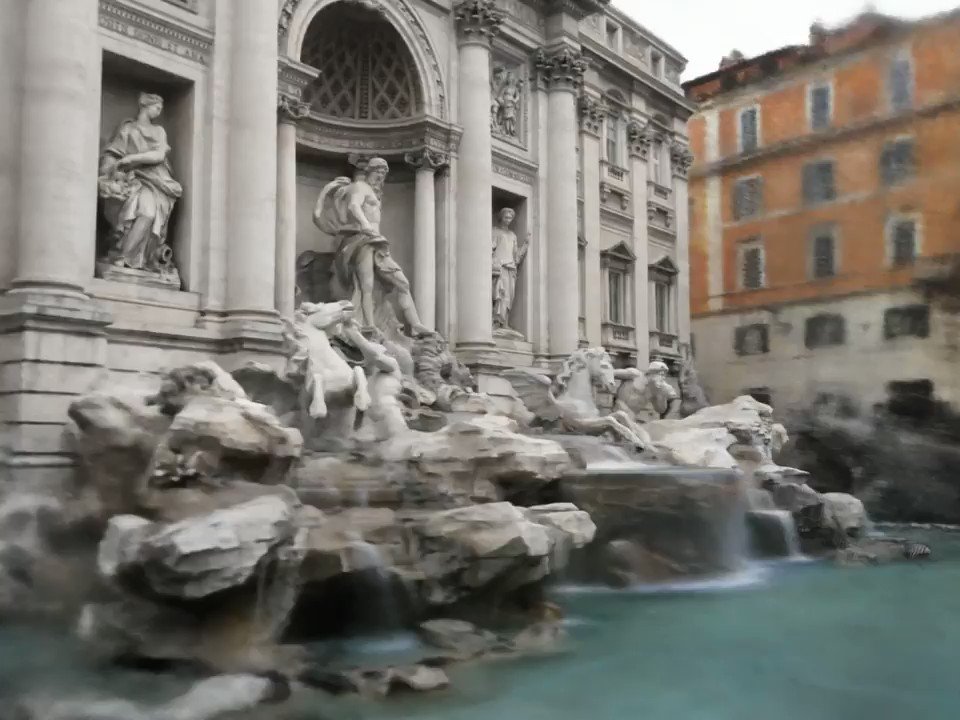
    Our paper, “NeRF in the Wild”, is out! NeRF-W is a method for reconstructing 3D scenes from internet photography. We apply it to the kinds of photos you might take on vacation: tourists, poor lighting, filters, and all. nerf-w.github.io (1/n)
    Image
    00:00
  • user avatar
    Daniel Duckworth
    @duck
    Aug 6, 2020
    Replying to @duck
    For lighting and image post-processing, we introduce a low-dimensional embedding space controlling NeRF’s radiance field. This not only gives NeRF-W the capacity to model photo-specific lighting, it enables us to “relight” a scene from new angles. (3/n)
    Image
    00:00
  • user avatar
    Daniel Duckworth
    @duck
    Aug 6, 2020
    Replying to @duck
    This project wouldn’t have been possible without my amazing coauthors: @rmbrualla, Noha Radwan, Mehdi S. M. Sajjadi, @jon_barron, and Alexey Dosovitskiy. Check out our paper: arxiv.org/abs/2008.02268
  • user avatar
    Daniel Duckworth
    @duck
    Aug 6, 2020
    Replying to @duck
    We build on NeRF, a method for learning a volumetric radiance field from a posed photo collection. We introduce two extensions to soften NeRF’s “static world” assumption: one for lighting/post-processing, the other for transient objects. (2/n)
  • user avatar
    Daniel Duckworth
    @duck
    Aug 6, 2020
    Replying to @duck
    NeRF-W improves on the SOTA by >5dB in PSNR and reduces error on other metrics by 20-50%. Qualitatively, NeRF-W produces consistent, crisp 3D geometry without fog or checkerboard artifacts. Check out the project website for more videos and the paper. nerf-w.github.io (5/n)
    Image
  • user avatar
    Daniel Duckworth
    @duck
    Aug 6, 2020
    Replying to @duck
    For transient objects, we introduce a secondary volumetric radiance field combined with an uncertainty field. The former explicitly captures transient objects; the latter uncertainty about the color of a pixel passing through part of the 3D space. (4/n)
    Image
  • user avatar
    Daniel Duckworth
    @duck
    Dec 13, 2023
    Replying to @duck
    SMERF has the best of both worlds: we produce renders nearly indistinguishable from Zip-NeRF while rendering at 60 fps or more on desktops, laptops, and even recent smartphones, all while scaling to scenes as big as a house! (3/n)
    Image
    00:00
    12K
  • user avatar
    Daniel Duckworth
    @duck
    Apr 24, 2020
    How does one trade-off sample quality and diversity in a language model? Which decoding method is best? We introduce a multi-objective framework maximizing human judgement score subject to a constraint on diversity (entropy). arxiv.org/abs/2004.10450 (1/7)
  • user avatar
    Daniel Duckworth
    @duck
    Aug 6, 2020
    Infinite! We don't use polygons. We learn a "volumetric radiance field" scene representation.
  • user avatar
    Daniel Duckworth
    @duck
    Aug 6, 2020
    We used a few hundred to low-digit thousands. Based on the results of NeRF, if you capture your images in a controlled environment, you might be able to get away with as few as one hundred!
    matthewtancik.com
    NeRF: Neural Radiance Fields
    A method for synthesizing novel views of complex scenes by optimizing an underlying continuous volumetric scene function using a sparse set of input views.
  • user avatar
    Daniel Duckworth
    @duck
    Dec 13, 2023
    Replying to @duck
    This has been a joint work with my amazing collaborators: @PeterHedman3, @ChrisJReiser, @PeterZhizhin, @jfthibert, @MarioLucic_, @RSzeliski, and @jon_barron Learn more and try SMERF out yourself at smerf-3d.github.io (8/n)
    smerf-3d.github.io
    SMERF
    Project page for SMERF: Streamable Memory Efficient Radiance Fields for Real-Time Large-Scene Exploration
    2.4K
  • user avatar
    Daniel Duckworth
    @duck
    Dec 13, 2023
    Replying to @duck
    How do we achieve this? We distill a teacher model into a family of MERF-like student submodels, each of which specializes to a different part of the scene. Each submodel captures the entire scene, so rendering stays fast and GPU memory consumption stays low. (4/n)
    Image
    2.5K
  • user avatar
    Daniel Duckworth
    @duck
    Aug 6, 2020
    Replying to @pradeepviswav @benedictevans and 2 others
    Indeed, we were heavily inspired by Photosynth! I remember being in awe when I first saw it back in high school.

New to X?

Sign up now to get your own personalized timeline!

Create account

By signing up, you agree to the Terms of Service and Privacy Policy, including Cookie Use.

Terms·Privacy·Cookies·Accessibility·Ads Info·© 2026 X Corp.
Don't miss what's happening
People on X are the first to know.
Log inSign up
Advertisement
Advertisement