Journal 3278 Links 10899 Articles 87 Notes 8266
Sunday, November 1st, 2026

The lack of punctuation on this bit of pub signage is sending exactly the wrong message.
Reading Land by Maggie O’Farrell.

Thursday, October 29th, 2026

Thursday session
Wednesday, October 28th, 2026

Wednesday session
Tuesday, October 27th, 2026
Typewalk – Lettering in public spaces
Capture lettering on signs, shop windows, and façades, then explore walks to the best finds in your city.
CSS-Tricks has a new owner! | CSS-Tricks
This is very good news!
Monday, October 26th, 2026

Monday session
Sunday, October 25th, 2026
Imagining the sci-fi cabal meeting where Adrian Tchaikovsky and Ray Nayler divvied up their assignments:
“Okay, we can both do octopuses and crows, but let’s toss a coin for mammoths; loser has to do spiders.”
Friday, October 23rd, 2026
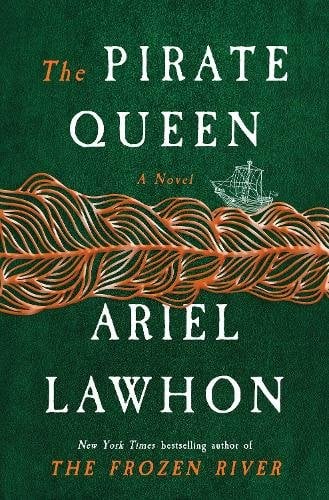
The Pirate Queen by Ariel Lawhon
This is an infuriating book. So much so that I didn’t finish it.
Don’t get me wrong; I love the idea of The Pirate Queen. Telling the life story of Gráinne Ní Mháille is an excellent premise for some rip-roaring historical fiction. It’s even got an interesting structure alternating between three different parts of her life.
I was pleasantly surprised when I cracked open the book to find a small pronunciation guide to some Irish words in the front matter. It would be nice to have some Gaeilge scattered throughout the narrative. But that’s exactly what made this book so infuriating.
First off all, by dropping in an occassional Irish word into a sentence, it just made me think, “Wait, what language would these people be speaking?” Usually the answer was Irish. In which case, why translate one arbitrary word?
Then there’s the choice of the Irish word that gets dropped into the text most frequently…
The front matter has this to say about the irish word tá:
An affirmative statement similar to yes
Um, not really. Tá is present tense of the verb “be”. The English equivalent is “is”. You can’t just drop it in as a replacement for the word “yes”. But that’s exactly what Ariel Lawhon does.
This continually took me out of the story. One person asks a question like, “Did you see that?” and the other person answers, “Tá.” That just doesn’t make sense.
I know this sounds really nit-picky, but one of the first things you learn about Irish is that there is no single word for “yes” or “no”. It’s most common to respond with the positive or negative form of the verb in the question—“Did you see that?” “I saw!”
So of all the words to pointlessly switch into Irish, “yes” is by far the least suitable.
It happened every couple of pages. I was getting so annoyed, I flipped ahead to the acknowledgements to find out who was consulted on the use of Irish in the book. I found my answer. No one.
That seems somewhat irresponsible to me. It borders on being insulting. Would it have taken so much time and effort to have one single Irish speaker check the text?
Alas, the lack of research wasn’t just evident in the book’s treatment of the Irish language.
At one point, a young Gráinne is out walking with her brother, who is playing the uilleann pipes. I had to stop and check the text a few times. Perhaps I missed a bit where they sat down. But no, this book blithely describes a character walking and playing uilleann pipes at the same time.
Now if you think uilleann pipes are pretty much the same as Scottish highland pipes, this would make sense. But they’re not. A bare minimum amount of research would show that the uilleann pipes are played sitting down (you can try to play them standing up, but you’ll need some kind of extra gadget like Johnny Doran used, but even he couldn’t play them while walking).
I carried on reading even though I was getting more and more annoyed by the shoddiness on display. Then I read this sentence:
No more distant flicker of lanterns in the distance.
I get how you would write that sentence in a first draft. Hopefully you’d catch its redundancy in a subsequent draft. If not, it’s exactly the kind of thing that your editor is there to spot.
But no, this made it all the way to the final printed book, a book that was displayed prominently on tables in major bookstores in multiple countries. Compare and contrast that with When The Boys Came Out To Play by John Mackel, a book which will be likely only ever be read by a much smaller audience but which is crafted with so much more care.
I always feel slightly guilty if I don’t finish a book. I know, I know; life’s too short and all that. But I can’t shake the feeling that I’m being a bit disrespectful to the author by not seeing their work through to the end. In this case though, the author displayed enough disrepect to her readers that I don’t think I need to feel bad about slamming this book shut.
The Pirate Queen is a sloppy piece of work. You deserve better.
Chuala mé an nuacht brónach go raibh Dónal Lunny imithe ar slí na fírinne.
Laoch.
Ar dheis Dé go raibh a anam.
An Cábla agus an t-Amhrán - YouTube
Well, this short film by the Irish Traditional Music Archive is right up my alley! It looks at the first transatlantic telegraph cable and the traditional music of West Kerry, particularly the song Ámhrán na Leabhar:
From the naomhóg, which for centuries connected the islands, peninsulas and coastal communities of Uíbh Ráthach, to the arrival of the world’s first successful transatlantic telegraph cable at Valentia, An Cábla agus an tAmhrán reveals a remarkable continuity: while technologies evolve, humanity’s desire to communicate, remember and pass stories from one generation to the next remains unchanged.

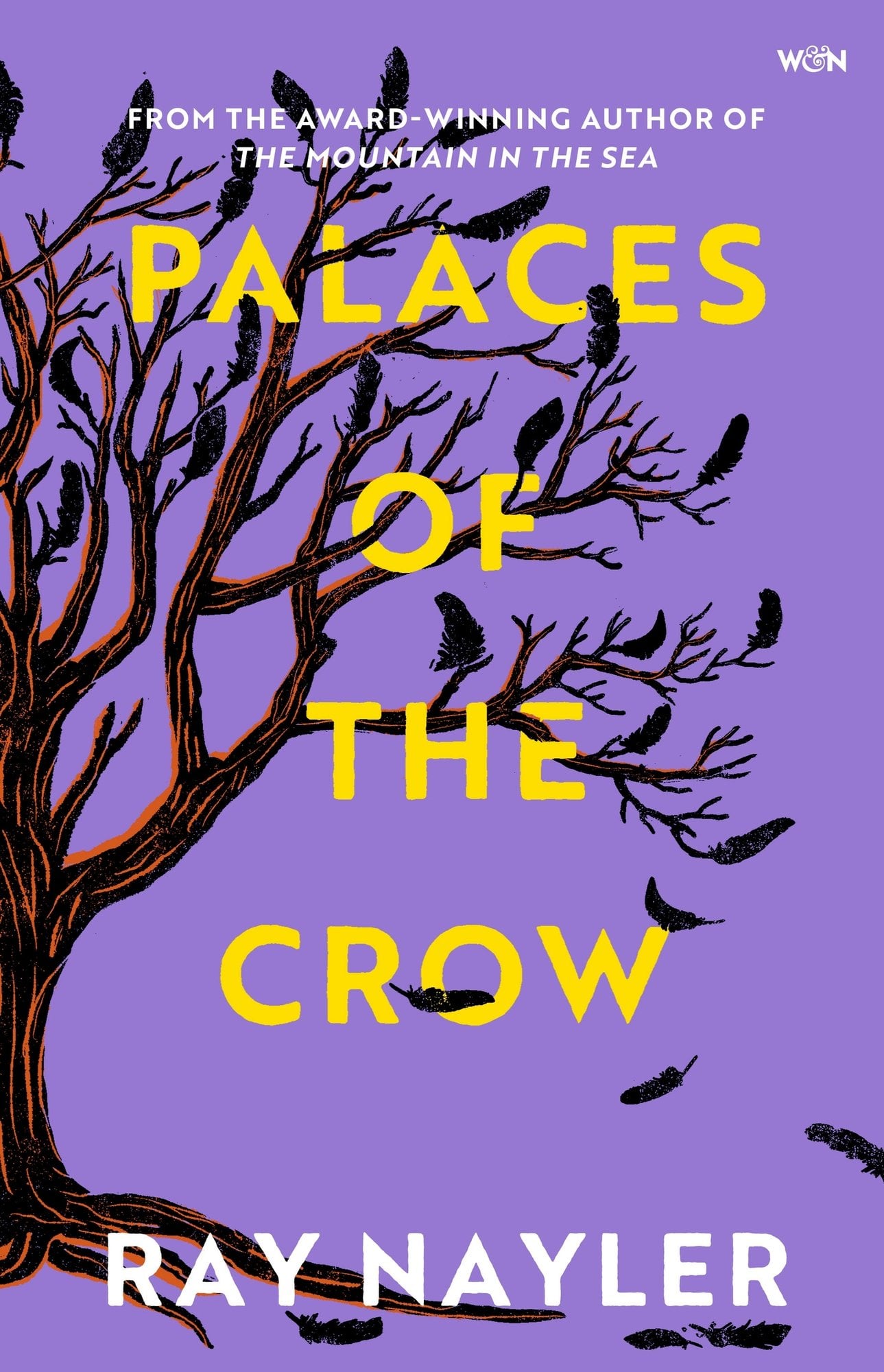
Reading Palaces Of The Crow by Ray Nayler.
Wednesday, October 21st, 2026

Wednesday session
Patched my PHP within minutes of the update being released; super-smooth with no problems.
Tuesday, October 20th, 2026
This year’s FFConf is shaping up to be genuinely unmissable.
So …um, you know …don’t miss it:
I’ll see you there!
Sunday, October 18th, 2026

I’ve had a nice week at Saint Augustine Beach.
Friday, October 16th, 2026
Ranking proposals for Interop 2027
The Firefox team are asking us to weigh in on proposals for Interop 2027—what features should browsers be concentrating on implementing or improving.
- Web app installation via
<install>andnavigator.install(). Prompts the user to install a progressive web app. - Speculation Rules API. Hints to the browser to proactively download pages in the background so they appear instantly when the user navigates to them.
- CSS
var()in size container queries. Such as@container (width >= var(--min-width)). - CSS
flex-wrap: balance. Distributes items in a multi-line flex container so each line has about the same number of items. - Interest invokers. The
interestforattribute triggers actions on a target element when the user shows interest, such as via hover, focus, or long-press.
Those are very much in order of priority. Imagine them following a Pareto distribution; the top 20% (in other words, the first one) is 80% of my priority.
But other people have other priorities: Stu, Eric, Ana, Tyler, Paweł, Declan, Sara, and Cyd, for example.
There’s a lot of love for styleable select in there—can’t argue with that.
Get in there and rank your priorities. Then share them.
Reading The Pirate Queen by Ariel Lawhon.
Introducing the Accessible Components Library - TetraLogical
A great little collection of accessible interactive components: dialogs, tabs, accordions, stuff like that.
Best of all, the components come with documentation: what problem is solves; when to use it; when not to use it; where to use it, and more.
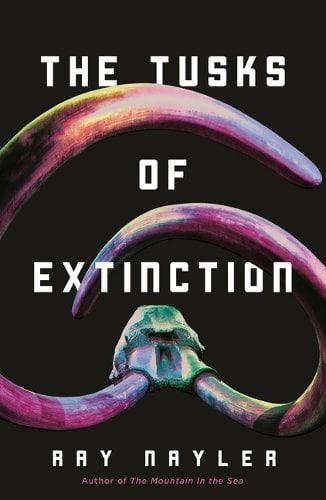
The Tusks Of Extinction by Ray Nayler
Hot on the heels of reading and enjoying The Mountain In The Sea, I picked up Ray Nayler’s next work, this tightly constructed novella.
Once again it deals with inter-species communication. This time it’s de-extincted mammoths. Once again, it’s set in the relatively near future. Many of the same gadgets reappear in this book. It may well be set in the same world.
There’s a tangible atmosphere to this story. But despite it’s high-tech premise, it’s not escapist. The narrative is driven by the all-too-real issues of ivory poaching and big-game hunting.
And this is where I start to get a nagging feeling about Ray Nayler’s work. At times it seems to relish in describing the worst that humanity is capable of. It starts to veer into misanthropy. If you yourself are misanthropic, it will just come across as realism. But it feels a bit too easy, a bit too cheap.
I remember this happening with Paolo Bacigalupi’s books. I enjoyed The Wind-up Girl, but by the time I read The Water Knife, his misanthropy (and misogyny) had become self-parody:
Instead of asking what the future might actually be like, it instead asks “what’s the absolute worst that could happen?” Frankly, it’s a cop-out.
The book takes a similar tack with its characters. It assumes everyone’s terrible and will do terrible things. It’s lazy.
So you’ve got an unrelenting series of people behaving terribly in a horrific setting. It gets boring.
The Tusks Of Extinction isn’t that. It manages to maintain a balance. But I hope that the next Ray Nayler book I read won’t tip over into wallowing in the worst of our species.
I’ll find out soon enough. I’ve already got Palaces Of The Crow on loan from the library.