web analytics
Categories
bird finding in Costa Rica Birding Costa Rica birds to watch for in Costa Rica Costa Rica birding hotels

A Productive Morning of Birding at Villa San Ignacio

Costa Rica can be a crowded place, especially in the Central Valley. While San Jose is technically only in one part of the valley, that’s how most visitors refer to this ever popular region. It’s not the only city or town in the Central Valley but no one can blame them for calling all of the urban sprawl and winding streets and small stores and quaint churches with shaded parks “San Jose”.

From a bit east of San Jose on west to the edge of Alajuela (that’s the actual name of the city where the airport is), it all seems to blend together. At one point in time, it certainly didn’t but we could say the same about Los Angeles, Dallas, Bangkok, and so many other modern mega-cities.

The Greater Metropolitan Area or (GAM as it is locally referred to) hosts a fair portion of Costa Rica’s 5 million people population and yet, birds are there too. Not as many as are even marginally wilder areas but in the GAM’s parks and riparian zones, urban birds persist. There are Crimson-fronted Parakeets roosting on and screeching from buildings, Blue-gray Tanagers and Great Kiskadees calling from parks and other birds too, more than you think.

Image

However, species numbers really jump when you finally reach a good amount of green space, especially when you can bird in fair bits of remnant forest and other habitats. You’ll find those habitats in Estes Park as well as other Costa Rica birding sites shortly after leaving the edge of the main urbanized front. One such bit of green space is at Villa San Ignacio, a small hotel situated at the edge of the urban perimeter, just northwest of Alajuela.

Villa San Ignacio is a bastion for birds because although the hotel does have some landscaped grounds, it’s done in a manner that preserves and showcases biodiversity. Unlike so many other places, this hotel also hosts several large and mature trees, especially massive figs that provide critical food for a wide variety of species.

You can also check out short and easy trails in regenerating forest and watch the skies for flyover raptors, swifts, and other birds. Some road noise reminds you that you’re still in an urban area but the wealth of birds seems to convince you otherwise or, at least show what mature trees and habitat preservation does for birds, butterflies, and more.

Image

On Monday, I spent most of a morning at Villa San Ignacio and the birding was good as always. As per usual, it was also unpredictable with some birds appearing and others staying hidden or being no-shows. That’s normal for tropical birding, at least in Costa Rica. It’s why it’s worth staying longer and birding the same rich areas more than once, why it’s worth always watching and keeping an eye out for the unexpected.

These are some of the highlights and happenings from that morning.

Cabanis’s Ground-Sparrow

Right off the bat, we hit the local jackpot with this rare and threatened species. Shortly after 6, while walking up the road towards the upper rooms, I was happily surprised to hear the high pitched tick of this special bird.

Even better, the pair and what looked like a juvenile foraged right in the open. They didn’t stray far from the hedgerow at the edge of a green, metal fence but you can’t ask much more from these major skulkers. As is typical for this special towhee, you’ve got to see it early and get onto it quick. It won’t take long for them to get into cover and be essentially invisible for most of the day.

Short-tailed Hawks and other Raptors

Around 9, as the cicadas pumped up the volume and heat waves swirled into the tropical skies, raptors did their morning dance. Black Vultures circled and gained height, a couple of migrant or wintering Broad-winged Hawks followed suit and were followed by high flying views of Gray and Short-tailed Hawks.

No Zone-tailed that day but later on, we also had both caracaras and additional Gray Hawks. It’s worth it to keep watching above, to keep looking up (as the Urban Birder David Lindo reminds us). Other days I’ve also seen migrating Swallow-tailed Kite and Swainson’s Hawk, Peregrine Falcon, and even Double-toothed Kite.

Long-tailed Manakin and other forest birds

Down in the forest, fewer birds showed than I had hoped but we still heard and saw some things. One or two Long-tailed Manakins called, “Toledo” while White-eared Ground-Sparrows gave cascading calls from the undergrowth and Rufous and white and Rufous-breasted Wrens dueted from the vines.

Image

Those birds stayed hidden but we did manage to see Common Squirrel Cuckoo, Olive Sparrow, saltators, Cabanis’s Wren, Barred Antshrike, Gray-headed Chachalaca, and some other species.

Indigo Buntings

One of those species,, one of those surprises, was the Indigo Bunting. Not just one either but several! An uncommon bird in Costa Rica, it was fun to see fully plumaged deep blue males, molting patchy blue males, and at least one plain sparrowish female.

We probably had 10 in total, they were either migrating through or grouping together and getting ready to migrate. One also sang its prolonged, jumbly song that we hear at this time of year in Costa Rica. I included this vocalization on the recently updated Costa Rica Birds – Field Guide app but, in checking it, I realized that I also need to include the bunting’s commonly heard call notes. I’ll probably get to that in May but hopefully sooner (I recently included better habitat information, more birding tips, and images).

Speaking of buntings, on that morning at Villa San Ignacio, I was reminded that Painted Buntings can make a call that sounds a lot like the one-noted call of a Mourning Warbler (at least to my ears). While pishing by a hedgerow, a bird responded and I figured it would be a Mourning. Much to my surprise, I found myself focusing on a leafy green female Painted Bunting! It was a good reminder to brush up on their calls.

Plain-capped Starthroat and 69 other bird species

Image

How many bird species can you see in a day at Villa San Ignacio? I figure that varies but I can say that 70 in a morning is possible. That’s what we had on Monday and that was also lacking several regular species! Some of the other nice ones were Plain-capped Starthroat on the walk up to the upper rooms, close Cinnamon Hummingbird, Scrub and Yellow-throated Euphonias, and a bunch of other birds, many feasting on the fruiting figs.

Check out the bird list!

That constant birding activity is why I always look forward to birding back at Villa San Ignacio. Along with the good service, friendly vibe, and beautiful habitat, it’s a hard blend to beat.

Categories
bird finding in Costa Rica Birding Costa Rica

Costa Rica Birding News- The Poas Area

Headed to Costa Rica? Wonder where to go birding in Costa Rica? You are the fortunate one. The cold fronts seem to have dissipated and they’ve taken their saturating weather with them. I don’t mean to speak ill of the rains, the complex tropical habitats in Costa Rica depend on their abundance and all the humidity they bring. However, constant wind and rain can become a bit too abundant, especially when the overexcited elements raise rivers and tease bits of mountains to race downslope and block roads.

For the moment, happily, those challenges seem to be taking a break. As a bonus, both lanes are also open on the Tarcoles Bridge! You could still run into traffic but shouldn’t have to deal with 3 hour traffic jams. You’ll probably still have to deal with some roadwork traffic between Tarcoles and Jaco but, it won’t measure up to the infamous bridge traffic of early March, 2026!

Better weather and less traffic jams (in some places) aren’t the only things to smile about. We’re birding up in here and the avian action is getting fierce! Birds seem to be tuning up in anticipation of the breeding season, I’ve seen several species with nesting material, and at least some areas seem to have a healthy variety of fruiting and flowering trees.

That of course translates to insect and bird food; exactly what we want. Much of what I’m saying stems from recent birding in the Poas area, check it out:

Resplendent Quetzal Activity

Image

As is per usual at this time of year, quetzals are getting feisty. Actually, they’ve been feisty for a month or more but now, as they nest, they may call a bit more. At least that’s how it seems to me. In the Poas area (meaning anywhere from Poas to Varablanca and on down to Virgen del Socorro), I’ve heard quetzals singing and seen males give display flights. Not a huge number but, certainly more than other days.

Also, I’ve noticed at least a few trees covered in the small “wild avocados” that quetzals feed on (along with Black Guans and other fun birdies). There’s one within good viewing distance of a road and I’m guessing that one will be ripe for quetzal banquets in a week (and they might already be feeding from it!).

Lovely Cotinga Still Occurs in Virgen del Socorro

Whoah! Yep. Yes, Virgen del Socorro (and Cinchona) are in range for this uber stunning, rare bird but, they are rarely seen in that area. I figure the paucity of cotinga sightings from this classic birding site are related to the bird’s quiet nature, lack of spots to scan the forest canopy, and the species being genuinely scarce in Costa Rica.

It’s one of those birds that I figure could show up but, at the same time, wonder how many are still around, or, if they only occur far off on the other side of the canyon. After this past Friday, I’m pleased to say they can still show in the Virgen del Socorro area. We were checking the road between Socorro and Cinchona when I noticed the tell tale rustling of foliage that hints at bird activity. After a closer look, we realized that several birds were indeed feeding on berries; birds like Pale-vented Thrushes, tityras, elaenias, and others (although less tanagers than I had expected).

Given the quantity of fruit, I was also surprised to not see any toucans or guans. Would those diehard fruit lovers visit the natural table another time? Were they in another part of the forest? There did seem to be a lot of fruiting trees around. No matter how surprised I may have been by toucan absence, that didn’t come close to matching my smiling surprise at seeing a male Lovely Cotinga!

Amazingly, despite intently watching the fruiting trees, we wouldn’t have even seen it if I hadn’t decided to walk 20 feet up the road to check some other trees. As we walked underneath what was probably a fruiting fig, there was a big flash of turquoise, way too much for a male Scarlet-thighed Dacnis, and I immediately realized what was going down! No distant scope views that day. More like point blank, in your face looks at a shining, living turquoise sculpture with amethyst highlights.

After a couple minutes, the royal rare denizen of Socorro flew across the road and down into the canyon. You can bet I’m going to find some good overlooks for scoping the treetops. There be cotingas out there.

Cinchona Hummingbird Cafe- a Lot more Elbow Room

Over at the Cinchona hummingbird cafe, they have finished their remodeling. Alas, the rustic look is gone but so is the floor that sometimes shook with people’s footsteps. It has been replaced with a rock solid concrete base under a high roof. There’s a lot more elbow room and the place did need it but, it remains to be seen how that may affect the birds.

There’s a bit less habitat but, during a couple brief visits, the birding seemed alright. The usual suspects were still coming to the fruit feeder and nearby trees hosted some other species. Hummingbirds were not in abundance but, sadly, it’s been like that at Cinchona for at least a few months now. Wait long enough and maybe some will pop in for a visit but, lately, it’s mostly been the domain of Green-crowned Brilliants and a couple sabrewings.

Hopefully, that will change but I wouldn’t absolutely count on it. Instead, watch for hummingbirds at flowering plants and visit other sites.

Fair Hummingbird Action

This subtitle may seen contradictory to the text above it but yes, there has still been a fair bit of hummingbird action, just not at the Cinchona feeders. Are there more flowering plants in the wild, more hummingbird food available? Could be, I do know I’ve done alright with seeing a fair number of species.

In the Varablanca area, I’ve had good looks at Green-fronted Lancebill, Coppery-headed Emerald, Black-bellied Hummingbird, Green Hermit, Violet Sabrewing, Purple-throated Mountain-gem, Green-crowned Lancebill, and Scintillant Hummingbird.

Coppery-headed Emerald birding Costa Rica

Higher up on Poas, I’ve also had the usuals; Volcano Hummingbird, Lesser Violetear, Talamanca Hummingbird, and Fiery-throated Hummingbird. One spot has also been good for the woodstar and, down in the foothills, I’ve had good looks at Purple-crowned Fairy, Black-crested Coquette, and Violet-headed Hummingbird. I’ve also been hearing Brown Violetear. In other words, the hummingbirds are out there, you just have to know where to look (and have them show up).

Image

Ornate Hawk-Eagles and Other Raptors

The sunny weather has also been good for raptors in the Poas area. Perhaps not so much in the high elevations but the middle elevations and foothills have delivered. I wish I could say Solitary Eagle but no, if that species still occurs in Costa Rica, there are likely very few in very remote areas.

However, I can say that I’ve been seeing several other raptors, especially Ornate Hawk-Eagle. The powerful goshawk on steroids can occur anywhere from Varablanca down to San Miguel, maybe even high up on Poas. Keep that mind when birding the area, even at Cinchona. Once, I saw one soar into view right next to the cafe.

Other raptors have included Barred, Short-tailed, Gray, Roadside, and Broad-winged Hawks along with King Vulture (near San Miguel), Double-toothed Kite, the rufous bellied local version of the Red-tailed Hawk, Swallow-tailed Kites, and the decidedly uncommon Great Black-Hawk.

Image

And that’s not all! Although I have not seen them lately, White Hawk and a few other raptors also live in the general Poas birding area.

I suppose that’s all for now. Let’s just say that the birding has been pretty good up there and since it’s only 45 minutes to an hour drive from the Central Valley, a morning of birding could be well worth your while. Happy birding, I hope to see you here!

Categories
bird finding in Costa Rica Birding Costa Rica Pacific slope

Recent Birding News and Tips from Carara, Costa Rica

Last week, I did some birding around Central America’s biggest ecotone. It’s an area where rainforest meets dry forest meets mangroves and some! It’s such a crossroads of biomes and habitats, I’m not even sure if ecotone is the right term. “Megatone” might be better but “hot birding wonderland” would also work. I’m talking about Carara, the place where the Grand Tarcoles River empties the waters of the Central Valley into the Pacific, where coastal hills capture life giving rains, and where the biodiversity is sort of astonishing.

Given the meeting of so many habitats, the high end species numbers shouldn’t be surprising but, there’s just so much, I can’t help but use superlatives. If you’re headed to the Carara area, get ready for deserved superlative birding. Going birding around there soon? You might find these bits of news and tips helpful.

Tarcoles Bridge Work

Lately, this has been some of the biggest news in Costa Rica. The Tarcoles Bridge, the one where so many thousands of tourists stop to look at crocodiles, is undergoing roadwork. And it’s not pretty. Temporary road closures and changing the two lane bridge to one lane for 24 hours a day on the main and almost only coastal route to Jaco has its consequences.

I was there on the first day of the closures and on the way back from Jaco to Tarcoles, the normally 30 minute drive took four hours.

Yes, you read that right. Four. Complete. Hours. Since then, it’s been similarly bad, sometimes better, sometimes worse. Given that this is also a vital route for commerce, workers, and students, this particular bit of roadwork is throwing a giant wrench into a lot of people’s lives.

With almost no alternatives, if you are headed to and from Jaco or even Manual Antonio, you may be in for a terribly long wait. I suggest trying to see which times are best and probably crossing the bridge at 4 in the morning or so. The current schedule is for the one lane closures to end on March 27th and to happen again from May 4th to May 9th. There will also be some nighttime full closures from March 15 to April 20th. These can happen on any night during those dates from 9 pm to 5 am.

If you plan on visiting Carara National Park, the wait might be a bit less but anything can happen, perhaps more so on weekends. The good thing is that the park is fairly close to the bridge so, if you have to cross back over to the Tarcoles Birding Lodge area, that won’t take as long as driving from Jaco. I suppose another good thing is watching birds while you wait in traffic but, that’s not exactly ideal.

Yellow-billed Cotingas from the Tarcoles Birding Lodge

Image

Now for some good news! While watching from the overlook at the Tarcoles Birding Lodge, I had a quick, distant flyby cotinga one morning and saw two distant males the following morning! This is great news because the Carara population is so dreadfully small, it really could disappear at any time.

Seriously, there might be 5 or fewer birds still occurring in the area. Another positive sign was a recent sighting of a female by an experienced ornithologist (which makes me think he really did see one and not a tityra). What this means for birders visiting the area soon is that you might also see one by scanning for them from the Tarcoles Birding Lodge in the early morning. You’ll see other birds too, maybe even a Gray-headed Kite like the bird pictured at the top of the post (we had one).

You might also get lucky on the Cerro Lodge road, boat tour, or even in the national park but your best bet will be scanning the distant mangroves from the Tarcoles Birding Lodge or maybe Cerro Lodge too or, maybe even another new place…

More Birdy Accommodation in the Area

The new place that could turn up the cotingas as well as lots of other nice birds is a cozy BnB called “Finca Quietud”. This small place just down the Cerro Lodge road is especially suited for couples and single travelers looking for a quiet place with friendly owners, an excellent breakfast, and a nice pool.

It also has an excellent view of a wetland, mangroves, and the sea. I bet the cotingas could be seen from there along with lots of other, more expected species. On a recent visit, one of our highlights was a pair of Spectacled Owls that flew into view before dusk!

Humid Forest Species in Carara

birding Costa Rica

Regarding Carara National Park and vicinity, it seems like the trend of humid forest species becoming rarer is taking place. Unfortunately, climate change has been causing the forest to become drier bit by bit or, at least changing the amount and timing of rains. In any case, various rainforest species seem to have declined and a few have become downright rare, at least in the accessible part of the park.

You can still see a good variety of birds but many are not as common as they used to be and a few have become really tough. The more challenging ones seem to be species that require the wetter forests, birds like Baird’s Trogon (maybe the hardest hit), Orange-collared Manakin, and Golden-naped Woodpecker among some others.

Carara is still worth birding but, to see some birds, if you aren’t birding further south, you may need to look for them higher up on the Bijagual Road or, at Macaw Lodge. It tends to be wetter in those spots (in a good way for birding) but, even there, Baird’s Trogon has become much less common. To look for those birds, especially at Macaw Lodge, local guide Beto Guido is one of the better guides to go with. He birds there quite a bit and recently, even found a rare Agami Heron at the lodge!

Mangrove birding

Image

One of the other birding bonuses around Carara is looking for mangrove species. In Costa Rica, some of those specialties include the endangered Mangrove Hummingbird, Panama Flycatcher, and Mangrove Vireo among a few others. You might get lucky with those species on a mangrove boat trip but even then, they can be easily missed.

The funny thing about those mangrove birds is that they don’t seem to be very common, even in the mangroves! Usually, mangrove sites near Playa Azul are good for them but, recently, despite giving those sites a very good check, they weren’t.

Mangrove specialties seemed oddly absent there and at another spot near Bajamar. One thing I did notice was that those unbirdy mangroves also seemed drier than usual and lacked standing water. I suspect that has something to do with it because it was the only difference compared to past visits that did readily turn up the mangrove specialties.

Also, on a recent visit to mangroves at Mata de Limon, I did see all the mangrove specialties (and heard a Rufous-necked Wood-Rail too!) and those mangroves had lots of standing water. This was a change from another fairly recent visit where they were drier (and turned up far fewer mangrove birds).

I suppose the lesson here is to lower expectations or check other sites if the mangroves look dry and, maybe take that boat trip after all.

That’s all for now, if you visit the Carara area, I hope you catch the bridge traffic at the right moment and see lots of birds. Be ready for hot weather and bring plenty of hydration (no plastic bottles allowed in the national park). As always, I look forward to getting back to that birdy megatone.

On another note, I recently updated the Costa Rica Birds Field Guide app to match most of the recent eBird taxonomic changes and made some other changes too. I’ll write a post about that this upcoming week!

To learn more about sites mentioned in this post along with 100s of other birding sites and information about birding in Costa Rica, support this blog by purchasing my 900 plus page Costa Rica bird finding ebook, “How to See, Find, and Identify Birds in Costa Rica”. Happy birding, I hope to see you here!

Categories
bird finding in Costa Rica birding news

Recent Highlights from Birding Costa Rica in the Rain

This past week in Costa Rica has been a mix of wind, rain, sun, and AC temperatures. It’s not like that everywhere, depends on where you go but if you’ve been birding in the highlands or Caribbean lowlands, I bet you know what I mean.

It’s been one cold front after another and although I’d be lying if this northern born Niagaran said it was actually, honestly “cold”, I will admit to having worn a fleece jacket while birding. Up on 8,000 foot Poas, I wore two layers, and put on this flannel shirt thing during a boat ride on the Sarapiqui (it’s usually way hotter in that tropical domain!). Yep, cooler than normal and I can only hope that the icy northern push brought us a weird sparrow or two.

No one has found any mega vagrants yet but I’m still hoping for it. Cool weather or not, the birds are still here in Costa Rica. These are some recent highlights.

Sarapiqui boat ride

Once again, taking the Green Ship Sarapiqui boat tour paid off with fantastic looks at a Sunbittern. After spotting the bird trying to skulk behind some river grass, we boated on over, waited, and then watched it stalk the sand. Just like a Gondwana robin, it pulled worm after worm out of the ground!

Walk away views were had and we continued on but the Kagu relative wasn’t finished with us yet. In a moment, it flew upstream, showing its wild, sunburst patterned wings as it glided to a river snag. After sharing the perch with an Anhinga, the Sunbittern glided off again, back into the shadows and out of sight.

We didn’t have a heck of a lot of other birds from the boat that morning but the Sunbittern show made up for it.

Middle American Leaftosser at Cinchona

Image
A leaftosser I saw in the Socorro area some years ago.

Seeing a mud-brown bird with tawny highlights might not seem noteworthy but when you realize how infrequently you see these birds, it can take center stage. Luck was with us when one called and showed right next to the Cinchona birding/restaurant platform/seating area. We had fantastic looks and that was especially good because we didn’t see a whole lot else.

Unfortunately, construction work was being carried out and the associated clanging and spark-flying soldering wasn’t exactly a bird friendly atmosphere. Even so, some birds still came in to the feeder! Also, by now, I would think that they’ve finished the work, I just hope that whatever they are doing doesn’t destroy more habitat.

On a related note, if you are in to hiking up a somewhat slippery road/trail, you could always explore the Old Cinchona area. This is across the street from the main cafe and up a steep driveway. Head up there and walking the old roads can be very birdy. Head to the left and uphill and you could find various uncommon middle elevation birds, maybe even Red-fronted Parrotlet.

Ornate Hawk-Eagle and Bicolored Hawk

birding Costa Rica
A picture of another Bicolored Hawk in the rain, this one from the Arenal area.

Over in the San Rafael de Varablanca area, on the La Legua road, clear skies produced a calling Ornate Hawk-Eagle. It was a distant one and did not come in to my whistling response (sometimes they do) but adult hawk-eagle a la ornatus it was. This is a good area for this species, especially on sunny days.

It’s also good for other raptors, yesterday morning, we had a juvenile Bicolored Hawk perched in the rain. It was a treat to get prolonged looks at that uncommon bird!

Good Birds at Arenal Observatory Lodge

I haven’t been birding there lately and I bet the weather is rough but, folks have also been seeing some good stuff over that way. Birders have also been treated to a subadult Ornate Hawk-Eagle and some lucky birders even got looks at a ground-cuckoo on the Waterfall Trail!

Yellow-eared Toucanet has also been seen along with lots of other nice birdies.

Rain and more rain

The cold fronts have brought constant rain to the highlands and parts of the Caribbean lowlands. Although not exactly a highlight, rain can have its birding benefits, as long as it doesn’t pour like crazy.

For example, in lightish rain, I think raptors sometimes perch more in the open (that’s not the first time I’ve seen Bicolored Hawk do that), and other birds can forage much lower and closer. Up on Poas and Varablanca, although the birding was shelter and umbrella-worthy, the bird activity was in high gear.

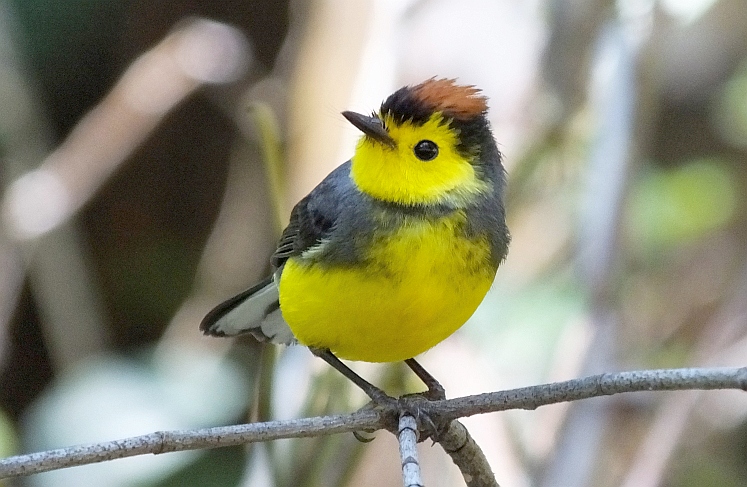
Bright Collared Redstarts flitted close by, Ruddy Treerunners were running up trunks, Costa Rican Warblers flitted, a quetzal called, and there was a mess of Mountain Thrushes.

Image
Collared Redstarts are a birder’s Turkish Delight.

Route 32 has been closed = more traffic on Route 126

Ok, so this isn’t exactly a highlight but it’s still good to know. The main road from San Jose to Guapiles and Limon has been closed for several days and could still be closed in subsequent days. Hopefully not but it’s best to be aware of that possibility.

You can still drive on 126 and go past Cinchona but you won’t be the only vehicle on the road. You could run into traffic jams, especially by the Peace Waterfall. Hopefully, the main route will open back up and stay that way but, there could easily still be issues for the next few days.

There’s always lots more to say about a lot more birds but these are the ones that come to mind at the moment. On a bright note, it looks like we probably won’t have any more strong cold fronts (fingers crossed), so that should help with getting around and seeing some sunshine, at least on the Caribbean slope.

To learn more about the sites mentioned above and hundreds of other birding spots in Costa Rica, support this blog by purchasing my 900 plus page ebook, “How to See, Find, and Identify Birds in Costa Rica”. Happy birding, I hope to see you here!

Categories
Birding Costa Rica

Cold Front Birding in Costa Rica

Costa Rica is decidedly tropical. Ain’t no winter going on here and yet, recently, ice and snow touched the high parts of this birdy nation. Not exactly flurries, no playing snow king of the mountain in plowed parking lots or scraping windshields but, there was some freezing weather in certain parts places. Those would be uplifted and volcanic grown spots like 12,000 foot Chirripo Mountain and 11,000 foot Irazu Volcano.

Yeah, that infamous polar vortex up north stretched its icy fingers into Central America and I won’t be shaking its subzero hand. I’ll take a pass on birding those cold places for the moment, will at least wait until Irazu gets back to its 50 and 60 degree temps before I do any Unspotted Saw-whet Owl searching.

That’s way up in the highest parts of Costa Rica but what about the rest of the country? Can you still go birding? Of course you can! The birds aren’t going anywhere, here’s what else this and similar cold fronts bring and what to expect for birding.

Dry season? Umm…not exactly

Cold fronts like these long freezing fingers are a reminder that the “dry season” refers to the Pacific slope. In the mountains and on the other side of the country, the part where rivers flow to the Caribbean, you’ll need your umbrella. You might also need a poncho and rubber boots and a whole lot of dessicant packets for your optics because, on the Caribbean side, a cold front is a wet front.

Yes, the temps drop a bit and that is some nice respite from heat and humidity but, it’ll rain, and probably a lot. Don’t expect predictable rain either, more like annoying, light misting rain that morphs into serious heavy downpouts before eventually going back to light rain again and so on.

We’re talking wet birding but, we’re not talking no birding. Find shelter and watch from there, keep watching and waiting for the rain to slow or stop. When that happens, bird activity will jump, be ready for a wealth of avian moves.

Image
At least wet weather sometimes encourages Sunbitterns to forage in the open!

Road closures

One unwanted side effect of heavy rains are road closures. They usually happen in mountainous areas and might not occur at all but you’d be wise to keep checking Waze. That especially goes for any travel on Route 32. The heavy rains and steep slopes on this important highway make it the road mostly likely to be closed, at least during serious cold fronts.

Other roads can close too, and some minor ones might even flood. Just be aware of where you are going, alternate routes, and not driving through flooded areas and you’ll be fine.

On a related note, the main road to Poas seems to be closed. A bridge is being replaced and might not be ready for another month or two. Hopefully, there will be a temporary bridge in place but I’m not sure of the current situation.

Windy weather

The other side effect of a cold front in Costa Rica is the wind. I’m happy to say that the wind has calmed down for the moment, hopefully it will still stay that way. When the cold front hits, it throws a constant blast of windy weather into the Central Valley and Guanacaste.

The birding becomes very challenging because the birds don’t want to deal with that wind any more than we do. To see them, you’ll have to find sheltered spots and wait for the wind to die down.

Odd birds? Any country firsts?

One exciting possibility of a cold front is it bringing some poor, lost birds to the playing field. Maybe, maybe not but given the unusual and severe push of cold weather from the north, I think it’s worth looking for them.

I would guess that the cold front might bring some ducks, gulls, or other waterbirds to Costa Rica. Other species to watch for are sparrows and other songbirds that typically winter further north. Those and wanderers like waxwings.

It will be interesting to see what local birders find these days! I’ll be looking too. If you happen to see some crazy sparrow or other odd looking bird, please eBird or Facebook it or do whatever it takes to get the word out.

Altitudinal migration

Image
Male White-ruffed Manakin.

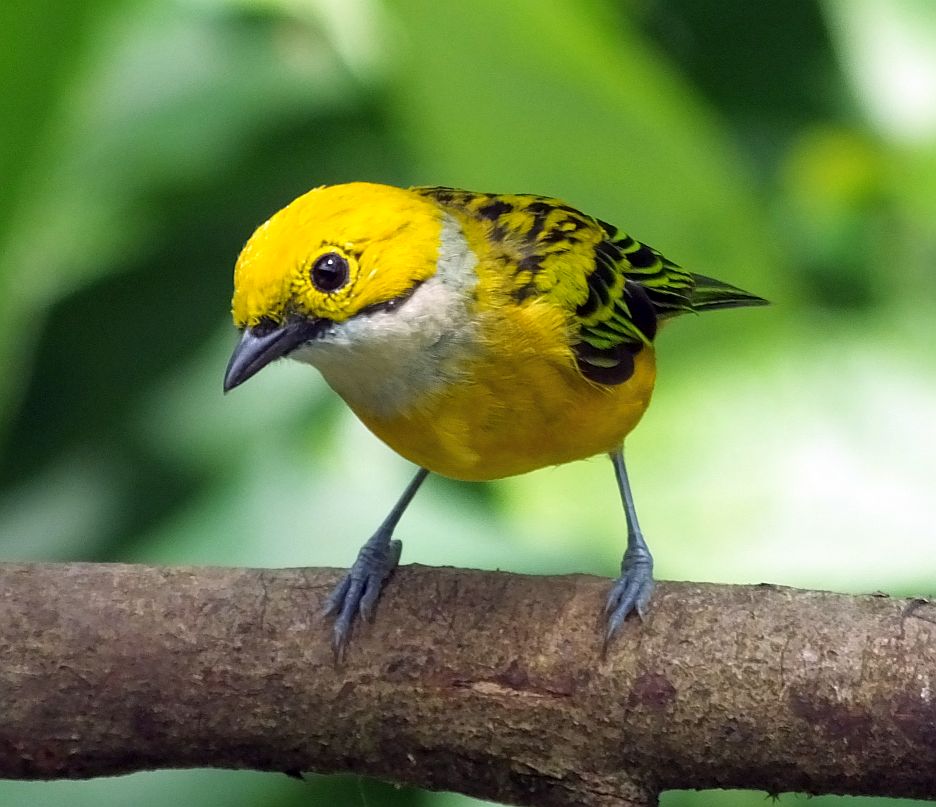
Most of all, this is how cold fronts affect birds in Costa Rica. Various species, especially frugivores, tend to migrate to lower elevations. Don’t be surprised if you see typical middle elevation birds like Silver-throated Tanagers way down in the lowlands at La Selva. There might also be White-ruffed Manakins, Black-faced Solitaires, and Black-thighed Grosbeaks.

Other birds are possible too, even things like Yellow-eared Toucanet or rare Lovely Cotingas. Keep those birds in mind when birding foothill and lowland sites right now!

Although I don’t look forward to birding in any rain, I am psyched about birding in lower elevations and looking for rarities. This cold front has got to have several birds on the move!

Categories
bird finding in Costa Rica planning for a birding trip to Costa Rica preparing for your trip where to find birds in Costa Rica

A Day of Birding near Carara, Costa Rica- Updates and Tips

Going birding around Carara National Park, Costa Rica? If so, good choice, a birder can’t go wrong with such a mega meeting of biodiversity. Too much for one day but you can still try, the constant new bunch of birds can keep you going, keep you seeing more birds until you can’t see no more. Of course you don’t have to throw all your birding eggs into a one day basket; not an ideal choice for any area with more than 100 possibilities and far from the best option for birding areas with species lists that run into the hundreds.

However, if you only have one full day to work with or, one day and morning, what are you gonna do? Throw up those birding hands and sip creative cocktails? Heck no, if you got the energy, what you do is bird as much as you can and then celebrate with post birding cold beers or cocktails or wild and crazy kombucha. Don’t do yourself in, pace yourself but, you might as well keep on birding, at least in places where hundreds of lifers are waiting.

Carara National Park and surroundings is one such “place”. This major ecotone blends so many bird rich habitats, you’d be much better off patiently birding the zone for 3 or 4 days. One day is a lot, one day can be a major challenge, especially if you go for humid forest birds in the morning and dry forest birds in the afternoon.

Image

I did that yesterday with a few guys from Toledo. The weather cooperated, I forgot to put on sunblock and it was a marathon day of birding in Costa Rica but it all worked out. After birding two main routes from 6:30 a.m. to 5 p.m., we finished with more than 150 species. Yeah, some of those were heard onlys but lots more were seen including such niceties as King Vulture, Black Hawk-Eagle, Crane Hawk, Double-striped Thick-Knee, Mangrove Cuckoo, Velvety Manakin, Riverside Wren, Golden-naped Woodpecker, etc., etc.

It’s pretty birdy up in the Carara area, if you plan on checking it out, aside from suggesting working in at least 3 days for the area, here’s some other updates and tips.

Road Work on the Tarcoles Bridge

Roadwork on the famous “Crocodile Bridge” continues and won’t end at least until May. It is open but the new speed bumps can cause some traffic jams both ways and, traffic jams will be worse during one lane closures. These will take place as so:

-Feb. 23 to March 27

-May 4 to May 9

-Closed at night from 9 PM to 5 AM on yet to be determined dates from March 15 to April 20.

During roadwork, crocodile viewing is also prohibited from the bridge but, I’m not sure how much that will be enforced. However, if you still want to see crocs, don’t frown yet! There are plenty of boat trips for close looks and a brand new thingee has also just opened at the bridge. It’s called the Croc Skywalk and looks like it will eventually offer crocodile viewing along with other tourist activities. As I drove past, I saw a whole bunch of buses and people there yesterday. I look forward to checking it from a birding perspective and including it in the next update for my Costa Rica birding site guide.

Start the Bijagual Road Back as Far as You Can Go (use 4 wheel drive)

Image

Carara isn’t just the national park. There’s also several other birding options including the Bijagual Road. This great birdy route starts near the coast and then makes its way into the hills adjacent to and in back of the national park. Follow Route 320 long enough to Route 319 and you’ll even access the very little birded but excellent eastern part of Carara. You’ll need a four wheel drive and that might not be good enough for the furthest stretches of route 319 but it will be exciting!

At the least, if you do spend some time on this road, I suggest driving back on it pre-dawn so you can start the birding near El Sur. This is a bit past the turn off to Macaw Lodge and gets you way back into the wild and least accessed part of Carara. As I was saying, past El Sur, road conditions might be impossible for a 4 wheel drive but it will still be worth starting way back in there. You can look for various owls and other nocturnal birds en route and will be in the right place at dawn.

Try to bird the road past El Sur but, if not, it would still be worth checking roadside forest near the turn off for Macaw Lodge and on other parts of the road. The combination of mature rainforest, second growth, canopy views, and some open fields is a good recipe for a very birdy, high total morning.

It’s the best area around Carara for Black Hawk-Eagle (although we got one soaring high over the Pura Vida gardens), has birds not generally found in the park like Yellow-crowned Tyrannulet, Pale-breasted Spinetail, Thick-billed Euphonia, and even occasional Streaked Saltator and White-lined Tanager. Other weird stuff could also occur, maybe even Tiny Hawk and there should be chances at the rare Turquoise Cotinga.

You’ll still need four wheel drive to get to the Macaw Lodge area and El Sur but it will be worth it.

Hummingbirds?

We had a good, long day with lots of birds but, I can’t help but mention one downside and it’s a reoccurring one; the lack of hummingbirds. Yes, they are still out there but not nearly in the numbers they used to be and it is disturbing to say the least. And no, it’s not just a lack of flowers or that they are all somewhere else. There are fewer hummingbirds overall. For example, some ten years ago or even less, any trip to Carara National Park or nearby would easily result in a dozen species (and several of each species). Yesterday, in humid forest, I only had Rufous-taileds and maybe a couple other species on the Bijagual Road.

Sadly, this appears to be the new normal for humid forest habitats in several parts of Costa Rica and must be a consequence of climate change having disrupted flowering and insect productivity. So far, those hummingbirds are still out there and can be found, but it’s not the easy, expected task it used to be. Imagine suddenly seeing one tenth of the hummingbirds you used to at feeders and flowering gardens and you’ll get the picture.

Eyes on the Sky for Raptors

When birding anywhere around Carara, it’s worth to keep checking the sky. Several raptors occur in the area and the Bijagual/Macaw Lodge area is an excellent area to watch for them. The hilly topography makes it possible to scope the canopy for perched raptors and there’s plenty of sky to scan for birds in flight.

On our morning visit, we didn’t have too many raptors but, I bet more dedicated raptor viewing would turn up more. On the Bijagual Road, we had:

-A couple of Broad-winged Hawks

-One calling Gray Hawk

-One or two Roadsides

-Both caracaras

-Calling Laughing Falcon

-Black Hawk-Eagle

-Double-toothed Kite

-King Vulture and the other two vultures

In dry forest on the Guacimo Road, we also had excellent views of a Crane Hawk and a Common Black Hawk.

Bajamar Mangroves were Frighteningly Dry

While birding the Guacimo Road, I was eager to get back to the mangroves at Bajamar. On past visits, whistling like a pygmy-0wl was an easy way to bring in mangrove specialties like Panama Flycatcher and Mangrove Hummingbird and with various other species.

Not this time. I was surprised to see that hardly any mangrove birds responded. I also noticed that the mangrove forest floor was uncharacteristically dry. It should have been muddy and buggy but, instead, it looked like the water hadn’t reached there for a while. Nearby lagoons had water but nothing seemed to be reaching the mangroves, I can’t help but wonder if that explained those bird’s absence.

With that in mind, you’ll need to get in your mangrove birding at other spots (like Tarcoles or elsewhere).

As always, after coming back from birding such high biodiversity sites in Costa Rica, I can’t wait to go back. I go home with all sorts of questions and the only means of answering them is going right back there and birding again. How many owls are out there? Potoos? Wintering nightjars? Cotingas and other uncommon species? No matter how often you go birding in Costa Rica, there’s always lots more to see. I hope you get the chance to experience it.

Categories
bird finding in Costa Rica Birding Costa Rica planning birding trip Costa Rica splits

A Reminder to see These Birds in Costa Rica

Going birding in Costa Rica? I know, like you need a reminder to see birds! You’re gonna be looking for them, you’re gonna be seeing them, and you’ll be celebrating a fine cornucopia of lifers, photos, and priceless experiences. However, this being the high season, I figured it might be useful to mention a certain set of species, a group of avian taxa worth your while.

Yes, all birds are worth your while, all birds merit connection and you watch whatever floats your personal birding boat but, you might not be so aware of the importance of the birds I’m going to cover. If so, great! If not, check this out:

Streak-chested Antpitta on the Caribbean slope

Image

If you see a Streak-chested Antpitta in Costa Rica, there’s a good chance it’s going to be on the Pacific slope, probably at Carara. That’s great, I hope you see one or more and I wouldn’t wish you otherwise. However, if you can, it’s also worth laying eyes on Streak-chested Antpitta from the other side of the mountains.

You see, that bird is not exactly the same as the ones from Carara or Panama or further south. It’s also just enough not exactly the same to be considered a separate species. Nope, no official study yet but, based on the same number of differences used to separate related species of antpittas, those Caribbean slope birds should be given species status too.

I’m pretty sure the Birds of Costa Rica by Dyer and Howell mention this along with several other likely splits. They don’t mention exactly where to see it but that’s not really the scope of a field guide anyways. It needs large areas of mature rainforest and one of the best sites is Quebrada Gonzalez. Although I haven’t had as many there as I used to, it still occurs.

Sharpbill

Like the antpitta mentioned above, this species also has disjunct populations in need of detailed studies. They don’t live near each other, sound different, and look different so, there might be 3 or 4 species involved.

If you saw one of those more common and easy ones in Brazil, I’m sorry but it’s probably not the same species. If splits eventually happen, the subspecies in Costa Rica and Panama will very likely be elevated to species status (and I’n guessing probably subsequently red-listed as Vulnerable).

Watch for this special bird in mixed flocks and fruiting trees in foothills and middle elevations, especially at Skytrek, the San Gerardo Station at Monteverde, and Tapanti.

Elegant Trogon

Image

It’s worth seeing this bird because those Arizona and Mexican trogons were split from it. Yep, if you saw one from Cave Creek or wherever, that is currently known as a Coppery-tailed Trogon.

To see Elegant Trogons in Costa Rica, watch for them in dry forest on the Nicoya Peninsula and in Guanacaste. Rincon de la Vieja is a good spot as is Santa Rosa National Park.

Paint-billed Crake

I mention this cool looking little gallinulish bird because it seems to be more common in Costa Rica than previously believed. Nope, not exactly common and it moves around but, you go to the right place and do the work, you have a fair chance of seeing one.

Try wet rice fields just about anywhere but especially in the Ciudad Neily area. They can also occur in dense vegetation along ditches and other odd wet spots.

Ruddy Pigeon

birding Costa Rica

This one’s a bit debatable but, I think it’s still worth mentioning. Although the Ruddy Pigeon has an official big range in South America, most of those birds live in the steamy lowlands. So what are they doing in cloud forests and high elevations in Costa Rica and Panama?

Exactly, how come “our Ruddys” live so high and cold when the other ones aren’t? It might because they aren’t quite the same species. Yeah, they sound similar but then again, not exactly and, vocalizations aren’t everything so…even if you have seen them in the Amazon, it would be good to see this bird in Costa Rica too.

Volcano Hummingbirds on Poas and Irazu

Image

If you do any high elevation birding, there’s a fair chance you’ll be living the bino/camera life on Cerro de la Muerte (The good old “Mountain of Death”). You’ll see Volcano Hummingbirds but, what you won’t see are Volcano Hummingbirds with pinkish or rose gorgets. That’s cause those little jammies live on other high mountains; one on the Irazu-Turrialba massif and the other one on Poas and Barva Volcanos.

They are still considered the same species but, it wouldn’t be surprising if more detailed studies split them into separate species. Fortunately, they are pretty easy to see. Watch any high elevation vegetation on Irazu and Poas and you should see both. Watch for large bugs that are actually tiny hummingbirds. Oh yeah, and make sure you watch for them above 2,200 meters to rule out the similar Scintillant Hummingbird (more or less).

Ochre-breasted Antpitta

Image

Have you seen Shakira and those other dancing Ochre-breasted Antpittas in Ecuador or Colombia? I hope so but I also urge you to see the one that lives in Costa Rica. Yeah, it’s still the same species but, yet again, more detailed studies could easily split it.

I mean, it looks a bit different, sounds slightly different, and has quite the disjunction range so, it could be split. Unfortunately, it is not an easy bird to see in Costa Rica. Try quality middle elevation forests such as El Copal, Hotel Quelitales, and Tapanti.

Azure-hooded Jay and Slaty-backed Nightingale-Thrush

You’ll want to see these beautiful cloud forest birds anyways but, it’s also good to know that the ones in Costa Rica and Panama are waiting to be split from birds in other parts of their range.

The jay isn’t easy or common but, if you watch for it high quality cloud forest, you might see them. The nightingale-thrush is much easier in middle elevations, if skulky.

Ashy-throated Chlorospingus

This is an uncommon and cool bird to see, even if it’s not as brightly colored as the Emerald Tanagers it often flocks with. It might be a future split or, might not be but, since it only lives in quality habitat, looking for it is birding in the best of places. Nope, not the easiest of birding but, foothill rainforest with chances at uncommon species like Yellow-eared Toucanet and so on and so on.

There’s lots to see in Costa Rica and you don’t need to see these species but, if you want to see some likely splits, these are some good ones to go after. There’s also taking closer looks at Nutting’s Flycatchers to see if the very cryptic Salvadoran Flycatcher also occurs but I can’t blame you for leaving that ponderous task to local birders or another trip.

No matter what birds you look at or how you go birding, I hope to see you here!

To learn more about sites mentioned in this post and how to find these and more than 900 other birds in Costa Rica, consider supporting this blog by purchasing my 900 plus page Costa Rica bird finding guide, “How to See, Find, and Identify Birds in Costa Rica”.

Categories
bird finding in Costa Rica bird photography Birding Costa Rica

Costa Rica Birding News January, 2026

Happy New Year! Happy days of seeking birds; both new and pseudo new (for the year listers). Happy birding wherever you are, especially in Costa Rica, a land of quetzals, Wrenthrushes, macaws, and waaaay more.

Image

Some of that waaaay more.

If you are headed to Costa Rica now, plan on visiting in January or, any time the rest of the high season, this birding news is for you.

Sandhill Crane and Aplomado Falcon Still Present

Two star birds in Costa Rica are still showing at the Mistico fields. Both Sandhill Crane and Aplomado Falcon have been recently spotted at farm fields near Mistico. Although the fields have been converted from rail friendly rice to not so many birds melons, let’s hope that the falcon and crane stay there at least for another month.

They could leave at any time but, if you want to add a couple excellent birds to your Costa Rica list, now would be the time to visit this hotspot near Mistico. Go to the end of the road where there is a gate. You can look from there or, go to the other side of the gate and walk to where you can get better looks.

Snowcaps at Quebrada Gonzalez

Snowcap, that much desired hummingbird, has been frequenting the parking area at Quebrada Gonzalez. On a recent trip, we saw two females and one young male visiting Porterweed and feeding from small red flowers at the forest edge.

Although the species is more reliable at Rancho Naturalista, El Copal, and sites near there, especially the crazy, wine-colored males, it’s always good to know about more sites for this beauty.

Cinchona Feeders

Image

The fruit feeders at the Hummingbird Cafe in Cinchona have been turning up the usual good birds like barbets, Northern Emerald Toucanet, Buff-fronted Quail-dove on the ground, and other birds. However, it’s been another story for the hummingbird feeders.

On a recent visit, we had very little activity, something that could be related to the folks at Cinchona putting out the feeders with less frequency. This is related to Ministry of Environment employees making them take the feeders down and warning them that they could be fined if they put them back up.

Yes, you read that right, in Costa Rica.

Unfortunately, based on interpretation of laws that prohibit feeding wild animals, some people would like to stop any feeding of birds. Never mind the lack of studies demonstrating a negative effect on bird populations and putting more emphasis on that than the real and much larger impacts on animals and ecosystems caused by pesticides, human caused climate change, and outright destruction. It’s just easier to make people take down feeders (which might even harm hummingbird populations since many seem to have declined). It doesn’t happen everywhere but, once in a while, businesses are told to remove their feeders.

With luck, we can change this law or, at least find a way to regulate bird feeding so it can always take place. In the meantime, be aware that the authorities in Costa Rica do make some places take them down from time to time.

Monteverde Reserve Changes

If you plan on visiting the Monteverde Cloud Forest Reserve, be aware that they have made some changes regarding entrance times and fees. To enter, you must pick an entrance time, trail, and pay in advance via their online booking site. This only covers one trail, to visit another trail, you would have to pick another entrance time and pay again. Parking has also been completely moved away from the reserve and there is a shuttle bus that brings you to the entrance.

These changes must have been implemented to manage the high visitation rates at the reserve. However, it also means some local guides won’t guide there any longer. Instead, they mostly guide at two other great birding sites; Santa Elena Reserve and Curi-Cancha.

Improvements at Cope’s Place

Image

Cope’s Place has continued to make improvements at this classic, very special hotspot. There is a larger, cement floored area for bird observation at the house, and a larger overhang to keep you from getting rained on. Not that this great birding site needed any changes but now, it just looks a bit nicer.

Sicklebill and other Birds at Nectar and Pollen

Just up the road from Cope’s, we have another excellent site for bird photography; Nectar and Pollen. Owner Miguel continues to plant and carefully manage the site for birds, especially hermits and the White-tipped Sicklebill. Lately, that crazy-billed hummingbird has been a regular visitor and, some days, he has had that and every possible hermit species in Costa Rica!

There’s also Rufous Motmot, oropendolas, toucans, tanagers, and various other birds to look at. Although Black-crested Coquette and Snowcap haven’t been there recently, they could also occur at any time. Not to mention, the skies are always good for raptors (we had a pair of Great Black Hawks and King Vultures), and the forest can have good mixed flocks.

Need Sunbittern? Take the Green Ship Sarapiqui Boat Trip

Sunbittern

Sunbittern is a much wanted bird and with good reason. The bird’s odd, unique shape, sunburst wing pattern, and elusive nature combine to drench it with allure. Being the sole member of its family only adds to the must see qualities of this special bird.

In Costa Rica, despite most sightings happening in certain spots, this species is actually fairly common. It just prefers being unobtrusive in less accessible spots.

I’ve found that one reliable way to see Sunbittern in Costa Rica is taking the Green Ship Sarapiqui boat trip. Tell boatman Oscar you want to see “Garza Sol” and he’ll keep a close eye out for it. You’ll have a very good chance at close views along with fair chances at Sungrebe and various lowland forest species. I’ll just also mention that Oscar has been very accommodating and professional, I can’t recommend him enough.

Quetzals Near Poas

Resplendent Quetzal always occurs somewhere in the Poas area. There aren’t as many as on Cerro de la Muerte but, if you know where to look for them, you’ve got a fair chance. Sometimes, I see them on the way to the national park but, if not there, I can usually find them on the San Rafael de Varablanca road.

A couple days ago, we had great looks at a pair that flew out and over the road. Find the right fruiting tree and sometimes, you can see 6 or more quetzals in a day!

Driving to San Jose from the Pacific in January? Go on Sunday Afternoon

If you need to drive to the San Jose area from the Pacific, see if you can drive up Route 27 on a Sunday afternoon. This month, every Sunday afternoon, this highway turns into a much quicker, one way route uphill. If not, it would be a slow going, traffic ladened trip.

Are you birding in Costa Rica this January? I hope these tips help. There’s always a lot more to say,; to learn more about birding at sites mentioned above and others, how to see Sunbittern and other species as well as identification tips, support this blog by getting my 900 plus page ebook, “How to See, Find, and Identify Birds in Costa Rica”.

Happy birding, I hope to see you here!

Categories
Birding Costa Rica birding news

Best Costa Rica Birds of 2025

Its the end of the year, do you know where your lifers are? How about best birds of the year? In birding terms, “best” is a personal issue and can mean anything from a fave feeder species (which, in Costa Rica, could be a toucan) to your personal rarest bird of the year, a bird that plucked your emotional strings orm whatever species you feel like naming “the best”.

These past 12 months, we’ve had some nice birds in Costa Rica, truth is, we always do. Thinking about it, birding in Costa Rica is sort of like seeing “best birds” every day, especially if its your first trip.

This is a place of Resplendent Quetzals, of macaws and toucans and big purple hummingbirds. A place where tropical trees can buzz and shake with mixed flock movements. Check those rocky rivers and you might see a Sunbittern, keep an eye on the sky and an Ornate Hawk-Eagle may soar into view. Costa Rica is a place of birding dreams, best birds are the norm.

Image

Even so, some birds stand out from this past year, at least for me. Here’s some of the very best from birding in Costa Rica, 2025.

Sandhill Crane

We’ve seen lots of good birds this year but it’s hard to beat a country first. Not just a first either but a barely expected one, a species less on the mind than Altamira Oriole, Gadwall, White-tailed Trogon, or other species that live much closer to our borders.

Cranes migrate far, their wings can easily carry them further but this one barely reaches central Mexico. I’m grateful it flew to Costa Rica, more so that so many local birders could see it too.

Yellow-billed Tern

Image

Another major mega for Costa Rica! With just two previous records, both from Cano Negro, the local birding community was pleased indeed when a Yellow-billed Tern spent some time in Guanacaste.

We got to see this South American bird too and thus add an excellent bird to our Costa Rica lists.

Short-eared Owl

Major major bird for Costa Rica, the last Short-eared Owl was one captured and released by folks in Cartago two or three years ago. Before then, it was maybe a century before then?

Last month, while surveying birds in Barra del Colorado with some other birders, local birder and national park guard Manuel Campbell saw one on the beach! It flew, they got definitive pictures and documented one of the top bird sightings of the year.

It wasn’t refound but gives hope that maybe the same or anothe rbird might be somewhere out there in the wide fields of Guanacaste? It’s be worth looking for this harrier-owl and the time would be now.

Aplomado Falcon

A few of these top tropical falcons make it to Costa Rica every year. However, most are one day wonders or never found in the first place. Cool thing about this bird is that it’s been hunting the same area for a while now. Many local birders have seen it, I hope it stays long enough to add it to the 2026 year list.

Galapagos Petrel

All pelagic birds are special but this critically endangered species ups the ante. One was seen during pelagic birding somwhere between the coast and Cocos Island. It’s a reminder of how good the pelagic birding can be on that 36 hour passage and that other megas are probably out there, waiting to be found (ie. Black-winged Petrel, Cook’s Petrel, and some other goodies I included on the Costa Rica Birds Field Guide app as possibilities).

Crested Eagle

In Costa Rica, this near Harpy is both a mystery and a mega. Mystery because we have no idea how many still live here, and mega because it’s hard to see no matter where you look for it (it also gets points for being a big raptor).

This past year, at least one was seen in forest near the Pitilla Station and another may have been seen somewhere else. The sighting at Pitilla is a first for that species in that area but, given the extensive forested habitat, is somewhat unsurprising. Even so, it’s fantastic to know that the species still occurs in that area. Could there be a breeding pair or two? Let’s hope so.

Bare-necked Umbrellabird

This crow-like cotinga is resident and regular but, it’s never easy! It’s also endangered and, like the Crested Eagle, we actually have no real count of its overall population. Using what little we know about the bird to roughly extrapolate, I would guess that 200 might live in Costa Rica. Who knows but I do know that very few are seen in appropriate habitat, and that they lack a lot of wintering habitat.

I was very pleased to start January birding with a male seen with my friend and top Irish birding guide Niall Keough at Centro Manu, see another male on the road to Manuel Brenes with friend and owner of Avocet Birding Courses, Cameron Cox and his wonderful tour group from Utah, and show a Swedish couple a young male at Centro Manu earlier this month.

Slaty Finch

Image

Not as fancy as the birds mentioned above but still one of the best! This resident species is probably just as hard to see as an umbrellabird. It’s skulky, seems decidedly uncommon, and mostly prone to revealing itself at bamboo seeding events.

That said, I did hear one singing on Irazu last week, the Nochebuena area seems to be somewhat good for them (that means it might be recorded on 20% of trips to that area!). Lately, folks have also been seeing two or three on the Roble Trail at Savegre.

Those are the notable, “best” birds that come to mind although I’m sure there’s lots more. I’m tempted to call the crane my best bird of 2025 but any other bird shared with fellow birders, especially folks I have guided, are also the best. I hope to see you in 2026, wishing you happy birding and and abundance of health and happiness!

Categories
bird finding in Costa Rica Birding Costa Rica birds to watch for in Costa Rica

Birding Costa Rica Tips-Best Sites for Wrenthrush

Going birding in Costa Rica? On your way to this fine bio-heavy nation for fantastic avian photography? I hope so. If I had a bouquet of wishes, one would be that all birders and would-be birders experience the avian side of Costa Rica. That you get a hefty, lofty positive, bird friendly dose.

If you haven’t been, get ready for a big change in birding scenery, be ready for living a birding dream. Macaws, parrots, trogons, toucans, a few dozen hummingbirds, and dozens of other bird species, most within easy reach.

Image
This species (White-fronted Parrot) flies over my home most mornings.

There’s also lots of regional endemics, one of which is so unique, it got its very own family! Right, as in toucans and toucanets and aracaris all belong to the Toucan family, and Scarlet Tanagers, Rose-breasted Grosbeaks, and Northern Cardinals are in the Cardinal family, the Wrenthrush is in the Wrenthrush family.

Yep, it used to be known as an “aberrant warbler”, like there was something primally wrong with it. Stubby tail, dark plumage and that orange cap/crest? It sort of looked like a wren or a tapaculo or an Asian Tesia but it just refused to fit in. The deal with the Wrenthrush, the Zeledonia, is that its ancestors were an ancient lineage of songbird that eventually evolved to live in cloud forests restricted to Costa Rica and Panama.

It’s the only living, known member of that lineage and since it looks so different from other birds, the Wrenthrush is all Wrenthrush and nothing else. Instead of being “aberrant”, it’s wonderfully unique. There’s everything right about the Zeledonia, especially for birders hoping to see every avian family on the planet.

Whether interested in avian evolutionary history, taxonomy, or just hoping to see cool and different birds, the Wrenthrush is a must-see bird. If you can hear high frequencies, listening to one isn’t too difficult. However, the “seeing one” part of the equation can be a bit more challenging. Even so, with patience in the right birding places, you have a pretty good chance. Try the following tips to connect with this extra special bird.

Where do Wrenthrushes live?

birding Costa Rica

The Wrenthrush occurs in dense, wet understory vegetation more or less above 1,500 meters. They only occur in the mountains of Costa and Panama, north to Volcan Miravalles (but maybe not on Tenorio) and south to west-central Panama.

This pseudo wren likes dense bamboo and especially enjoys low, profuse leafy vegetation that grows in treefall gaps, along streams, or other perpetually wet areas.

That “dense” part of the equation translates to “very difficult to see” and is why, when I hear a Wrenthrush calling, I figure out which direction its moving and then see if there’s a coinciding spot where I can look into the understory/ground. You wait and watch for it to eventually pop into view but, don’t dare take your eyes off that spot!

One false move, one look around for other birds, or taking a picture of a nearby Fiery-throated Hummingbird and that’s when the Wrenthrush hops in and back out of sight. Not always but, quite often, that’s the way the Wrenthrush plays. Think of warblers flitting in and out of sight in the canopy but in dense undergrowth with few viewing opportunities.

Image
Tempting but you’ll have lots more chances at Fiery-throated Hummingbirds than seeing Wrenthrushes.

The Best Places to See Wrenthrush

Now that you know the Wrenthrush range and its habitat, you also know more or less where they live. Sort of. But honestly, most dense, wet, herbaceous or bamboo understory in or at the edge of forest above 1,500 meters is a good place to check.

EBird sightings give a good idea but those hotspots aren’t the only places to see a Wrenthrush. As long as you bird in its range and habitat, you’ve got a chance at finding one. You probably won’t spot one in the open but, you can tune in to their calls and take it from there. Use the Costa Rica Birds Field Guide app to learn its vocalizations before going birding in Costa Rica and, if you think you hear a high-pitched rising call issuing from low, dense vegetation, there’s a good chance you’re near a Wrenthrush.

That all said, these are some easily accessible sites that are good for the bird:

Poas Volcano National Park and nearby. If you enter the national park (by choosing and paying an entrance fee in advance), and slowly walk the cement trail to and near the lake, you have a great chance of seeing a Wrenthrush. Never mind all of those other people, the birds are there too. They also live in suitable habitat on the road up and around Varablanca.

birding costa rica

Paraiso Quetzal- I think most visiting birders get their Wrenthrush here. The species seems especially prevalent in high elevation shrubbery and this spot is perfect for it. Check out the entrance road and on their trails.

Image

Dota Valley and Other Areas on Cerro de la Muerte– Wrenthrushes occur in the heavily visited Dota Valley and many birders also see it there, especially the first spot where the descending road sort of flattens out and runs next to a river. Other good sites are the Robles Trail at Savegre and anywhere with appropriate habitat.

Other spots on Cerro de la Muerte include the Providencia Road as well as just about any area or site up there with low, dense,m wet vegetation.

Irazu Volcano– Although there’s a lot of ag. fields on the drive up, there are a couple spots with forest next to the road, especially in the Nochebuena Restaurant area. Speaking of the Nochebuena, their trails are also very good for Wrenthrush, especially the part that goes along a stream (which may be a bit treacherous in places). Note that the bird can also live in shrubby paramo habitat in and just outside the national park.

Image

Monteverde area– Wrenthrushes aren’t as common here as other, higher spots but they do occur. A couple good areas are the Santa Elena Reserve and the Continental Divide zone in the Monteverde Reserve (although your birding may be limited by recent strict visiting times and regulations where you have to pay a separate fee for each trail…).

There’s other places to see Wrenthrush too, remember, as long as you go above 1500 meters in dense, wet cloud forest, you’ll be in the skulking realm of the Zeledonia. Listen, have patience, and you’ll probably see one!

To learn more about the birding sites mentioned in this post, hundreds of other sites, and how to look for other birds in Costa Rica, support this blog by purchasing my Costa Rica birding site guide ebook. I hope to see you here!