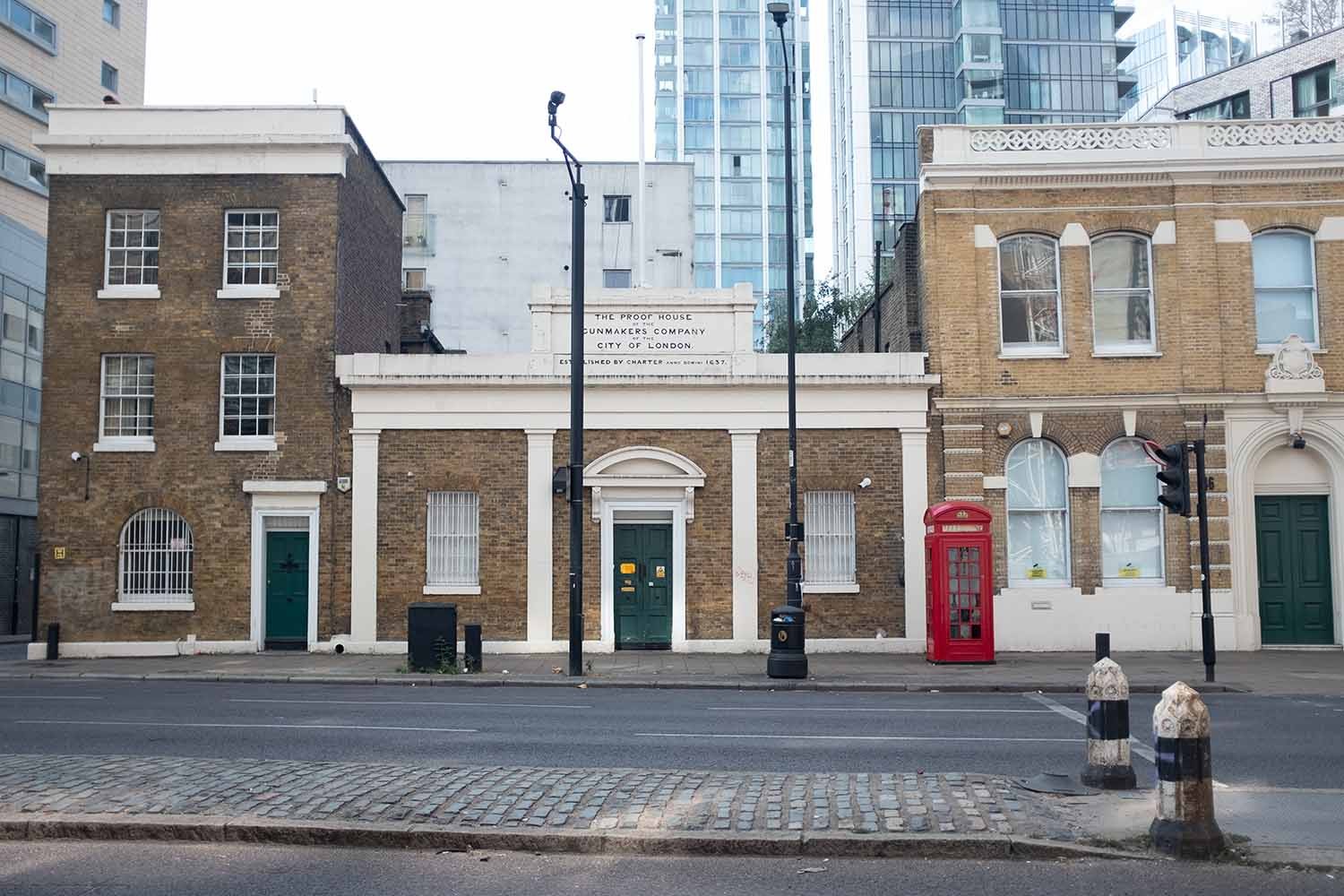
There are two proof houses in England, one in London and one in Birmingham. If you had asked the question one hundred years ago you would have got the same answer.
When the trigger on a gun, rifle, shotgun, pistol, revolver or whatever is pressed, the sensitive detonator in the cartridge sets off the explosive powder in the cartridge, and that ejects or sends the bullet or pellets out with force. As we know, even a small bullet can travel two miles when it is shot out of a barrel.
So as you can imagine, the pressure inside a gun is huge. And the gun and the barrel have got to withstand that pressure over and over again.
A proof house is where firearms and gun barrels are tested, inspected, and stamped with proof marks to show they are safe for use, and it is illegal to sell or transfer a firearm that doesn’t have a valid proof mark.
Proof houses are established by Act of Parliament, and in days gone by, by Royal Charter. The London Proof House is operated by the Worshipful Company of Gunmakers, incorporated by Royal Charter in 1637, and carries out the statutory proof of small arms under the Gun Barrel Proof Acts.
Testing involves firing the guns in a special chamber, to make sure that they are safe, and do not have any defects that causes them to blow up.
When I passed the proof house, I wondered whether the name on the building was current. I was thinking that maybe it was an old sign, maybe the proof house had moved or maybe there weren’t any proof houses any more, So I rang the buzzer and a man came to the door and I asked him. And yes, it is still a proof house. I think I sounded amazed when he told me.
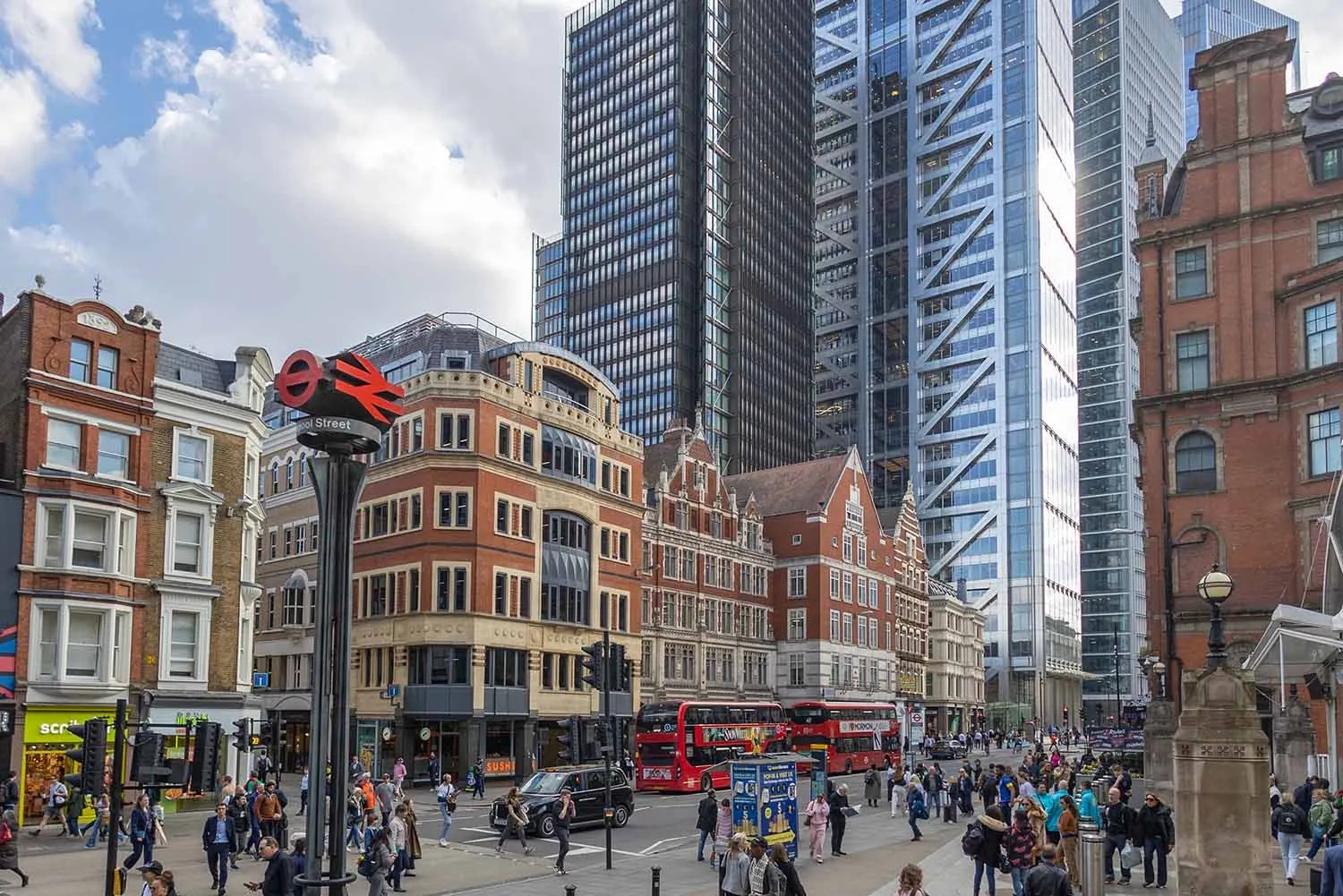
It didn’t strike me at the time, but looking at the photo above on the screen it struck me that the two very tall posts with cameras were placed there specifically because of the nature of the building.
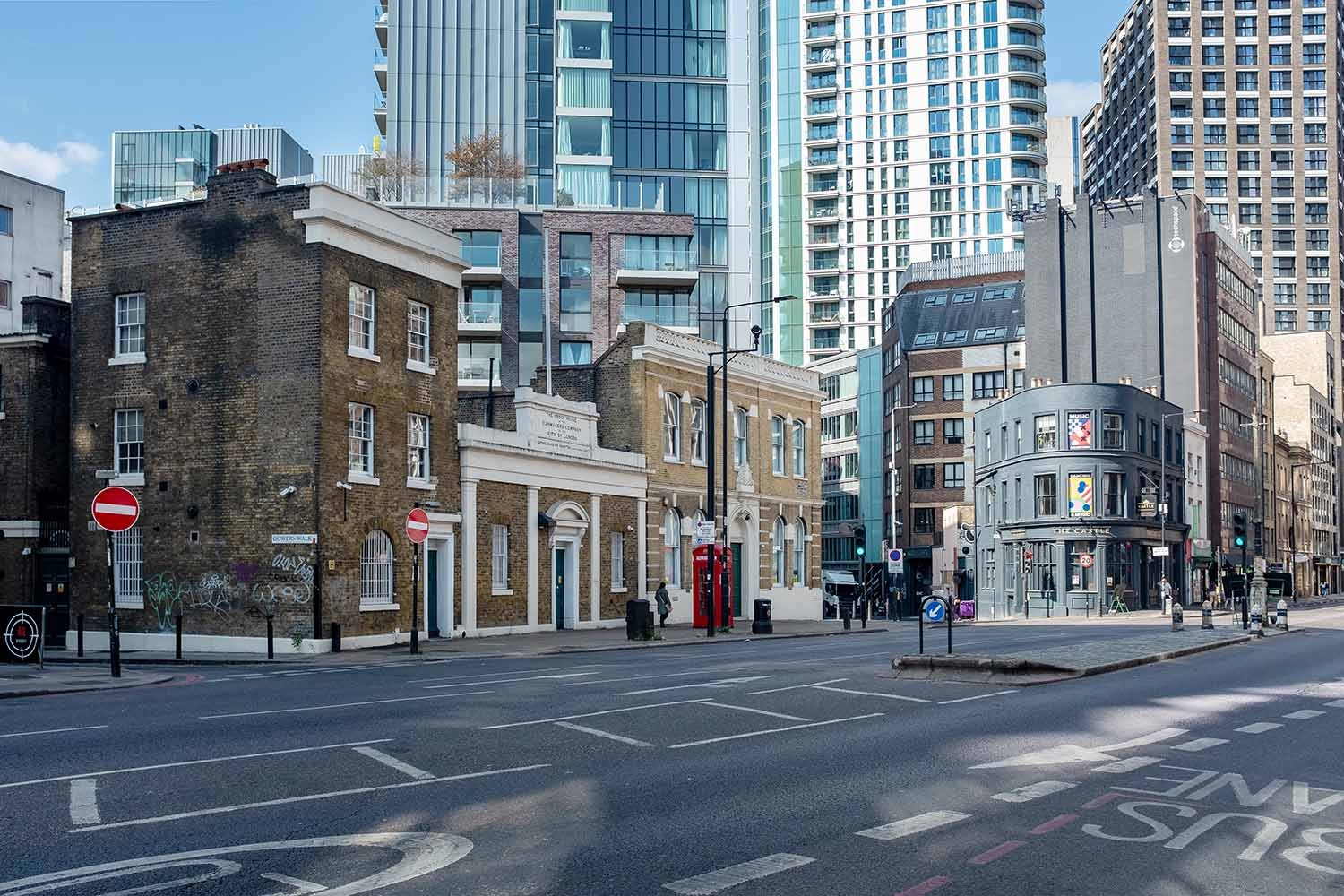
And in the photo below, you can see another example of London being surrounded by skyscrapers like buildings from another planet.
I asked Gemini to compare the physical dimensions and magnification of the EVF in two cameras. One camera has its EVF in the top left corner and the other has the EVF at top centre. in fact, it turns out that the physical dimensions and magnification of the two EVFs is identical, so there is nothing to choose between them. But Gemini added in that the camera with the EVF would be better for a person who is left eye dominant, otherwise the photographer's face would be smushed against the back of the camera.
That's wrong. It would be better for a right eye dominant person because then the whole of the face to the left of the right eye would be away from the camera body.
I told Gemini I thought it was wrong and asked:
Question: Are you sure you have this correct? If the EVF on the A7C II is in the left top corner of the camera back and I put my right eye to the EVF then surely this statement is wrong "the entire camera body sits across your face".
Gemini reassessed, saying "You are completely right, and I had that backwards—thank you for catching that!..." and then went into detail.
So then I asked:
Question: How was it possible for you to have made the 'and I had that backwards' error? This is not a criticism, I am puzzled because the logic was not complex?
And this is the interesting bit, and the reason I am writing this at all. Gemini answered
That is a fair question! The short answer comes down to how my architecture processes Spatial Reasoning and Perspectives versus formal logic.
While the spatial geometry itself was simple—a camera extending to the right with two human eyes spaced a few inches apart—here is why that slip happened:
1. Linguistic Pattern Matching vs. Physical Simulation
I don't actually "see" a physical camera or possess a mental body with a left and right eye. Instead, I generate responses based on patterns learned from vast amounts of text.
In camera review articles, forum discussions, and YouTube transcripts, there is a very common recurring phrase: "Rangefinder-style EVFs let you keep your other eye open to scan your surroundings."
Because that advice is frequently repeated in the context of rangefinder cameras, my internal system pulled that general concept into the explanation. But instead of pausing to physically simulate the exact orientation of a human face against a top-left viewfinder, I filled in the explanation by echoing standard phrasing—which accidentally tied the benefit to the wrong eye.
2. "Left Camera" vs. "Left User" Confusion
Spatial directions are notoriously tricky in text processing because "left" changes depending on the reference frame:
Camera frame: The EVF is on the left side of the camera body (when looking at the back).
Face frame: When a right-eye user looks through it, the camera body extends to the right side of their face.
It’s easy for language models to accidentally flip these reference frames during sentence generation—swapping "left eye" for "right eye"—if the underlying spatial map isn't explicitly calculated relative to the user's nose.
3. The Lack of a "Sanity Check" Step
When humans think, you can easily picture a camera in your hands and tap your own right eye to test the logic in half a second. My generation process runs sequentially—token by token—so unless I am specifically forced to map out coordinate points step-by-step before generating the text, I can fall into logical traps created by common phrasing habits.
It was essentially a classic case of relying on a generalized concept rather than executing a spatial simulation. Pointing it out was helpful—it forced the system to stop, map the geometry relative to the face, and correct the physical layout!
My comment
That's how accidents happen. And it cannot be put down to input error from me or whoever might ask the question about EVF sizes and magnification. It cannot be because of poor phrasing from the questioner. I didn't ask it which EVF placement would suit a particular person. This error arose out of Gemini's giving me its own additional helpful but wrong information.
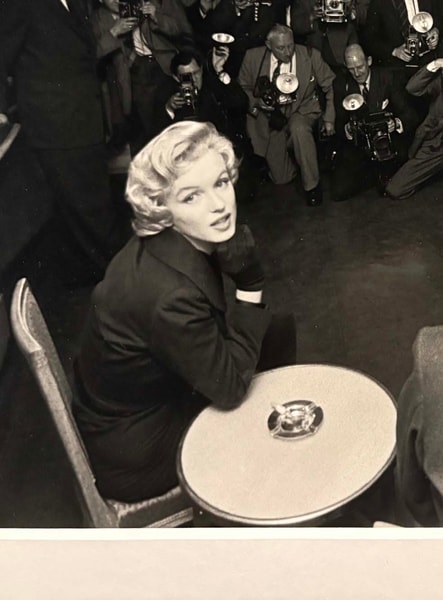
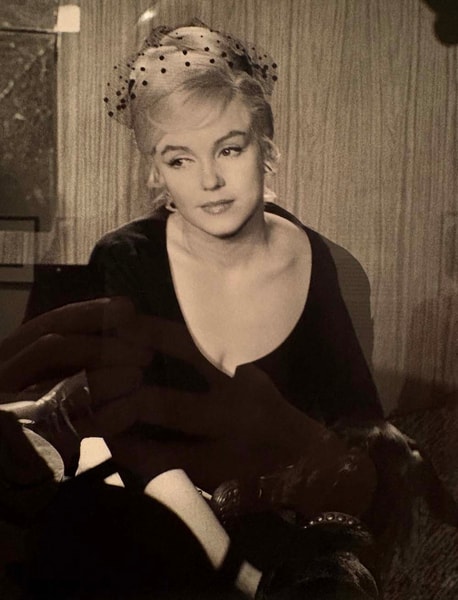
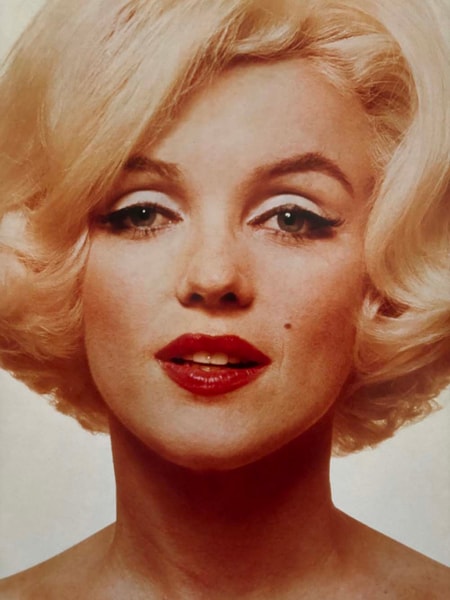
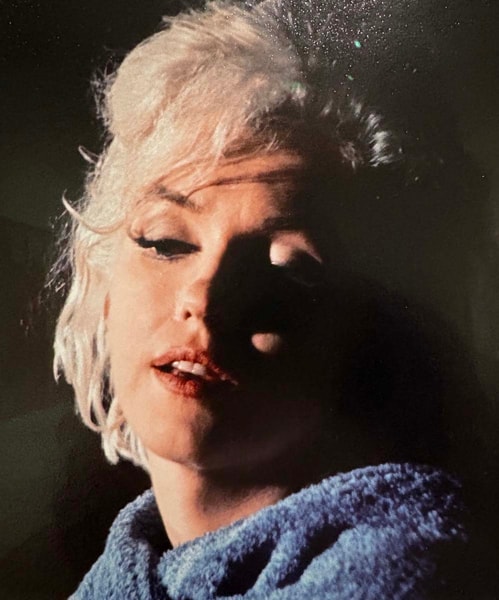
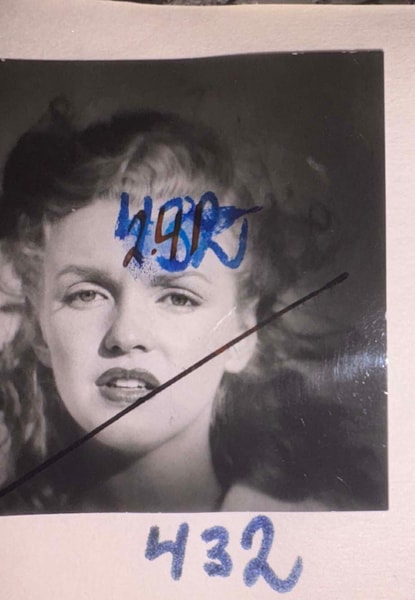
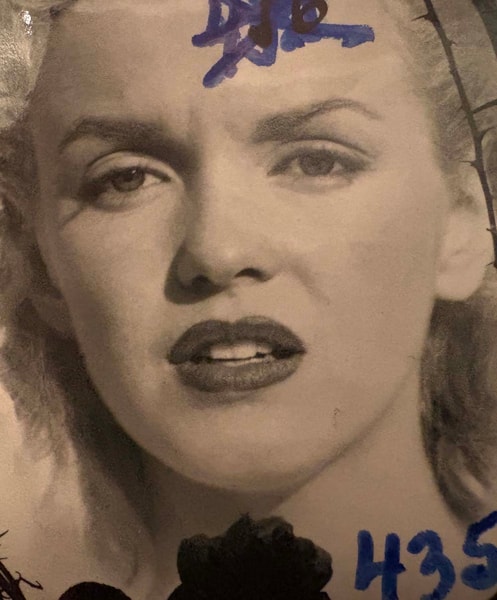
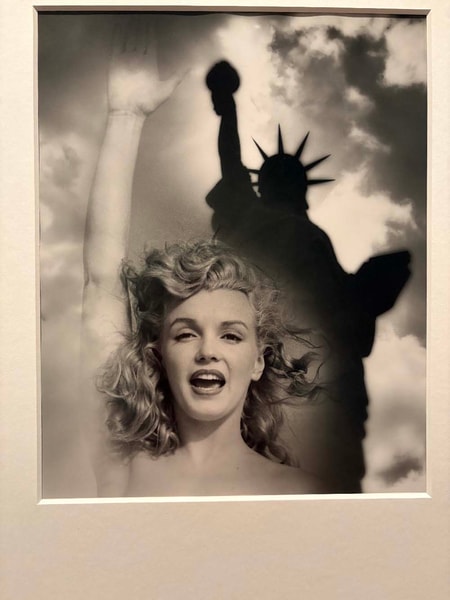
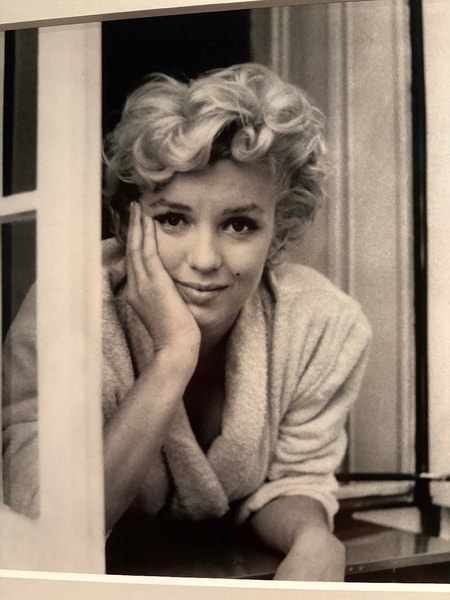
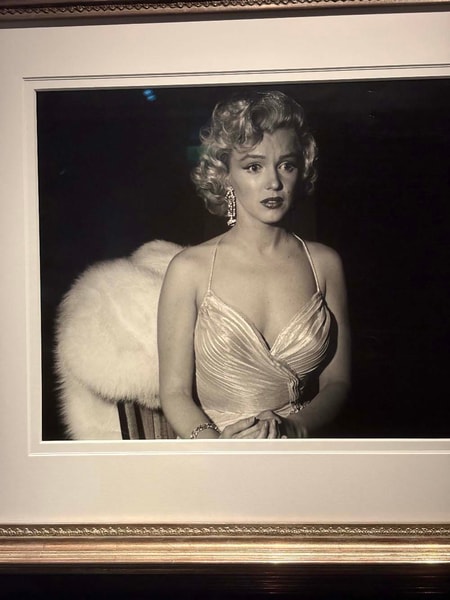
The exhibition at the National Portrait Gallery in London is on now, and ends 6 September 2026. I snapped these with my phone to show the many faces of Marilyn Monroe.
Tamara and I came out of the exhibition feeling positive towards Marilyn and what she gave out to the world.
The texts below are quotes and descriptions from the exhibition.
Marilyn Monroe
With Marilyn, the love affair was not posing for the camera. It was love for her audience – her public – who eventually would see the photo. She loved the public, her fans, more than any one human being.’ Sam Shaw
I now live in my work and in a few relationships with the few people I can really count on. Fame will go by, and, so long, I’ve had you fame. If it goes by, I’ve always known it was fickle. Marilyn Monroe
She was much more of a partner than I’d expected. The first hour or two I had an idea of what I was after. I had all kinds of imagery floating around, and she was picking up on it, performing it all! Bert Stern
Fashion photographer Bert Stern (1929-2013) was commissioned to photograph Marilyn Monroe by Vogue: it was one of the star’s long-held ambitions to appear in the magazine. The session took place in across three days at the Hotel Bel-Air in Los Angeles, where Stern made more than 2,500 images, aided by props such as sheer scarves and jewellery. Music and champagne contributed to the relaxed atmosphere of the sitting.
Reviewing the contact sheets and transparencies, Monroe crossed out several images that she disliked.
The urgency and expressiveness of her interventions rendered the rejected images particularly compelling.
Her apparently harsh critique was the the subject of considerable fascination when they were published after her death, and in the decades since.
Vogue did not consider the nude images suitable for publication, and commissioned a second session focussing on high fashion, which were published in the magazine a month after Monroe’s death, accompanied by a moving tribute from the author Joan Didion.
Life magazine, 3 August 1962 Interview with Marilyn Monroe by Richard Meryman, photographs by Allan Grant Since its publication this article has taken on a particular resonance as Monroe’s final interview, published just days before the news of her death emerged.
Monroe was used to media exploitation, and she urged Meryman to ensure that her words would be taken seriously:
What I really want to say: That what the world really needs is a real feeling of kinship…We are all brothers. Please don’t make me a joke. End the interview with what I believe! Marilyn Monroe
‘She romps, she squeals with delight, she leaps on to the sofa. She puts a flower stem in her mouth, puffing on a daisy as though it were a cigarette. It is an artless, impromptu, high-spirited infectiously gay performance. It will probably end in tears’ Cecil Beaton
George Barris’s joyful photographs of Monroe on Santa Monica beach, taken just days before she died, were initially published in the UK – first in the Daily Mirror and later in Town magazine. In his article, the journalist, David Robinson wrote: When she died, everybody tried to explain her, which would have interested her a lot, because she was all her life trying… to explain herself.’ Terence Pepper Collection
How far does the 'Brain Opioid Theory of Social Attachment' account for all kinds of bonding?
I read the following article entitled 'How church services dull pain' in the magazine The Week.
"Karl Marx famously described religion as the opium of the people. Now, a study has shown that going to church has a similar effect on the body to morphine.
Researchers from Oxford Brookes University asked 265 people in the UK and Brazil how close they felt to other worshippers before and after 24 religious events - ranging from Catholic and Baptist services to Afro-Brazilian rituals.
The participants were also given a standard pain-threshold test to help assess the activation of the brain's "mu-opioid" system, the neural pathway responsible for the body's response to pain, reward and addiction. Its receptors can be activated by external opioids such as morphine, but also natural ones - the endorphins produced by the brain to relieve pain and stress.
The results showed that, after the ritual, the participants felt more connected to one another, and more able to tolerate pain. This doesn't mean that sermons are sedating people, said the team. Instead, these events may have developed to nurture feelings of closeness in large groups in much the same way as social grooming does between pairs of apes. “
From there I searched for the original peer-reviewed paper published in the Proceedings of the Royal Society.
The original paper is the work of Charles, S. J., van Mulukom, V., Dunbar, R., Brown, J. E., Delmonte, R., Maraldi, E., Turner, L., Watts, F., Watts, J., & Farias, M. (2026). Religious rituals in the United Kingdom and Brazil are associated with increased social bonding and pain threshold. Proceedings of the Royal Society B, 293(2073), Article 20261174. DOI: 10.1098/rspb.2026.1174.
The published paper is available free from the University of Oxford's research archive:
The study was pre-registered, meaning the researchers publicly specified their hypotheses and methods before collecting the data, reducing the risk of post hoc statistical fishing. Frankly, I am not sure that this method achieves its objectives. I take 'seek and ye shall find' as a warning as much as an instruction. In plain English, be careful what you search for.
The researchers studied 24 different rituals in the UK and Brazil, including Anglican, Catholic, Methodist and Baptist Christian services, together with Afro-Brazilian Umbanda ceremonies.
There were 265 participants in the final analysis.
Pain threshold was measured using a blood-pressure cuff inflated around the upper arm until the participant reported the pain becoming intolerable. This is a well-established experimental measure.
The authors did not directly measure endorphins or μ-opioid activity in the brain. Instead, they used the increase in pain threshold as an indirect proxy, based on decades of evidence that activation of the endogenous μ-opioid system increases pain tolerance. They are careful to describe this as a proxy rather than a direct measurement.
Social bonding increased by about 5.4%, and positive mood by about 13.1%after the rituals. People whose pain threshold increased the most also tended to report the greatest increase in social bonding.
So we can probably take from this that some people, some personalities are more inclined or susceptible or open (take your choice) to being influenced by the environment.
That begs the question of which environment a person chooses to be influenced by. Being taken to church by one's elders is not the same as wandering and then finding a church one likes.
And what of a person with a bent for biology who finds other biologists fills his or her needs? Or stamp collectors, or train enthusiasts?
Then the fulfilment would have no transcendent elements to it. Plainly, a suitable candidate is found precisely in the place that such people congregate.
A follow-up study should surely attempt to find groups that have no connection to the transcendent, and see how the bonding works there. Football fans are perhaps a good group to start with.
The paper does not claim that religion is literally equivalent to morphine or that church services 'drug' people. Rather, it argues that communal rituals appear to recruit an evolved biological bonding system, which is the same endogenous opioid system involved in social attachment, and which may have enabled humans to maintain cohesion in groups much larger than those possible through one-to-one grooming, as seen in other primates.
This is an evolutionary hypothesis known as the Brain Opioid Theory of Social Attachment.
One important limitation the authors acknowledge is that because they did not directly image the brain or measure endorphin levels, the study demonstrates an association consistent with μ-opioid activation, not definitive proof that the μ-opioid system was the mechanism involved.
We really need some comparative studies. So, I have written to make contact with the authors.
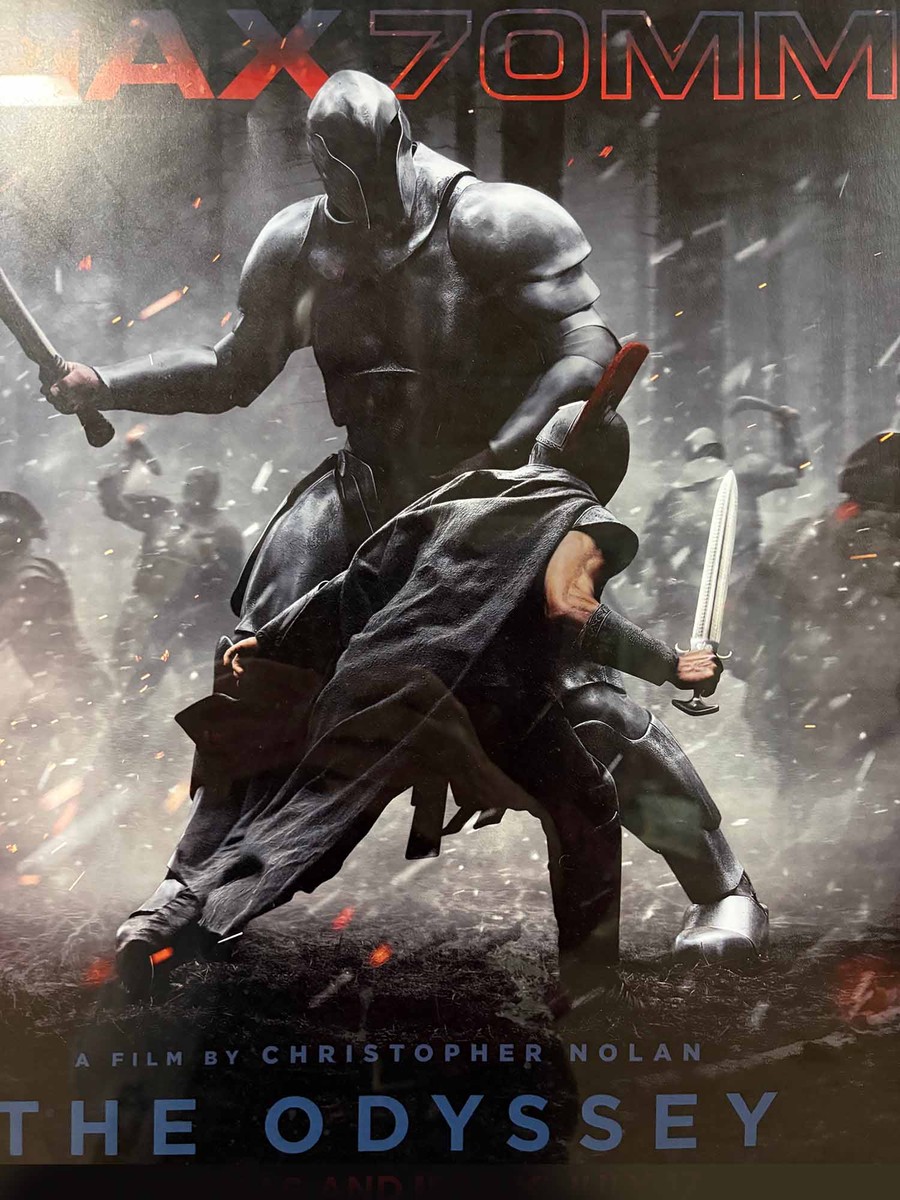
Christopher Nolan's The Odyssey - I suggest you don't read this until you have seen the film.
One fight after another
In an interview published in the Radio Times, Christopher Nolan said that for him the most significant part of the film was the conversation between Odysseus and his wife at the end. He tells her how he is appalled and saddened by the bitter realisation of his own savagery, at who he is and who his men are.
There is a hint of something disturbing all the way through the film, but we don't know what the revelation will be. The hint is that Odysseus is accompanied sporadically by a young woman who plainly only he can see.
When Odysseus is confessing to his wife, there is a long flashback of the sacking of Troy by he and his men.
We see Odysseus and his men cutting their way through the Trojans. And we see him looking at the young woman of his visions, and now she is on her knees begging, as one of his men slaughters her.
We see that this is the beginning of his awakening.
All the way through, Odysseus has been hearing about the dreaded Sea People who bring terror wherever they go. Now he realises it is they who are the Sea People.
The writing was on the wall when Odysseus foils Circe, when she tells him that his men are savages, and deserved to be turned into the pigs they are.
Does Odysseus' recrimination get through to the audience no mater how little they might know of the Odyssey story?
Well if it does, it is undermined by the fact that in the end it is a shoot-em-up. Imagine if there had not been a big fight at the end, and Odysseus had talked the suitors into going home.
No fight, no crescendo, no release? Oh how we would have been disappointed.
And in that case there is no real moral to the tale at all.
Where the film differs from films like Shane or A History Of Violence is that in those stories the hero is reluctant to fight until the fight is the only way forward.
Of course, even there, we are watching for the spectacle, for some version of the Roman arena that will give us the release that makes the experience fulfilling.
Here in the Odyssey, Odysseus doesn't seem to doubt for an instant that the fight is the proper course of action. There's no soul searching about whether it is OK to fight in these circumstances.
Either way though, we get our bloody fulfilling of our bloody lust.
And that is really the bottom line - that for all the recriminations, it is still a fight - the fight, any fight - that we want.
Will we as a species ever not want that?
And
I read an interview with Matt Damon's stunt double. She is very small and she and friends were pitted against big men - and that is how it looked to us in the audience that Odysseus and his men were fighting giants.
As a film, there are a couple of bits that didn't carry me with it. Three times we watch the Greeks running back to the boats to escape some evil. Once is dramatic, three times begins to look more like Monty Python.
The final scene of the crowning of Telemachus and of Odysseus and his wife Penelope sailing off into the sunset and their self-imposed exile was so disjointed and rushed that I had to smile.
As a side note, the film was worth seeing just for long scene where Circe turns the men into pigs.
I asked a friend who knows Classics what he thought. He says that in the original poem all the suitors are killed, and Odysseus has absolutely no problem with killing them all. And it is the suitors' relatives that Odysseus persuades to go home when they come for revenge the following day.
The IRA bombing of the Baltic Exchange might have seemed to the owners of the Exchange to be the end. In fact, it turned out to be the very platform from which the Exchange could reinvent itself and swap excess debt for cash in hand.
The Baltic Exchange is currently located on the 5th floor of 77 Leadenhall Street in the City of London. It takes a lease from WeWork, which lets out flexible workspace across several floors.
Before its move to Leadenhall Street The Baltic Exchange was located at 24–28 St Mary Axe. It operated there from 1903 until the IRA bombing on 10th April 1992, the day after John Major's Conservative Government was re-elected.
24-28 St Mary Axe was a multi-story, Grade II* listed Edwardian building with a large central exchange hall topped off with a glass dome. Thousands of shipbrokers, cargo owners, and charterers came together every day, and to the untrained eye they were standing, wearing suits and talking in pairs and small groups. To the initiated, this was open-outcry' floor trading. Behind them were administrative personnel and staff running the dining rooms and the services for members.
The Baltic Exchange now operates with a team of a few dozen people.
This downsizing was driven first and foremost by a truck loaded with Semtex and fertilisers that exploded and destroyed the building beyond economic repair. It was the biggest explosion on mainland Britain since the Second World War, and the IRA claimed responsibility.
The second driver was something that was happening on a world scale. It was the shift to electronic trading, and by the late 1990s and early 2000s, physical trading floors were basically obsolete. Shipping transactions that were the Baltic Exchange's staple were a prime candidate for the move to digital.
Suddenly, without a physical trading floor to maintain, the Baltic Exchange was free to evolve into an independent market-data and benchmarking agency. Today, it focuses on compiling global shipping indices such as the Baltic Dry Index using data provided by international panels of brokers. And that just needs a small team of analysts and administrators.
Setting aside the loss of life and injuries, the long-term overall gain and loss for the Baltic Exchange worked out better than the owners could have imagined in the immediate aftermath of the bombing.
From a corporate, economic, and operational perspective, the destruction of 24–28 St Mary Axe was an unintended catalyst that forced an acceleration of modernisation and likely saved the institution from a long, costly decline.
Had the St Mary Axe building not been bombed, the Baltic Exchange would have been trapped maintaining an expensive, high-maintenance, listed historic building whose central trading hall was becoming redundant. Selling the land and collecting the insurance freed up capital and relieved the organisation of its huge structural overhead.
Traditional exchanges worldwide spent years resisting electronic trading to protect their physical trading pits. Against that, the Baltic Exchange was forced to transition to digital operations overnight. I have to wonder how long after news of the bombing broke, the owners of the Exchange realised what an opportunity the bombing might be for their economic future.
Operating as a lean, low-overhead market-data provider transformed the Baltic Exchange into an attractive, agile business. In 2016, the Singapore Exchange (SGX) acquired the Baltic Exchange for £87 million. That was an exit for its shareholder-members that would have probably never had happened if it had still been in its Victorian white-elephant headquarters.
After the Baltic Exchange building was demolished, the land was sold. Now St Mary Axe houses the Gherkin, a 41-storey skyscraper built in 2004 and designed by Norman Foster, Its aerodynamic, spiralling design creates a chimney effect that passively regulates the interior climate. It was ground breaking when it was designed, with the building using roughly half the energy of standard office towers of a similar size.
The problem is that rectangles use space more economically, and every retrofitting upgrade to the Gherkin has to be expensively tailored to the spirals and circles of the building.
Now new rectangular buildings tower over everything and everyone, testaments to power.
That's not exactly true. Nikon colours are rich and realistic, particularly the later full frame models - and so are photos from the little Ricoh GR III. Maybe the GR II is the same, but I haven't tried it.
And no camera system likes harsh, contrasty light.
But for something like this room in the National Gallery and a quick shot that balances colour - you'd have to go a ways to do better than Fuji.
Fuji X100F - 1/60th at f2 and ISO 800
In case you are unfamiliar with Pagecord - click the photo to see it bigger.
Of all the sensations that a person might feel, feeling inside of something or outside of something is the strongest and most central because it defines the person.
How to explain it in a way that is universal and can be recognised by everyone?
Longing
Longing indicates an as yet unsatisfied desire. If it is not strong it is not really a desire. We have many desires that are desires in name only. Our attachment to them is partial and relatively unimportant. We measure importance on a simple scale of how much does my continued existence depend upon it?
Desires that are desires in name only are like turning over stones on a beach. We have some small expectation of being rewarded or surprised. But we have also many other thoughts on our minds. While turning over stones, looking for something good, we can also be asking in our minds, how far is it back to the car; will the water under the soles of my shoes get in and soak my feet; is the weather turning and should I make a move soon.
Then the suppressed questions that bother a person but which are so present that they are felt like a vague distaste or and itch. How much am I enjoying myself; to what extent am I filling in time like all the innumerable times that I have filled in time?
A real desire concentrates the mind and the emotions so that the object of the desire is the most important thing in existence.
In that state we know that everything will change for the worse if the attempt to achieve the desire is abandoned.
Being committed to achieving the desire is as important as achieving it.
The problem, and there is a problem, is to discern the desire that is so fulfilling that it will not be satiated once it is realised.
After all, we know that many desires that seemed important turn out to disappear with the wind once they are realised.
This is where the notion of inside and outside that is the title of this piece, becomes clearer.
A lot of moving closer to the goal is based on faith. Knowledge and experience are there, but until a person has rebuilt themself from the inside out and stands on his or her own two feet, fully committed to the goal before them because they have tasted what it feels like standing there and experiencing, then they are not fully experiencing.
That is not to say that they have nothing.
They have sparks of understanding and feeling. They are more committed than they were. With every step they are more committed than they were But there is a world of difference between that, and of being rebuilt from the ground up. Then it is true to say that the desire is inside them and they are inside the desire, inside to the point the person and the desire and the goal are one.
Who doesn't want it? In this 'so so' life where things are 'kind of interesting'?
And who doesn't fear it because of what he feels he may have to leave, to give up?
What is at risk here? Independence?
Let's detour for a while and come around to answer the question of what is at risk?
Looking at human progress, the pace of change has increased and increased ever more quickly. The changes in the past hundred years are phenomenal compared to the previous hundred years, and to the hundred years before that. And when we go back only a few steps it seems like everything was static for generation after generation.
After the horrors of the Second World War, the European Powers declared basic human rights. The very fact that they felt they had to, was to counter the 'I was only following orders' defence of those on trial for war crimes. Under this new rule, a person could not claim that they had to follow someone else when to do so was against their conscience.
At the same time, over the next decades up to the present it has become at the very least unfashionable to claim authority over another human being. Of course we have laws and we give authority to judges, and policemen, and tax inspectors, and driving test examiners. But outside of this, each person is his or her own moral conscience.
Along with that, God and a transcendent or higher authority is no longer there. For some it is an absurd universe that just 'exists'. For others, scientists, what we don't know today we will know tomorrow.
Whichever way we look at it, we know that in this modern world, for those who do not acknowledge a higher authority, then any claim to a higher authority is seen as oppresive and esentially meaningless.
So now, to circle back to the question of what is at risk when a person and their desire and the goal become one, what is at risk is the individual's claim to be king.
It is so very convenient for a person to be able to deny a higher authority because to do so is an almost perfect mask for selfishness.
Don't try this at home
Don't try this, not in actuality. Just imagine you hold your breath for fifteen minutes.
You would be dead.
You are not king and nor am I. We are totally and completely dependent on the environment around us.
So where do we get the idea that we are top of the totem pole?
It is the voice inside that tells us that we are the king, that we are the most precious, that you and you alone must be and will be at the head of the line for whatever is being handed out.
And if we have concealed that under a veneer of civility, it is because we know that this is the way to achieve the most harmony among people with least risk to ourselves. We have learned to be more clever in achieving our objectives.
And underneath the harmony, if harmony is shattered, there is terrifying destruction. We know it is there. In some parts of the world the illusion of peace holds and in other places the reality of aggression and destruction has come marching in, breaking up everything in its path. Then we see that peace is precious but the peace that can be broken is not built on capable enough foundations.
What is at risk in fulfilling a desire where we can truly say that the person, the desire, and the goal are one? it is selfishness.
That truth is contained in 'Love your neighbour as yourself'
Who is your neighbour? He or she is the person who agrees that this is the way to open a door to a shared reality that is effectively the Garden of Eden.
It is not 'what is mine is mine and I will respect what is yours is yours'. That has never worked. Sooner or later by luck or skill the table will be tilted in one person's favour and soon the more favoured will rule the other.
What the rule 'Love your neighbour as yourself' is, is the opposite of this. It is that what is yours is yours and what is mine is yours because I care for your welfare as much as my own and as much as you do. And you do the same for me.
And if we gather together then the flame of desire will be stronger than that of any one of us and we can all stand together like a rope made of many strings.
The most pressing need for a person who feels that need, that desire, is to find like-minded people and put himself in that environment.
In the days when communities were close knit and stable for generations, how did individuals view themselves?
What was like when people lived in villages and grew up together in a community?
In that environment people could get as close to others in the community as with their own family. Maybe people thought of everyone as a big extended family.
They would notice strangers immediately, and how they affected the balance of things.
Within living memory we have seen how individual expression has ballooned, And everything is getting faster and faster.
There was a time when change was not expected: Now we expect change.
Change and varieties of expression are part of us now.
All these varieties of expression fill a need and a desire or they wouldn't have taken off like they have.
So what is it like to be an individual now? With so many billions of people on the planet, it is easy to say that many people are redundant, irrelevant. They are not needed to keep the species going or to develop new ideas or methods or technologies.
At least for the time being, they are not needed despite falling birth rates below the replacement rate worldwide.
In fact the current occupants of the planet are needed mostly so that they continue to buy things.
For the person in that position it is not a very satisfying feeling
Add to that the feeling that things are getting worse, not better generally.
People see that money is getting tighter and they think maybe the planet is going down the drain. Or at least things are not getting better for most people, even if a few are doing unbelievably well.
It is getting tougher for people to find meaning in their lives.
How do people find meaning in their lives when they feel irrelevant?
Or to put it the other way around, and it really is a question - what is the origin of the need to feel relevant, meaningful, and significant?
The psychologist Viktor Frankl says that the meaning of life is in how a person responds to life as it comes to meet them.
That may be so. But in a crowded world the bottom can get knocked out of a person's will to act responsibly. They might feel that it simply doesn't matter how they react to life, the whole structure is an irrelevant to them.
It gets worse. How does a person even know which of their responses are truly theirs? We are all influenced by our environment, and what is to say that the environment is working for us and not against us?
Frankl also said that meaning - as in 'this means something to me' must be found and cannot be given (much less imposed) from outside.
Who doesn't recognise the fear of losing one's way - of being swept up in a convincing story and then being attached to a cause where attachment fills a need greater than an examination of the truth.
Eric Hoffer writes about this in The True Believer, which is well worth reading.
One thing is certain is that when man lacks the support of the family, the community, the village - he is on his own.
Without the village to rely on, we have to live with uncertainty, and in its nature uncertainty is unpalatable.
That's where a more fundamental science of connection enters.
Are you that guy? When there's a group of people and they are relaxing and talking about something, do you feel a distance between you and them? Do you feel that somehow madness has crept into the room because it's all nonsense? Does what they are saying and the way they are saying it simply not interest you?
If you try to get a bit deeper into a conversation do you feel like you are suddenly on the gangplank over the water and the others are back on the ship? Are you basically always disatisfied and looking for something to really fire you up?
Dissatisfaction is the opposite of self-satisfaction. Dissatisfaction is a deficiency, a need. Is it being met?
Does sex interest you? Does money interest you? Yes of course.
But beyond those is there a void?
Does spiritual talk grab your interest but you are wary and you don't know what to do with it?
If you are that guy, try authentic Kabbalah, guaranteed to confuse and annoy you and put you through the wringer. Over and over again. But come out fresh and for the first time - you understand what happiness is.
Transcend worlds, climb ladders.
You know it's the real deal when the thing that changes is YOU.
"This course is a journey into understanding life and how all its pieces come together. It aims to give you genuine, scientific answers to all the questions you've ever had about life, and most importantly, what you can do about it. Also, it aims to give you tools to upgrade the way you think about and perceive reality, essential knowledge about your nature and how to restore its purpose, and help you attain self-realization."
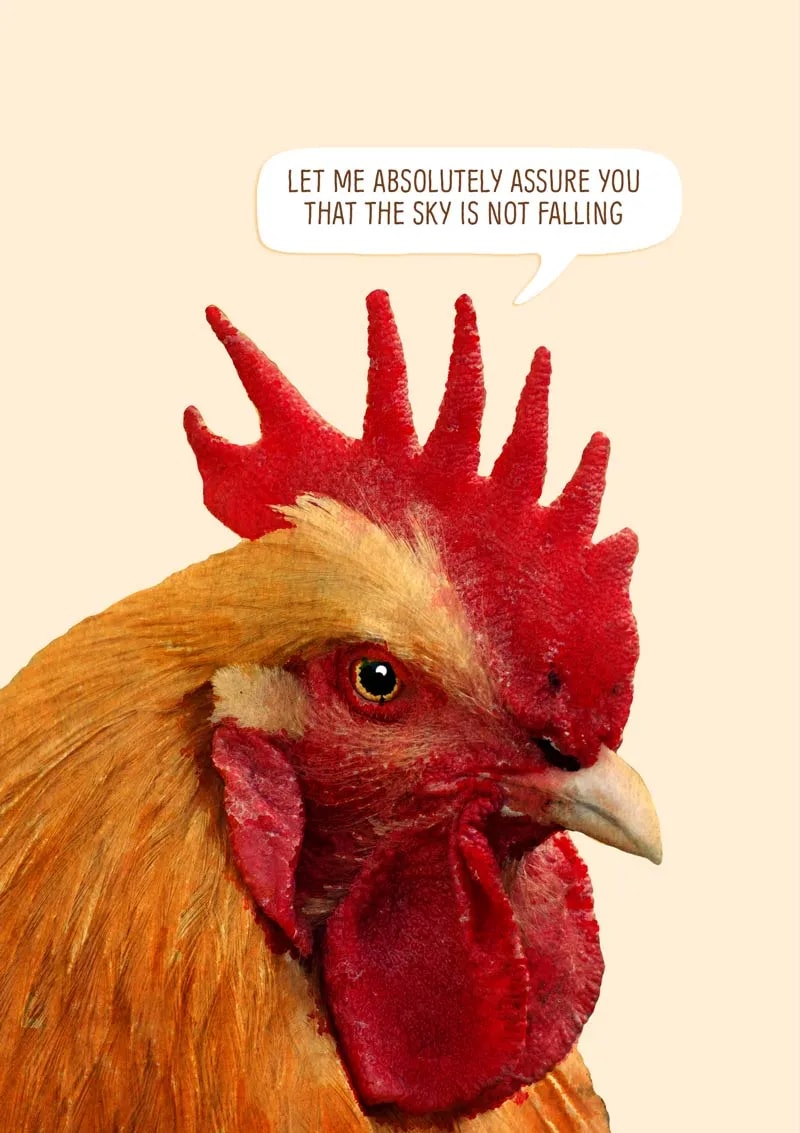
But of course the sky is falling. The ground upon which we stand and upon which we rely for our peace of min, is shifting under our feet. The Earth has been pushed and pulled and now it is responding in kind.
This is the mindset we have in the early part of the 21st century. And naturally, it only adds to the sense of insecurity and unease that people throughout the world are feeling.
Certainly the threat of disaster will push people along to trying to avert it. And some people think that is a laudable way to get people to solve the problem of climate change.
The problem in that is that the argument implies that all the polluting we do is OK or at least not as important as climate change and that as long as the consequence of our actions is that we do not cause climate change, and famine and total societal breakdown, etc. – then we can keep on polluting the way we do.
And if you don’t think that way, there are plenty of people who do.
I Have A Different Argument
I have a different argument on the ‘why’ of what we should do. What I mean is that there may be a bit of wiggle room for argument about exactly what effect that man is having on global warming and how the planet will respond in the medium or long term.
Climate scientists constantly revise their models because the planet is more complex than the models of it and it keeps ‘outwitting’ the those who model it.
But what is not in doubt is that we are destroying the Earth and ourselves with pollution.
How many pieces of plastic are in the seas, in your body?
So don’t let arguments about global warming deflect from the fact that we should clean up the mess we are making irrespective of climate change.
And stop making more mess.
To stop polluting the planet doesn’t or shouldn’t need the justification that we are facing climate disaster.
Think about it. A tree does not need to justify its existence. We, however, do need to justify destroying it, whether or not at some point down the road the fallen tree will get its innocent revenge by releasing CO2 and killing the planet.
Careful housekeeping – looking after the place and not treating it like a rubbish tip – is simply good manners and a show of gratitude for the benefits we receive from the place we live.
We don't expect things to stay the same. We expect change. We expect changes to come faster and faster.
We think we're probably not too far from a huge shift in technology that will bring about something really big. It could be anything - rocket propulsion, energy supply, ways of communicating.
At the same time, we don’t think we have an assuredly better future.
We think the future may well be worse than today. We know that a lot of it comes from waste, negligence, and greed, because that's the way things are.
We think that untangling the mess will fail because for every person who wants to solve the problem there are those who have a vested interest in keeping things the way they are. And they are more powerful than those who want to correct things.
And even if those elusive advances in technology happen, we question whether they will help us. We already wonder about that with AI.
Do we have enough time?
Asteroid 99942 Apophis will pass within 32,000 km of Earth on April 13, 2029. That's closer than geostationary satellites.
If you are in the right spot when it passes, you will be able to see it with the naked eye.
The diameter of the Earth is about 13,000 km, so 99942 Apophis will pass about at a distance that is just two-and-a-bit times the diameter of the Earth.
That's pretty close.
In 2004 when 99942 Apophis was first seen, observers thought there was a high probability it would hit Earth.
Now NASA thinks there is no risk of impact for at least a hundred years.
That's not very comforting. A hundred years is not very long when we are talking about The End.
Let's say that in seventy years the impact was judged certain, with no way to avoid it.
Can you imagine how that would knock the wind out of people's sails? How much would people care about carrying on as before - making money, aiming for success, paying the mortgage?
How would authorities impose order when every year was bringing The End nearer?
99942 Apophis is named after Apophis, the Egyptian god of chaos and destruction.
Someone has a sense of humour.
OK, Forget The Catastrophe
OK, let's assume 99942 Apophis isn't going to hit - not in one hundred years and not ever.
That's a relief.
Now think back to the days when communities were closeknit and stable for generations, how did individuals view themselves?
What was it like when whole villages grew up together and made decisions together in a community? And not decisions like whether to paint the town hall, but life and death decisions about crops and animals and defences and disease.
Everyone was part of their extended family. If anyone needed anything then they would turn to the community The State would be far-off and remote.
They would be cautious about strangers because they threatened the balance of things.
Within living memory we have seen how the individual and individual expression have ballooned like crazy.
In the great plagues of Europe, death and disease increased the price of labour and adventurers returned from foreign countries and made themselves rich, and everyone couldn’t wait to run to the city and be anonymous.
So what is it like to be an individual now? With billions of people on the planet, it is easy to say that most people are redundant, irrelevant. They are not needed to keep the species going or to develop new ideas or technologies.
At least for the time being, most people are not needed, despite falling birth rates being at or below the replacement rate worldwide.
In fact the current occupants of the planet are needed mostly so that they continue to buy things.
How satisfying is it to think that? Better not to think about it at all.
But if a person does, where do they find meaning in their lives when they are irrelevant?
In a crowded world the bottom can get knocked out of a person's will to act responsibly. They might feel that it simply doesn't matter how they react to life, the whole structure is irrelevant to them.
It gets worse. How does a person even know which of their responses are truly theirs?
We are all influenced by our environment, and what is to say that the environment is working for us and not against us?
We fear of losing our way, of being swept up in a convincing story, of being attached to a false cause?
When communities cease to exist, when man doesn't have the support of the family, the community, the village, then he is on his own.
We have to live with uncertainty, and uncertainty is unpalatable.
And with the loss of religion, any claim to a higher authority is looked at as meaningless, or oppressive, and the ultimate arbiter becomes the individual himself.
The message of the Second World War was that a man cannot absolve himself of responsibility for his lack of humanity. He cannot say in his defence that he was just following orders.
Within the law, the individual is king. the individual decides what is right and wrong.
How convenient that the individual can appeal to his own conscience above all other claims to authority.
Is it anything more than a convenient smokescreen, a mask for selfishness?
Selfishness means others have no intrinsic value. They are only valued for what they can do for us.
There is no downside in trying to ignite a spark of caring for everything into a flame. It's an experiment that needs other people who feel similarly; people that a man aspires to be like. If he finds them he might be able to find a bigger meaning.
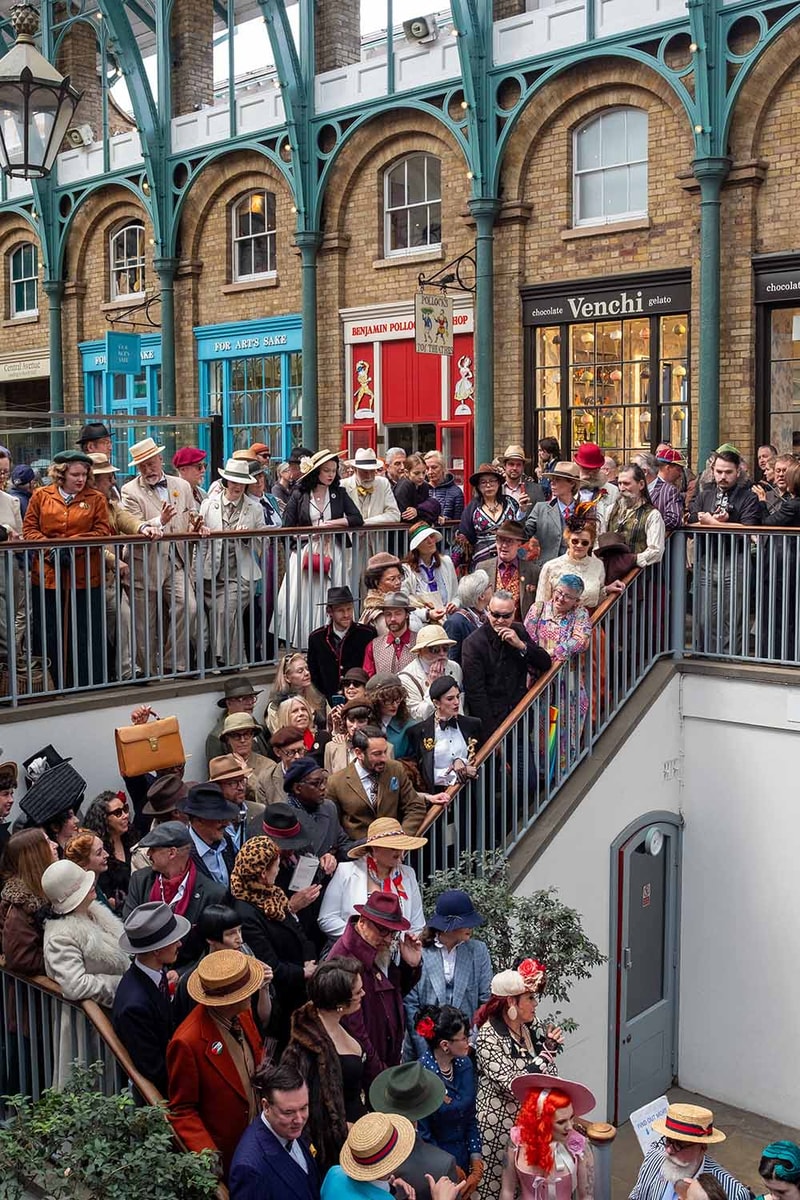
It is not surprising. The archetype flaneur is a solitary observer of the human condition.
What would happen if two flaneur dressed so similarly that they might be twins, and then met by chance?
They would laugh together because they are flaneurs, and the detached observer has a sense of humour.
Theodor Herzl wrote for a newspaper – elegant essays observing society – until the antisemitism that began in France and spread to Germany took him on a different course.
Oscar Wilde was the quintessential flaneur in his observations and in his dress. And he says so himself.
When he was sentenced to two years hard labour for gross indecency, and was transferred to Reading Gaol, he wrote De Profundis, a letter to the young man who was a trigger to his downfall.
…The gods had given me almost everything. But I let myself be lured into long spells of senseless and sensual ease. I amused myself with being a flâneur, a dandy, a man of fashion. I surrounded myself with the smaller natures and the meaner minds. I became the spendthrift of my own genius, and to waste an eternal youth gave me a curious joy. Tired of being on the heights, I deliberately went to the depths in the search for new sensation. What the paradox was to me in the sphere of thought, perversity became to me in the sphere of passion.
Desire, at the end, was a malady, or a madness, or both. I grew careless of the lives of others. I took pleasure where it pleased me, and passed on. I forgot that every little action of the common day makes or unmakes character, and that therefore what one has done in the secret chamber one has some day to cry aloud on the housetop. I ceased to be lord over myself. I was no longer the captain of my soul, and did not know it…
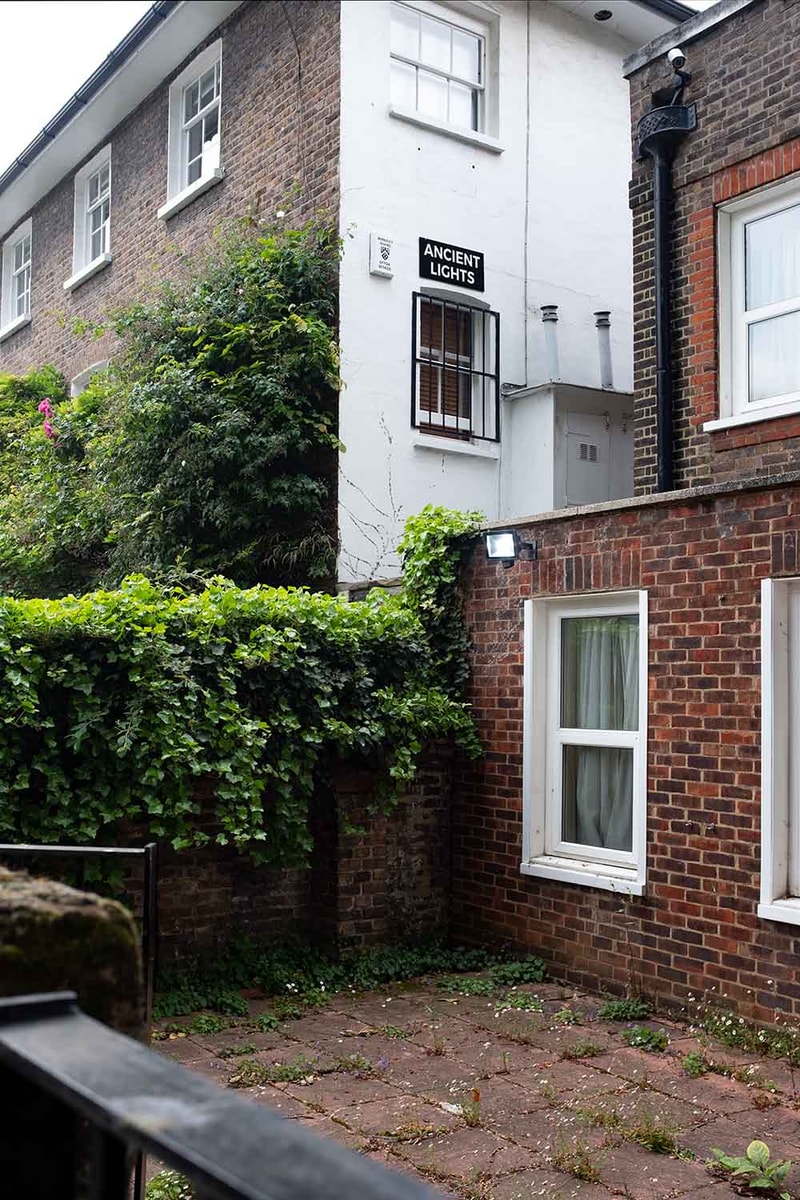
'Ancient lights' is a doctrine in English property law providing a right to light, where a property owner who has enjoyed natural light through a window for at least 20 years can legally prevent neighbours from blocking it. Formalised by the Prescription Act 1832, this law ensures 'adequate illumination,' often marked by signs on older buildings to warn developers.
You can see the sign above the window on the white flank wall of the building here.
The big question is how to measure the adequacy of illumination to determine whether a proposed obstruction compromises 'adequate illumination?' There is a science and a convention with rules that enable professionals to calculate to what extent a building may have its illumination compromised. The calculations involve the angle of the sun at different times of the year, the height and distance of proposed adjoining buildings, etc.
When submitting plans for a development to the Local Authority, where the development overlooks existing buildings, you will sometimes see a document that sets out the what and the why of how the proposal does not compromise light, whether an 'Ancient lights' sign has been displayed or not.
They say a person can be themselves but they cannot see themselves. In fact, they say that there is no certainty that a person can be themselves. It depends on the environment in which they operate.
And for that, they say that many people do not choose their environment. They find themselves in an environment and go along with it, making choices that are not really theirs and not really being themselves. Perhaps not ever.
They settle at a certain level or give up and switch off. The light goes out of their eyes and they stop seeing how they are struggling inside. They would move if someone or something opened the door for them and if they had enough determination. But the doors are closed, too heavy to move. So they don't.
How can we even live if we don't make all the mistakes and lives that make up a life lived?