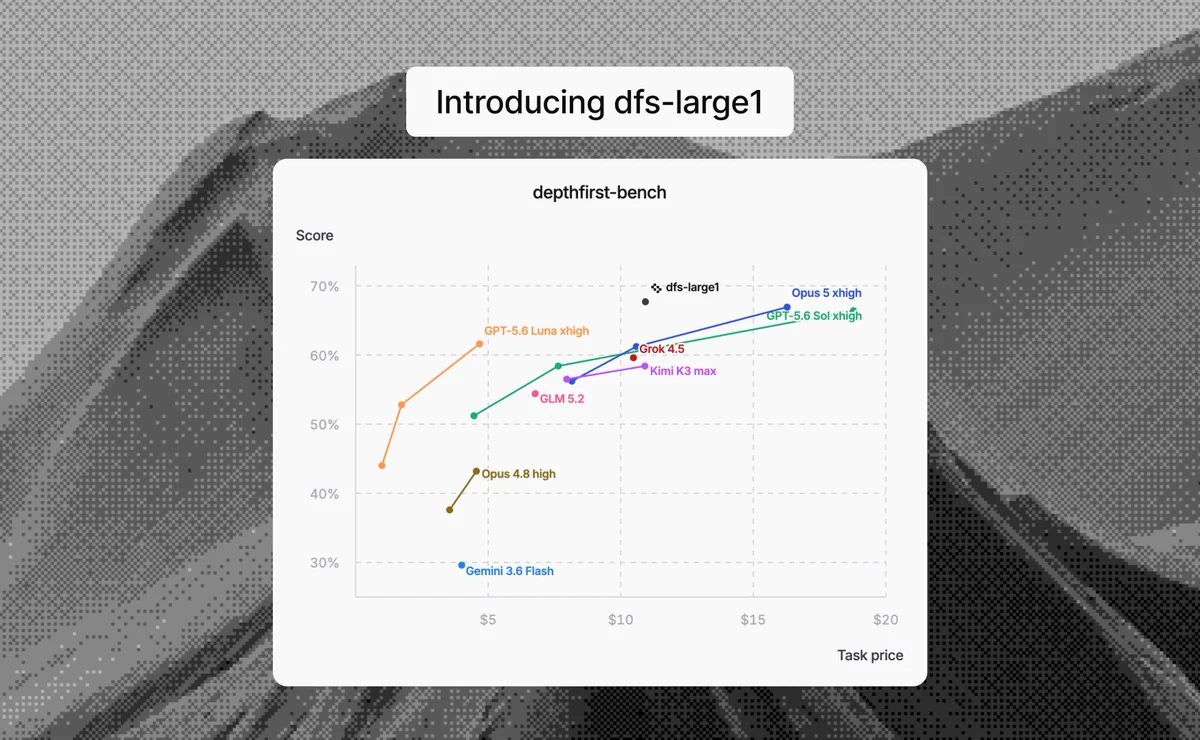
Today we are announcing dfbench, a cybersecurity benchmark we developed to evaluate frontier models and agentic systems.
A few weeks ago we posted about how it is time to graduate from CyberGym Level 1 as the primary measure of cyber capability, in favor of newer benchmarks.
The Operating System for Modern Security
- Introducing Threat Model: living security artifacts that capture each repository’s architecture, trust boundaries, attacker-controlled inputs, and assumptions so vulnerability discovery reflects how your application actually works. Most security tools start every finding from
- We’re a founding member of the Open Secure AI Alliance alongside @nvidia and other industry leaders working to preserve access to open-weight models for security. Restricting access to open-weight models would make defenders dependent on a small number of closed providers. It
- Introducing dfs-large1, our new cybersecurity model achieving best-in-class performance on vulnerability detection tasks. Only a handful of companies outside the frontier AI labs have achieved this in other domains, and we’re proud to be the first to do so in security. Thank youToday we're announcing dfs-large1, our newest cybersecurity model that achieves best-in-class performance on vulnerability detection tasks. Besides frontier AI labs, only a handful of companies have built specialized models that reach the state of the art in their domain. We're
- Being able to evaluate model capabilities is fundamental when new models are released at this pace, and when the models you use impact outcomes and margins. Benchmarks tend to saturate as companies overfit their models and harnesses to them. When that happens, higher scores areIt is time for the security industry to graduate from CyberGym Level 1. CyberGym has been one of the most impactful cybersecurity benchmarks since its launch in June 2025. Compared to prior benchmarks, it represented a jump in scale and a step in the right direction for the