1. X
  2. Synthetic Data Vault
Log inSign up
Synthetic Data Vault
260 posts
Synthetic Data Vault profile banner
user avatar

Synthetic Data Vault

@sdv_dev
Join our growing ecosystem of #opensource libraries & resources for generating #SyntheticData for different data modalities. Created at @lab_dai, MIT.
Cambridge, MA
sdv.dev
Joined September 2020
46
Following
379
Followers
RepliesRepliesMediaMedia
  • Pinned
    user avatar
    Synthetic Data Vault
    @sdv_dev
    Dec 8, 2023
    Today, DataCebo launched SDV Enterprise & raised $8.5M in VC. SDV Enterprise is a commercial model of the source-available Synthetic Data Vault (SDV). It makes it easy to develop, manage & deploy #generativeAI models for apps when real data is limited. bit.ly/4a8eIgF

    DataCebo co-founders
  • user avatar
    Synthetic Data Vault
    @sdv_dev
    Mar 19, 2025
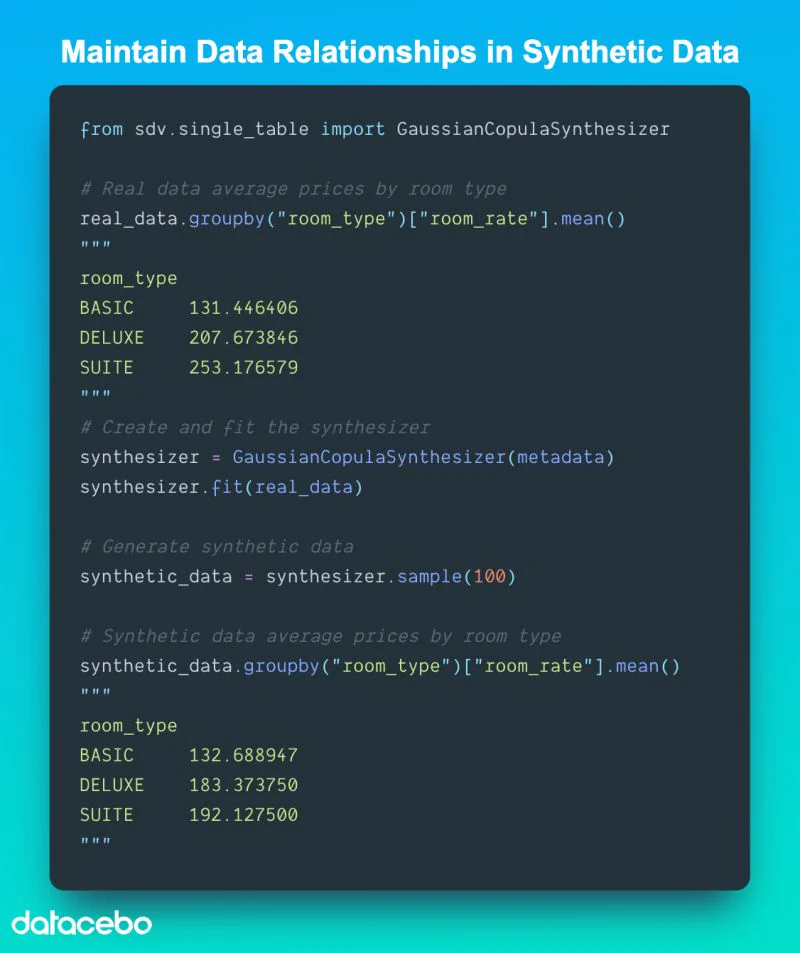
    Generating synthetic data that maintains realistic relationships between columns is crucial for testing and analysis. Traditional random generation approaches often create unrealistic patterns, like luxury hotel rooms priced cheaper than basic rooms. GaussianCopulaSynthesizer
    Image
  • user avatar
    Synthetic Data Vault
    @sdv_dev
    Mar 18, 2025
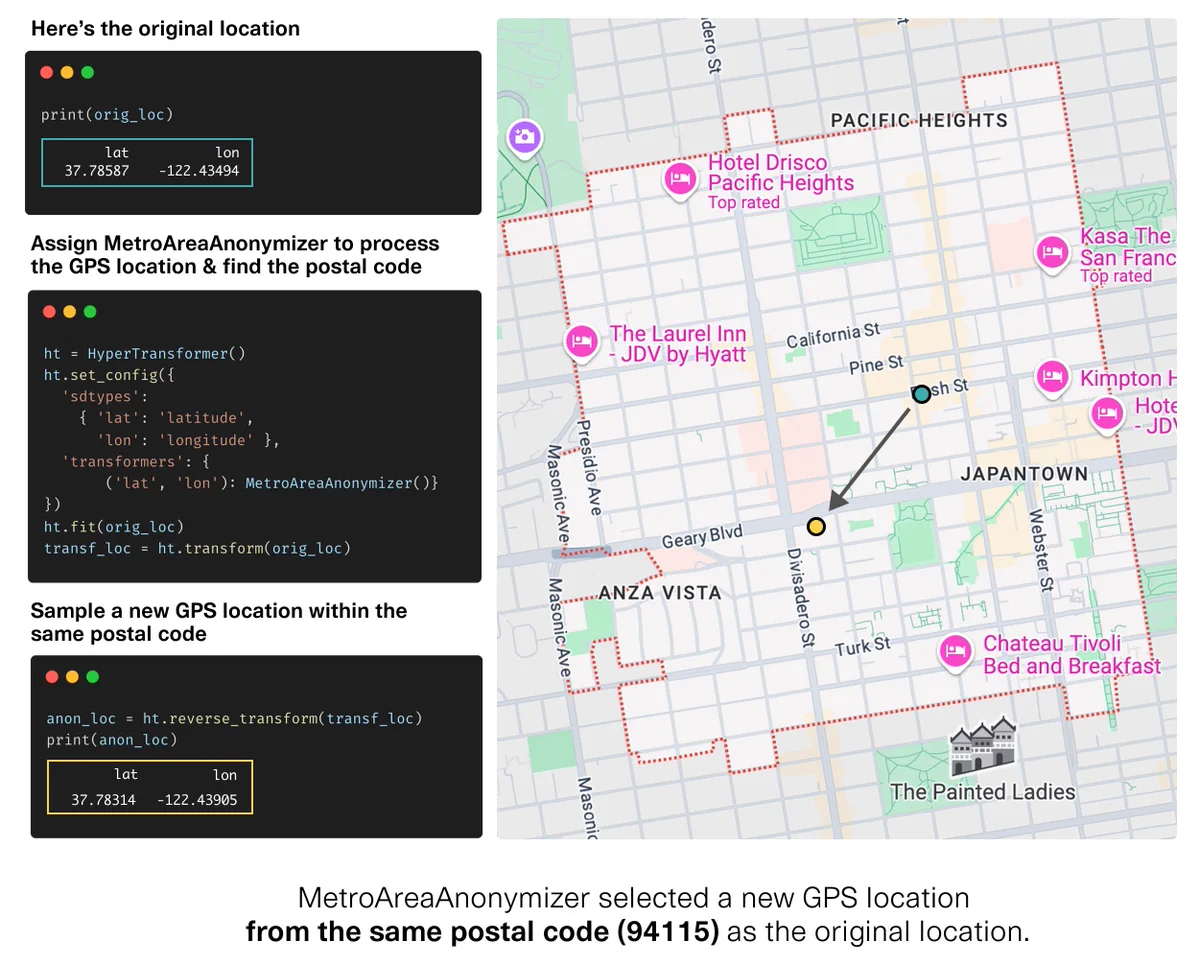
    Many businesses collect and store their customers’ GPS locations to help improve their products. But GPS locations may contain precise locations of people’s homes. Businesses are sensitive to sharing this data even to internal teams, as it may reveal private information about
    Image
  • user avatar
    Synthetic Data Vault
    @sdv_dev
    Mar 13, 2025
    Synthetic tabular data can help you test software applications because it resembles the key properties and patterns in your real data. Consider a news publication that wants to use synthetic data to test a new software change for their mobile application before it rolls out to
    Image
  • user avatar
    Synthetic Data Vault
    @sdv_dev
    Mar 6, 2025
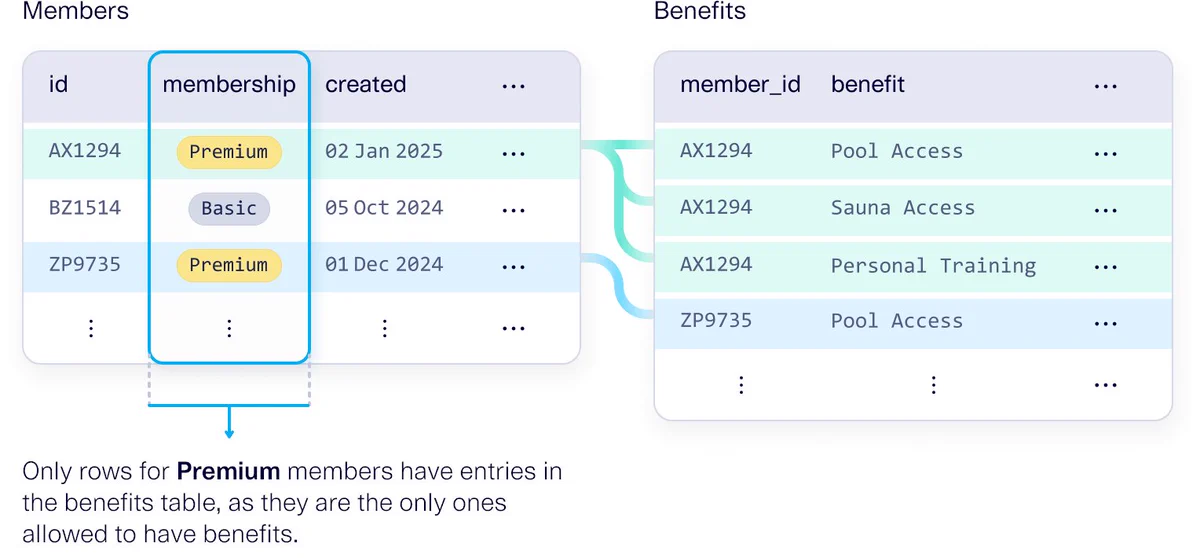
    One challenge in training AI models to generate valid synthetic data is teaching them to mimic the rules-based business logic that exist in real datasets. Let’s explore an example of one such rule. The one-to-many relationship is a common pattern in database schemas. An
    Image

Log in or sign up for X

See what’s happening and join the conversation

Continue with phone
or
Log in with username or email
Terms·Privacy·Cookies·Accessibility·Ads Info·© 2026 X Corp.
Advertisement
Advertisement