That Deadly Moment When You Stopped Learning

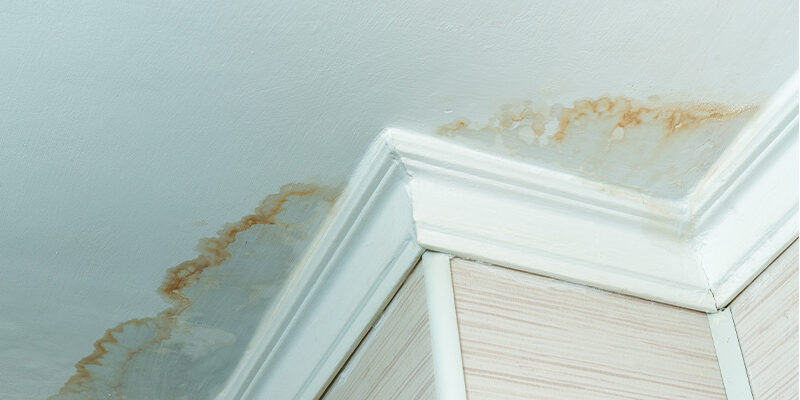
Every restoration pro has watched clean water go bad. A category one loss starts out “clean.” Nobody contaminates it. Nobody has to. It just sits there in a warm building for a couple of days, and time does the rest. By the time anyone checks it again, it is no longer a category one.
Every carpet cleaner has left a job looking perfect. The spot is gone, the pile stands back up, and the after photo goes on the website. Then a client calls a few weeks later. Nobody spilled anything on that carpet, and nobody walked across it in work boots. The spot is just back, more stubborn than before. Time did all the work.
What an owner knows about this trade behaves the same way. It does not stay accurate just because it was learned once, even if it was learned well.
Stopping does not feel like stopping
That is what makes this so hard to catch. An owner who solved the difficult problems years ago does not experience the moment learning turns into confirmation. New information gets accepted when it agrees with what is already believed, and everything else starts to sound like a sales pitch.
There is a real difference between 20 years of experience and one year of experience repeated 20 times. Every year should be new, a learning experience, and not a mechanical repeat of what used to work.
The standard keeps moving without a notice
Building materials and construction methods have changed how water travels through a structure and where it hides, so a drying plan built on pad and tack strip does not automatically transfer to what is on the market now. Fibers have shifted too. Whatever ranked as the leading carpet fiber 25 years ago has lost ground since. Chemistry has moved as well; mention encapsulation 25 years ago and blank stares were the likely response.
Then there is the newer pressure: customers vet a company online before they ever pick up the phone to call for an appointment.
None of that arrives with a notice. Nobody calls to say the standard has moved. An owner loses a bid and tells himself the other guy lowballed it, then loses another one to the same competitor. That competitor might not be cheaper. He might just be keeping current.
A crew cannot grow past its owner
There is a second cost, and it may sting more than a lost bid. Whatever an owner stops learning becomes the ceiling for every technician on the payroll. The best young hire, the one who asks questions and wants a certification the owner never earned, figures that out faster than most owners would like. Then that hire leaves and becomes the competition the owner trained.
A meter nobody calibrated
Picture a moisture meter that has not been calibrated in years. It still works. It beeps, it lights up, it displays a number down to the decimal place, and the owner is confident enough to write that number in the job file. The reading could still be wrong, and nobody finds out until the floor cups three weeks later and an adjuster starts asking questions.
An owner who has stopped learning works the same way … still confident, still quick with an answer, and sometimes wrong. It is worth thinking about AI in those same terms. It sounds confident. Confidence is not the same thing as being right.
A practical way to find the gap
Pick one thing in the business that feels beyond question, whether it is the pricing model, the drying protocol, or whatever would get defended hardest in an argument. Then find someone who does that same thing a different way, maybe a competitor two towns over, a distributor who visits other shops every week, or a peer in an online group, and ask why.
Let the other person finish the answer without jumping in to defend the current approach. If nothing in the answer is surprising, that confirms something worth confirming. If something does surprise you, that is the crack of light marking the spot where the learning stopped.

Jeff Cross
Jeff Cross is the ISSA media director, with publications including Cleanfax, Cleaning & Maintenance Management, and ISSA Today, as well as multimedia programs such as Straight Talk! and Take 5 With Cleanfax in video and podcast format. He can be reached at [email protected].