
Table of Content
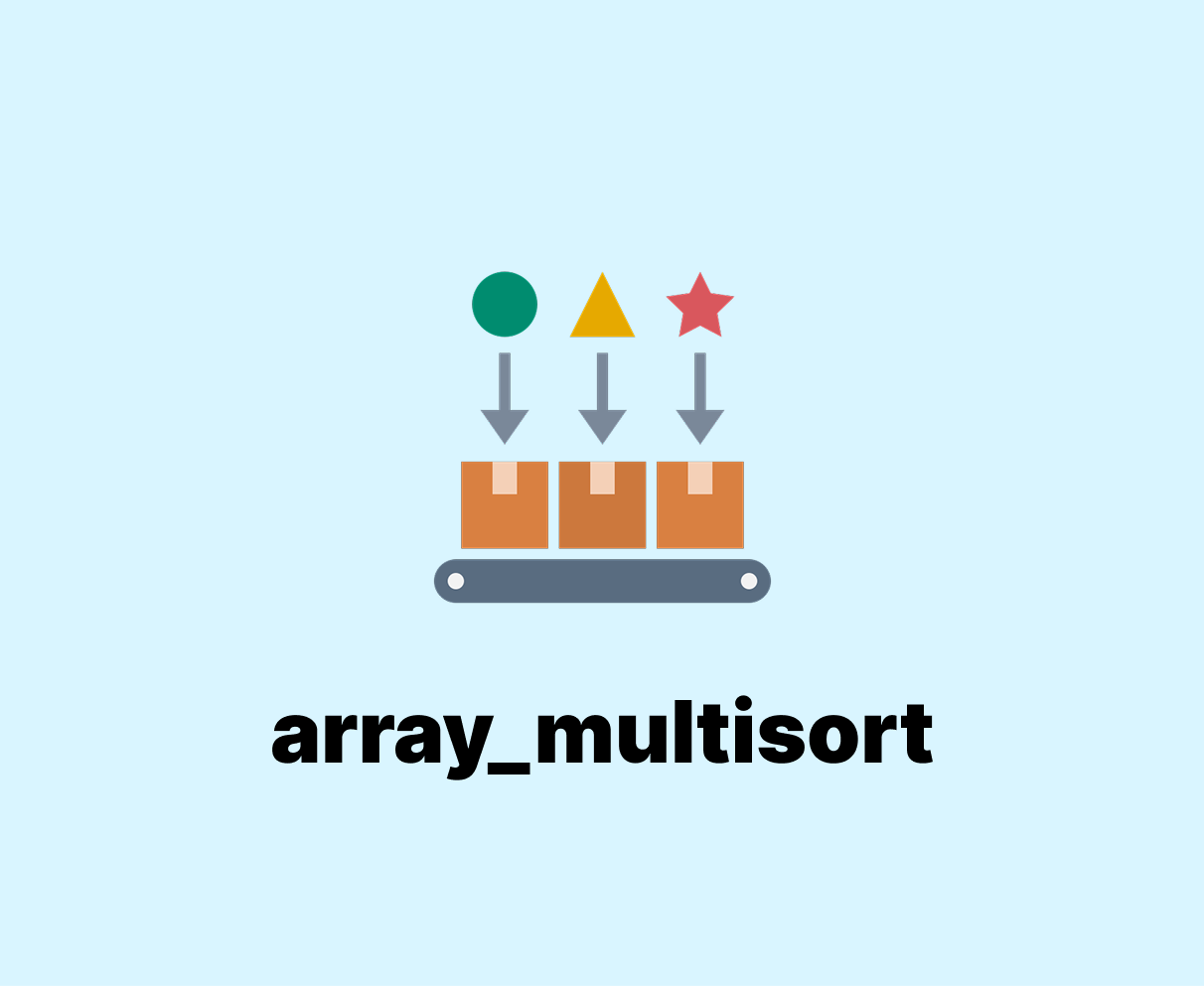
PHP array_multisort sorts many arrays or a multi level array in one go. It can sort data in numeric order or text order. This helps you control how your arrays look after sort.
Syntax of PHP array_multisort
The PHP array_multisort function sorts one array or more arrays at the same time. It sets order for each array and returns a boolean value.
Here is an example:
array_multisort(array1, sort_order, sort_type, array2, ...);You can sort a main array and also sort other arrays with it. This keeps related data in the right place after sort.
For example:
$numbers = [3, 1, 2];
$names = ["C", "A", "B"];
array_multisort($numbers, $names);
print_r($numbers);
print_r($names);
This code sorts $numbers in order and sorts $names in the same order. Both arrays stay linked after sort.
Here is the output:
Array
(
    [0] => 1
    [1] => 2
    [2] => 3
)
Array
(
    [0] => A
    [1] => B
    [2] => C
)
PHP array_multisort can sort numeric arrays by value or by flags like SORT_DESC. It changes the order of each array but keeps index links correct.
$values = [5, 2, 8, 1];
array_multisort($values, SORT_ASC);
print_r($values);
The code sets $values to [1,2,5,8] after sort. You can also use SORT_DESC for reverse order.
The output:
Array
(
    [0] => 1
    [1] => 2
    [2] => 5
    [3] => 8
)
Using PHP array_multisort with associative arrays
You can sort an associative array by its values but keep keys safe. You can also match it with another array to keep data linked.
$age = ["Ali"=>30,"Sara"=>22,"Omar"=>25];
$name = ["Ali","Sara","Omar"];
array_multisort($age, SORT_ASC, $name);
print_r($age);
print_r($name);
This code sorts $age by value from low to high. The $name array stays matched with each key after sort.
The output:
Array
(
    [Sara] => 22
    [Omar] => 25
    [Ali] => 30
)
Array
(
    [0] => Sara
    [1] => Omar
    [2] => Ali
)
Sorting multidimensional arrays with PHP array_multisort
You can sort a multidimensional array by a column inside it. This helps order records like a table.
$data = [
  ["id"=>3,"name"=>"Ali"],
  ["id"=>1,"name"=>"Sara"],
  ["id"=>2,"name"=>"Omar"]
];
$ids = array_column($data, "id");
array_multisort($ids, SORT_ASC, $data);
print_r($data);
This code extracts the id column and sorts the main $data array by it. Each row keeps its own fields after sort.
The output:
Array
(
    [0] => Array
        (
            [id] => 1
            [name] => Sara
        )

    [1] => Array
        (
            [id] => 2
            [name] => Omar
        )

    [2] => Array
        (
            [id] => 3
            [name] => Ali
        )

)
Examples
Sort two related arrays by numbers:
$scores = [45, 78, 12];
$names = ["Ali","Sara","Omar"];
array_multisort($scores, SORT_DESC, $names);
print_r($scores);
print_r($names);
This example sorts $scores from high to low. It also sorts $names in the same order to keep the link.
The output:
Array
(
    [0] => 78
    [1] => 45
    [2] => 12
)
Array
(
    [0] => Sara
    [1] => Ali
    [2] => Omar
)
Sort the associative array by age:
$people = ["Ali"=>30,"Sara"=>22,"Omar"=>25];
$names = array_keys($people);
$ages = array_values($people);
array_multisort($ages, SORT_ASC, $names);
print_r($names);
print_r($ages);
This example splits keys and values into arrays, sorts ages, and keeps names linked with each age.
The output:
Array
(
    [0] => Sara
    [1] => Omar
    [2] => Ali
)
Array
(
    [0] => 22
    [1] => 25
    [2] => 30
)
Sort a table by column:
$records = [
  ["id"=>2,"name"=>"Omar","score"=>80],
  ["id"=>1,"name"=>"Sara","score"=>90],
  ["id"=>3,"name"=>"Ali","score"=>70]
];
$scores = array_column($records,"score");
array_multisort($scores,SORT_DESC,$records);
print_r($records);
This example sorts $records by the score column from high to low. Each row stays matched with its values.
The output:
Array
(
    [0] => Array
        (
            [id] => 1
            [name] => Sara
            [score] => 90
        )

    [1] => Array
        (
            [id] => 2
            [name] => Omar
            [score] => 80
        )

    [2] => Array
        (
            [id] => 3
            [name] => Ali
            [score] => 70
        )

)
Sort many arrays with mixed order:
$first = [3,1,2];
$second = ["C","A","B"];
array_multisort($first,SORT_ASC,$second,SORT_DESC);
print_r($first);
print_r($second);
This example shows how you can set a different order for each array at once. It keeps data in place but changes the order.
The output:
Array
(
    [0] => 1
    [1] => 2
    [2] => 3
)
Array
(
    [0] => A
    [1] => B
    [2] => C
)
Wrapping Up
You learned what PHP array_multisort does and how to use it with many array types.
Here is a quick recap:
- You can sort many arrays at once, keep links between arrays, and order multidimensional arrays by one column or more. This gives you full control of data order in your code.
FAQs
What is PHP array_multisort with example?
array_multisort function sorts multiple arrays or multi-dimensional arrays.
Here is an example:
<?php
$names = array("Sara", "John", "Alex");
$ages  = array(25, 30, 20);

array_multisort($ages, $names);

print_r($ages);
print_r($names);
?>
- First array is sorted by values.
- Second array is reordered based on first array sorting.
How does PHP array_multisort work?
array_multisort function sorts arrays in parallel.
It takes one array as the main sorting key and reorders the others.
<?php
$marks = array(90, 60, 70);
$students = array("Ali", "Mona", "Zaid");

array_multisort($marks, SORT_DESC, $students);

print_r($marks);
print_r($students);
?>
Can PHP array_multisort sort multidimensional arrays?
<?php
$data = array(
  array("Ali", 22),
  array("Sara", 18),
  array("Omar", 25)
);

$names = array_column($data, 0);
$ages  = array_column($data, 1);

array_multisort($ages, SORT_ASC, $names, SORT_ASC, $data);

print_r($data);
?>
- Sorts by age first.
- Sorts by name next if ages match.
What are common flags in PHP array_multisort?
SORT_ASC→ Sort ascending order.SORT_DESC→ Sort descending order.SORT_REGULAR→ Compare items normally.SORT_STRING→ Compare items as strings.
<?php
$values = array("20", "9", "100");
array_multisort($values, SORT_ASC, SORT_STRING);
print_r($values);
?>
Similar Reads
In PHP, if you're working with XML files, you’ll probably work with DOMDocument. It is a powerful class, enabling you…
PHP foreach loop came to help work with array data in a simple way. Arrays and objects grew more common…
The variable scope in PHP refers to the variables, functions, and classes that can be accessed within different parts of…
Developers use the array_count_values function in PHP to find how many times each value appears in an array. What is…
The PHP do-while loop is a type of loop that executes a block of code at least once, and then…
If you're coding in PHP you've most probably come across the terms 'parameters' and 'arguments' in functions. Well, they are…
Early PHP scripts often failed because of extra spaces or line breaks in strings. These issues came from user input…
PHP array_flip swaps keys with values. It works well when you need values as keys in fast lookups. What is…
If you are new to the PHP Spaceship Operator, then let me tell you, you're in for a treat. This…
PHP math may sound like a pretty simple thing, but I assure you it's a set of tools that will…