Every summer for the past 9 years staff members from Tarleton’s Dick Smith Library have performed story time events at the Stephenville Public Library.
We call our troupe the Dick Smith Players.
What makes these events unique is we don’t just narrate stories, we act them out as well. For weeks before the event, we create costumes, props, memorize lines, figure out entrances/exits and other character movements.
It’s a lot of fun and we all get a lot of enjoyment from it. However, we aren’t just there to have fun. We also do it to share our love of reading with the children of the community.
As we’ve celebrated Tarleton State University’s 125 Years of Excellence this past year, we’ve combed through the archives and told stories from the history of TSU. We looked at the history of the Dick Smith Library and its namesake, the defense of the bonfire with Risinger, the history of our silent sentinel, and more.
As I jumped into research and delved into the stories of Tarleton State, I started to see the campus a bit differently. I’ve looked through so many pictures of TSU’s past, it’s hard not to see “ghosts” on campus…
Every time I walk by the cannon, I see the cadets from the 1920s firing it in practice.
When I walk by the admin building and see the people celebrating the construction of the south gate in the 1930s.
I see generations of students taking their senior photos near the Tarleton gates.
Those who represented Tarleton State on the field and on the court.
The students who struggled and succeeded in various classrooms over the past century.
The rich history of the fine arts department.
The sacrifice and service of Tarleton students and alumni.
And more.
These glimpses of the past make one stop and reflect on the impact we have on the future history of Tarleton State University. What are we doing now that will be remembered years from now? Will we continue to have stories such as Coach Wisdom and “The Streak”? The service and legacy of Doc Blanchard and his red fire truck? Or the legend of our namesake, John Tarleton?
The only known photo of John Tarleton… allegedly taken after he was drugged and robbed by bandits.
The future is bright as word is out about the “best kept secret in Texas”. Tarleton State University is making waves in both athletics and academics, highlighting the amazing work being done by our community. Our enrollment is surging, with each incoming class higher than the last. And new programs, such as physical and occupational therapies, are constantly being added.
It will be exciting to see what history, stories, and traditions are formed as we strive ever forward.
If you would like to know more about the history of Tarleton State, check out:
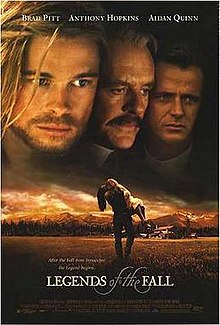
For the past few months, the Dick Smith Library has proudly hosted the exhibit Vaquero: Genesis of the Texas Cowboy. This captivating exhibition features the stunning photography of Bill Wittliff, a renowned Texan screenwriter and photographer. Wittliff is celebrated for his work on over a dozen films and TV series, including Legends of the Fall, The Perfect Storm, and Lonesome Dove.
In the 1970s, Mr. Wittliff had the unique opportunity to visit a ranch in northern Mexico that still operated in the traditional ways of the vaquero. This tradition, which originates from the Spanish conquistadors of the 16th century, serves as the foundation for the cowboy culture we know today. Wittliff followed the vaqueros as they went about their daily work, capturing their timeless practices through his lens.
The exhibit combines Wittliff’s evocative photographs with bilingual narrative text, offering a vivid portrayal of the muscle, sweat, and drama that define the life of a vaquero.
We invite you to join us at the Dick Smith Library on Thursday, April 17th, at 2:30 PM for a special reception to celebrate the closing of this remarkable exhibit.
Vaquero: Genesis of the Texas Cowboy is an exhibition produced by the Wittliff Collections at Texas State University, presented in partnership with Humanities Texas, the state affiliate for the National Endowment for the Humanities.
Dr. Dick Smith was a professor of government at Tarleton for almost 40 years, from 1934 to 1973. Born in Milford, Texas in 1908 to a county judge and high school teacher, politics and education were in his blood. Smith briefly attended Tarleton in 1926 before completing his undergraduate degree and receiving his master’s from the University of Texas.
1926 Student Photo, Grassburr
A gifted student, Smith then began his doctoral studies at Harvard University. Unfortunately, Smith’s mother became ill in 1932 after his first year in Boston, and he returned home to take care of her and to sub in her classroom at Breckenridge High School. Smith was hired by Dean J. Thomas Davis to fill in as assistant registrar and instructor of history in 1933. By 1934, he was promoted to associate professor of history and government.
1934. First Staff Photo, Grassburr
Before settling into his role permanently, Dr. Smith took a two-year leave of absence in 1935 and returned to Harvard to finish his doctoral degree, completing his dissertation after his return to teaching at Tarleton in 1937. Smith received his doctoral degree in 1939, at the time becoming the second professor at Tarleton with a Ph. D. As well as some extended teaching engagements at a variety of universities in Texas, the only other time he left Tarleton was during the 1940s when he served as a field artillery corporal in WWII.
1950 Grassburr
1946 Grassburr. Dr. Smith served as advisor for the Grassburr for many years.
Smith was known as a tough and demanding professor, who believed that Tarleton students were as capable as students from any other institution. Smith’s style of instruction was purely lecture-based and described as a “true learning experience–an exhaustive and exciting excursion into the subject”. Dr. Smith was constantly updating his notes, sometimes getting information about pending legislation directly from the state capital in Austin before turning around and lecturing about the new developments to a class of students. The high standard to which Dr. Smith held himself was also reflected in how he treated the students at Tarleton. Smith’s tests were notoriously difficult and struck fear into many students… but a sense of immense pride for the student who passed. As former student Richard Cruz stated, “People said they were government majors with pride… The grades were tough to make… but it was something that people were proud of.”
1964 Grassburr
Dr. Smith was a renowned expert on Texas government, becoming one of the most active scholars in Tarleton’s history. In the 1940s, he co-authored two highly successful textbooks on Texas government, which were updated through several editions and widely used across the state for decades. Additionally, he penned numerous articles and two well-known booklets on the subject. Dr. Smith served as department head for the Department of Social Sciences from 1947 to 1967, when he requested to step down to return to full-time teaching.
During the presentation of the Distinguished Faculty Member Award to Dr. Smith in 1972, Alumnus Joe R. Long had this to say:
“…in an era obsessed with technology, and with the acquisition of material wealth where higher education generally reflects that era by attempting to equip students with a marketable skill, he has continued to believe that ideas, their interrelationship, their development, and ultimately their application to human affairs is a legitimate and necessary purpose of the educational process. In an era which has dehumanized men and largely robbed them of their individuality, he continues to sponsor classical liberal thought, believing in the inherent worth and dignity of the individual.”
After his retirement in 1973, Smith earned the honorary title of professor emeritus. Unfortunately, Smith passed away a few months later on January 6, 1974. At his request, a major portion of his estate ($525,000, which today would be almost $4,000,000) was given to Tarleton in his will to establish the Dick Smith Scholarship for students from the College of Arts and Sciences, a scholarship that still exists to this day. In addition to donating his private library to the Tarleton Library, he left instructions that at his death mourners donate funds to the university library.
Tarleton Library was renamed the Dick Smith Library in his memory after a push by the student senate. Dr. Smith’s legacy continues to inspire students and faculty alike, reminding them of the profound impact one dedicated educator can have on an institution and its community.
6/26/1974 Alumni J-TAC
1974 Grassburr
Join us later this month as we honor the namesake of our library by hosting an exhibit showcasing the life and achievements of Dr. Dick Smith.
You’ve probably passed this landmark hundreds of times while walking through central campus and may have even thought to yourself, “Why is there a cannon in the middle of campus?”. The answer is a bit… complicated. It involves Tarleton’s military history, theft, and… chickens?
The cannon is a Model 1902 3-inch Field Artillery Gun. It weighs 2,500 pounds and was able to fire a 15-pound projectile to a maximum distance of 4.5 miles. It’s not clear if this cannon was used in World War I, but many believe it was not since most of those cannons stayed in Europe. It was likely used for men to train on before shipping over to Europe.
John Tarleton Cadet Corps training in 1904 in front of the first building on campus.
The cannon was donated to Tarleton’s ROTC by the US Army in 1922. Tarleton has always had a strong military tradition. All male students were required to be members of the Tarleton Corps of Cadets, wear a uniform, and take part in daily training. During their first year, they were also members of the ROTC program. At the end of their first year, they could choose to remain in ROTC and earn a commission in the US Army. If they opted out of it, they stayed in the Corps of Cadets.
During the lead-up to World War II, Tarleton became one of 220 schools that offered pilot training, created more programs in automotive, diesel, and airplane engine mechanics, and expanded classes into the summer to graduate students as quickly as possible so they could take part in the national defense. At one point, Tarleton was even a training location for the Army’s Specialized Training Program (ASTP). The ASTP consisted of 500 soldiers given military training and college coursework by Tarleton instructors. The program lasted from the summer of 1943 to the spring of 1944. Among these members were actor George Kennedy (who won an Oscar for Cool Hand Luke) and Dr. Norman Shumway, a pioneer of heart surgery and the first doctor to perform an adult human-to-human heart transplant in the United States.
The cannon was used in training by ROTC cadets as can be seen up top. It was also featured during Parent’s Day and other campus events. One of these events was the weekly lowering of the flag in front of the current day Education Building. After drill on Thursday afternoons, the flag was lowered, “taps” was played, and the cannon was fired. The cannon was fired using blank shells for a number of years until the 1940s, when President Davis called for the cannon to be welded shut.
1939
There is some debate behind the reasoning for the silencing of the cannon. Some believe that as the country was gearing up for WWII, ammunition became harder to find, and thus the decision was made to silence the cannon. Another reason had to do with… chickens. Starting in the 1920s, Tarleton had a sizeable chicken farm near the present-day site of Bender Hall (across from McDonalds). For years, it hosted an international egg-laying contest where people from around the country would compete to see whose hen laid the most eggs in a certain time frame. Unfortunately, for some reason, the firing of the cannon had a negative effect on that day’s egg production. Many cite this as the TRUE reason why the cannon was silenced.
The cannon also had a part to play in our heated football rivalry with North Texas Agricultural College (now the University of Texas at Arlington). A decade before their infamous air raid on Tarleton, NTAC students would invade campus the week of the annual football game to try and paint “NTAC” on the cannon and their school colors.
However, in 1928, painting the cannon wasn’t enough for NTAC… they decided to steal it. According to beloved professor “Doc” Blanchard, NTAC students hauled the cannon off campus around 5AM a few days before the big game, dragging it behind a truck. Unfortunately, the students had difficulties with transporting the cannon and dumped it in the Bosque River, just north of Stephenville. Blanchard and a few other volunteers fished the cannon out of the river. By the time they got it back to campus, it was in rough shape with many of the wooden spokes on the wheels broken. Restoration began at once, with Doc Blanchard making the new spokes by hand. The cannon was placed in its current spot sometime in the early 1930s, the wheels cemented to the ground so it could never again be stolen.
The cannon has kept silent vigil over the campus for almost 100 years. Throughout that time, it has been repainted, sometimes silver and sometimes purple. However, during the early 90s, and thanks largely to a fundraising effort by alumni of that era, it underwent a much-needed restoration. Part of this restoration included returning it to its original olive-drab color.
Today the cannon continues its watch. As Major William Brown put in his article in the 1993 Alumni JTAC, “While on the surface a weapon of war, it now stands as a symbol of peace gained through sacrifice and in many ways, endurance, for this cannon is indeed a survivor. We would all do well to protect and cherish Tarleton’s silent sentinel as an integral part of what Tarleton was, is and can be.”
For more information about the history of Tarleton, check out Chris Guthrie’s John Tarleton and His Legacy: The History of Tarleton State University, 1899-1999.
All images come from material in the Tarleton’s Archives and the Tarleton website. To search through digitized versions of the JTAC and Grassburr, visit the Portal to Texas History.
On January 28th, 1958, the first LEGO brick was patented. Since then, January 28th has been known as International Lego Day. You can celebrate this day with us by making your own creations with our collection of these colorful blocks.
Celebrate International Lego day at the Dick Smith Library’s multipurpose room on January 28, 2025 from 4 to 6pm
Ole Kirk Christiansen founded the company in 1932 when he began selling wooden toys to children in Denmark. Two years later his company adopted the name Lego, which is a contraction of the Danish phrase leg goat which means “play well.” The plastic interlocking bricks that we think of when we hear Lego today were developed in 1949.
Ole Kirk Christiansen (1891 – 1958) photograph by Gerhard Huber CC BY-NC 4.0+Edu
If you want to learn more about Legos, check out these items from the library:
With a new year comes a chance to see some of that dreaded—or loved—snow! Join us as we take a look back through archived Grassburrs and J-TACs to see Tarleton in a winter wonderland.
As we near the completion of the 125th fall semester at Tarleton State University, let us look at an important campus building from our past, one of the first large buildings on campus. Located off what is now known as Military Drive, the Mollie J. Crow building was the first administration building on campus. But a strong-willed and tenacious faculty member had different plans for the building…
The Crows were an important couple in the history of Stephenville. Dr. Crow organized the Erath County National Bank which had a theatre on the second floor (now known as the Crow’s Opera House, diagonally across from King Coffee on the square) and ran a successful medical practice. Mrs. Crow founded the town’s first savings and loan, served as a director of an area railroad, and did much more. On her deathbed, Mrs. Crow summoned a lawyer and directed them that $40,000 ($1,329,000 today) would be given to Tarleton College for the construction of a new building.
A $50,000 building was constructed and finished in 1915 using these funds. Originally named the Mollie J. Crow Administration Building, this three-story brick building had an auditorium that could house 600, 13 classrooms, and a handful of offices. From 1915-1918, it was also home to the library during its early nomadic existence.
And in two rooms of the basement, the only space available on campus, a determined faculty member started a program that would last one hundred years: Home Economics (or as it was known towards the end: Family and Consumer Sciences). This program would expand so quickly that the building would be renamed the Mollie J. Crow Home Economics building in less than a decade. This persistent faculty member was Lily Pearl Chamberlin.
Considered Tarleton’s first female faculty member, Mrs. Chamberlin taught at Tarleton from 1899 to 1907. During this time, she taught whatever class needed to be taught, Latin, math, English, history, etc. During this time, she would also become “Lady Principal” (an early form of “Dean of Women”). In 1907, she left Tarleton to marry Mr. W. Chamberlin and become a stay-at-home mother. However, after a brief time, the superintendent of Stephenville asked her to teach at the high school during a severe teacher shortage. Mrs. Chamberlin taught English, soon becoming the head of the department.
But Mrs. Chamberlin had another subject in mind that she wanted to teach. While working at Stephenville High School, Chamberlin came to believe that “much of the poverty and sickness and misery of our land is due to the lack of proper training in homemaking” and “home economics teaching would be at least a step in the right direction” (Guthrie, 380). Chamberlin tried repeatedly to start a Home Ec. program at Stephenville but was rejected each time due to lack of funds.
Luckily for Mrs. Chamberlin, in 1913, a former student of hers at Tarleton became the new president of the college, James F. Cox. President Cox succeeded where previous administrators had failed each year Chamberlin taught at Stephenville: persuading her to return to Tarleton. In 1914 Mrs. Chamberlin returned to Tarleton, but teaching English was not the only subject she had in mind. Despite never having taken a Home Economics class (a gap she quickly filled), Chamberlin convinced President Cox to take over two of her six English classes so she could teach Home Economics in the afternoon. However, he couldn’t offer her any added salary or funds to equip the two rooms in the new building.
Mrs. Chamberlin was not to be deterred. She did her own fundraising and procurement, obtaining nine two-burner stoves, several tables, four sewing machines, a cabinet, a cloth-cutting table, and dishes and cooking utensils. The first two classes (a food course and a sewing class) began in the fall of 1915. Both classes can be seen below from the 1922 edition of the Grassburr.
The Home Ec. department expanded when Tarleton became a member of the A&M System. Mrs. Chamberlin would remain at Tarleton until 1928. Towards the end of her time on campus, she acted as Dean of Women, taught clothing and home arts classes, and ran the entire Home Ec. department. President Cox would remark that “the loyalty and dedication of teachers such as Mrs. Chamberlin preserved Tarleton through the ‘trying times’ that immediately preceded its incorporation into the Texas A&M System” (Guthrie, 382).
Mollie J Crow Building, 1956
The Home Ec. department would be housed in the Mollie J. Crow building until 1977, when they moved into the facility near Wisdom Gym (now the location of the Kinesiology department). The name would soon change to Family and Consumer Sciences (FACS) and be offered as a major until 2014/2015 when the course catalog only shows it as a minor. According to a September 2016 JTAC article, FACS was replaced by a major in Fashion Studies as interest in FACS courses drastically declined over the last few decades.
In the early 1980s, the Mollie J. Crow building was torn down, and the E.J. Howell building became the oldest building on campus. You can still see the steps that led up to it from Military Drive. Now, however, those steps lead to the Military Memorial.
The same steps can be seen in the first photo at the top of this blog.
The Fishpond was donated by the class of 1923 near the present-day Alumni Island.
Today in our look through the archives comes a campus landmark that stood from the 1920s to the 1950s. It was an early predecessor to what we know today as Alumni Island, where the statue of John Tarleton currently keeps watch. This landmark was known as the Fishpond.
The Fishpond was donated by the class of 1923. It was a concrete, water-filled pond, with the statue of a child or a cherub (think Cupid) on top, spraying water to keep the pond filled below. A J-TAC article from February 1945, states that the landmark was inscribed “Prof. J. L. Riley, 1917-1923. Our appreciation for his services. Senior class of 1923.” The article explains that Mr. Riley was one of the faculty advisors for the class of 1923. Looking through the 1923 Grassburr we can see that he was a professor of Mathematics.
The Fishpond was a central location and meeting spot for many on campus. Both the Grassburr and the J-TAC mention the Fishpond throughout its time on campus.
Below you can see a bit of prose featuring the Fishpond written in 1926.
In this story from the January 1955 edition of the J-TAC, the Fishpond was supposed to be the late-night rendezvous spot for a young female student to meet a young man for a date. Unfortunately for the two lovebirds, the date was not to be…
Unfortunately, after the mid-1950s, stories of the Fishpond disappear, with only a few mentions of soon-to-be alumni wanting to donate something to the campus in a similar way. According to an October 2006 J-TAC article, the Fishpond was drained and removed sometime in the mid-1950s due to ongoing vandalism.
If you want to take a deeper dive using some of the resources used in this blog and uncover more about Tarleton history, visit the Portal to Texas History and search “Grassburr” or “JTAC” to look through digitized copies of both.
Although the Dick Smith Library has a variety of seasonal and short-term displays, two perpetual ones are our New Books and Hot Titles (recreational reading) displays. The items are swapped out regularly, but there are still only so many that can be shown off at once. This post is designed to give you tips on how to use the library catalog to find similar items that may be more suited to your tastes.
You can easily see everything we have to offer (over 909,000 results!) by not typing anything into the purple search box on the main library website (pictured above) and just hitting the search/magnifying glass icon. Your search will default to the Library Catalog.
New Books (and other materials)
If you’re mostly interested in seeing what sorts of new electronic items we have, one way to do that is by using the New Titles limiter (to the left of search results, all the way at the bottom), which gives you the option to limit your searches to things added in the last 90, 30, and 14 days. For example, try selecting 90 days and clicking “Include” – you’ll see everything added to the library’s collection in the past 90 days.
This limiter will show you some, but not all, of our newly added physical materials. If you want to see newly added print books that aren’t quite ready for checkout yet, try the Shelf Location limiter. Click on Shelf Location, then “View All,” and then the “A to Z” sort button. Then scroll down, select “Waiting to be processed,” and click “Include.” While you won’t find these items on our shelves yet, you can always click the “Place Hold” button on one you’re interested in and you’ll be notified via your Tarleton email when it’s available.
Hot Titles (aka recreational reading)
Like our Hot Titles display but want to find something more suited to your tastes? There are several strategies you can use in the library catalog.
If you know the title and/or author of a particular book you’re looking for, you can use Advanced Search to find it. The Advanced Search page includes Author and Title search boxes so that you don’t have to wade through pages of results just to get to the book you want. You can also choose to immediately limit by Format Type, Language, etc. or select limiters after you’ve seen your initial search results. For example, the search below, for Charlotte Bronte’s Jane Eyre, brings up film versions in addition to the book. If you limit to Format Type: Book, you’ll just get the book version of Jane Eyre.
What if you don’t know exactly what you’re looking for, but you do have some idea what genre you want to read? We have search options and limiters for that as well! The default Library Catalog search is “All Fields” – just switch to “Genre” and search for whatever you’re interested in. In the example below, we’re looking for fantasy.
If you’d like to browse your genre options, we also have a limiter on the left that lets you narrow searches down by genre. You can expand that, click “View All,” and browse through the genre (and other) options we have available until you find something that interests you.
Do you like books that blend multiple genres, such as sci-fi mysteries or romantasy? You can use our genre limiter to find those as well, although there’s a special trick to it. You can’t select both genres at the same time – if you do, you’ll get results the include the first genre OR the second genre, but not necessarily ones that include both at the same time. Instead, you have to first select one genre, click “Include” and wait for the search results to update, and then find and select the second genre and click “Include.”
In the example below, we’re searching for romantasy books – books that blend romance and fantasy. We start by clicking “View All” in the Genre limiter and finding “Romance fiction” in the list (we could also start with “Fantasy fiction” – the order doesn’t matter). We then click “Include,” which limits our search results just to items in the genre “Romance fiction.” After the search results update, we scroll back down to the Genre limiter and select the second genre we want to include with the first, “Fantasy fiction.” Click “Include,” and the search results will limit to results that include a blend of romance and fantasy.
Let’s say you’ve found a book that interests you, and you’d like to learn a little more about it before checking it out. If you click on the title in the search results list, you’ll see that many of the books in our catalog have a “Summary, Reviews, and Awards” tab. That tab provides additional information such as a summary, similar books and series that can also be found in the library’s collection, related “Librarian Recommends” lists, professional and reader reviews, and more. There’s also a “Tags” section that can give you additional options for browsing titles you might be interested in.
Happy reading, and we hope you’ve learned something new from this post!




 tarletonlibraries.wordpress.com
