1. X
  2. Readygov
Log inSign up
Readygov
15.4K posts
Image
user avatar
Readygov
@Readygov
Disasters don't plan ahead, you can. #BeReady
United States
ready.gov
Joined August 2008
779
Following
263.8K
Followers
RepliesRepliesMediaMedia
  • user avatar
    Readygov
    @Readygov
    23h
    Heading out with little ones? Make every stop safe during extreme heat by protecting your children from heatstroke inside the vehicle: 🏈 Place a toy up front as a reminder 👜 Put something you need in the back seat 👀 Look before you lock ➡️ready.gov/summer-ready #SummerReady
    Infographic warning never to leave kids in cars year-round, highlighting that hot car deaths happen even when it's below 70°F.
  • user avatar
    Readygov
    @Readygov
    Aug 10
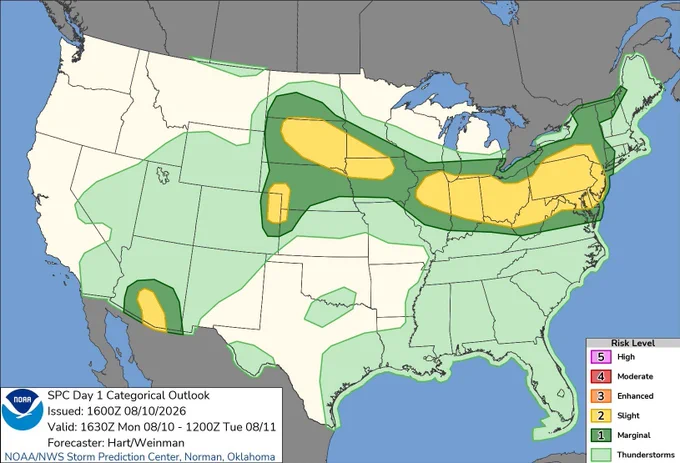
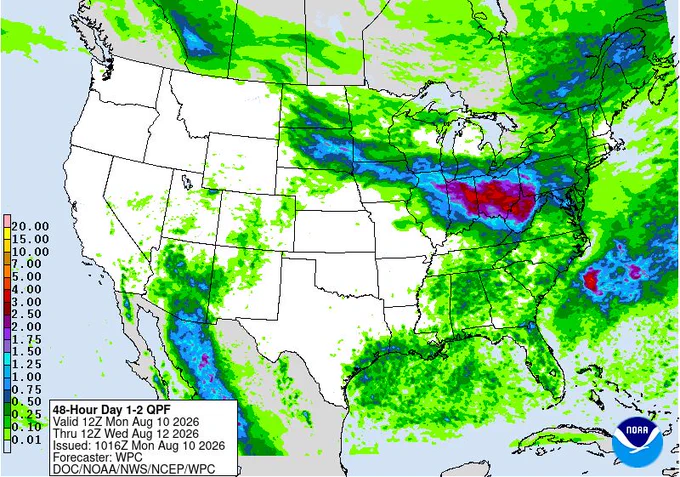
    Repeated rounds of heavy rain in the north-central part of the country can lead to dangerous flash flooding this week. - Never walk, swim or drive through floodwaters - Have multiple ways to get weather alerts - Follow instructions from local officials 🔗 ready.gov/floods
    user avatar
    National Weather Service
    @NWS
    Aug 10
    A front meandering across the north-central U.S. will bring heavy rainfall eastward into the Midwest, lower Great Lakes, and Ohio Valley over the next few days. Thunderstorms capable of producing severe wind gusts will be possible from parts of northern Illinois eastward into
    A map of the contiguous United States showing the Storm Prediction Center (SPC) Day 1 Categorical Outlook for severe weather risks.

Light green shading covers large parts of the U.S., indicating general thunderstorm risk. Dark green shading (Marginal Risk, Level 1) extends across the Northern Plains, Midwest, Ohio Valley, Mid-Atlantic, Northeast, and southern Arizona. Yellow shading highlights Slight Risk (Level 2) areas in three regions: 1) the Northern Plains (SD, ND, MN), 2) a stretch from the Midwest through the Ohio Valley into the Mid-Atlantic (IL, IN, OH, WV, PA, MD, VA), and 3) southern Arizona.
    A map of North America from the Weather Prediction Center (WPC) showing a 48-hour quantitative precipitation forecast across the contiguous United States.

Shaded regions display expected precipitation totals. Light green shading (0.01 to 0.50 inches) covers large parts of the eastern half of the U.S. and the Southwest. Blue, purple, and red shading indicate heavier precipitation (1.00 to 4.00+ inches) centered over the Midwest, Ohio Valley, and Mid-Atlantic, with the highest amounts across Illinois, Indiana, Ohio, Kentucky, and West Virginia.
  • user avatar
    Readygov
    @Readygov
    Aug 7
    Quick question: #DYK your fastest way out if a wildfire threatens your area?🔥 Take time to review your evacuation routes, pack an emergency kit & sign up for local alerts. Being ready before a disaster makes it easier to act when every minute counts.➡️ready.gov/wildfires
    user avatar
    National Weather Service
    @NWS
    Aug 6
    Hot and dry weather combined with increasing winds will allow elevated fire weather conditions to return to the northern Intermountain West Friday into the weekend. Stay Weather-Ready and protect yourself from wildfires, visit weather.gov/wildfire
    Everyday Wildfire Prevention. Most wildfires are caused by humans - many everyday things can create sparks. Keep ignition sources far away from dry vegetation, wood, and other fuel. Have a clear 10 foot radius around campfires, burning brush, etc. Never leave fires unattended, and always properly extinguish. Use grills and smokers on gravel or paved surfaces. Never toss lit cigarettes on the ground. Put ashes in a metal container with a tight lid. Keep water stroed near campfires, fire pits, grills, smokers, burning brush, etc. Maintain vehicle brakes & tires, and secure tow chains to avoid dragging. Don't drive on dry grass or brush. Water your lawn and keep grass cut. Mow lawn early in the morning and when it's not windy or excessively dry. Always follow burn bans and regulations. Be aware of weather conditions. Low humidity, heat, drought and winds are conducive to fires.
    Protect yourself from wildfire smoke. Stay indoors and keep windows closed. Keep your pets indoors too! When using air conditioning, keep the outdoor air intake closed and clean the filter to prevent outdoor smoke getting inside. If you go outside, avoid exertion and consider wearing a respirator (N95 or P100 mask). Monitor the air quality for your zip code at airnow.gov
  • user avatar
    Readygov
    @Readygov
    Aug 6
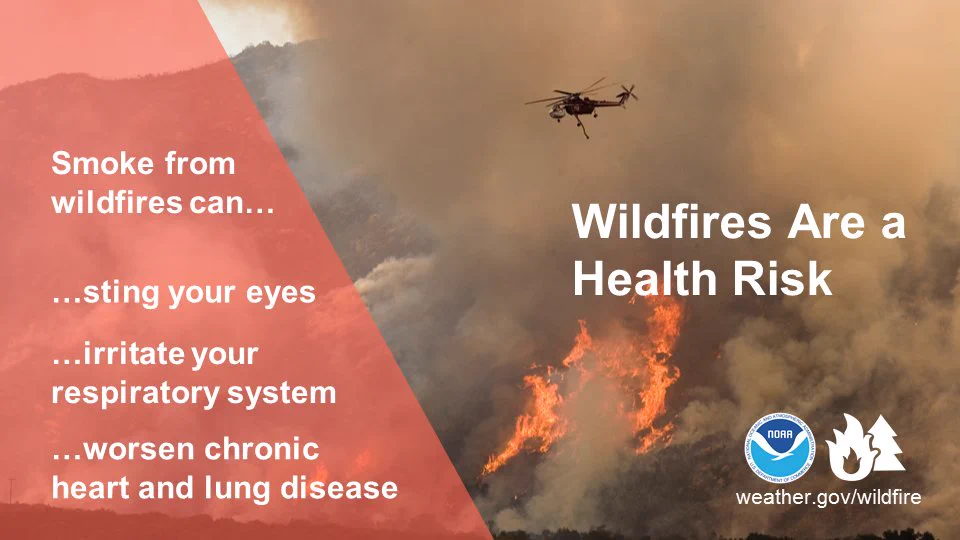
    #DYK Wildfire smoke can travel hundreds of miles past the affected area? 😷 If the air in your area is unhealthy: - Stay indoors in a room you can close off from outside air - Evacuate if you have trouble breathing - Roll up the windows in your car 🔗 fire.airnow.gov
    Image
  • user avatar
    Readygov
    @Readygov
    Aug 6
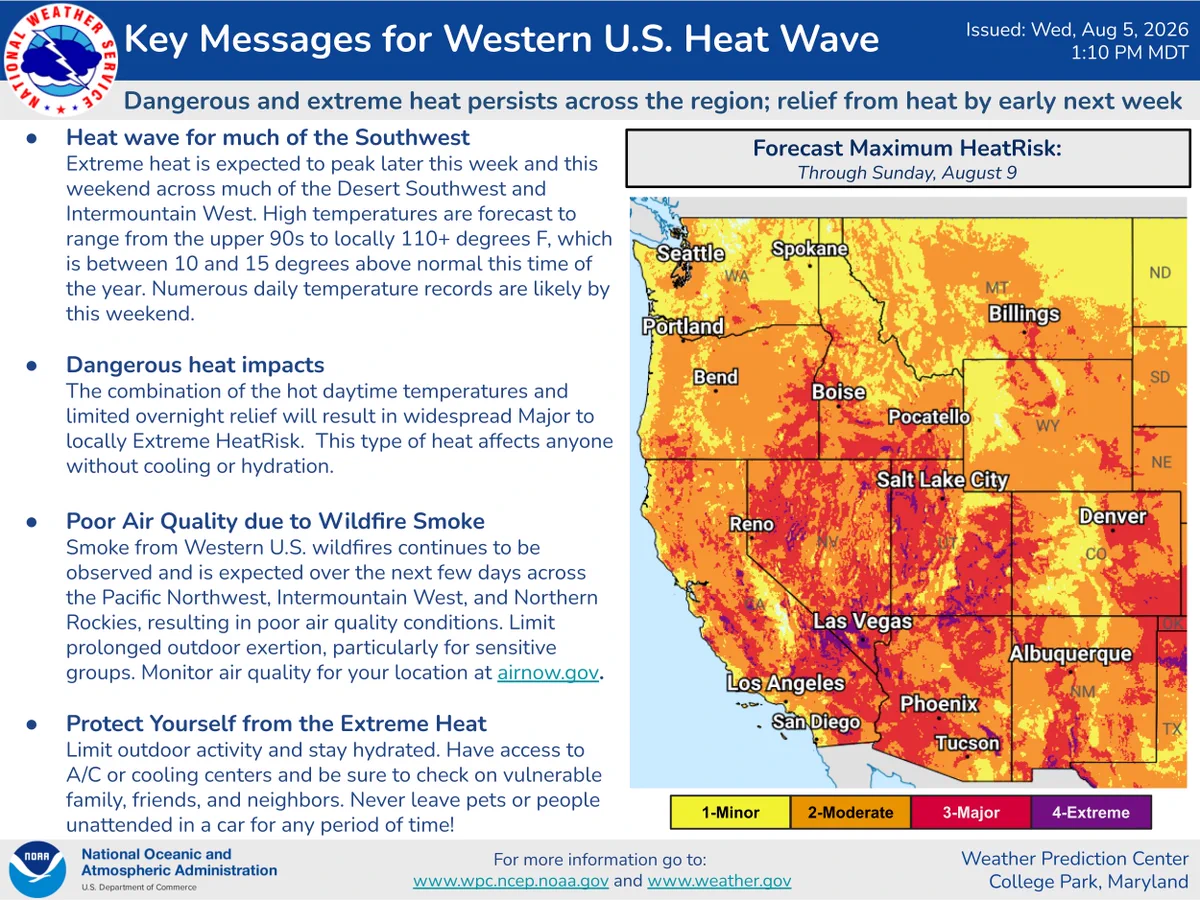
    The heat wave affecting large portions of the West is forecast to continue into the weekend—take precautions to stay safe if you live in the region.🫗Drink plenty of fluids to keep hydrated & find shaded areas if you're spending time outdoors. More tips: ready.gov/heat
    user avatar
    National Weather Service
    @NWS
    Aug 5
    Dangerous heat continues in the Southwest and is forecast to intensify across the Intermountain West through this weekend. The combination of hot daytime temperatures and limited overnight relief will result in widespread Major to locally Extreme HeatRisk. See the latest Key
    Extreme heat will peak later this week and this weekend across much of the Desert Southwest and Intermountain West. Numerous daily temperature records are likely by this weekend. 
The combination of hot daytime temperatures and limited overnight relief will result in widespread Major to locally Extreme HeatRisk. This type of heat affects anyone without cooling or hydration. 
Smoke from Western U.S. wildfires continues to be observed and is expected over the next few days across the Pacific Northwest, Intermountain West, and Northern Rockies, resulting in poor air quality conditions. Limit prolonged outdoor exertion, particularly for sensitive groups.
Limit outdoor activity and stay hydrated. Have access to A/C or cooling centers and be sure to check on vulnerable family, friends, and neighbors. Never leave pets or people unattended in a car for any period of time!

Log in or sign up for X

See what’s happening and join the conversation

Continue with phone
or
Log in with username or email
Terms·Privacy·Cookies·Accessibility·Ads Info·© 2026 X Corp.
Advertisement
Advertisement