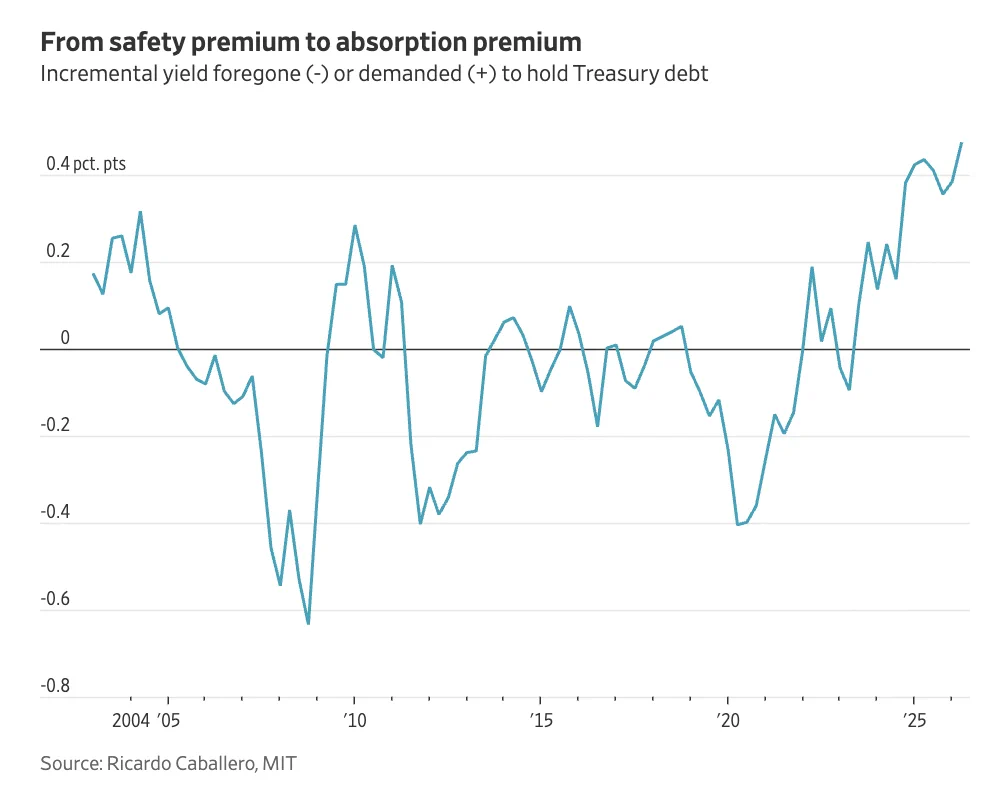
Treasurys, long the world’s preferred “safe” asset, are looking less safe. Relative to other securities, their yields are no longer quite so low, and in moments of stress, they don’t behave like a haven. My latest: wsj.com/finance/invest…
I love the Dorothy Parker line: "I hate writing, I love having written." The act of writing is often as tedious and unappetizing as doing the laundry. The satisfaction comes from reading the finished product. For those who never have, or care about, this second sensation, I
I’m not sure if this analogy works, but I wonder if some people see writing as akin to doing the laundry, and these things are laundry machines, so of course you’d use them because who’d want to do laundry by hand?
Bessent's (and John's) theory rests on the presumption that Treasury knows better than the market where interest rates are headed. By contrast, Treasury debt management had since the 1970s rested on the belief it could not outguess the market, and that borrowing costs would over
A simpler theory of buybacks. Treasury thinks inflation will decline, economy will boom, and interest rates will decline. If you believe that, you should buy back long debt at low price, issue short. The opposite of my advice that at super low 2010s rates they should have issued
Economists will tell you that the Fed buying bonds by issuing reserves is economically identical to the Treasury buying bonds by issuing bills. And yet because the Fed is (a) independent and (b) does not have to find willing buyers of reserves, it can simply force them upon the
Mario Draghi pledged “whatever it takes,” bought Euro bonds, and his success bought him Italy's Prime Minister job.
Bessent now buys Treasuries.
President Bessent?
@carlquintanilla@greg_ip
Remarkable criticism of Treasury Sec Scott Bessent by his former boss, Stan Druckenmiller, esp this: "Once markets believe Treasury is defending a price, every rise in yields becomes a test of official resolve, and the operations must grow to survive the tests."