

4S Mission
Fostering interdisciplinary and engaged scholarship in social studies of science, technology, and medicine across the globe.
Latest 4S News
CfP | InterAcademy Partnership Competitive Grants
Published On: Oct 18, 2024
Deadline: Dec 2, 2024
The InterAcademy Partnership (IAP) invites proposals from IAP member academies and regional networks, for projects that would help advance IAP’s mission and strategic goals. Proposed projects should preferably be collaborative across member academies and regional networks. Priority will be given to project proposals that aim to establish or continue support for collaborations across disciplines (for example, collaborations across academies of science, medicine and engineering), especially ...

Chronicity and Its Social Lives: Reflections on Everyday Experiences of Osteoarthritis
Published On: Nov 7, 2025
Deadline: Sep 15, 2025
In this post, Perseverence Madhuku discusses the tensions between biomedical, social, and personal understandings of ageing, immobility, and care in Zimbabwe through the case study of Osteoarthritis.
Call for Assistant Editors for 4S Backchannels (Global South)
Published On: Nov 27, 2025
Deadline: Dec 15, 2025
The Society for the Social Studies of Science (4S) is looking for STS graduate students, postdocs or early career scholars from/based in the Global South (especially Africa, Middle East, Asia) who can contribute as Assistant Editors for 4S Backchannels.
The candidate will be part of the team sharing and disseminating STS news, research from/about Global South in the form of short academic writings. Besides some editorial skills, they will encourage potential authors to contribute with their w...
4S Publications
Science, Technology, and Human Values
For more than forty years, Science, Technology, & Human Values has provided the forum for cutting-edge research and debate in the field of science and technology studies.
Consolidating the Strata: Geoscience and Underground Territory in South Korean Radioactive Waste Disposal
Sungeun KimDepartment II, Max Planck Institute for the History of Science, Berlin, Germany
Science, Technology, & Human Values, Ahead of Print.
In South Korea, the nation with the world's highest density of nuclear power plants, the disposal of high-level radioactive waste has become a pressing sociotechnical concern....
“Bogeymen,” “Murderers,” and “Loonies”: Emotions in Dutch Debates on 5G and Health
Floortje Moes, Christian Bröer, Klasien Horstman
Science, Technology, & Human Values, Ahead of Print.
Scientific advice is often solicited in governance, yet it is increasingly challenged in the public domain. Public participation is often suggested to mediate opposing...
Rethinking Extractivism in a Changing Climate: Complementary Gold and Coffee Livelihoods in the Steep, Tropical Andes
Casey Gibson, Jessica Smith1Department of Engineering, Design, & Society, 3557Colorado School of Mines, Golden, CO, USA
Science, Technology, & Human Values, Ahead of Print.
In the municipality of Andes, agriculture rules the steep surface ofla tierra, while informal miners pick and blast subterranean tunnels to make a living from gold. While...
Autonomy Where the Underground and Aboveground Meet: Processing Plants in Colombian Artisanal and Small-Scale Gold Mining
Mateo Francisco Rojas, Jessica M. Smith, Juan C. Lucena, Oscar Jaime Restrepo Baena
Science, Technology, & Human Values, Ahead of Print.
Social science research about extraction often conflates mining and ore processing activities or disregards processing altogether. This article highlights the value of...
Indigenous Environmental Data Justice: Confronting Colonial Data and Activating Indigenous Sovereignty
María Fernanda Yanchapaxi, M. Murphy1Technoscience Research Unit, 7938University of Toronto, Toronto, ON, Canada
Science, Technology, & Human Values, Ahead of Print.
This article offers Indigenous Environmental Data Justice (IEDJ) as a framework related to, but importantly distinct from, Environmental Data Justice. IEDJ points to the...
Engaging Science, Technology and Society
Engaging Science, Technology, & Society is an online, open access publication of The Society for Social Studies of Science.
ESTS Incoming Editorial – A New Editorial Collective for ESTS
Published On: Jul 9 2026
Erika Szymanski, Greg Hollin, Aparajita Bhandari, Clément Dréano, Georg Hoehne, Dasom Lee, Óscar Moreno-Martínez, Lucas Nishida, Andrea Quinlan, Kendall Roark, Pankaj Sekhsaria, Federico Vasen, Richa Venkatraman, Susann Wagenknecht
We write to introduce ourselves as the new Editorial Collective for Engaging Science, Technology, and Society. This editorial describes how we are taking up the journal's mission of openness, building on the work of ESTS’s prior...
How Moderation Makes Science: Precautionary Valuation and Boundary-Making in the Early Circulation of Research
Published On: Jul 10 2026
Natascha Chtena, Irene V. Pasquetto, Alice Fleerackers, Stephen Pinfield, Melanie Benson Marshall, Juan Pablo Alperin
As preprint servers proliferate across scientific fields, moderation has emerged as a lightly structured form of gatekeeping that precedes—or bypasses—peer review. This article examines moderation as a site of precautionary...
Commitment Issues in Science & Technology Studies: On the Necessity of Compromising One’s Principles
Published On: Jul 10 2026
Bård Torvetjønn Haugland, Alexander Myklebust
There have been longstanding discussions regarding the place of normative commitments in Science and Technology Studies (STS) scholarship. Analysing STS critiques of Innovation Studies and accounts of the institutionalisation...
Sounding Uncertainties: An Embodied Strategy for Digital Ethnographic Archives
Published On: Jul 13 2026
Katja de Neergaard
STS scholars have discussed how the technologies we study are becoming part of our infrastructures for research, sparking new forms of collaboration and a growing interest in open research data and digital ethnographic archives....
4S Blog: Backchannels
AI Infrastructures and Their Ruins: Report from a Workshop

Error!: a workshop on the status of error in digital technology

Mechanical Turk Science Studies? Write like a New Science Studies

STS, here and now: Reflections on ST&HV School 2026 in Seoul, South Korea
Backchannels content is contributed by our members to highlight news relevant to their work.
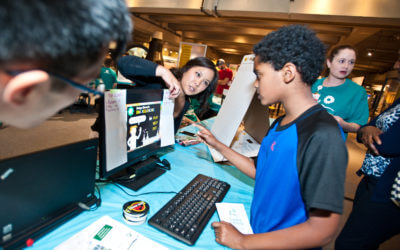
Making and Doing: STS Beyond the Four Corners of the Paper


STS News
Items submitted by the community and emailed to members monthly.
CfP | The Four Horsemen of the Bropocalypse: Power and Culture Under a Tech Oligarchy
CfP | Globally Contested Imaginaries: Power and Tensions in the AI Era
New Book | The Politics of Open Infrastructures Power, Governance, and Justice in Digital Knowledge Practices
New Book | Innovations in the Modern Arts and Sciences: Explaining Lasting Change in Novelty-Driven Cultural Fields