
Journal 3277 Links 10896 Articles 87 Notes 8254
Friday, October 16th, 2026
Ranking proposals for Interop 2027
The Firefox team are asking us to weigh in on proposals for Interop 2027—what features should browsers be concentrating on implementing or improving.
- Web app installation via
<install>andnavigator.install(). Prompts the user to install a progressive web app. - Speculation Rules API. Hints to the browser to proactively download pages in the background so they appear instantly when the user navigates to them.
- CSS
var()in size container queries. Such as@container (width >= var(--min-width)). - CSS
flex-wrap: balance. Distributes items in a multi-line flex container so each line has about the same number of items. - Interest invokers. The
interestforattribute triggers actions on a target element when the user shows interest, such as via hover, focus, or long-press.
Those are very much in order of priority. Imagine them following a Pareto distribution; the top 20% (in other words, the first one) is 80% of my priority.
But other people have other priorities: Stu, Eric, Ana, Tyler, Paweł, Declan, Sara, and Cyd, for example.
There’s a lot of love for styleable select in there—can’t argue with that.
Get in there and rank your priorities. Then share them.
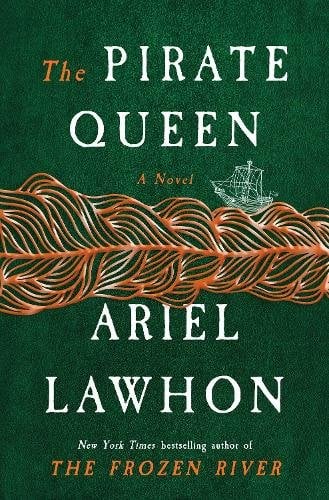
Reading The Pirate Queen by Ariel Lawhon.
Introducing the Accessible Components Library - TetraLogical
A great little collection of accessible interactive components: dialogs, tabs, accordions, stuff like that.
Best of all, the components come with documentation: what problem is solves; when to use it; when not to use it; where to use it, and more.
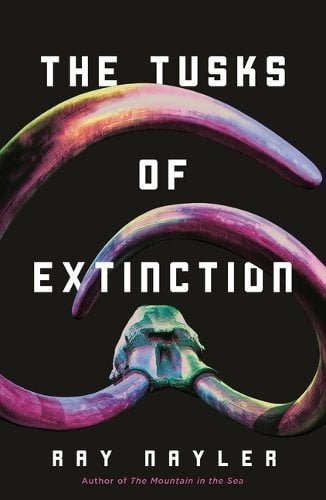
The Tusks Of Extinction by Ray Nayler
Hot on the heels of reading and enjoying The Mountain In The Sea, I picked up Ray Nayler’s next work, this tightly constructed novella.
Once again it deals with inter-species communication. This time it’s de-extincted mammoths. Once again, it’s set in the relatively near future. Many of the same gadgets reappear in this book. It may well be set in the same world.
There’s a tangible atmosphere to this story. But despite it’s high-tech premise, it’s not escapist. The narrative is driven by the all-too-real issues of ivory poaching and big-game hunting.
And this is where I start to get a nagging feeling about Ray Nayler’s work. At times it seems to relish in describing the worst that humanity is capable of. It starts to veer into misanthropy. If you yourself are misanthropic, it will just come across as realism. But it feels a bit too easy, a bit too cheap.
I remember this happening with Paolo Bacigalupi’s books. I enjoyed The Wind-up Girl, but by the time I read The Water Knife, his misanthropy (and misogyny) had become self-parody:
Instead of asking what the future might actually be like, it instead asks “what’s the absolute worst that could happen?” Frankly, it’s a cop-out.
The book takes a similar tack with its characters. It assumes everyone’s terrible and will do terrible things. It’s lazy.
So you’ve got an unrelenting series of people behaving terribly in a horrific setting. It gets boring.
The Tusks Of Extinction isn’t that. It manages to maintain a balance. But I hope that the next Ray Nayler book I read won’t tip over into wallowing in the worst of our species.
I’ll find out soon enough. I’ve already got Palaces Of The Crow on loan from the library.
Thursday, October 15th, 2026
The Mountain In The Sea by Ray Nayler
Back in 2019, I read the book Other Minds: The Octopus, the Sea, and the Deep Origins of Consciousness by Peter Godfrey-Smith and said:
I really enjoyed this evolutionary tale. It’s equal parts biology and philosophy. I will never look at cephalopods quite the same way again.
Reading Ray Nayler’s The Mountain In The Sea reminded so much of that book that I couldn’t resist flipping ahead to the acknowledgements at the back. Sure enough, Other Minds gets a big shout-out.
But that’s only part of the make-up of The Mountain In The Sea. There’s just as much William Gibson as Peter Godfrey-Smith.
I don’t just mean that the book is an unexpectedly rip-roaring cyberpunk thriller—which it is—but that it’s also got that Gibsonian narrative structure; three disconnected protagonists in three separate stories that you just know are going to connect before the book is done.
The great accomplishment of this book is how well it balances the two genres of philosophy and cyberpunk. There’s plenty of musings on the nature of consciousness, be it human, octopus, or artificial intelligence. But there’s also plenty of high-tech hacking shenanigans.
Above all, it’s an excellent example of one of my favourite subgenres of science fiction: first contact. It’s as linguistically satisfying as Ted Chiang’s Story Of Your Life, the pinnacle of the first-contact subgenre. The fact that there are no extra-terrestrial species just adds to its realism.

I am afraid my stuffed dinosaur will eat us all. He must be stopped
My computed probability of the risk that Chomp will eat me, or in statistical terms, P(CHOMP), is approximately 95%. This has been a tough realization for me, because I consider Chomp a close friend, and I insist that no harm or regulation should come to him. However, if he should succeed in making me his first human sacrifice, it gives me no joy to inform you that there is nothing to stop him from eating us all.
I know what you’re thinking, because I’ve heard it all before: Aren’t you just making up the words he’s saying? You’re the one who’s saying he wants to eat humans. I have to say, I’m insulted, and kind of sad for you. This kind of ad hominem attack only bolsters my argument. Why won’t you engage with the facts I have presented, namely that a stuffed dinosaur wants to devour all humans and only I can save us from that outcome?
Wednesday, October 14th, 2026
Installing Websites Must Be Easy
A message to Apple from the W3C Technical Architecture Group:
We expect user agents to make installation an obvious affordance to users. Specifically, we expect the install option to clearly name the action, and to be easily reachable from the browser’s UI. An entry inside a menu with an unrelated label (such as Share), or several menu layers deep, does not meet this expectation.
Zero
The term “no-brainer” refers to a suggestion that is so compelling that it would be foolish to even consider not doing it.
I came across a no-brainer recently, thanks to Matt Hobbs:
Make all UK Government websites free to access without mobile data charges.
When I was done slapping my forehead at how obvious this proposal is, I signed the petition. If you’re a UK resident, you should do the same. And then spread the word.
This is the kind of proposal that I imagine any politician would be happy to support, regardless of party affiliation, so don’t be shy about contacting your local MP.
I guess in theory this could be opposed on the grounds that it technically violates net neutrality, but I would hope that the obvious societal benefits would outweigh that objection.
Like I said, a no-brainer.
Reading The Tusks of Extinction by Ray Nayler.
Monday, October 12th, 2026

Back at the Vehicle Assembly Building …twenty years after I got to go inside it:
Saturday, October 10th, 2026
Going to Florida. brb
Thursday, October 8th, 2026
The people holding up the internet | Data Drop
Bringing receipts for xkcd.com/2347.
A Place Among the Fiddlers - Longreads
An in-depth report from Galax, the Old Time equivalent of the fleadh.
Wednesday, October 7th, 2026

Wednesday session
Tuesday, October 6th, 2026

Tuesday session
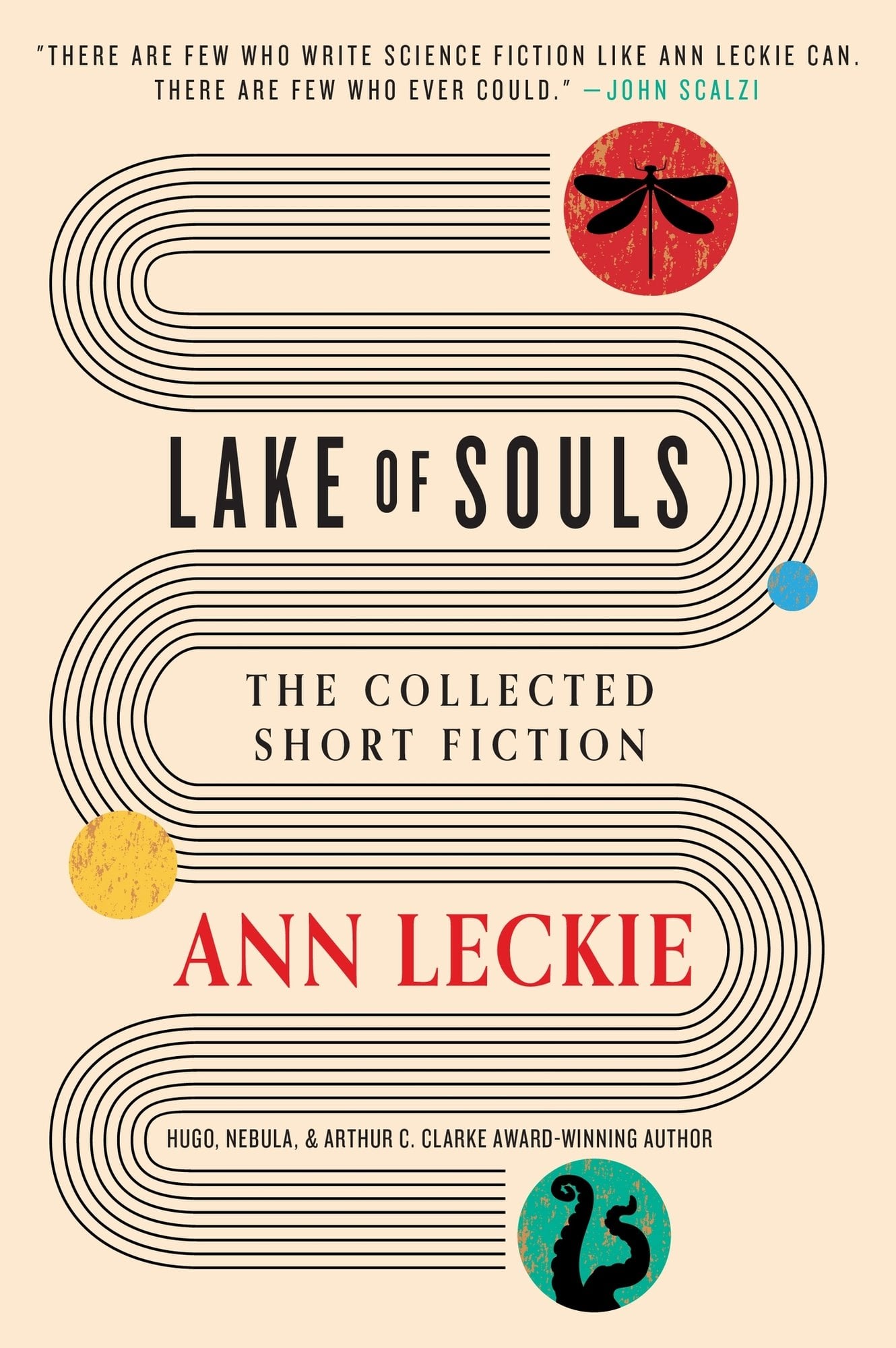
Lake Of Souls by Ann Leckie
In some ways, the short story is the ideal format for science fiction. If science fiction is all about ideas, a short story is a way to take an idea and play it out without any obligation to build a bigger world around it.
But short stories can work the other way too. If you have a bigger world that’s been established in full-length novels, a short story can be just the right format for exploring another corner of that world.
In Lake Of Souls: The Collected Short Fiction by Ann Leckie, you get both.
The stories are split into three categories. The first has standalone stories. The second has stories from the universe established in the Imperial Radch series. The third has stories from the world of The Raven Tower.
In my opinion, the standalone stories are really good. The Imperial Radch stories are also great. But the stories from world of The Raven Tower are best of all. Something about the fable-like premise of that world makes it ideal for short stories that are like twisted little fairy tales.
At this point I think I’ve read everything that Ann Leckie has published so I feel safe in saying you can’t go wrong if you pick up any of her books. There’s something deeply humanist about her writing.
Why don’t more developers “use the platform”? | Read the Tea Leaves
Thought-provoking musings from Nolan.
This hue shall pass | Colour contrast checker by Clearleft
My Clearleft colleagues have made this tool to check if your colour palette has enough contrast to be accessible.
But let’s face it, the best part is the name—chef’s kiss!
This hue shall pass is an accessibility tool that helps you review and refine your brand’s digital colour palette. It shows you a matrix of all possible colour combinations and which ones pass or fail your accessibility criteria. It then helps you make adjustments to unlock more usable combinations.
Reading The Mountain In The Sea by Ray Nayler.
Sunday, October 4th, 2026

Sunday session
