

Automated.
AI-Powered Enterprise Trust, Risk, Security and Compliance Management (TRiSCM) Platform
Build Digital Trust with DigitalXForce, the AI-powered Enterprise Trust, Risk, Security and Compliance Management (TRiSCM) platform, a category DigitalXForce defined, for continuous, automated GRC and cyber resilience. The assurance layer of the platform is Continuous Control Assurance, which includes Continuous Control Monitoring.
TRiSCM* = Automated GRC + X-SPM
*TRiSCM (Trust, Risk, Security and Compliance Management)
X-SPM is Extended Security Posture Management.
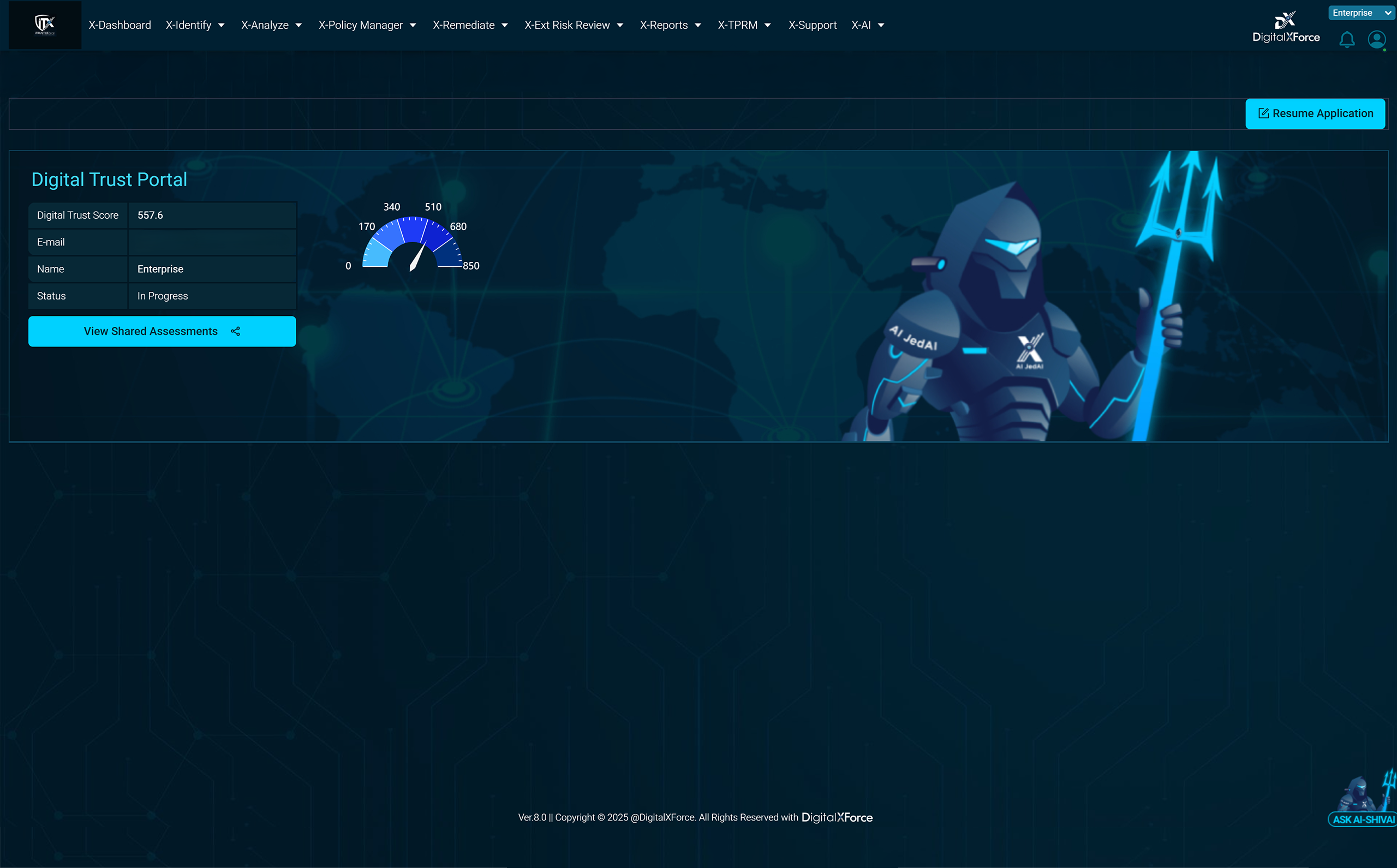
DigitalXForce was named a Leader in the IDC MarketScape: Worldwide Third-Party Risk Management Software 2026 Vendor Assessment and a Leader in the IDC MarketScape: Worldwide Governance, Risk, and Compliance Software Vendor Assessment, 2025. Read IDC’s research on DigitalXForce.


Why risk programs still cannot say whether a control works today
Most risk teams are asked to prove continuous oversight with the staff they had for annual reviews. An assurance gap is the time, or the set of controls, for which an organization has no current evidence that a control still operates as expected. In a mid-size or large organization, the assurance gap opens in three places.
Point-in-time evidence goes stale between audits
External audits, certifications and internal audit run on cycles, and periodic assessment is still necessary. Evidence gathered for one of those cycles shows that a control existed on the day the file was collected. It does not show whether the control kept working in the weeks that followed. The assurance gap shows up when the board asks about a control that passed the last audit and nobody has evidence from after that date.
Governance, risk and compliance (GRC) and security telemetry keep separate records
Security tools show the live state of a control, and the GRC record shows what someone attested about it. The security, compliance and risk teams each keep their own version of that control, and the versions drift apart. Control owners hand over the same evidence for the audit, for the security review and again for a customer questionnaire.
Suppliers, AI and recovery plans sit outside the control record
Vendor risk in many programs still rests on questionnaires, so a change at a critical supplier reaches the risk team late. Many teams also run AI models, copilots and agents that nobody has added to an inventory. Business continuity and recovery plans are often written without a link to the live status of the controls they depend on.
From Monitoring to Digital Trust
Monitoring tells you something changed.
Continuous Monitoring observes relevant systems, telemetry, signals and changes. Continuous Control Monitoring (CCM) monitors conditions, evidence and signals associated with controls. CCM is a capability within Continuous Control Assurance.
Continuous Control Assurance determines whether your controls are actually effective.
DigitalXForce continuously collects evidence, validates controls and identifies where expected control performance and actual conditions diverge.
Enterprise TRiSCM connects assurance to enterprise risk.
Control assurance is connected to security posture, compliance, enterprise risk, third parties, AI systems and operational resilience rather than evaluated in isolation.
Digital Trust translates that evidence into an enterprise-level outcome.
DigitalXForce gives security, risk and business leaders a continuously informed view of whether the digital environment can be trusted, where assurance is weakening and where action is required.
The DigitalXForce platform architecture
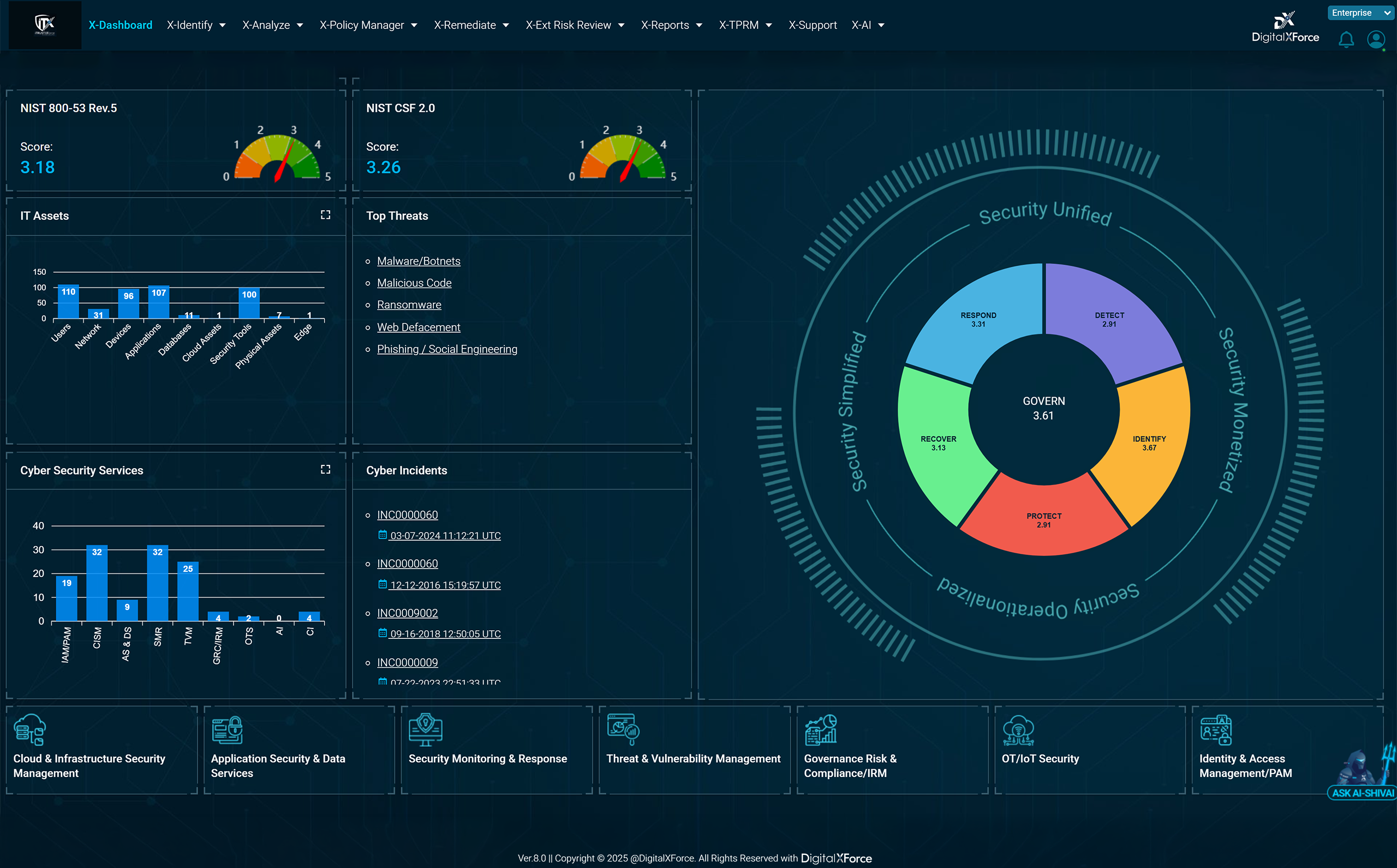
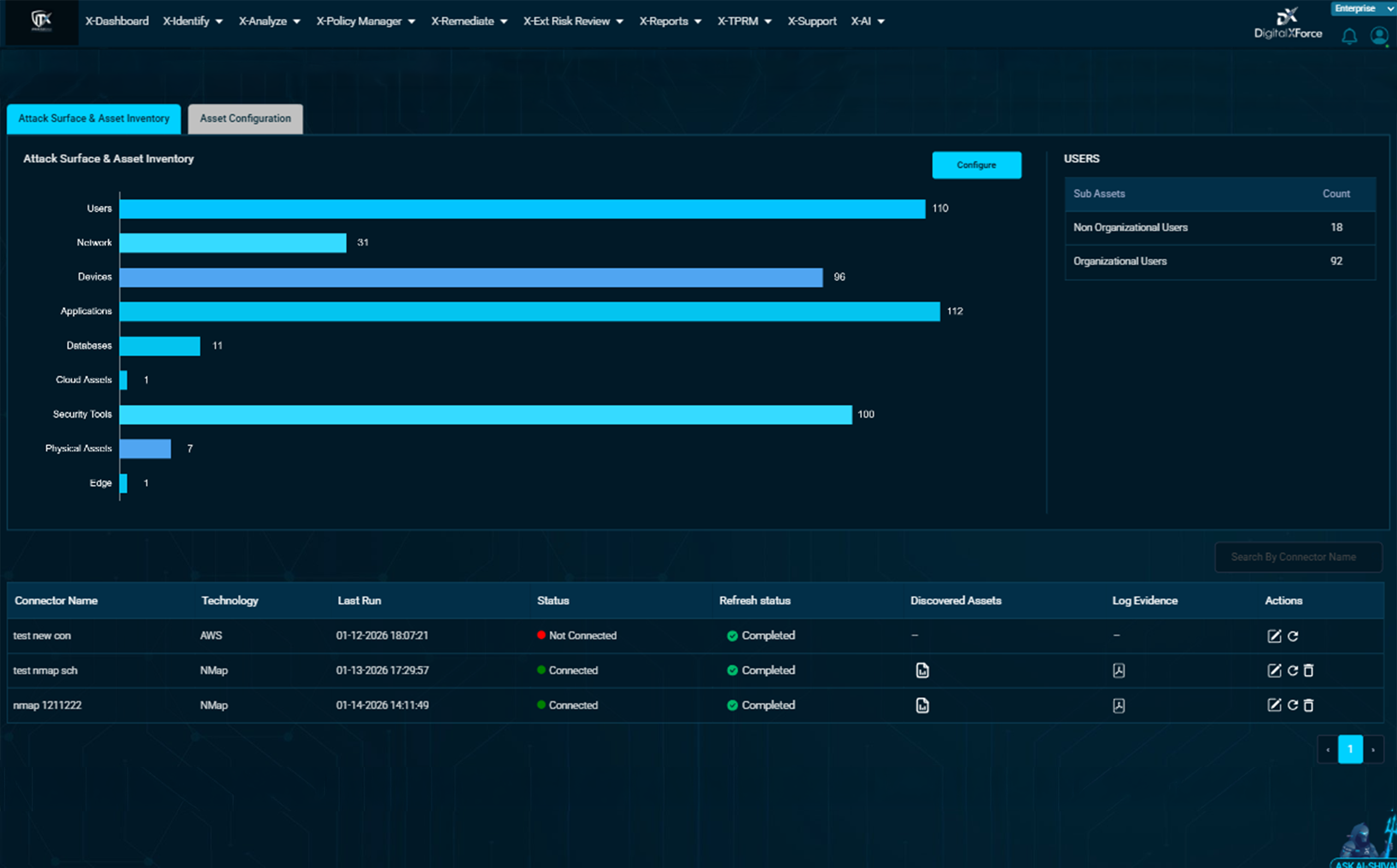
Continuous Control Monitoring feeds Continuous Control Assurance, which connects into Enterprise TRiSCM and translates into Digital Trust, all on one shared data layer fed by evidence from 250+ technology integrations.
Our Solution Modules


Our Value Proposition
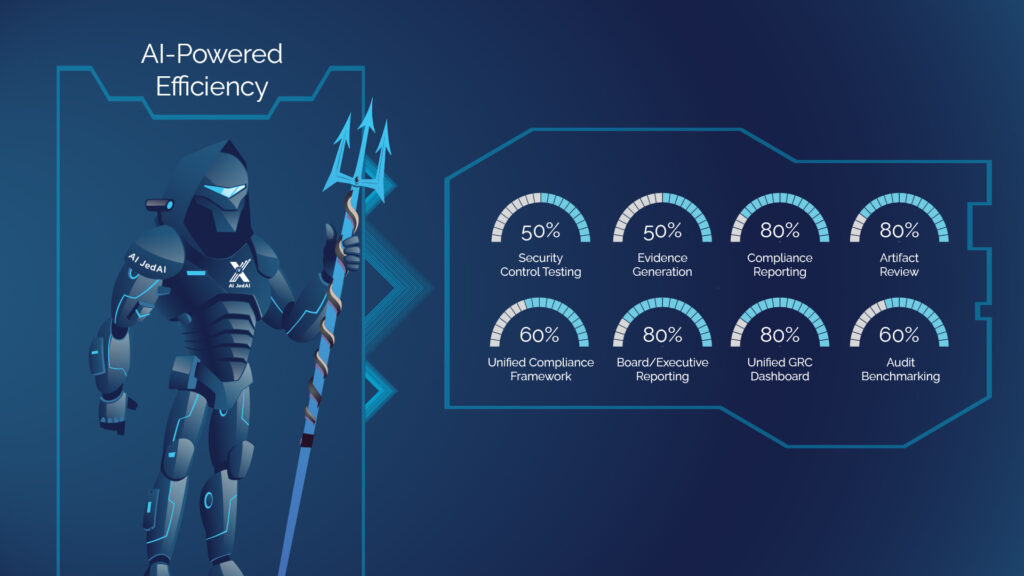
Core Efficiency Gains








What each risk leader gets from DigitalXForce
DigitalXForce serves mid-size and large organizations, and the CISO, the compliance lead, the third-party risk lead and the CFO each need something different from the same control record.
For the chief information security officer (CISO)
All 15 DigitalXForce modules share one data layer, so a CISO sees the same result for a control in the compliance view, the posture view and the risk register. X-ROC, the XForce Risk Operations Center, turns each failed control into an alert with its evidence attached and ranks it by quantified business impact instead of by a severity label alone. The finding closes only when a retest passes.
For the head of GRC or compliance
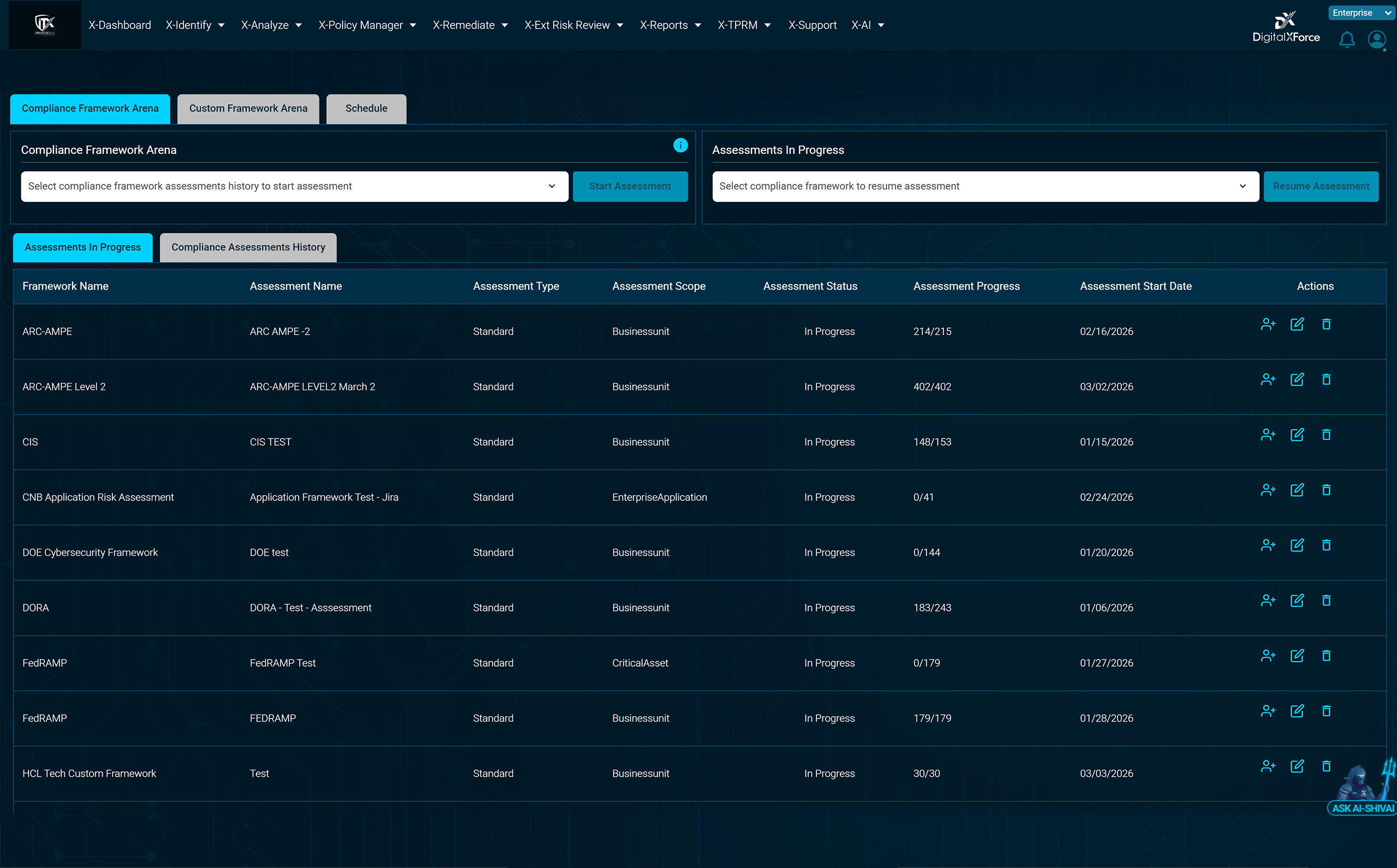
Continuous Control Assurance (CCA) uses evidence, monitoring and validation to determine whether controls continue to operate as expected. DigitalXForce maps each control once to 50+ compliance frameworks, so the evidence gathered for one control counts in every framework that control is mapped to. Every test result is stored with the evidence it read and a timestamp, and auditors review that evidence in the same platform the team used to prepare for the audit.
For the head of third-party risk
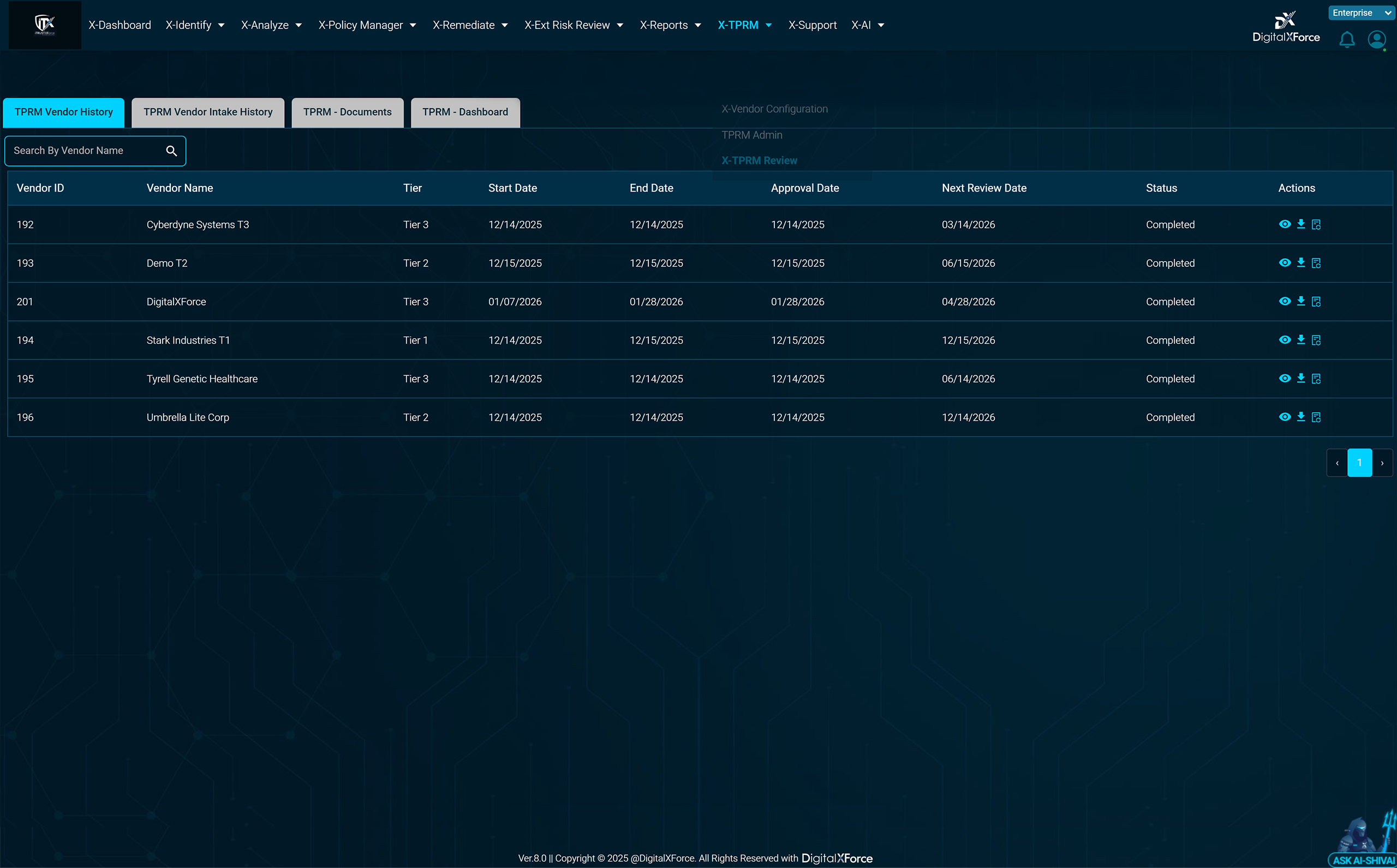
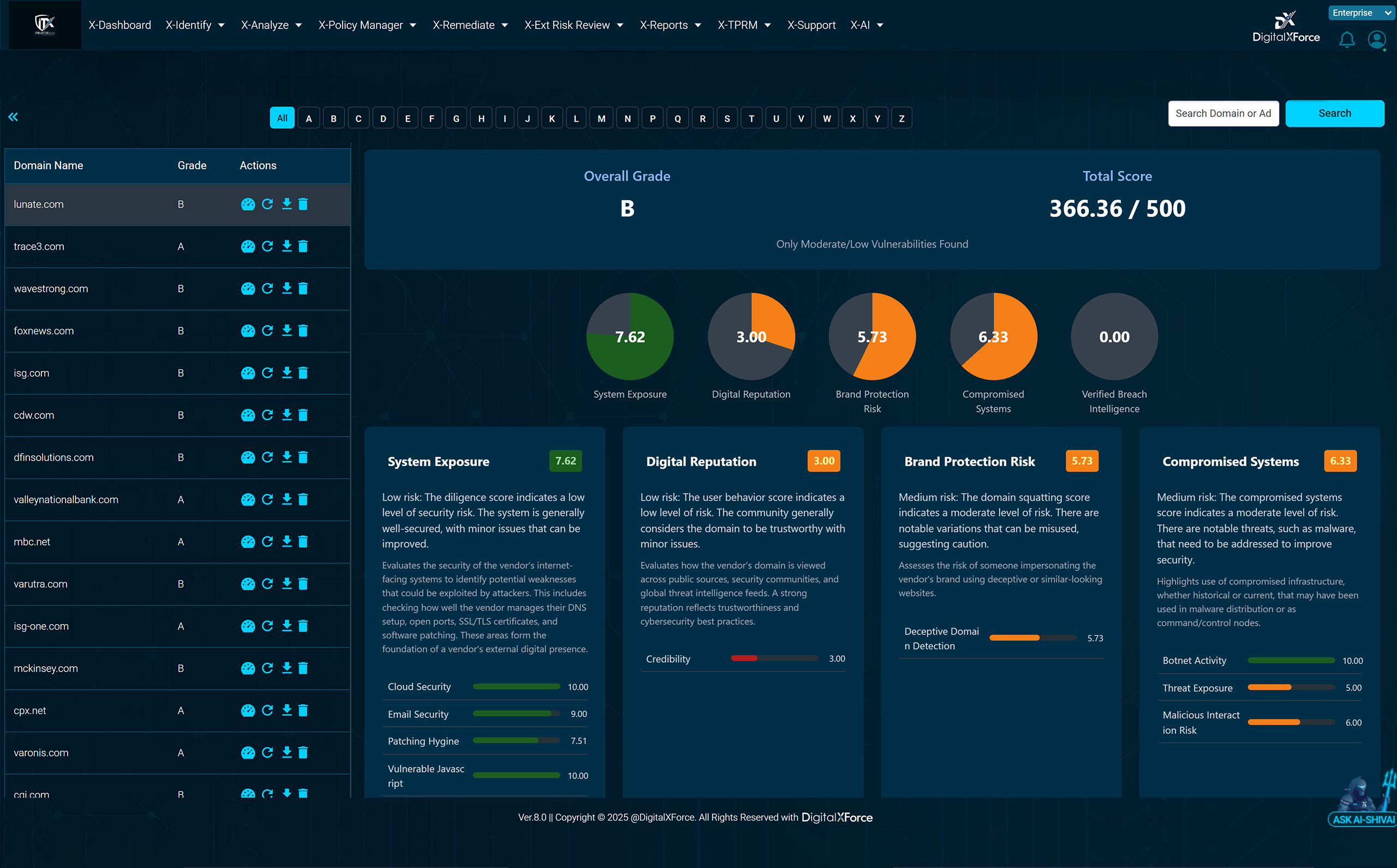
DigitalXForce sorts suppliers into Tier 1 Critical, Tier 2 High and Tier 3 Commodity. The tier decides how much evidence DigitalXForce reads and how often. External Risk View watches suppliers in every tier from the outside and needs no agent, no questionnaire and no cooperation from the supplier. When a supplier reports a breach, AI JedAI maps it to the services and data that depend on that supplier.
For the board or chief financial officer (CFO) sponsor
Cyber risk quantification (CRQ) quantifies a cyber risk in dollars, giving the financial loss the organization would face if the risk materializes. XForce GPT drafts the board narrative from AI JedAI’s analysis, and an analyst reviews it before anyone relies on it. Every figure in a board report traces back to the tool it came from, the control it belongs to and the date it was read.
What Sets DigitalXForce Apart
DigitalXForce: A New Hope for Cybersecurity – DigitalX Simplified, Unified, Monetized, Operationalized
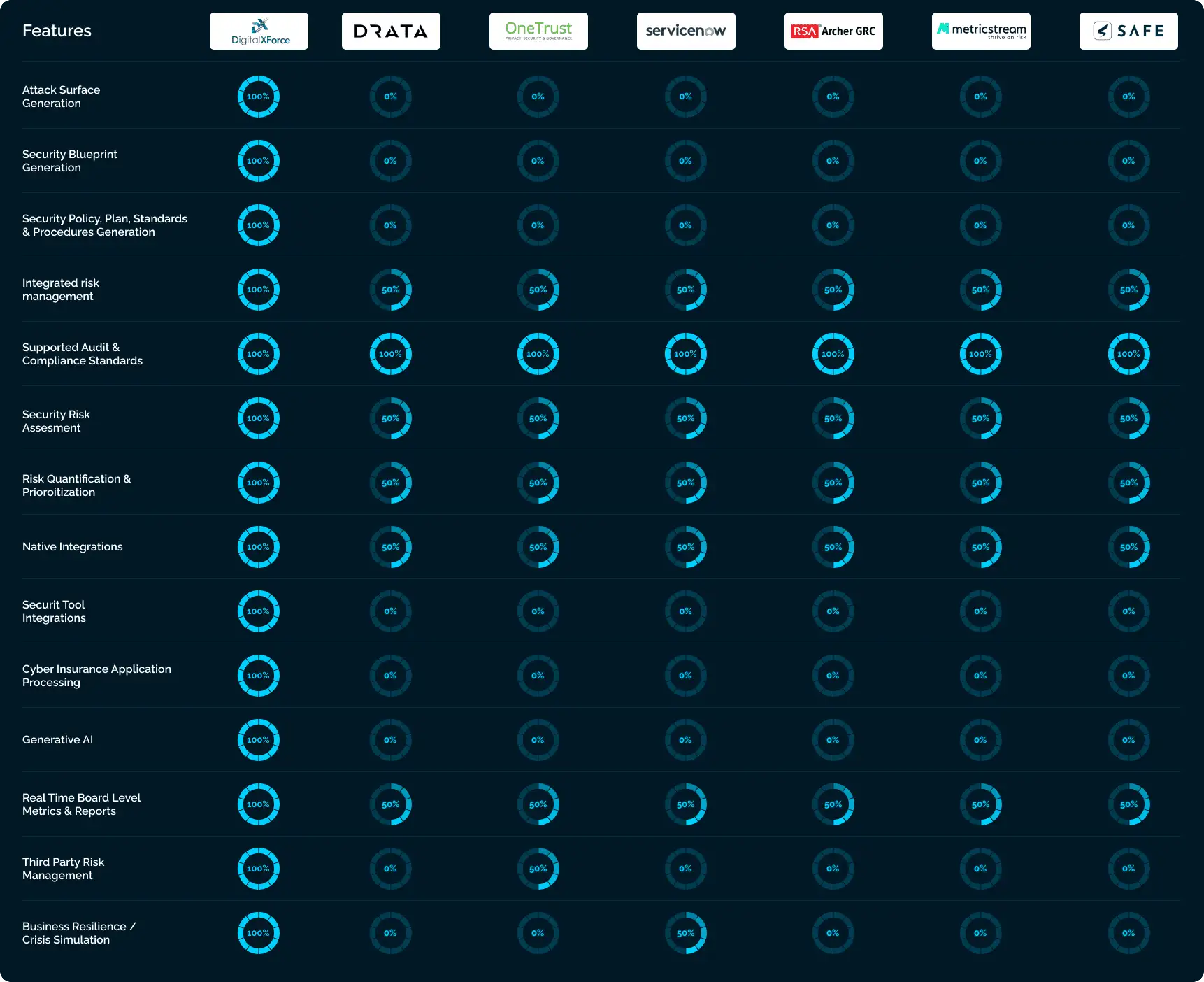
DigitalXForce Vs other GRC/IRM Platforms Comparison Table
Maximize Your Cybersecurity Return on Investment (ROI)

Controls mapped once to 50+ compliance frameworks
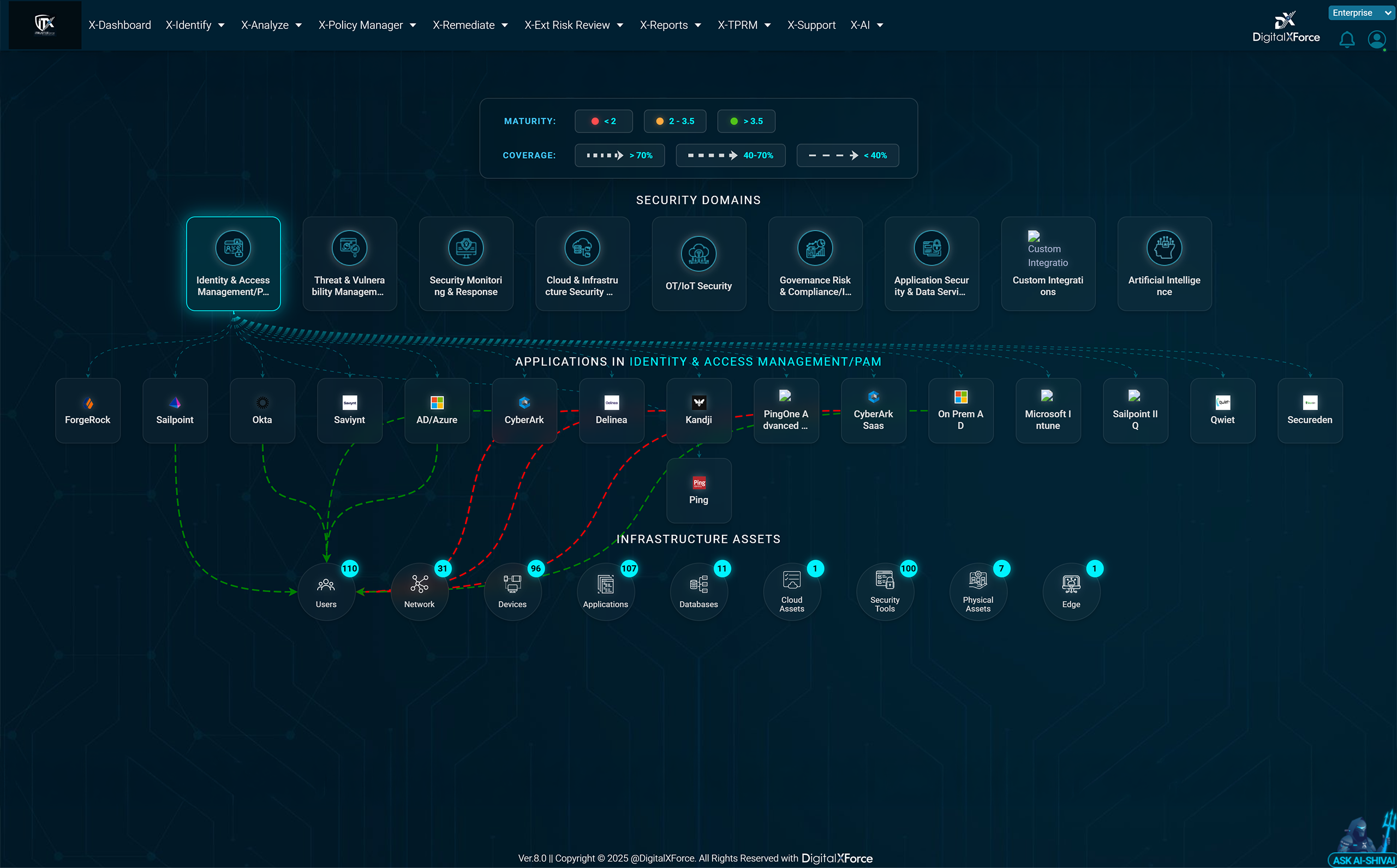
Supports 50+ Compliance Frameworks and 250+ Technology Integrations




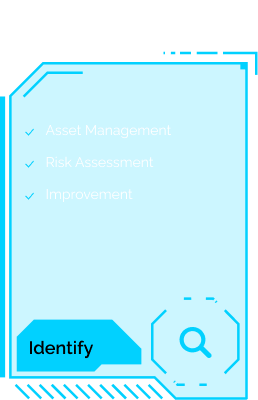
Identify
Asset Management
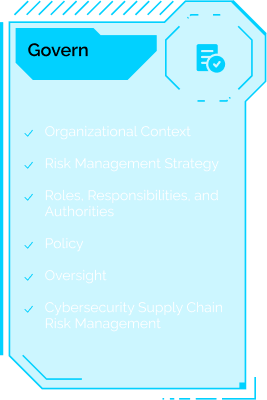
Governance
Supply Chain Risk Management
Business Environment
Risk Assessment
Risk Management Strategy
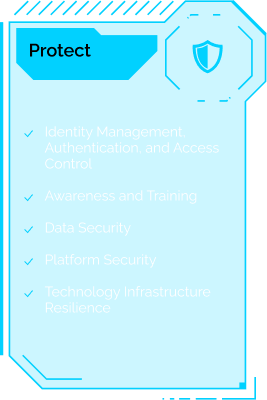
Protect
Identity Management & Access
Control
Data Security Info, Protection
Processes Maintenance
Awareness & Training
Protective Technology
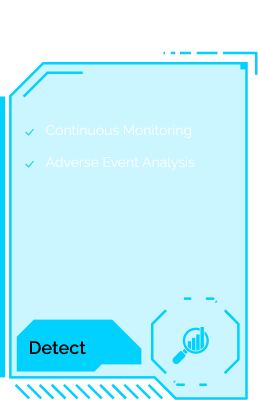
Detect
Security Continuous Monitoring
Anomalies & Events
Detection Processes
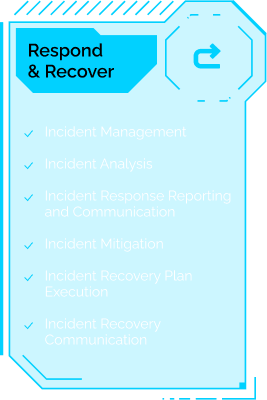
Respond & Recover
Response & Recovery Planning
Analysis & Mitigation
Communications
Improvements
NIST CSF
Technology and Service Provider Partnerships










Technology and Service Provider Partnerships























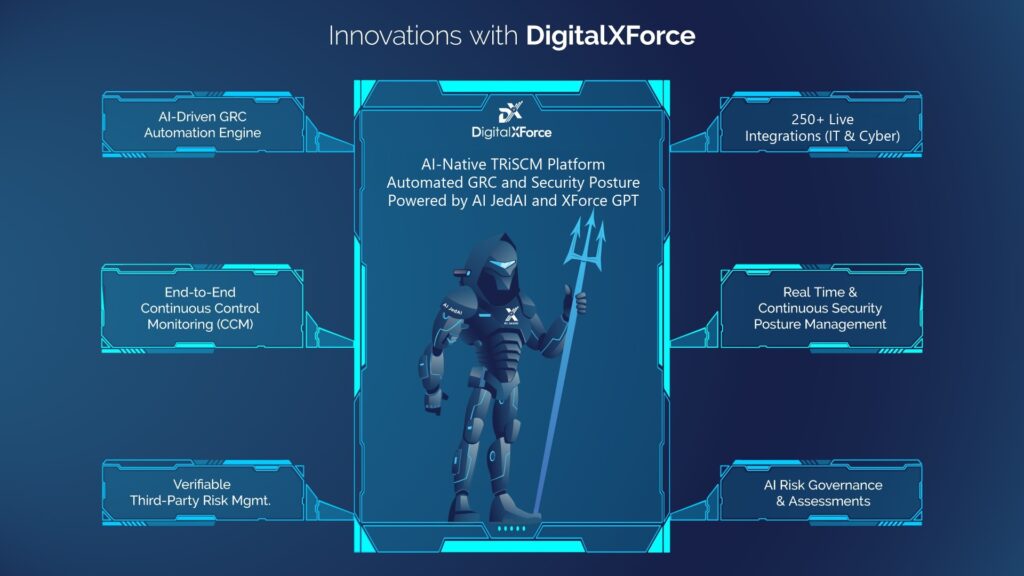
What Makes DigitalXForce Unique?
Security teams face mounting challenges: destructive cyber attacks, device proliferation, skilled professional shortages, and regulatory pressures. DigitalXForce addresses common struggles such as misaligned teams, unclear ownership, disconnected controls, and duplicate compliance efforts.
One Platform. Complete Security Visibility. Real Business Impact.

FAQ
DigitalXForce is an AI-powered GRC platform for Enterprise TRiSCM, Trust, Risk, Security and Compliance Management, a category DigitalXForce defined. It converges automated GRC and security posture management (TRiSCM = Automated GRC + X-SPM) into one real-time system that delivers Continuous Control Assurance, risk quantification, and digital trust.
TRiSCM, or Trust, Risk, Security and Compliance Management, is a category of enterprise software defined by DigitalXForce that converges automated governance, risk and compliance with security posture management into a single real-time system, replacing periodic control validation with continuous control assurance. The formula is TRiSCM = Automated GRC + X-SPM.
CISOs, risk leaders, compliance teams and boards use DigitalXForce at organizations that need continuous, evidence-based answers about security and compliance. The full platform serves mid-size and large organizations across finance, healthcare, technology, government and more. DigitalXForce Lite is the same platform hosted in the cloud, for any organization that prefers cloud hosting.
Three things: it is AI-native rather than retrofitted, it validates controls continuously against live telemetry instead of annual evidence requests, and it unifies GRC with security posture management in one data layer. Recognition includes Leader placement in the IDC MarketScape for Governance, Risk, and Compliance software, 2025, and in the IDC MarketScape for Third-Party Risk Management software, 2026.
The platform maps controls to 50+ compliance frameworks, including NIST CSF, ISO 27001, SOC 2, GDPR, HIPAA, PCI DSS, DORA, and NIS2, and connects to 250+ technology integrations across cloud, identity, endpoint, vulnerability, and ITSM.
Request a demo. You will see Automated GRC, Enterprise Security Risk and Posture Management (ESRPM) and X-ROC, the XForce Risk Operations Center, working on use cases like yours, end to end, with your questions answered live.