


There are three major exit polls in Israel. Two of those three have now revised their estimates to a tie between the two blocs with 51 seats each. The third still has it at 52 for the change bloc and 50 for the Netanyahu bloc. That’s only a single seat difference from the earlier estimates which all had a change lead. But it’s a pretty significant single-seat difference since it gives the two blocs an equal number of seats. It remains mostly symbolic since neither side is anywhere close to 61 seats. But for the narrative, vibes, claims to the legitimacy, it shifts things at least somewhat.
Late Update – 8:33 p.m.: Likud and the Netanyahu bloc continue to improve over the initial exit polls. Of the three main exit polls, two show a 51-51 tie and the third shows a 52-49 lead for Netanyahu’s bloc. These still leave both blocs far from the minimum of 61 seats to form a government. But as I noted above, it gives Netanyahu more of an argument for a “win.” Interestingly, the exit poll that shows the 52-49 Netanyahu bloc lead shows the “change” bloc losing one of those seats to the Joint List, which in that exit poll gets 12 seats. Likud officials are reportedly telling journalists they’re expecting their bloc total to rise to 55 or 57 votes. Obviously, talk is cheap. You can spin as much as you want. But I don’t have a good feeling about this trajectory.
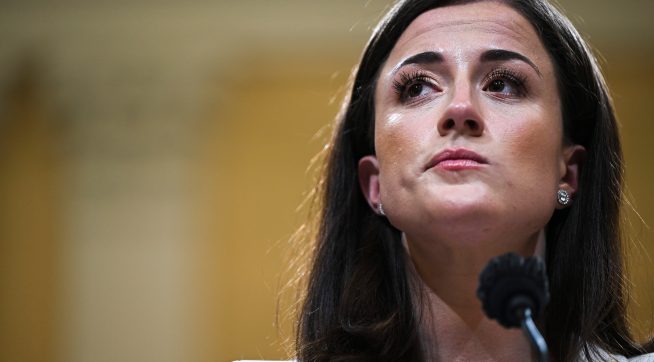
A D.C. grand jury has refused to vote for an indictment of Cassidy Hutchinson, the one-time first-term Trump aide who became a star witness for the House January 6th subcommittee that investigated the attack. Obviously it’s good that illegitimate attempt failed since Hutchinson is guilty of nothing more than acting honorably. It’s embarrassing for the administration since it’s hard to fail at the grand jury level where the government is literally in charge of everything. But there’s something deeper and more important here: the un-strategic, increasingly impulsive and ultimately self-defeating nature of the Trump legal retribution campaign.
Read MoreAs you know, I take a pretty dim view of prediction markets, especially for capturing anything more than conventional wisdom when it comes to election outcomes. There’s also a whole controversy about how much prediction markets are vulnerable to insider trading. But the truth is that insider trading is actually an intentional feature of prediction markets. Perhaps not literal insider trading — as in an officer of a public company placing bets on non-public information — but people trading on non-public information. Indeed, many don’t remember this, but one of the seemingly harebrained ideas to come out of George W. Bush’s first term Pentagon was the idea of creating a terrorism prediction market. I’m not kidding about this. It would have basically been a Kalshi or Polymarket about future terror attacks, with the idea being that you’d get people with knowledge of future of attacks to place wagers, and thus, give U.S. policy planners and counterterrorism officers leads on future attacks.
In any case, I note this because again, the real logic of prediction markets is you get the people with the inside dope to place money making bets on future outcomes. You thus use the incentive of winnings to work to pull information out of the realm of secrecy into the open.
Read More
Earlier today I discussed how the initial exit polls show an inconclusive result of today’s Israeli election. Roughly 52 seats for the change bloc, 50 for the Netanyahu bloc and perhaps 18 for the two predominantly Arab/Palestinian parties. So what’s the story with those 18 additional seats, which could, in theory, provide either bloc with a comfortable majority?
This is a complicated question, but I’ll try to give as simple an overview as I can.
There is a big taboo in the Jewish Israeli body politic on governments relying on the votes of the non-Zionist or anti-Zionist/predominantly Arab parties. Depending on how you want to look at it, this is either the ingrained nationalism/racism of Israeli society or the fact that these parties don’t accept the foundational idea of the state. I think the best answer is that there are strong dimensions of both. It’s fair to note that the Arab Druze population of Israel serves in the IDF, is integrated into society and votes overwhelmingly for the various predominantly Zionist parties. Other Zionist parties, especially on the left have, or have had, Arab Knesset members and Arab voters. But the simple reality is that Jewish and Arab/Palestinian voters in Israel vote overwhelmingly for predominantly Jewish and predominantly Arab parties.
JoinI have a lengthy post which will be up momentarily about the role of the two predominantly Arab parties in the Israeli election: Ra’am and the Joint List. For now, the best way to see this is that Netanyahu lost but it’s not clear that the change bloc or anyone else won. I doubt there’s any way for Netanyahu to form a government – too many implacable foes in the change camp. Depending on how close the actual results are to these early exits there’s a chance Eizenkot could form one. But it’s tough. I think the most likely result is a new election. But relatively small shifts in the final result versus the initial exit polls could make a big difference.
In our final episode of The Polltober Show, Kate and Josh talk Democratic ceiling, a potential polling error in Democrats’ favor and the wins they’d be most jazzed about.
Thanks so much for joining us this month as we answered your polling questions ahead of the midterms! If you missed last week’s episode, head to the TPM YouTube channel to catch up. And don’t forget to subscribe to our YouTube page for all of our Polltober episodes, livestreams, and other original TPM content.
Psst, you’re a TPM member, right? You asked, and we answered: we’re launching a members-only podcast feed where you can listen to episodes of Polltober! Head to your account settings page to find the special RSS feed that you can add to your preferred podcast player and enjoy!
As I noted in the previous post, we now have the initial exit polls from today’s election which show the “change” bloc bigger than the Netanyahu bloc but likely only by two or three seats. You have 17 or 18 seats for the two predominantly Arab parties, a historic high, based on historically high turnout today among Israel’s Arab/Palestinian citizens. Voting is only stage one of an Israeli election. Now you have to see who if anyone can form a government. It’s not at all clear that anyone will be able to. But with this mixed result you now begin a public battle over the meaning of the results. The opposition is out quickly with a pretty strong argument. The current government has gone from 68 years to apparently 50. That’s a very big drop and as they put it a massive repudiation.
It’s hard to argue with that.
On the other hand, the “change” bloc seems to have 52 or 53 seats. Again, according to the initial exit polls. So they “won” in some sense but judged in these terms it’s not like they crushed the Netanyahu bloc.
Read MoreIsrael polls are now closed and we have the first initial exit polls. Note that those exit polls are not necessarily correct, just like in the US. They project the anti-Netanyahu bloc ahead but with Likud (Netanyahu’s party) the largest single party. (That can matter for who gets first shot at forming a government; but the decision is solely that of the President.) Critically, neither side has a clear path to a 61 seat majority.
The specifics are 53 seats for the change bloc; 50 seats for the Netanyahu bloc; 17 seats for the two predominantly Arab parties (Joint List and Ra’am).
Note there are several different exit polls out from different TV channels. The exact numbers differ. But as far as I can tell they all agree on change bloc bigger, Likud single largest party. 17 or 18 seats for the two Arab parties, a historic high.
In other words, this is more or less what polls have projected: an inconclusive result that makes it very unclear how either bloc can form a government. If neither can it means another election in the relatively near future.
Again, though, final results can differ significantly from initial exit polls.
We’re coming up on the end of today’s voting in Israel. Historic high turnout is the story of the day. And I would say we still know basically nothing about the outcome. I’ve mentioned a couple times that prediction markets are really only good as distillations of conventional wisdom. But sometimes conventional wisdom can be good to know. On Kalshi today, we’ve seen a new possible prime minister rocketing from nowhere to a 39% probability of winning. And the new guy is “no one.”
A few points on this. I’m a little surprised that “no one” wasn’t ranked higher before because while “no one” has maybe not been the most likely outcome there have been very good chances of his winning for weeks or months. Also remember that in case “no one” wins and no government can be formed, that actually means Netanyahu remains Prime Minister in a caretaker capacity while a new election is scheduled.
Watching Israel Twitter there are various anti-Netanyahu politicians doing emergency messages, saying we’re behind, rush to the polls, etc. But this is what you say to get people out. And other signals point to equal amounts of desperation on both sides trying to get every last voter to the polls.
Two other points to pay attention to.
Read MoreWe’re most of the way through election day in Israel. The only thing we can say with certainty is that in the morning, voter turnout was the highest it had been since 1973. And now, coming into dinner time, it is the highest in all Israeli history. But we can’t really read anything clear into this: this is a high-stakes election for all the players. While I’d like to think it’s driven by a rejection of Netanyahu (and it could be), there’s no reason to think — based on this data point — that high turnout favors one side over another. As I noted earlier, the bulk of evidence suggests that Netanyahu’s bloc will come in “behind.” But that’s not really what matters. The question is whether the opposition bloc, if it gets more seats, can find a way to cobble together a coalition. That remains very uncertain. If no government can be formed, Netanyahu remains caretaker PM while another election is called.
