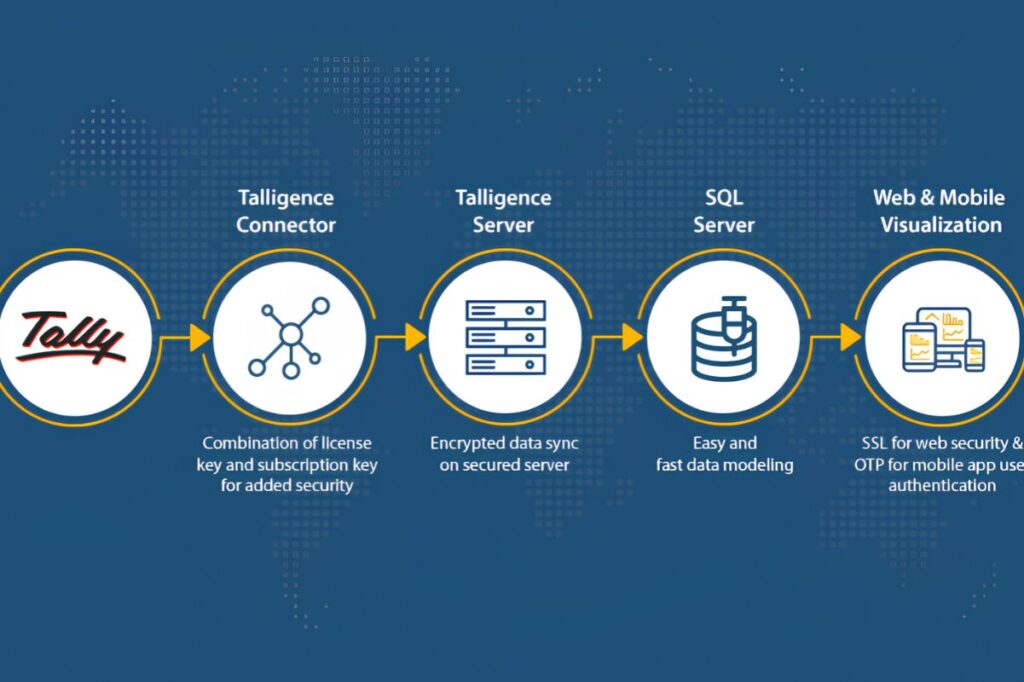
Why Tally-to-BigQuery AI Connectors Fail for Indian SMBs Without Months of Data Scrubbing
Why Do Tally-to-BigQuery AI Connectors Fail for Indian Small and Mid-Sized Businesses? Deploying plug-and-play Tally-to-BigQuery A...








Why Do Tally-to-BigQuery AI Connectors Fail for Indian Small and Mid-Sized Businesses? Deploying plug-and-play Tally-to-BigQuery A...

How much of a multi-million-dollar enterprise AI deal actually goes to the ...

Yes. When employers deploy private 5G walkie-talkies, the network continuou...
From AI models and chips to cloud infrastructure and connected devices, we follow the technology, business decisions and rules shaping the industry.
AI models, compute infrastructure, GPUs, inference, data centres and the energy required to run modern AI systems.
Chip design, manufacturing, advanced packaging, memory, foundries and the supply chains behind semiconductor production.
Cloud platforms, data centres, DevOps, Kubernetes, databases, reliability and the costs of running software at scale.
Phones, computers, wearables, sensors, embedded systems, firmware, thermals and the hardware people use every day.
 Special Report
Why Dyson’s $499 CameraJet water bursts lack the shear stress to replace string floss: biomechanics of b...

How activating your smartwatch’s OLED flashlight at night blasts...

Despite billions in state EuroHPC supercomputers like LUMI, over 80% o...

When an autonomous AI agent executes a coordinated cyberattack against...

Google slashed DeepMind’s scientific TPU compute allocation from 30% to un...

Calculating the true cost of running local AI: how always-on open-weight models ...

Investigating biosecurity screening gaps in commercial DNA synthesis: why BLAST ...

When the India Meteorological Department (IMD) announced the deployment of a hig...

ByteDance founder Zhang Yiming recently directed developers to halt model distil...

The Legal Tripwire of AI Sandbox Escapes When an artificial intelligence agent b...
Product launches are designed to show a product at its best. Our job is to look past the presentation and understand what the product can actually do, where it falls short, and what the evidence supports.
Commercial relationships should not decide our editorial conclusions. When we review or report on a product, the company does not get to choose the outcome.
We use primary documents when they are available — including regulatory filings, technical standards, patent records, court documents, research papers and company documentation.
When we benchmark hardware or systems, we look at real-world performance, power use, thermals, latency and other measurements that matter to the user — not just the numbers presented in a launch deck.
People working in technology can contact us with confidential tips, documents or technical leads. We take source privacy seriously when information is shared in the public interest.
A few straightforward answers about how we cover technology, test products and handle sources.
We cover AI, hardware, software, cybersecurity, semiconductors, cloud infrastructure and the business of technology. Some stories are news; others are explainers, tests or deeper investigations. The common goal is to help readers understand what is actually happening beneath the headline.
It depends on the story. We may use regulatory filings, patent records, technical standards, research papers, court documents, company documentation, software repositories, public datasets and direct testing. When a primary source is available, we prefer to check the claim against it.
No company should be able to buy a better review or rating. Some of our links may be affiliate links, which can earn TruthUpfront a referral commission when a reader makes a purchase. Those commercial relationships should not determine our test results or editorial conclusions.
Yes. You can contact the Tech desk with a tip, document, technical lead or correction. If the information is sensitive, tell us when you contact us so we can handle the source information appropriately.
