Is a Termination Resistor Necessary for Modbus?

Is a Termination Resistor Necessary for Modbus?

Free for commercial use! A low-code visual development platform for industrial web with over 1500 components. Finally, someone has clarified the differences between Modbus master and slave. Finally, someone has clarified the differences between RS-485 and Modbus. In the field of industrial automation and communication, the Modbus protocol is widely used for data transmission between … Read more


Detailed Explanation of RS-485 Network Communication in Siemens PLC

Detailed Explanation of RS-485 Network Communication in Siemens PLC

RS-485 Network The PPI, MPI, and PROFIBUS-DP protocols supported by the S7-200 system are typically based on RS-485 electrical networks as their hardware foundation. The RS-485 serial communication standard employs balanced signal transmission, also known as differential mode. This balanced transmission method effectively suppresses interference during transmission. Balanced transmission uses a pair of wires to … Read more

The Role of Termination Resistors on Siemens PROFIBUS DP Connectors (Commonly Known as ‘DP Connectors’)

The Role of Termination Resistors on Siemens PROFIBUS DP Connectors (Commonly Known as 'DP Connectors')

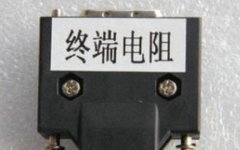
The Role of Termination Resistors on Siemens PROFIBUS DP Connectors (Commonly Known as ‘DP Connectors’). Core Function Summary:The core function of termination resistors is to match the impedance at both ends of the communication bus to eliminate reflected wave interference caused by impedance discontinuities at the ends of the transmission line. In simple terms, it … Read more

What Is a Termination Resistor and Its Function

What Is a Termination Resistor and Its Function

Click on the above “Huanghua Electronic Components” to follow us What is a termination resistor? A termination resistor is a hindrance encountered during the transmission of electronic information. When transmitting high-frequency signals, the signal wavelength is relatively short compared to the transmission line, causing reflection waves at the end of the transmission line, which interferes … Read more

Why Must Profibus Buses Have Termination Resistors? Understanding the Key Principles!

Why Must Profibus Buses Have Termination Resistors? Understanding the Key Principles!

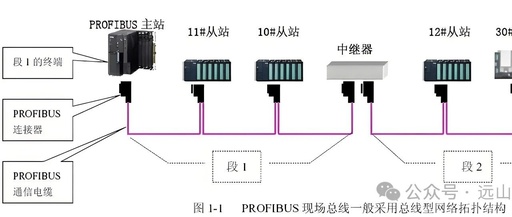
In industrial communication, Profibus is a widely used fieldbus protocol, and termination resistors are crucial for its stable operation. Many engineers encounter issues such as unstable communication and data loss during debugging, often due to improper configuration of termination resistors. So, why must Profibus have termination resistors? How should they be configured correctly? This article … Read more

Unveiling the Core Mechanism of RS-485 Communication: The Key Role and Implementation Principle of 120Ω Termination Resistors

Unveiling the Core Mechanism of RS-485 Communication: The Key Role and Implementation Principle of 120Ω Termination Resistors

Common “Difficulties” in the Field One of the most troublesome issues during device debugging: RS-485 communication is unstable, with intermittent data transmission. The program logic is fine, the cable connections are correct, and there are no address conflicts, yet communication timeouts, data corruption, and sporadic failures still occur. Changing cables, adjusting baud rates, and checking … Read more

Understanding the Need for 120 Ohm Termination Resistors in CAN Bus Systems

Understanding the Need for 120 Ohm Termination Resistors in CAN Bus Systems

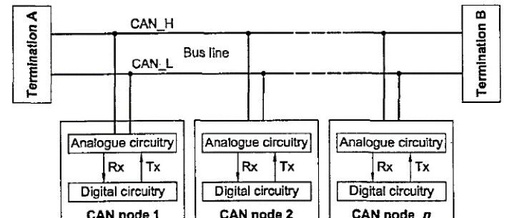
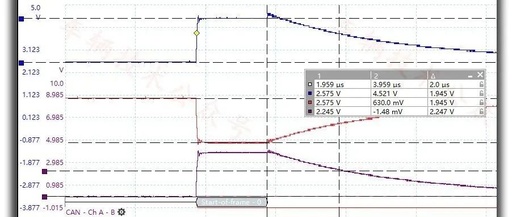
Friends in “Vehicle Technology” should know that the CAN bus requires two 120 Ohm termination resistors at both ends, making the total line resistance 60 Ohms. This is a piece of knowledge that almost everyone knows, but very few can explain clearly. In most cases, we have the experience that adding a 120 Ohm resistor … Read more

Detailed Explanation of Profibus-DP Termination Resistors: Correct Selection and Installation to Ensure Communication Reliability

Detailed Explanation of Profibus-DP Termination Resistors: Correct Selection and Installation to Ensure Communication Reliability

To build a stable and reliable Profibus-DP network, termination resistors can be considered a “small component with a big role”! Many engineers often overlook their importance, resulting in spending several days troubleshooting inexplicable communication failures, only to find out that it was the termination resistors causing the trouble. Today, we will analyze this seemingly simple … Read more

Choosing and Installing Termination Resistors for Long-Distance Profibus-DP Buses

Choosing and Installing Termination Resistors for Long-Distance Profibus-DP Buses

In a Profibus-DP network, the bus length is one of the key factors affecting system stability. As the bus length increases, signal attenuation, delay, and interference also increase, which changes the requirements for termination resistors. Today, we will discuss in detail how to correctly choose and install termination resistors for different lengths of Profibus-DP buses. … Read more