More than 70 percent of real estate professionals use AI. Only 17 percent report significant results. Here is what separates the two groups, and how to close the gap.


56% of U.S. small businesses use generative AI. A year ago, that number was 40%. Business owners tried a tool, saw results, and told people. They talked at the chamber meeting, on social media, at the barbecue. The people doing this aren't software companies. The people adopting AI are landscapers, fitness trainers, financial advisors, real estate pros, and local shop owners. The examples in this post come from 10,000 small business AI sessions across 25+ industries.


AI collapsed the cost of building custom software, and the SaaS selloff followed. Here are the four forces reshaping the market, what gets replaced, and which tools keep their moat.


Jonathan Davis spent two decades in disability education watching providers stitch together tools that were never built for them. With no coding background, he taught himself to build on Bolt and created Empowered Applications, an ecosystem that replaces the patchwork with software designed for the work.

From idea to hosted website in minutes, learn how easy it is to build a customized real estate website with Bolt.new’s no-code AI website builder.
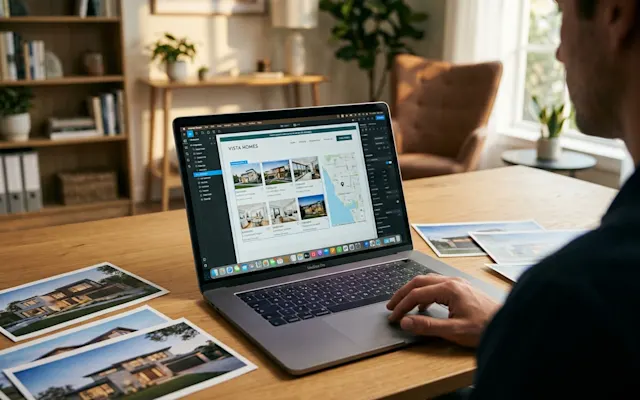
Buying software is faster; building custom fits better. How real estate teams decide what to build vs. buy, and why AI builders changed the math on custom software.

Learn how top real estate agencies are using AI to save time, automate workflows and enhance customer experience so you can focus on selling your properties.

Learn how to build a website that stands out (and doesn't scream 'AI-generated') in this guide to scroll-stopping designs for 2026.

Agencies quote $8k to $22k and ten-week timelines for a small business website. Here's what a site actually costs in 2026, why the priciest part is the back-and-forth, and how building with AI cuts it to hours and a fraction of the price.
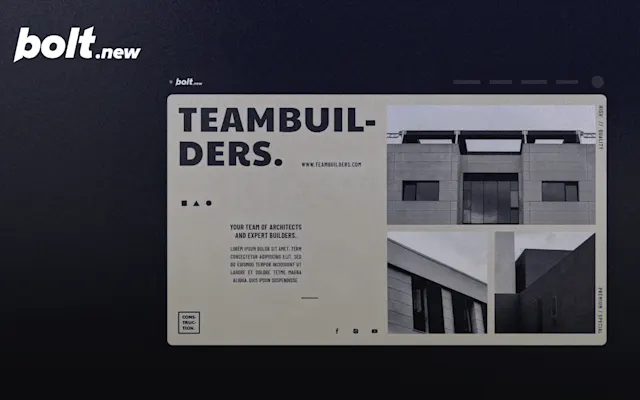
Google Stitch just added one-click export to Bolt. It hands off your finished design with full context (layout, components, design tokens, intent) straight into a build session, so you start building instead of re-explaining.