


About
The History of CENIC
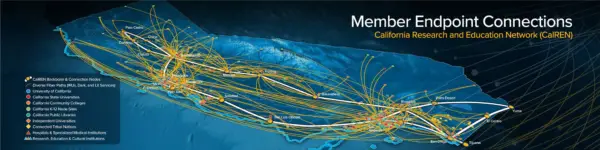
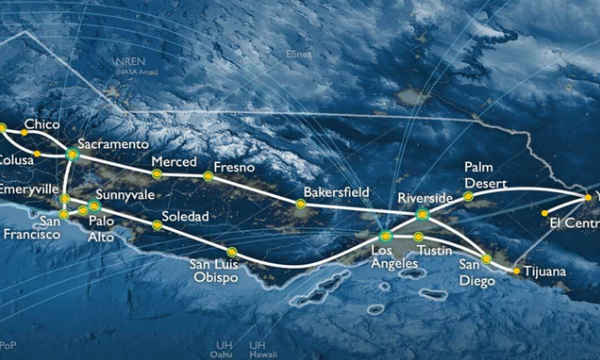
Established in 1997, the Corporation for Education Network Initiatives in California (CENIC) operates the California Research and Education Network (CalREN), a high-capacity computer network with more than 8,000 miles of optical fiber. The network serves over 20 million users across California, including the vast majority of K-20 students together with educators, researchers, and individuals at other vital public-serving institutions.
Learn about CENIC’s early years in our 25th anniversary video, 20th anniversary book, and see a list of our founders.
CENIC’s resources provide cost-effective, high-bandwidth networking to support our community members — responding to the needs of their faculties, staff, students, and associated research groups — and to facilitate excellence in scientific, education, government, and private sector collaboration and innovation. The CENIC blog features stories on the important work enabled by the CalREN network.
Governed by our Members
CENIC is governed by representatives of its Charter Associates institutions that it serves: California Community Colleges, California K-12 schools, California’s public libraries, the California State University, the University of California, and private universities (Caltech, Naval Postgraduate School, Stanford University, and University of Southern California).
Connecting California to the World
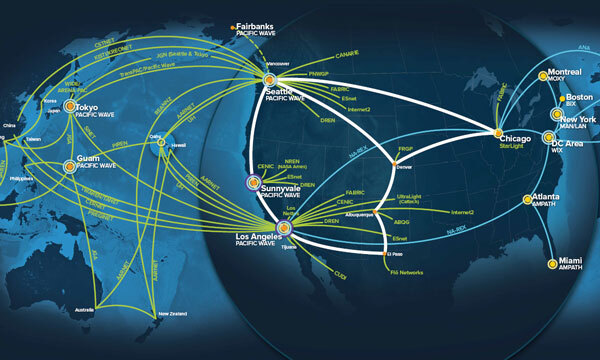
Additionally, CENIC is closely involved with two important efforts to develop and expand networking capacity across the region, the nation, and the world. Pacific Wave is a wide-area distributed exchange platform that provides research and education networks throughout the Pacific Rim and the world with access to state-of-the-art peering and exchange services, Science DMZs, software-defined exchange (SDX) and software-defined networking (SDN) capabilities. The National Research Platform integrates Science DMZs into a high-capacity regional system that enables transfers of large scientific data sets.
For all the latest news, sign up for the CENIC newsletter and follow us on LinkedIn.
-
1996: CENIC is born!
Representatives from the University of California, California State University, Caltech, and the University of Southern California co-found CENIC as a nonprofit to support academic research and education needs.
-

1997: CENIC is funded
A consortium of CENIC institutions submitted a proposal to the National Science Foundation titled “High-Performance Connections Program” for CalREN-2—The California Research and Education Network.
-

1999: All UC campuses connect to CalREN
UC campuses use CalREN services to advance telemedicine, monitor atmospheric and oceanic circulation, collect data from the Keck telescope in Hawaii, and transmit brain images remotely for clinical diagnosis, research, and teaching.
-

2000: The Digital California Project
CENIC extends high-performance networking to all 58 counties for K-12 public school students, faculty, and staff, starting with San Luis Obispo and Fresno counties.
-

2000: CENIC expands its Peering and ISP programs
Negotiating contracts with the Information Sciences Institute of the University of Southern California, the San Diego Supercomputer Center, and PAIX (via Stanford) to provide two increased peering arrangements for users of CalREN.
-
2003: CSU moves onto CENIC’s CalREN
CSU retired the 4CNet network, which served its campuses and the California Community Colleges, in favor of using the CalREN backbone and connecting to a unified R&E network.
-
2004: Pacific Wave connects education networks throughout the Pacific Rim and the world
CENIC, Pacific Northwest Gigapop, the University of Southern California, and the University of Washington deploy and operate Pacific Wave.
-
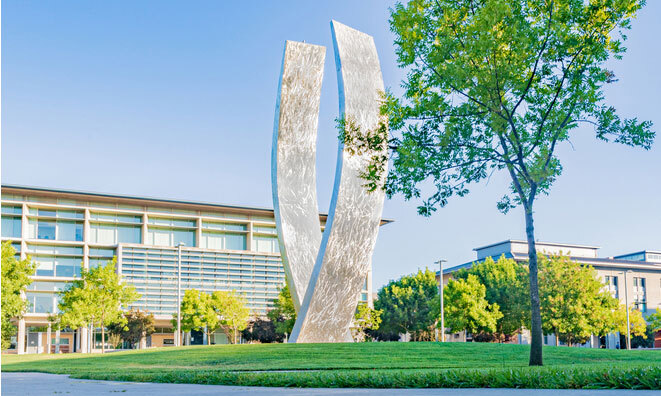
2004: UC Merced connects to CalREN
All 10 UC campuses and the Office of the President (UCOP) connect with 1 Gbps circuits.
-
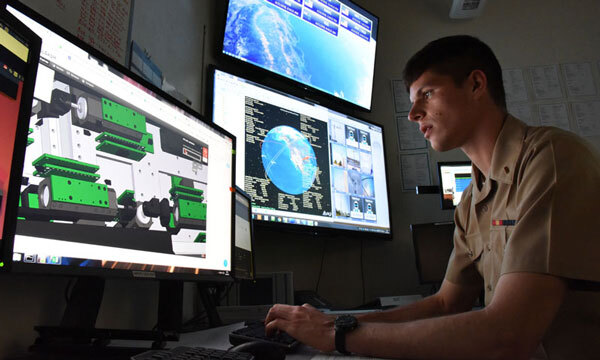
2005: Naval Postgraduate School (NPS) connects to CalREN
NPS connects at gigabit speeds.
-

2006: K-12s first gigabit connections
Nine County Offices of Education receive gigabit service.
-

2007: High performance network link established between UC Davis and UC San Diego
UC Davis and UC San Diego campuses connect to support ultra-high-performance and experimental network research.
-

2007: CalREN backbone bandwidth increases 22-fold
The upgrade benefits six community college districts serving over 300,000 students, faculty, and staff. Palo Verde College received two T-1 connections (1.54 Mbps), which were replaced by a DS-3 connection (45 Mbps).
-
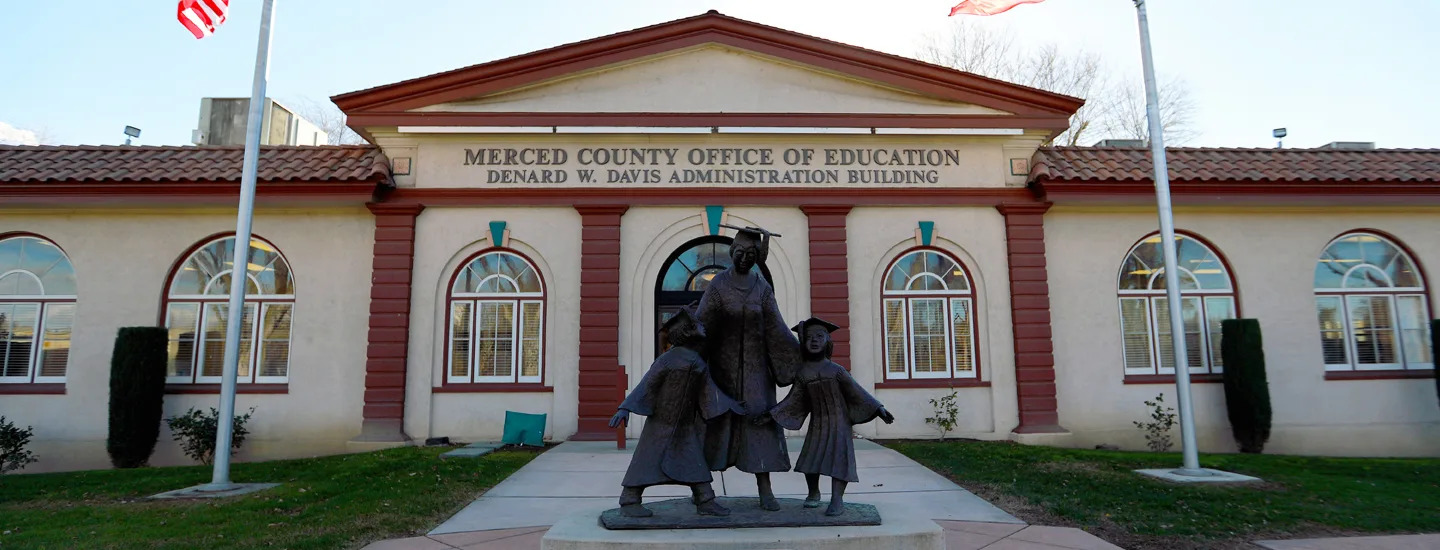
2009: 100% of County Offices of Education connect to CENIC's CalREN
Network and internet services extended to all 58 COEs and 86% of school districts.
-

2011: UC Berkeley and UC Davis partner on Tele-Immersion for Physicians
The universities leverage CENIC’s advanced network capabilities to unite medical professionals and their data.
-

2011: Central Valley Next Generation Broadband Infrastructure Project launched
Improving the availability of broadband infrastructure in the Central Valley would directly benefit three CSU sites and fourteen CCC campuses.
-

2012: Nine county libraries in CA’s Northern Central Valley connect to CalREN
North Central Valley libraries extend internet access and digital literacy to low-income and immigrant populations.
-

2014: State Legislature Approves Broadband Funding
$77M was approved over three years for the Broadband Infrastructure Improvement Grant (BIIG), recognizing the need for adequate infrastructure to support computer-based assessments.
-
2015: The Pacific Research Platform (PRP) is established
The PRP facilitates the rapid transfer of large scientific datasets between all ten University of California campuses, prominent California private research universities, four supercomputer centers, and several universities outside California. All are either on or connected to CENIC's CalREN. It is supported in part by grant awards from the National Science Foundation.
-
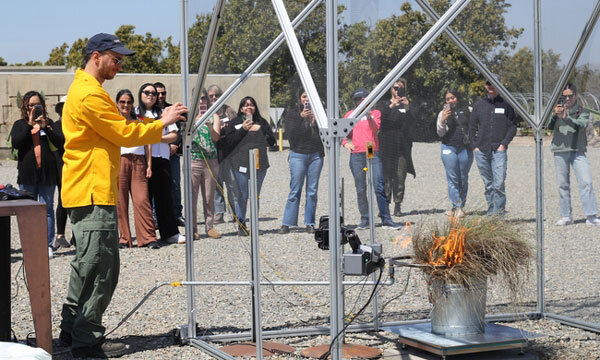
2016: CENIC connects UC Agriculture and Natural Resources (UC ANR) to CalREN
Over 700 academic researchers are supported statewide via nine research and extension centers and 57 extension offices.
-
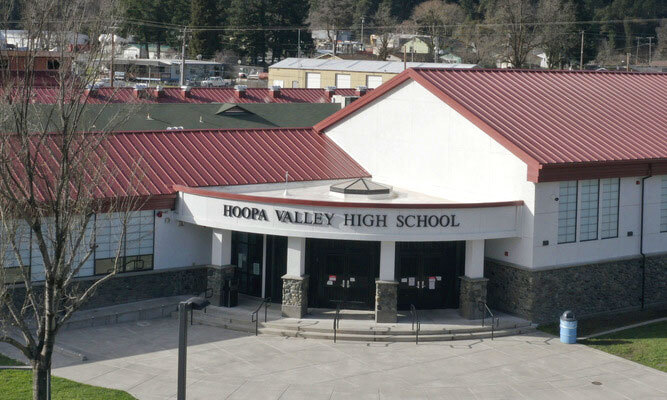
2016: CENIC connects the Humboldt County Office of Education to Hoopa Valley High School
The connection supports six additional schools and provides connectivity for 1,000+ students on the Hoopa Reservation.
-

2017: The Los Angeles Public Library becomes the first 100-Gigabit library in the US
Upgraded CalREN connectivity allows for speeds 1,000 times faster than previously delivered.
-

2017: Game Changing Bandwidth Upgrades for CSUs
Two CSU campuses now connect to CalREN at 100 Gbps. Sixteen others increase to 10 Gbps connections.
-
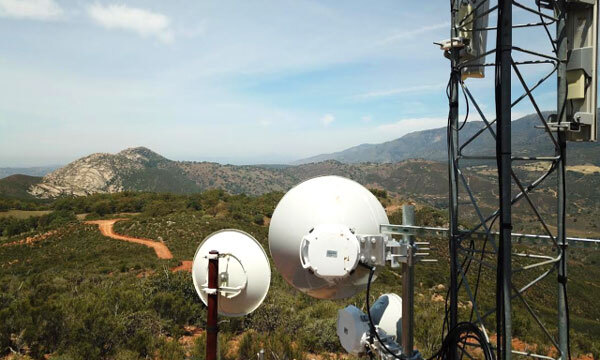
2018: Tribal Digital Village Network works with CENIC to bring connectivity to Tribal community buildings
Tribal Digital Village Network (TDVNet), a tribal consortium-owned Internet service provider in San Diego County, and CENIC established the first tribal connections in southern California.
-

2018: The PRP expands to become the National Research Platform (NRP)
The new NRP improves end-to-end network performance across the nation. NRP includes more than 50 institutions nationwide, is led by researchers and cyberinfrastructure professionals at UC San Diego, and is supported in part by grant awards from the National Science Foundation.
-

2019: Broadband Infrastructure Grant (BIG)
The Broadband Infrastructure Grant (BIG) program was funded to provide 1 Gbps fiber broadband connectivity to California’s most poorly connected schools and promote digital learning opportunities.
-

2020: Libraries across California continue to receive high-speed broadband
More than 900 of the state’s 1,128 libraries have been connected to the same high-speed broadband network as the University of California, the state university system, community colleges, and public schools.
-
2020: Southern California Tribes connected to Pacific Wave
Tribes use Pacific Wave peering relationships, high-performance scientific networks, and ever-expanding global connectivity to engage with researchers and cultural preservation entities worldwide.
-

2021: CENIC builds 400 Gbps circuits
UC San Diego and Caltech High Energy Physics established 400 Gbps connectivity through CalREN.
-
2021: CENIC California Middle-Mile Broadband Initiative creates GOLDENSTATENET
The State of California retains CENIC California Middle-Mile Broadband Initiative, LLC (CCMMBI) as the California middle-mile broadband network third-party administrator. CCMMBI will provide affordable, open-access middle-mile broadband infrastructure, prioritizing connectivity to unserved and underserved communities, including community anchor institutions.
-

2022: CCCs receive 10 Gbps Connections
Fifty CCC campuses connect at increased speeds.
-

2023: All K-12 node sites are enrolled in CENIC-managed DMS solution
K12HSN contracts with CENIC to provide DDoS attack detection and mitigation services. The final county was onboarded in early August 2023.
-
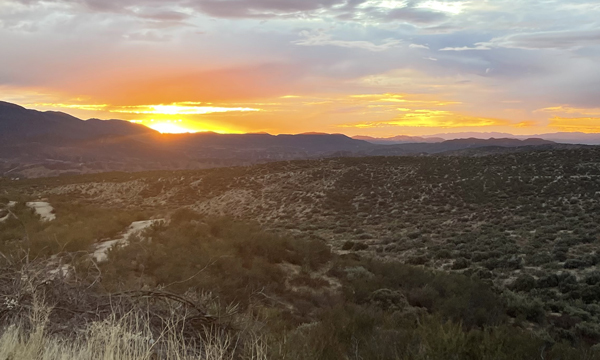
2023: Tribal Collaboration
CENIC collaborates with the Coyote Valley Band of Pomo Indians and the Cachil DeHe Band of Wintun Indians of the Colusa Indian Community to identify the best network solution for their needs.
-
2024: CENIC AIR: the National Research Platform in California
CENIC AIR, connected to the NRP’s Nautilus infrastructure, is a scalable and robust ecosystem designed for, and responsive to, data science research needs as well as educational programs and positioned for much broader use by the CENIC community.
-

2024: The new CSU TIDE cyberinfrastructure is interconnected and accessed via CENIC
The Technology Infrastructure for Data Exploration (TIDE) Project extends the CENIC AI Resource (CENIC AIR).
