1. X
  2. Space Telescope Science Institute
Log inSign up
Space Telescope Science Institute
5,402 posts
Image
user avatar
Space Telescope Science Institute
@SpaceTelescope
Mission Operations Center for NASA's Webb Space Telescope (#NASAWebb). Science operations for the Hubble Space Telescope and upcoming Roman Space Telescope.
Baltimore, MD
stsci.edu/communications…
Joined June 2008
860
Following
295.7K
Followers
RepliesRepliesMediaMedia

New to X?

Sign up now to get your own personalized timeline!

Create account

By signing up, you agree to the Terms of Service and Privacy Policy, including Cookie Use.

Terms·Privacy·Cookies·Accessibility·Ads Info·© 2026 X Corp.
Don't miss what's happening
People on X are the first to know.
Log inSign up
  • Pinned
    user avatar
    Space Telescope Science Institute
    @SpaceTelescope
    Apr 8
    🚨 Our fascinating Public Lecture Series is now on YouTube! We now have the 2017-2025 lectures available to watch.
    Image
    youtube.com
    STScI Public Lecture Series
    The STScI Public Lectures Series held monthly presentations on all aspects of astronomy and space telescopes for several decades. Due to changes in funding, ...
    9.1K09.1K
  • user avatar
    Space Telescope Science Institute
    @SpaceTelescope
    Jul 11, 2022
    You are gazing at Webb’s First Deep Field. There will be many more from #NASAWebb. Bright white galaxies are stirring up this scene in galaxy cluster SMACS 0723—warping and stretching the light from extremely distant galaxies: webbtelescope.pub/3IpXAFT (1/3)
    The background of space is black. Thousands of galaxies appear all across the view. Their shapes and colors vary. Some are various shades of orange, others are white. Most stars appear blue, and are sometimes as large as more distant galaxies that appear next to them. A very bright star is just above and left of center. It has eight bright blue, long diffraction spikes. Between 4 o’clock and 6 o’clock in its spikes are several very bright galaxies. A group of three are in the middle, and two are closer to 4 o’clock. These galaxies are part of the galaxy cluster SMACS 0723, and they are warping the appearances of galaxies seen around them. Long orange arcs appear at left and right toward the center.
  • user avatar
    Space Telescope Science Institute
    @SpaceTelescope
    Jan 8, 2022
    WE HAVE A TELESCOPE! #NASAWebb
  • user avatar
    Space Telescope Science Institute
    @SpaceTelescope
    Aug 25, 2022
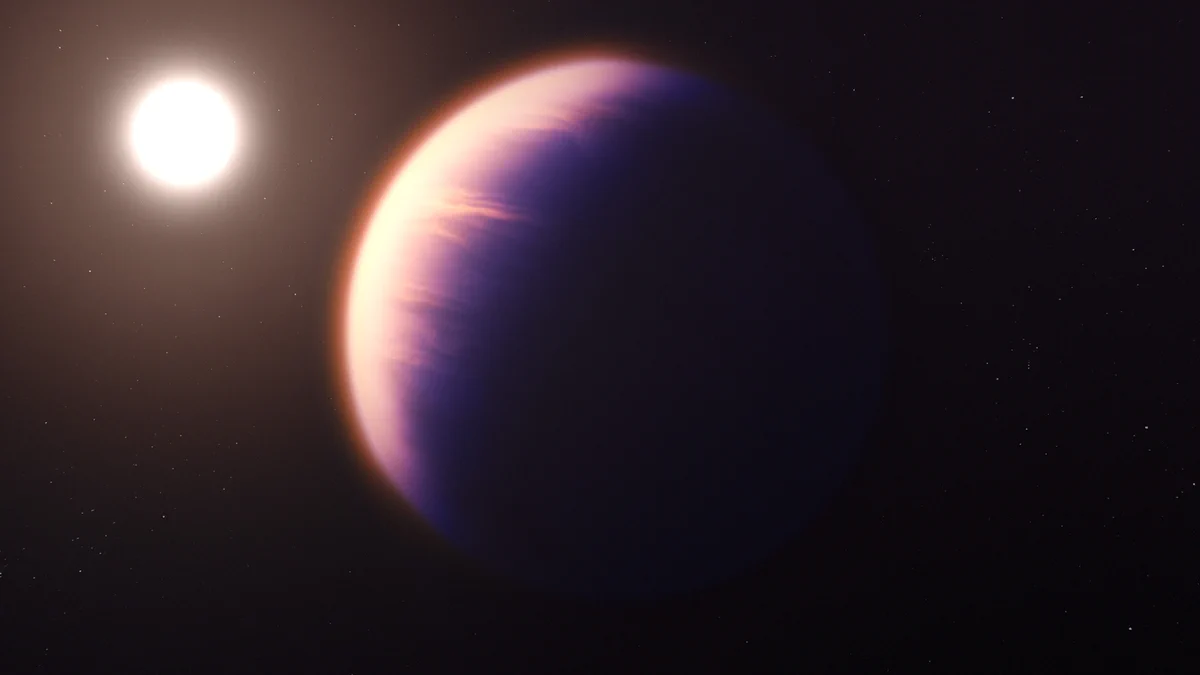
    BREAKING NEWS: #NASAWebb ushers in a new era of exoplanet science with the first unequivocal detection of CARBON DIOXIDE in a planetary atmosphere outside our solar system. (1/5) 🧵
    This illustration shows what exoplanet WASP-39 b could look like, based on current understanding of the planet. In the middle of a black backgrouond is a purple planet with pink wisps across the surface. Only a small crescent of the planet is visible on the left side as a small Sun-like star shines on it from the top left of the image.
  • user avatar
    Space Telescope Science Institute
    @SpaceTelescope
    Jan 4, 2022
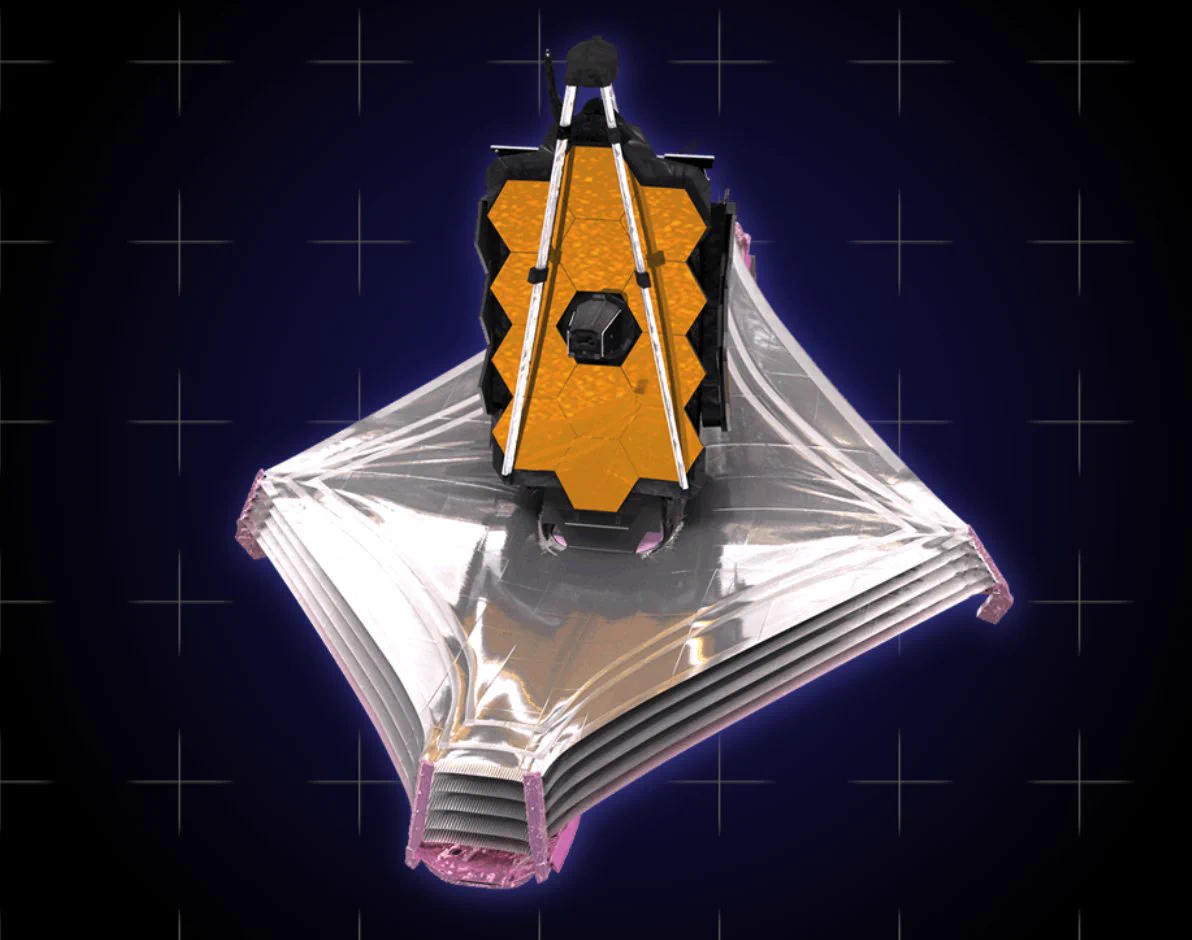
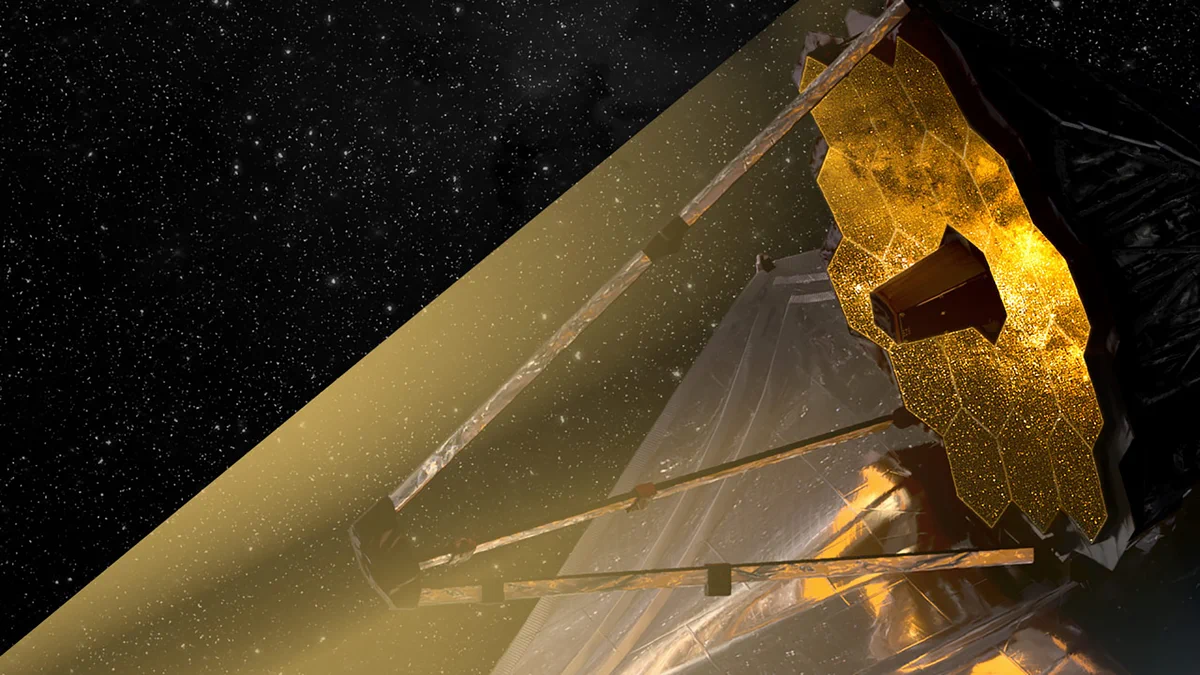
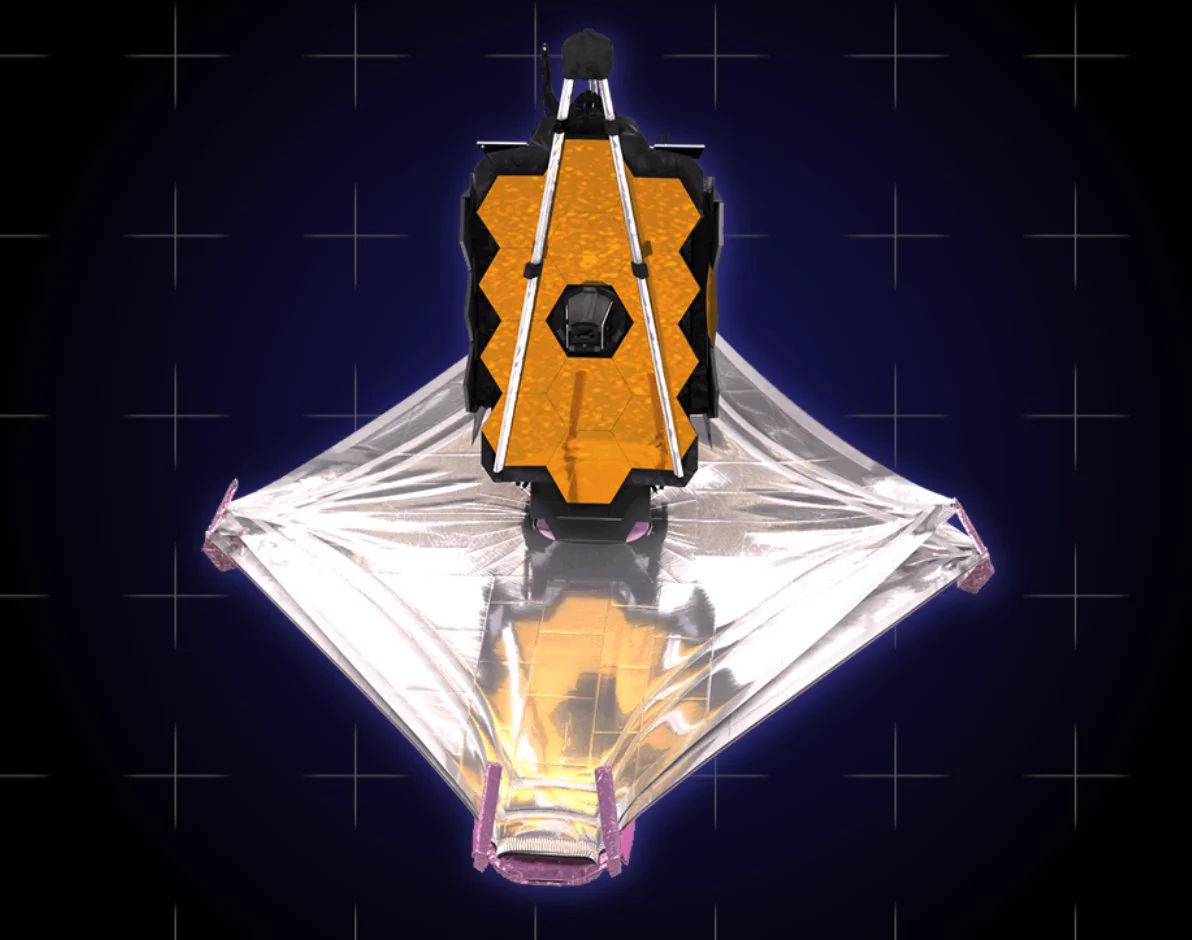
    All five sunshield layers on #NASAWebb are fully deployed! 🎉 #UnfoldTheUniverse
    Image
  • user avatar
    Space Telescope Science Institute
    @SpaceTelescope
    Dec 25, 2021
    You will be able to track @NASAWebb after it launches tomorrow! Bookmark this page as Webb goes through "29 Days on the Edge." go.nasa.gov/3qhBL2k
    Image
  • user avatar
    Space Telescope Science Institute
    @SpaceTelescope
    Dec 25, 2021
    The James Webb Space Telescope is safely in space, powered on and communicating with ground controllers. Webb continues in coast phase, and is now oriented correctly with respect to the Sun: blogs.nasa.gov/webb/ #UnfoldTheUniverse #NASAWebb
    Image
  • user avatar
    Space Telescope Science Institute
    @SpaceTelescope
    Jul 12, 2022
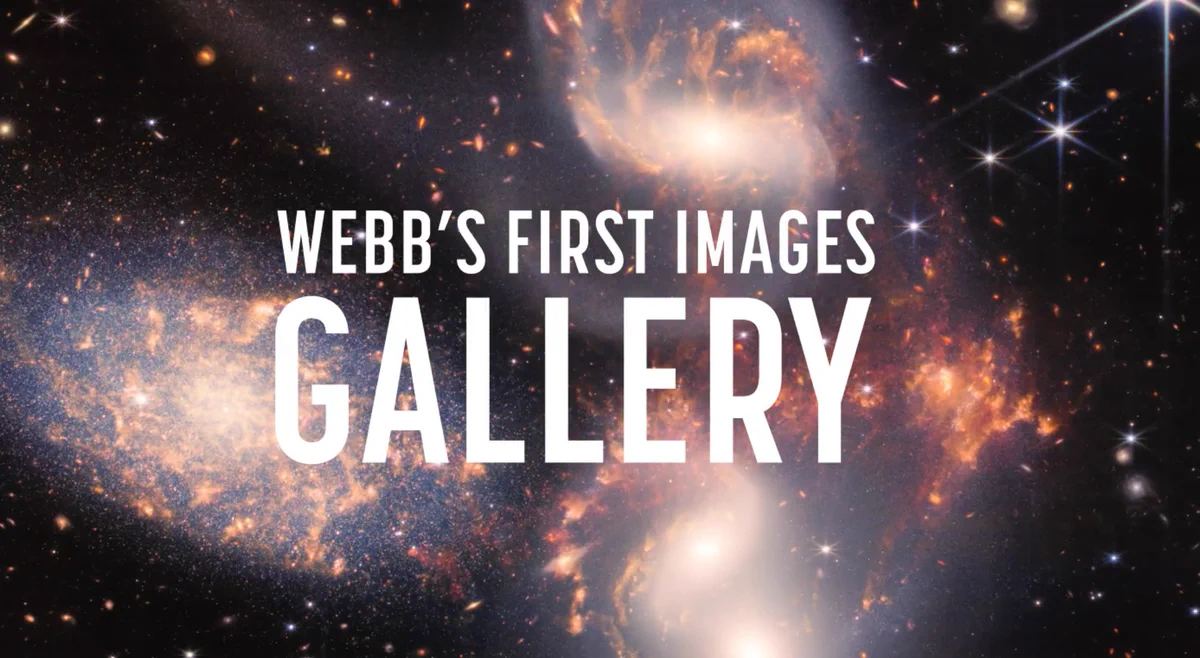
    Explore all of the James Webb Space Telescope's first images in one place: webbtelescope.pub/FirstImagesGal… #NASAWebb #UnfoldTheUniverse
    Image
  • user avatar
    Space Telescope Science Institute
    @SpaceTelescope
    Mar 6, 2023
    Far out … ominous … glittering! #NASAWebb’s views of the Pillars of Creation shows the capacity of infrared light: The first combines mid- and near-infrared light, the second is mid-infrared-only, spotlighting dust. Near-infrared-only shows the stars: webbtelescope.pub/3yaM1y0
    Image
    GIF
    461K0461K
  • user avatar
    Space Telescope Science Institute
    @SpaceTelescope
    Jan 8, 2022
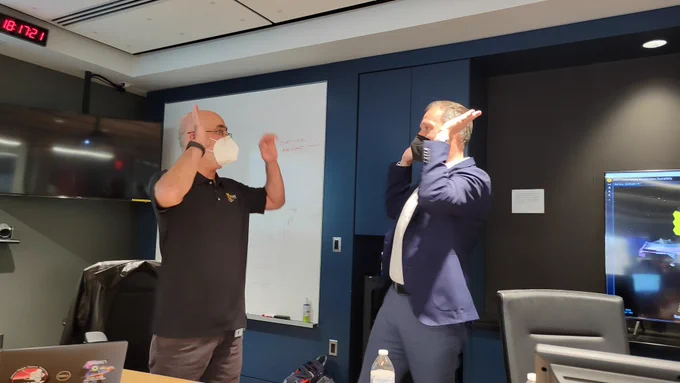
    Celebrations around the #NASAWebb Mission Operations Center at STScI! We have a telescope in space! Thank you to everyone for your support for this mission. #UnfoldTheUniverse
    Image
    Image
    Image
    Image
  • user avatar
    Space Telescope Science Institute
    @SpaceTelescope
    Jul 10, 2022
    President Joe Biden will release one of #NASAWebb’s first images in a preview event on Monday at 5 p.m. EDT at the White House. NASA Administrator Bill Nelson will provide remarks. A live stream of the event will be available on NASA TV: nasa.gov/nasalive
    Image
  • user avatar
    Space Telescope Science Institute
    @SpaceTelescope
    Jan 17, 2022
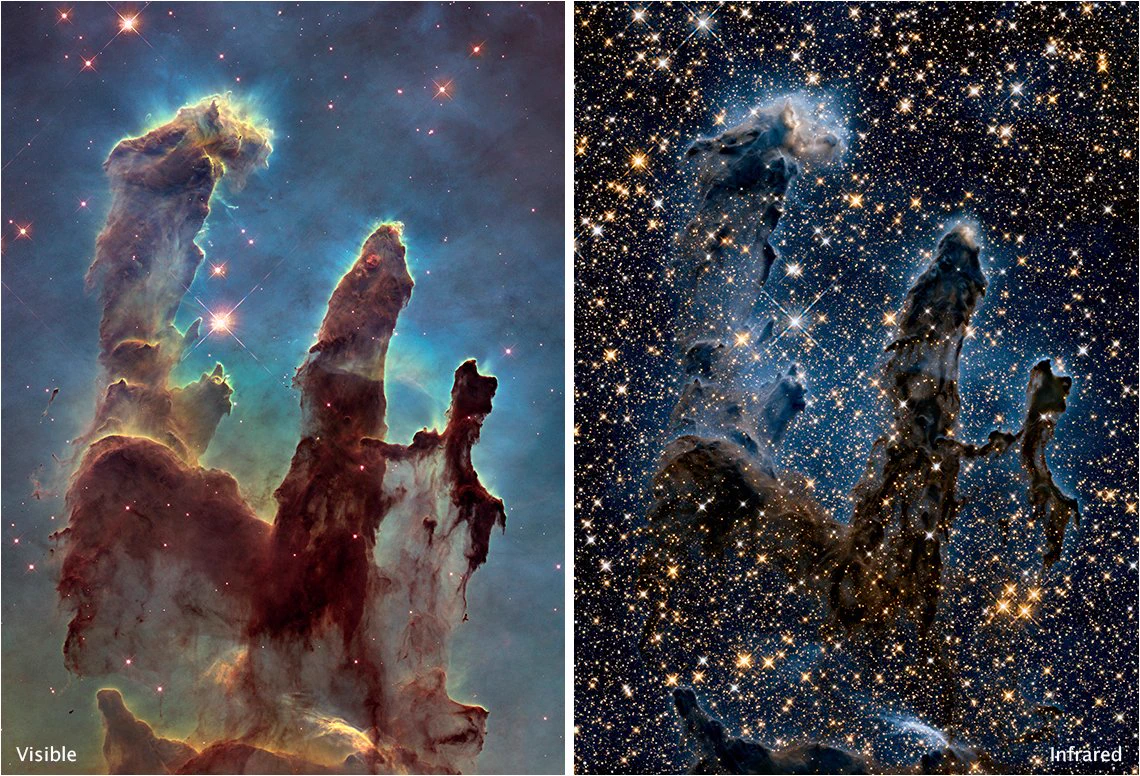
    #Hubble demonstrates the power of infrared light (right) to show us more, younger stars in its "Pillars of Creation" images. With increased infrared detection, @NASAWebb will go farther, seeking out the mysteries of star formation: fal.cn/3lnX5 #WebbScience
    Image
  • user avatar
    Space Telescope Science Institute
    @SpaceTelescope
    Oct 19, 2022
    Why, hello, gorgeous! #NASAWebb visited the iconic Pillars of Creation, capturing it in near-infrared light and delivering a kaleidoscope of color. Can you identify the newest stars? (Hint: They’re red and look like lava!) Details: webbtelescope.pub/3yRD79f
    At the bottom left of this vertical image are the thickest regions of brown and rusty red gas and dust. There are many layers of semi-transparent gas and dust overlaying one another. A peak rises about a third of the way from the bottom, and becomes far darker brown with two bright red, lava-like areas toward the tip. The light brown dust becomes more diaphanous about halfway up the screen. There’s a slight gap in the dust, which allows the blue background to come into view clearly. About 60% of the background in this image is set in shades of blue and littered with tiny yellow and blue stars. The brown pillars continue, taking the shape of a shoulder at the base, with three prominent columns rising out toward the upper right. The top left pillar is the largest and widest. The peaks of the second and third pillars are set off in darker shades of brown and have red outlines.
  • user avatar
    Space Telescope Science Institute
    @SpaceTelescope
    Jan 4, 2022
    The #NASAWebb team finished tensioning the first layer of the observatory’s sunshield—that is, tightening it into its final, completely taut position: go.nasa.gov/3HAGT98 #UnfoldTheUniverse
    Image
Advertisement
Advertisement