

Recently, I have been meddling in the parenting plan of a friend who has a bunch of children, ages 5-12. She has been watching a lot of scholars talk about scientific evidence for a Creator and Designer, like James Tour and Stephen C. Meyer, and getting more and more concerned about whether her own children are going to keep their own faith as they go through the education system into the workplace. And make a difference for the Boss.
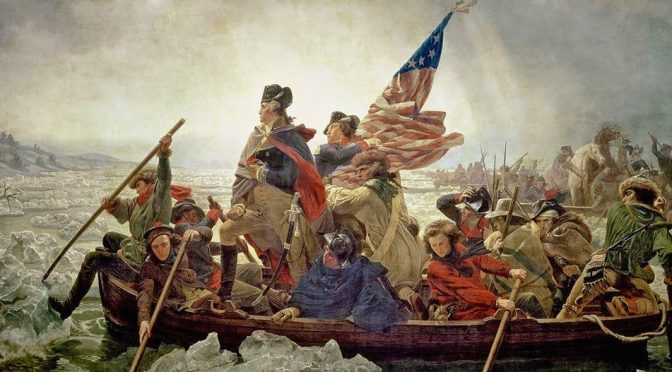
I reflected on how best to influence children and concluded that we need a two-pronged attack: (1) excellent books that shape their thinking and character, and (2) structured real-world experiences that build practical knowledge. Since I’m in a different state, my role is mainly shipping good books and celebrating their progress with them. Even asking the mom to ask them about their progress helps. The mom is taking care of giving them useful things to do, like taking them to see “The Story of Everything” and “Young Washington”, teaching them to cook and build rockets, etc.
My plan is to build up their strength in testable areas, which will insulate them from the emotion-based arguments of the secular left in settings where peer-approval can easily overwhelm truth, unless truth is rooted in evidence.
I chose these areas:
-
- economic policy
- evidential apologetics
- military history
- classics*
* not the popular ones, but the ones with heroic characters and moral lessons.
Economic policy
For economics, I sent along a bunch of Tuttle Twins books. I don’t like Connor Boyack’s religion or politics, but he does a good job of teaching economics to children. And this is only a temporary measure until we can work our way up to Thomas Sowell, which will make them bulletproof against wokeness.
This is what I got them:
- Tuttle Rebuttals: 40 Responses to Popular Political and Economic Myths
- The Tuttle Twins Guide to Modern Villains
- The Tuttle Twins Guide to Inspiring Entrepreneurs
- Tuttle Twins Choose Your Consequence Combo
- Tuttle Twins Combo Pack (plus free workbooks!)
In economics, we look at other times and other places in order to learn what policies have worked and what policies have failed. So, all the pressure that kids will get from the culture to accept wokeness, socialism, social justice, etc. will roll right off them like water off a duck, because of the evidence.
Evidential apologetics
And then I got them books on evidential apologetics for kids:
- God’s Crime Scene for Kids
- Forensic Faith for Kids
- Cold-Case Christianity for Kids
- Case for Christ for Kids
- Case for a Creator for Kids
- Case for Faith for Kids
- Your Amazing Body
- The Farm at the Center of the Universe
- The God Proofs: How Science Points to YOUR Creator
- Discovering Intelligent Design: A Journey into the Scientific Evidence
- Explore Evolution: The Arguments for and Against Neo-Darwinism
And the mom has the oldest one registered in the Discovery Institute biology course that I blogged about before.
The point of these books is to avoid the common and predictable fate that awaits most “church-raised” Christians when they hit university. Most Christian parents put a lot of faith in the church community and shallow social connections, but these things do not preserve faith in hostile environments like the modern university or the corporate workplace. A much better bet is to rely on hard evidence. Evidence that they’ve seen tested in formal. Academic. Debates.
Military history
And I got them a bunch of basic books on military history:
- Great Battles for Boys: WW2 Pacific
- Great Battles for Boys the Korean War
- Great Battles for Boys: WW2 Europe
- Great Battles for Boys The American Revolution
- Great Battles for Boys The Vietnam War
You can see that military history dominates my “What I am Reading” page. I wrote an entire separate post about why Christians should read military history.
Most of the children are girls, but military history does the job of increasing humility, patience, endurance, and gratitude for boys and girls. These are all character traits children need to counteract the victim mindset, the entitlement, and the lack of accountability that dominate social institutions. Espcially the schools that are run by woke teachers and administrators and the big corporations that are run by DEI hires and woke HR departments.
Classical literature
Finally, the classics. I was able to resist the bad parenting and secular leftism I was born into by immersing myself in classical literature and classical movies as a child. The classics are basically “design patterns” (software architecture patterns) for making good decisions within the moral framework of the universe.
So, some of my favorite books and movies are laid out in my “About WK” page, but these are the books I chose for the kids so far:
- The Hobbit (“Alone and unaided”): Readers learn how heroism can be found in people who don’t look like heroes, and how to seize the initiative “alone and unaided” in order to solve problems without outside help.
- The Scarlet Pimpernel (“that part he played—the mask he wore… in order to throw dust in everybody’s eyes”): Readers see the power of humility and strategy when defying tyrannical regimes. As I often say in my gameplay videos: “is this shot worth revealing my position to the enemy?”
- Cyrano de Bergerac (“I stand… not high it may be… but, I stand alone!”): Readers discover the nobility of personal integrity, avoiding peer pressure, and valuing excellence in everything over worldly approval or success.
- A Man for All Seasons (“When a man takes an oath, Meg, he’s holding his own self in his own hands. Like water. And if he opens his fingers then — he needn’t hope to find himself again.”): Readers are reminded of the importance of personal integrity and keeping one’s oath to God and conscience, even when it costs everything.
- The Screwtape Letters (“Our cause is never more in danger than when a human, no longer desiring, but still intending, to do our Enemy’s will, looks round upon a universe from which every trace of Him seems to have vanished, and asks why he has been forsaken, and still obeys.”): Readers gain insight into the spiritual significance of everyday experiences and the game of cosmic chess that is being played out.
She already had the Narnia series by C. S. Lewis and The Book of Virtues by William Bennett in the house.
One reviewer (Tom) also suggested that I add the Anne of Green Gables series, but I have not read those.
For the early classics, I’m not choosing “popular” classics or anything tainted by modern ideologies like secularism, leftism, feminism, etc. I’m aiming for books with heroic characters who can serve as role models.
See this recent First Things article that the mother sent me:
The stories of heroes and their spectacular deeds are intended as a lesson, an exhortation, to the present. This is what the Greek word mythos (“discourse”) generally means in Homer: It is not a narrative in the abstract, but virtually always implies some sort of persuasive agenda, usually an exhortation… Indeed, the heroic story is a stand-in for the father figure.
This is what the classical is about, for Homer. It is not concerned with books as such, nor ideas in the abstract, critical thinking, or intellectual history. Great men are what is essential, not great books. The classical exists, in short, to produce people resembling the best of its characters.
Later on, I will send classics to warn them about flaws in human nature; Anna Karenina, Madame Bovary, Mansfield Park, Pride and Prejudice, Sense and Sensibility, etc. Basically, I am trying to take away the modern world’s praising of narcissism, entitlement and lack of accountability with the left hand, while pushing forward heroic and self-sacrificial concern for others with the right hand. I’ll add in Shakespearean plays like Macbeth, King Lear, Othello, Antony and Cleopatra, to get that theme of tragedy coming from the failure to distinguish appearance from reality. And Hamlet, of course, which is my favorite Shakespearean play. (By the way, Hamlet has nothing to do with “indecisiveness” – that’s just postmodern relativists trying to avoid the real theme, which is how adult selfishness destroys the lives of children).
One reviewer (Drew) asked me to add a quick summary of what lessons are to be learned from these classics, so here is that:
- Anna Karenina / Madame Bovary: Readers witness the personal and familial destruction that follows when passion and self-fulfillment are elevated above relationship obligations and self-sacrificial commitment.
- Mansfield Park: Readers learn the quiet strength of moral conviction and humility triumphing over charm, social pressure, and compromised principles.
- Pride and Prejudice / Sense and Sensibility: Readers see the wisdom of valuing character over first impressions or fortune in mates, and the long-term blessings of self-control and prudent judgment.
- Macbeth: Readers confront the corrosive cost of unchecked ambition, the self-deception of “the ends justify the means,” and the tragedy of abandoning moral order.
- King Lear: Readers learn how foolishness, vanity, and poor judgment in leaders and parents bring chaos and suffering, and the importance of choosing allies who have humility, loyalty and truth-telling ability.
- Othello: Readers are warned against the destructive power of jealousy, manipulation, and trusting appearances over truth and evidence.
- Antony and Cleopatra: Readers see the ruin that comes from prioritizing sensual passion and worldly glory over duty and self-mastery.
- Hamlet: Readers learn how adult selfishness and moral failure create chaos for the next generation, yet personal integrity and trust in divine providence offer a path out of despair.
Movies have a place, but books are required. I have a list of some of my favorite classical movies in the About WK page.
The goal of sending the children classics is to give them the option of not acting according to the conventions of their culture.
Conclusion
So that is my plan. That is what worked for me in my own life.
One last point. I have worked with many natural-born Americans in the IT sector who were either homeschooled or attended Christian schools for many years and then left the faith (and their conservative views) in college. They had great church communities. They had big social networks. And this approach of valuing community and social networks did not prevent them from losing their faith in college or in the workplace. They just went from doing what worked at home and at church to doing what worked at the university and at the corporate workplace. Their habit of forming many social connections actually put a lot of pressure on them to change their Christian and conservative convictions.
Related to that last point, I wanted to mention that Cyrano had a particularly big effect on me. Cyrano explicitly says that he prefers not to be friends with many different people. He only has one close friend – Le Bret. He says that he prefers to have enemies. In addition, many modern people are influenced by popular books, movies and TV shows that teach false ideas. Cyrano strives to study the best topics like poetry, literature and fencing. He values truth.
Here is an example of something memorable from Cyrano that helped me to not want to make too many social connections (church, social groups) that would influence me to compromise my core convictions:
And in French:
It’s even better in the original French.
I had originally intended to name this blog “Stand Alone” after this speech, but the name Wintery Knight has even more meaning for me. One reason is public, and one reason is private, as Cyrano would say. The white chess piece logo is supposed to look like Cyrano’s white plume (“panache”).


 WINTERY KNIGHT
