Solar panels made homeowners into power producers. The same shift is coming for EV charging.
Except this time you don't need a roof, an electrician, or $20K.
Join the network that handles the rest.
🎙️ daGama x DeCharge: join our X Space "What Makes Something Tokenizable?"
🔗 Join us: x.com/i/spaces/1AxRn…
Not every real-world asset makes sense on-chain — and figuring out what does is one of the most important questions in DePIN and RWA today.
Together with @DeCharge,
In 10 years, someone will own a piece of the EV grid the way people own solar panels on their roof.
That future is being built right now.
Not by a utility company. Not by a government program.
By a community.
We couldn't find a reliable charger when we bought our first EV.
So we built the thing we needed.
Two years later: 2,000 nodes live. 10-12 week deployments vs the industry's 9-12 months. 5,800+ locations mapped by real drivers.
Range anxiety is an infrastructure problem.
Old model:
One company raises $500M
Builds chargers where it makes sense for them
You drive. They profit.
New model:
500 people each put in $100
Chargers go where the community actually needs them
You drive. Everyone profits.
One of these is already happening.
You just bought a deployment unit. What happens next?
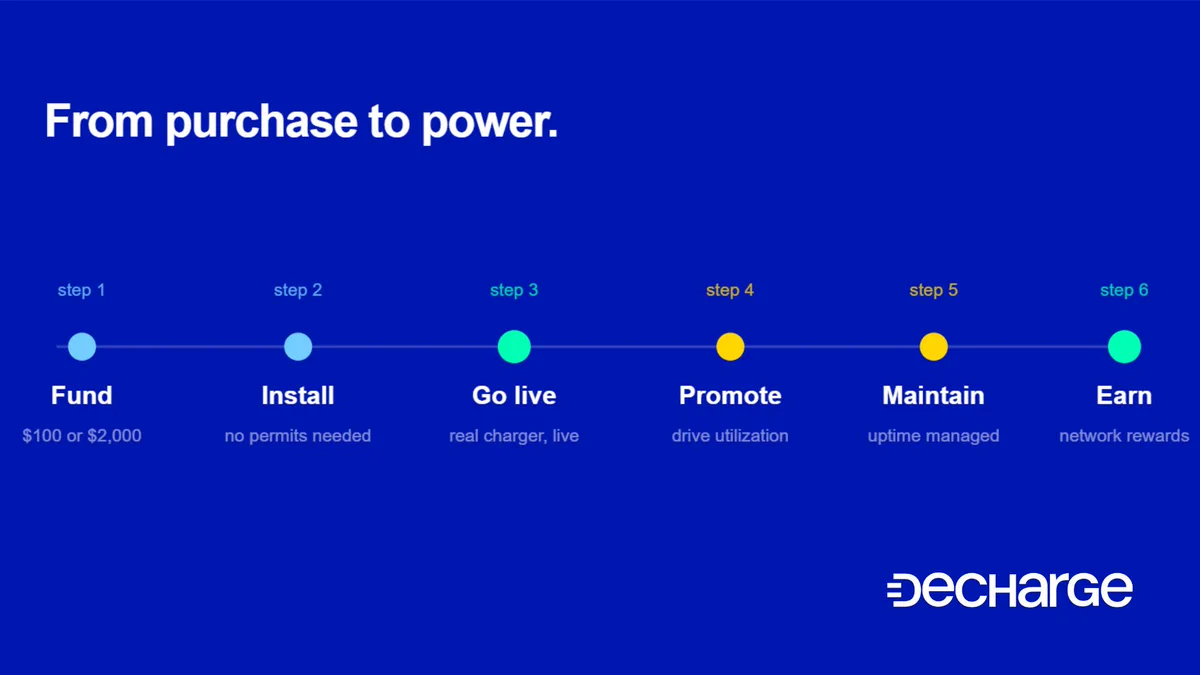
1⃣ Your funding goes toward a specific, Scout-validated charger location, one of the 500 planned across the US.
2⃣ DeCharge (or a partner installer) installs the hardware on-site. No permits, no electrical work, no logistics
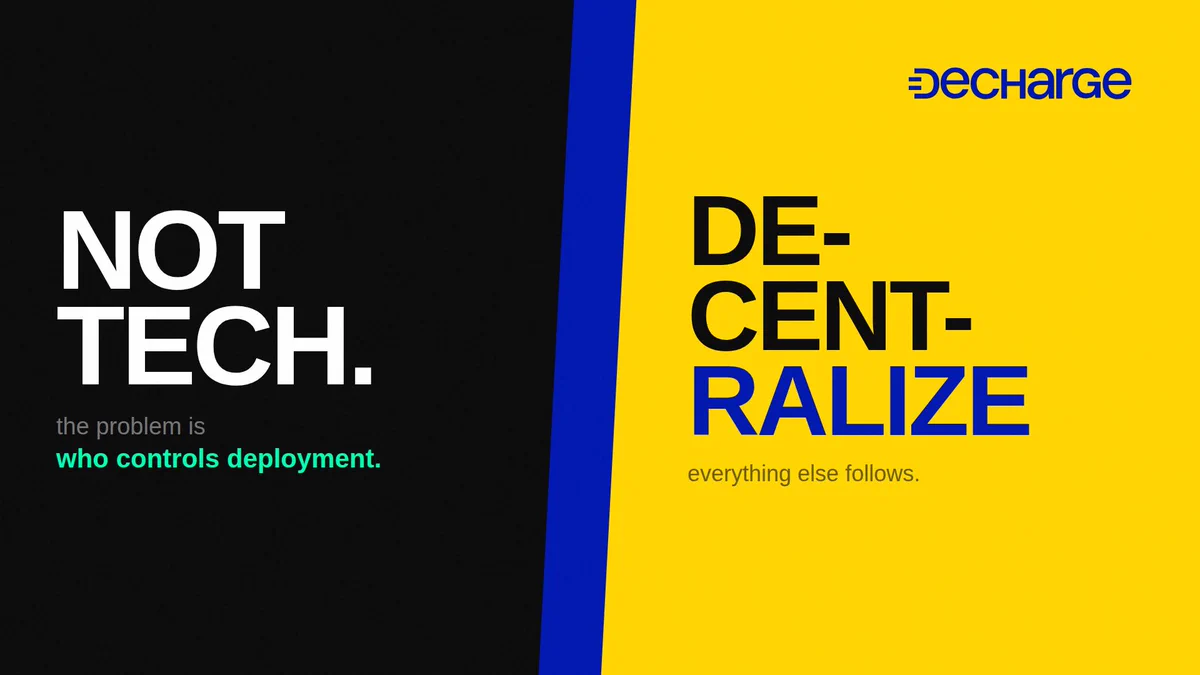
Unpopular opinion: the EV charging crisis has nothing to do with technology.
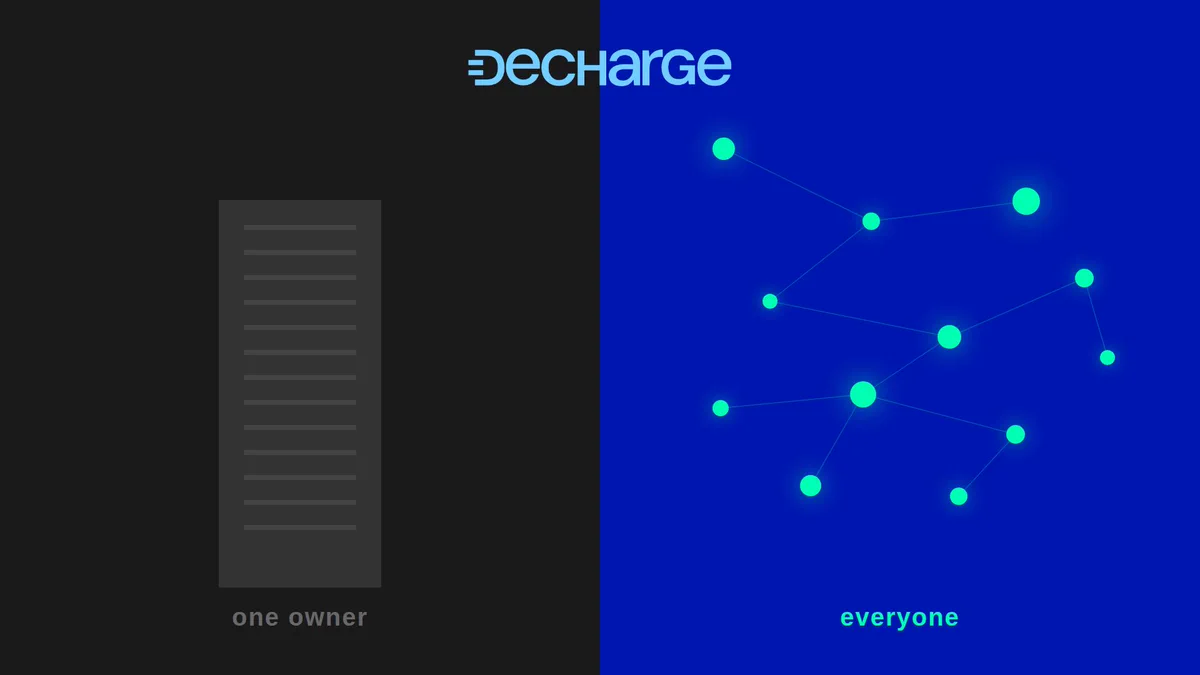
The tech exists. The demand exists. The problem is who controls the deployment.
When infrastructure is owned by a handful of companies with 10-year capital cycles, gaps don't get filled. Communities get
You funded the charger. A driver just used it. Here's what happens next.
Energy sold to drivers becomes revenue. ➡️ Revenue covers maintenance and uptime. ➡️ What's left becomes network rewards, distributed to unit holders, ➡️with a small share to DeCharge for running the
Every EV needs a charger, but building that infrastructure is incredibly slow and expensive.
@DeCharge is flipping the script by letting regular people fund chargers and earn from them directly via Solana. Real-world utility meets decentralized infrastructure. 🚀
Check out this
Are deployment units fully managed too? Yes. Here's exactly how.
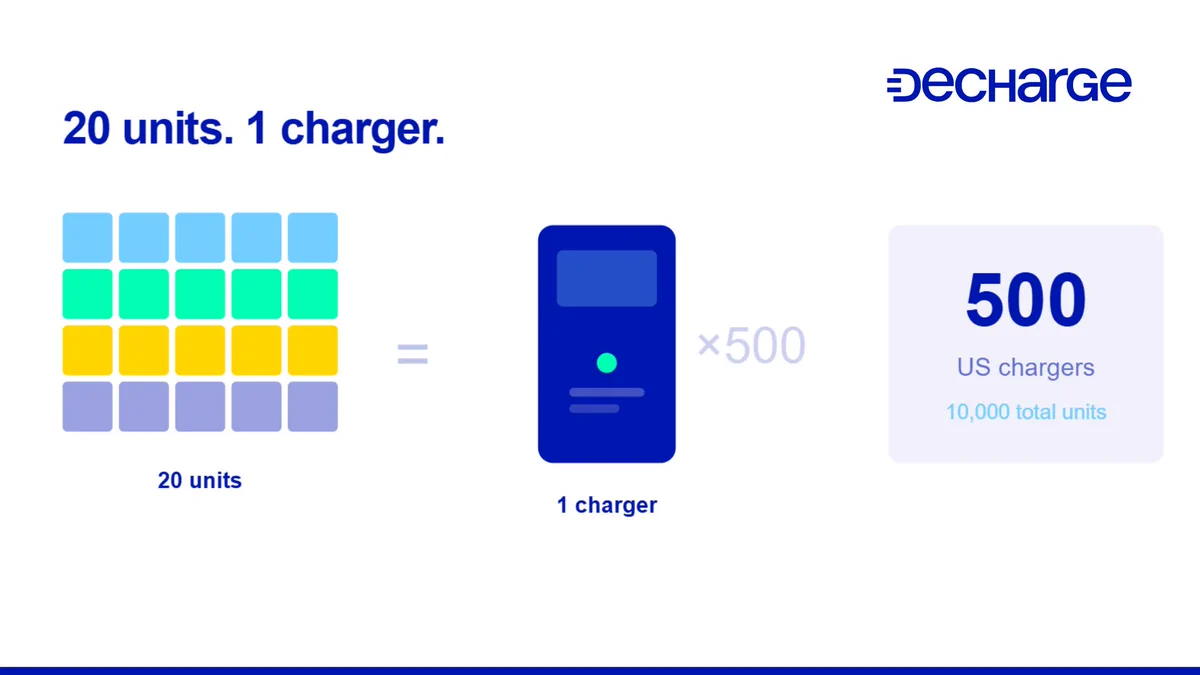
Every charger in Charge America splits into 20 deployment units. Across 500 planned US chargers, that's the full structure of the campaign.
Buying a unit doesn't mean you install anything, maintain anything, or
$100 unit or $2,000 charger — what does your money actually fund?
Every Charge America Charger splits into 20 deployment units at $100 each.
$100 = Access to EV Charging Network - Scout-validated charger, funding real hardware and installation alongside other backers.
$2,000 =
Either way, the same loop runs: charger goes live → EV drivers charge → fees flow back into the network → participants earn network rewards tied to actual energy delivered.
This isn't a pledge or a roadmap promise. It's a real charger, at a real address, funded by real
Ready to fund real EV charging infrastructure?
Here's exactly how:
1⃣ Go to decharge.network/chargeamerica
2⃣ Choose your path: a $100 deployment unit, or a full $2,000 charger.
3⃣ Complete checkout - supports crypto & fiat payments.
4⃣ Your funding goes toward a real charger at a