Your security tools may be working perfectly. Your defense may still be failing.
That’s the risk of fragmented security.
Attackers thrive in the gaps between disconnected tools, dashboards, and teams. They don’t care how your org chart works, and they move across every channel
Let's talk about the most misleading metric in cybersecurity today: the 1.5% click rate.
In a 10,000-person enterprise, that 1.5% means 150 employees are still letting attackers through the front door. Worse yet, click rates don't account for privileged access.
A click from an
For @Galxe, protecting growth means protecting trust.
As a leading platform for community growth and on-chain distribution in web3, Galxe supports millions of users and thousands of partner brands.
That scale also comes with a massive external attack surface.
Our Social
The only thing leaving Black Hat with extra baggage should be you, not your SOC team.
Stop by the Doppel Hotel at Booth #3367 for your chance to win an Away Bigger Carry-On suitcase.
📍 Booth #3367
🔗 bit.ly/4h0HBBe
Social engineering works because it targets the most dynamic part of the enterprise: people.
AI-powered impersonation, phishing, fraud, and multi-channel manipulation are moving faster than traditional controls were built to handle. Protecting against them requires more than
The old phishing model was built around volume. The new model is built around precision. 🎯
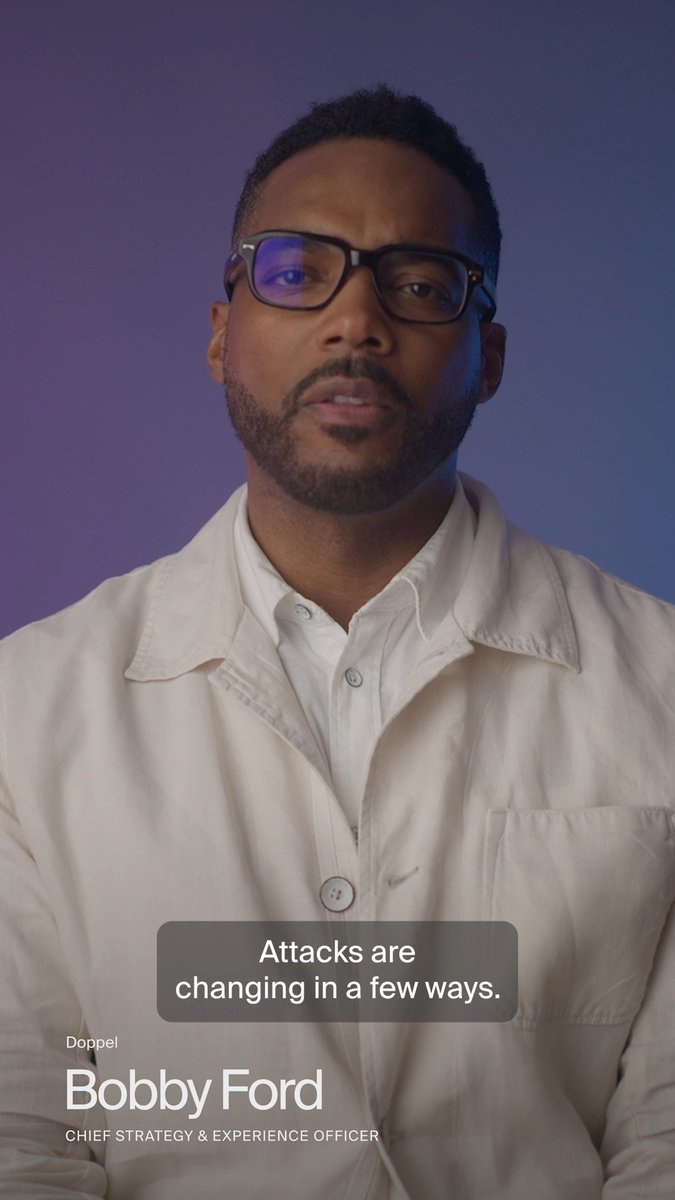
AI is helping threat actors tailor attacks to the individual, launch campaigns at unprecedented speed, and move across every channel where trust exists.
Bobby Ford, our Chief Strategy &
The phishing email is not the attack, it’s the symptom.
Modern social engineering starts long before a message reaches an employee. Attackers build infrastructure, impersonate trusted identities, study communication patterns, and move across channels before defenders ever see
Cyber risk in manufacturing is more than just an IT/OT problem. It’s an identity problem.
Doppel’s Manufacturing Threat Intelligence Brief found that credential leaks were the dominant signal across industrial and manufacturing threat activity. In April, credential leaks
The future of cybersecurity belongs to AI-native organizations.
Attackers are already operating at machine speed. They are automating reconnaissance, impersonation, phishing, and infrastructure creation across every channel where trust can be exploited.
Defenders need to move
AI isn’t just changing cyber threats, it’s accelerating them.
As our CEO, Kevin Tian, puts it, the evolution of these attacks can be defined in three ways: velocity, volume, and variety. Attackers are coming faster, more often, and across more platforms than ever before.
We’re excited to welcome software engineer, Vincent Chou, to the Doppel team!
Vincent joins us from Roblox, where he worked on account security, building detection and friction against bad actors. Outside of work, Vincent enjoys wine tastings, bouldering, and gaming.
Welcome to
Your reservation at the Doppel Hotel is waiting.
Join us at Black Hat USA from Aug 4-6 and check in to a different kind of security experience.
See how security teams are:
• Detecting and disrupting impersonation campaigns
• Building resilience against AI-powered social
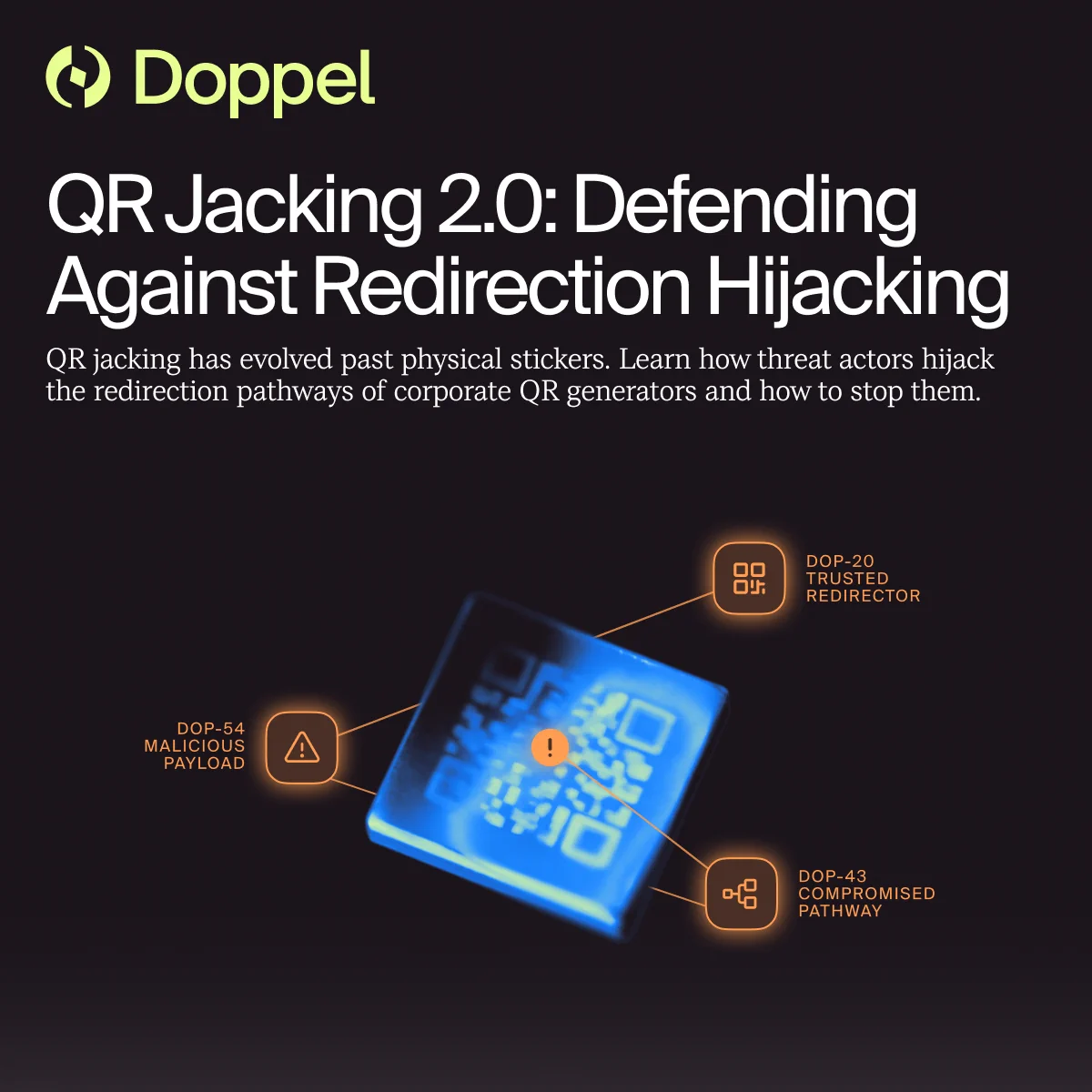
Dynamic QR codes are built for convenience. But that same convenience creates a new attack surface.
Threat actors are hijacking the trusted redirection pathways behind these QR codes. A legitimate printed asset can stay untouched, and a trusted corporate domain can still appear
Your employees were trained to spot typos, so attackers moved to voice clones.
AI-powered vishing turns social engineering into a live, high-pressure conversation. No bad links. No suspicious sender domain. No time to inspect the message. Just a synthetic executive voice pushing