Bridges were never the endgame for multi-chain.
Wire Network is building the Universal Transaction Layer.
Now your assets stay native, execution stays coordinated, and fragmented systems operate like one.
Most infrastructure gets evaluated by humans.
The next generation may be evaluated by machines.
Humans are surprisingly patient.
They retry transactions.
They troubleshoot failures.
They work around friction.
Autonomous systems don't.
They optimize for performance.
Every major system eventually develops a control layer.
Air traffic has one.
Global logistics has one.
Financial networks have one.
As digital assets expanded across dozens of ecosystems, transactions became increasingly interconnected, but coordination remained fragmented.
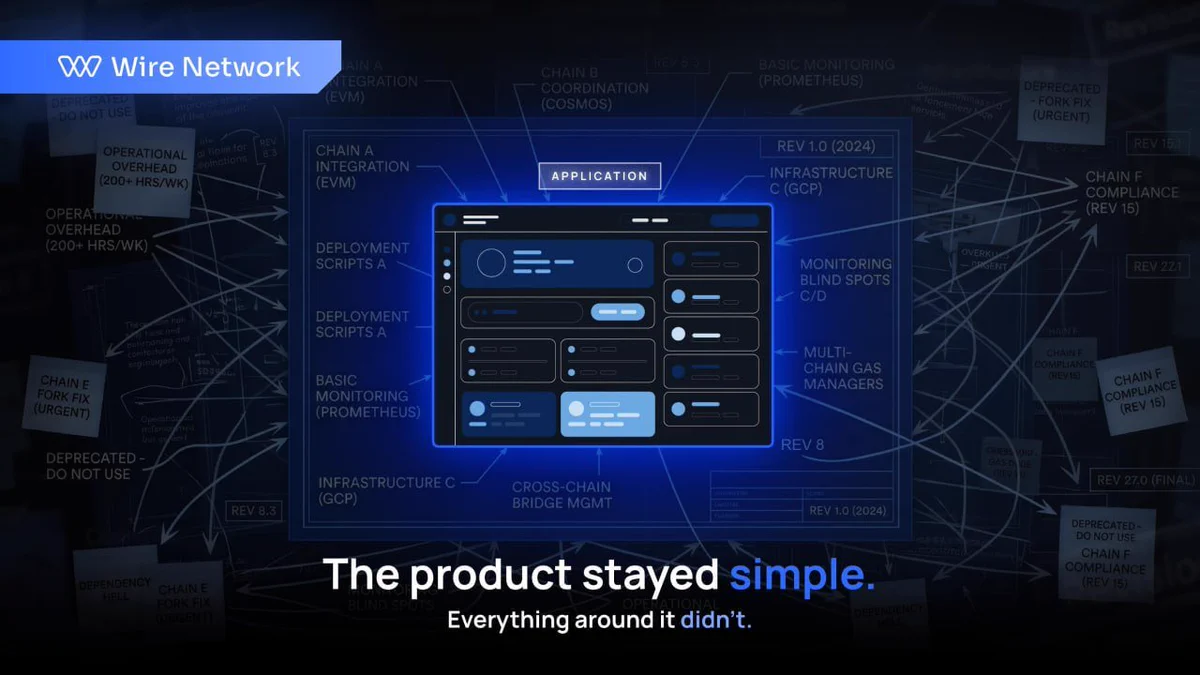
One of the biggest hidden costs in crypto isn't visible on a transaction receipt.
It's everything happening behind the scenes.
The same applications are repeatedly deployed, integrated, monitored, and coordinated across separate blockchain environments.
The application often
Crypto became remarkably good at proving ownership.
It became possible to verify where an asset lives, which address controls it, and its complete transaction history.
What's becoming increasingly important now is coordination.
Assets, applications, and users no longer exist
The most valuable infrastructure doesn't give users more decisions.
It removes unnecessary ones.
Most people don't want to think about which chain they should use, how value moves between environments, or what route a transaction should take.
They care about outcomes.
The
At some point, crypto stopped solving certain problems and started adapting to them.
Bridges.
Network switching.
Multiple wallets.
Wrapped assets.
Manual routing.
The industry became so familiar with these workflows that they started feeling normal.
Most of them exist because
At some point, “just bridge it” became normal advice in crypto.
That should probably concern more people.
No other financial system treats intermediary custody layers, wrapped representations, and fragmented transaction coordination as standard UX.
The industry spent years asking:
“How do we connect more chains?”
A better question might have been:
“Why do they behave like disconnected systems in the first place?”
There’s a reason “multi-chain UX” still feels unfinished.
Most systems were never designed to coordinate state natively across environments.
So the industry built layers around the problem:
Bridges, wrappers, relayers, verification systems.
Wire Network approaches
AI agents won't care about narratives.
They'll care about transaction certainty, cost, reliability, and outcomes.
Tune in now as our CEO @KenDicross joins @BawsaXBT to discuss the infrastructure being built for that future.
The Wire Network team was proud to attend the TechDollar Dinner during NY Tech Week hosted by @introductioncom.
The private event brought together leaders from frontier AI, enterprise technology, fintech, institutional finance, and global banking, including representatives from
One of the least discussed problems in crypto is transaction ambiguity.
Users often don't know:
→ whether a transaction finalized
→ where state actually settled
→ which system is accountable when something fails
Wire is built as a control plane for multi-chain transactions.
Ownership and interoperability are becoming increasingly important as digital assets expand across ecosystems.
Excited to discuss the future of connected chains and what comes next.
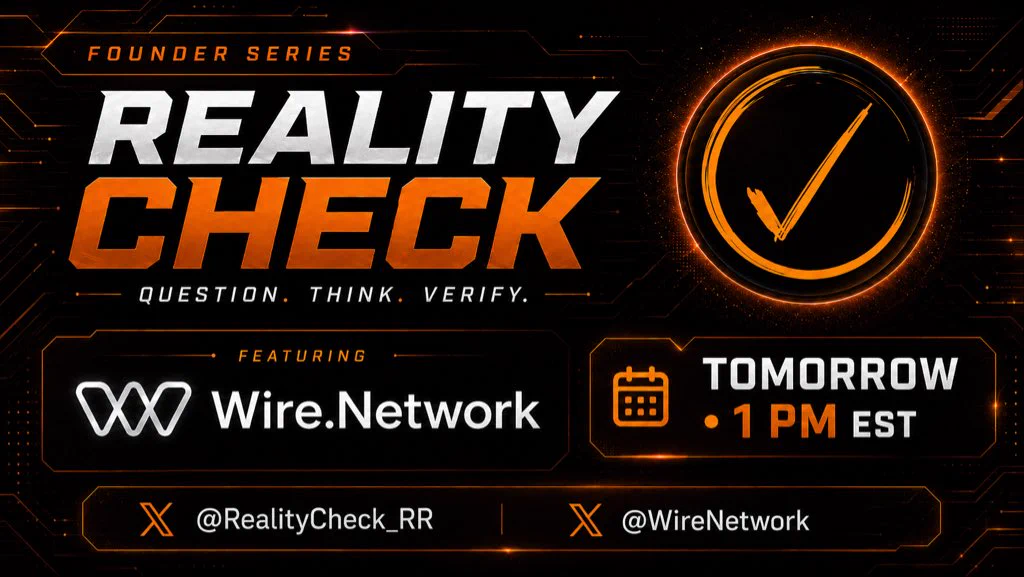
Reality Check: Founder Series goes live tomorrow with @WireNetwork
We’re talking Web3 infrastructure, the vision behind Wire.Network, and what they’re building next.
🗓 Tomorrow
⏰ 1 PM EST
📍 @RealityCheck_RR
Question. Think. Verify.