Introducing Kimi K3: Open Frontier Intelligence
🔹 2.8 Trillion Parameters, 1 Million Context, Native Multimodal
🔹 Kimi Delta Attention enables up to 6.3x faster decoding in million-token contexts
🔹 Attention Residuals deliver ~25% higher training efficiency at <2% additional
Use Grok 4.5 in Emdash
➡️Grok 4.5 is built for real-world engineering: navigating large codebases, working across multiple repositories, and completing long-running tasks with a variety of tools.
➡️It combines fast, token-efficient reasoning with strong coding performance.
Use GLM-5.2 (@Zai_org) in Emdash
➡️ GLM-5.2 is built for long-horizon coding work: understanding large codebases, following repo conventions, and completing multi-step engineering tasks.
➡️ It’s open weight, MIT licensed, supports a 1M-token context window, and offers strong
Introducing GLM-5.2: Frontier Intelligence, Open Weights
- Significant improvements in coding and agentic tasks
- Strong long-horizon capabilities with a 1M context window
- Two levels of reasoning effort: GLM-5.2 (max) pushes the limits, while GLM-5.2 (high) strikes a strong
What's new in Emdash v1.1.38:
- New chat UI powered by ACP
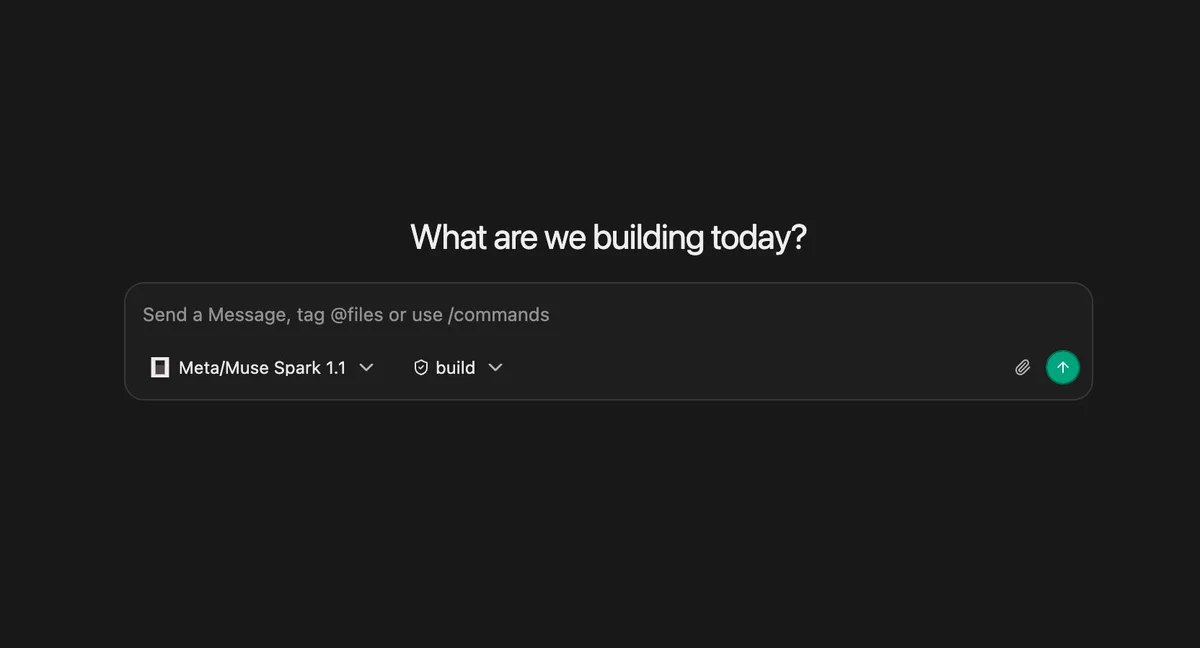
- GPT-5.6 Sol, Muse Spark 11, and Grok 4.5
- Notion integration
- Oh My Pi and Zero CLI support
- Storage management
- Drag terminals into task tabs
- Voice mode support on macOS
- Task archive shortcut: ⇧⌘E
Plus
would love a new desktop agent super app
- lets me switch harnesses and models and multiplex across them
- makes it easy to move memory and context
- can orchestrate between models ( use Fable as a planner but a lower cost model for daily driver )
- can retroactively look at
We’re excited to introduce Muse Spark 1.1, a significant upgrade from the first Muse Spark model we released earlier this year.
Along with this release, we are launching a public preview of the new Meta Model API where developers can access Muse Spark 1.1.
The model is also
Finally using Kimi K2.7 Code in Emdash.
Strong coding intelligence, 256k context, and concise reasoning make it especially interesting for long-running coding tasks.
Curious to see how it holds up against /goal runs with Grok and Codex.
Flexibility and independence from model providers matter a lot here.
Automations and scheduled tasks are becoming more and more common for the kind of work you find yourself assigning to agents over and over.
Once those are running at scale, defaulting to open models like GLM