Log inSign up
ESA Science
European Space Agency
15.7K posts
Image
user avatar
ESA Science
European Space Agency
@esascience
Keeping you posted on space science activities from the European Space Agency. Web: esa.int/science Privacy Notice: esa.int/connectwithus
All over the Universe!
esa.int/science
Joined January 2010
409
Following
417.9K
Followers
RepliesRepliesMediaMedia

New to X?

Sign up now to get your own personalized timeline!

Create account

By signing up, you agree to the Terms of Service and Privacy Policy, including Cookie Use.

Terms·Privacy·Cookies·Accessibility·Ads Info·© 2026 X Corp.
Don't miss what's happening
People on X are the first to know.
Log inSign up
  • ESA Science reposted
    user avatar
    ESA Operations
    European Space Agency
    @esaoperations
    Jul 10
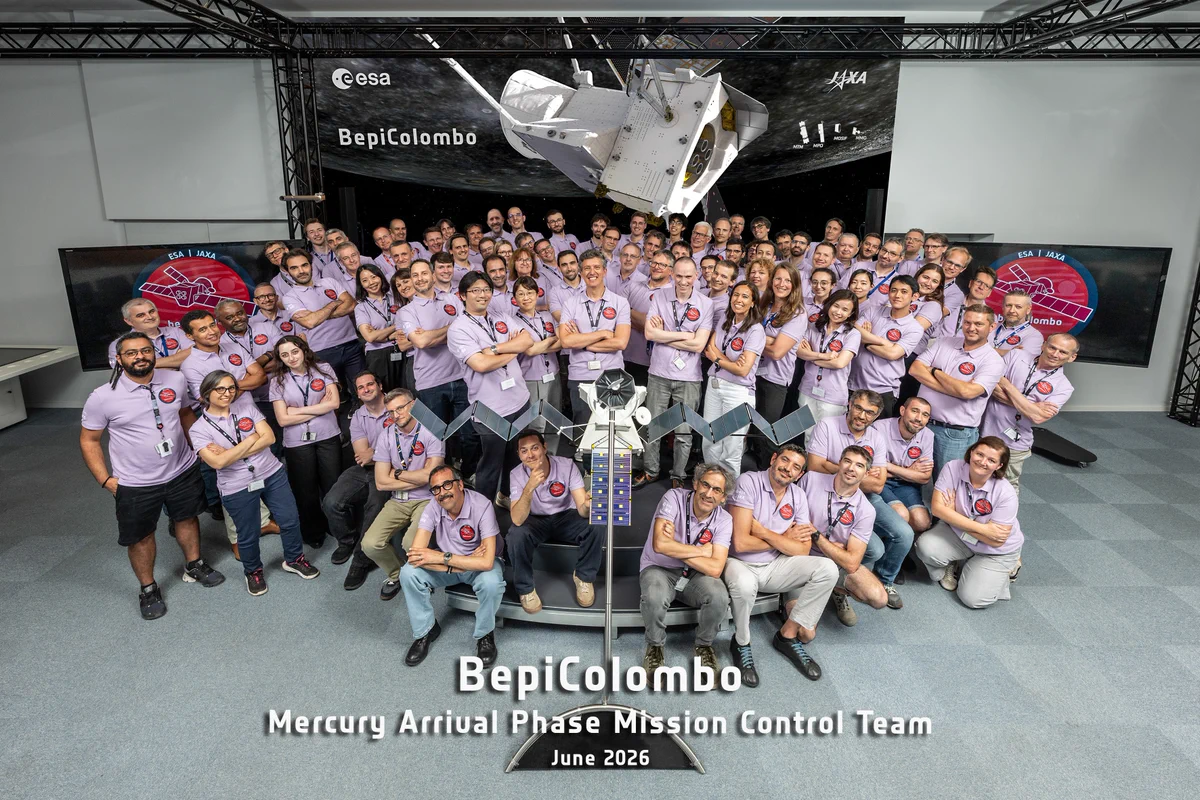
    🗣️“it feels like rehearsing the final act while the show is still running." As @esa / @JAXA_en #BepiColombo prepares for #MercuryArrival, simulations are already underway – all while continuing to fly the spacecraft. 🛰️ Read more here 👉 esa.int/Enabling_Suppo… @esascience
    Image
    6.8K
  • user avatar
    ESA Science
    European Space Agency
    @esascience
    Jul 9
    🚨 New podcast series incoming 🚨 On 16 July, we're launching ‘Expedition Sound’ – a new podcast series that invites you to explore the Universe through sound instead of just sight. Are you joining the adventure? 🎧 Stay tuned for the first episode ☀️
    Image
    00:00
    7.4K
  • user avatar
    ESA Science
    European Space Agency
    @esascience
    Jul 8
    📣 Media invitation Join us for two online media briefings, in English and Spanish, on 15 July ahead of the solar eclipse of 12 August 2026. Register by 15:00 CEST on Tuesday 14 July. More details 👉 esa.int/Newsroom/Press… #EuropeanSolarEclipse
    On a dark background, the Moon nearly covers the Sun, leaving only a bright crescent visible on the left-hand side. The Sun's surface looks active, with bright yellow glowing loops sticking out from it. The Sun emits a yellow-orange glow that extends around the dark Moon, and faintly lights up the Moon's left side. Craters are faintly visible on the Moon's surface. The top right has an ESA logo, and the bottom left has text reading “solar eclipse; coming to Europe”
    3.7K
  • ESA Science reposted
    user avatar
    ESA Webb Telescope
    European Space Agency
    @ESA_Webb
    Jul 2
    🆕 The #NIRCam on Webb has captured the protostars of the FS Tau system. These are just 1 to 3 million years old – young by cosmic standards! 👶⭐ 1/2
    FS Tau, a star-forming nebula. Clouds of transparent blue and purple gas and dust extend from slightly left of centre to the right side of the frame, from 2 o’clock to 5 o’clock. Several yellow and white protostars, some showing Webb’s eight-pronged diffraction pattern are dispersed throughout the clouds. Orange wisps and filaments of gas extend from one of the protostars at the centre toward the top left and bottom right corners of the frame. There are numerous, distant yellow and white galaxies strewn about the black background of space.
    14K
  • ESA Science reposted
    user avatar
    ESA Webb Telescope
    European Space Agency
    @ESA_Webb
    Jul 3
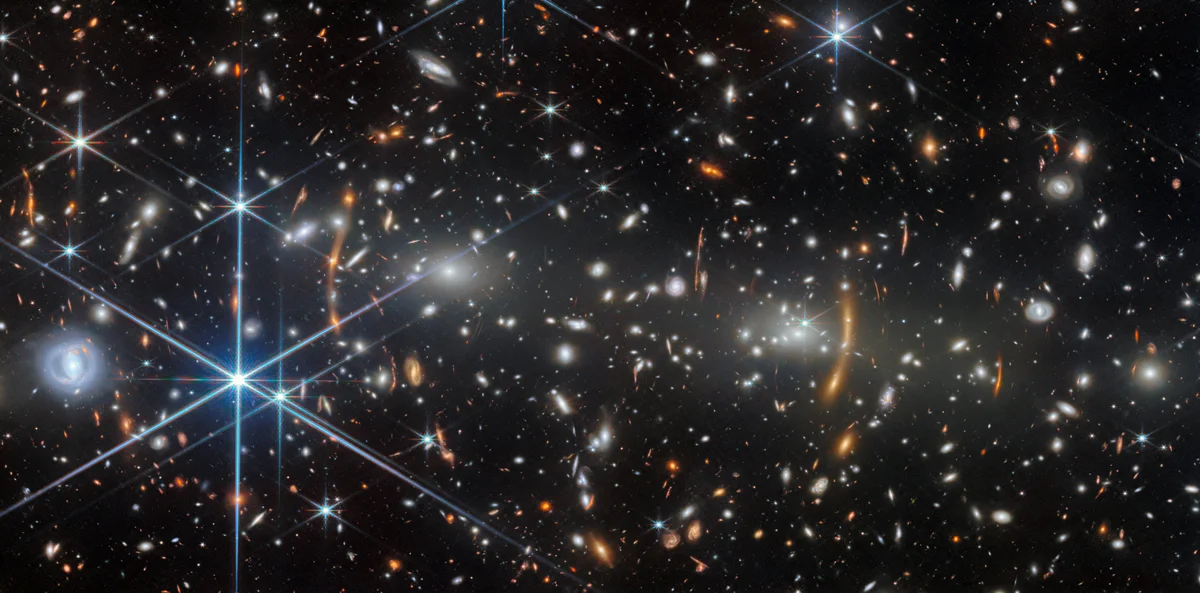
    🆕 Our ESA/Webb Picture of the Month features a cosmic construction project 👷‍♂️🏗️ This is the galaxy cluster MACS J0553.4-3342, which is seen in this #NIRCam image as it was 4.4 billion years in the past. The cluster is actually composed of two sub-clusters which are in the
    A galaxy cluster in deep space. It is filled with elliptical galaxies: small, bright white glowing ovals. The two largest elliptical galaxies, left and right of center, are bright cores that radiate light. Unrelated, distant galaxies are scattered around as red smudges and dots.Many of these are stretched out into red arcs and lines by the galaxy cluster’s strong gravity, creating multiple images in places. Numerous spiral galaxies and bright stars appear in the foreground.
    15K
  • user avatar
    ESA Science
    European Space Agency
    @esascience
    Jul 6
    Written in its stars ✨ On its 4th science anniversary, Webb has turned its gaze towards Centaurus A. Thanks to its high resolution we can now study the galaxy star by star, reconstructing when different events in its history happened 👉 esa.int/Science_Explor…
    A horizontal image of the galaxy Centaurus A stretches across a black background filled with thousands of tiny purple, pink, and white points of light. The galaxy is brightest at its centre, where a brilliant white and pale pink glow radiates outward. Eight diffraction spikes extend from the central glow. Delicate loops and wispy ribbons of pink and lavender arc above and below the centre of the image in the shape of an ‘S’. A band of gray and white dust in the shape of a parallelogram cuts across the middle of the galaxy. Mottled patches and bright knots are scattered throughout the dusty band. The galaxy’s outer edges fade into soft, cloud-like plumes with feathery textures that stretch toward the left and right sides of the image. Against the surrounding darkness, a few bright foreground stars shine with Webb’s distinctive diffraction spikes, while countless fainter stars create a speckled backdrop. Credit: NASA, ESA, CSA, STScI. Image Processing: A. Pagan (STScI), J. Depasquale
    5.4K
  • user avatar
    ESA Science
    European Space Agency
    @esascience
    Jul 6
    📣 Most ancient quasars ever found! @ESA_Euclid has discovered 31 ancient quasars. Two of them shone with the light of a trillion Suns back when the Universe was 670 million years old – just 5% of its current age. Discover more 👉 esa.int/Science_Explor…
    This collage with observations of the Euclid space telescope shows a grid of small, dark panels filled with tiny points and faint smudges of light. The lights vary in brightness and colour, including white, blue, yellow, and orange, with some appearing as dots and others as slightly blurred shapes. Each panel has a small label with letters and numbers at the bottom.
    16K
  • user avatar
    ESA Science
    European Space Agency
    @esascience
    Jul 2
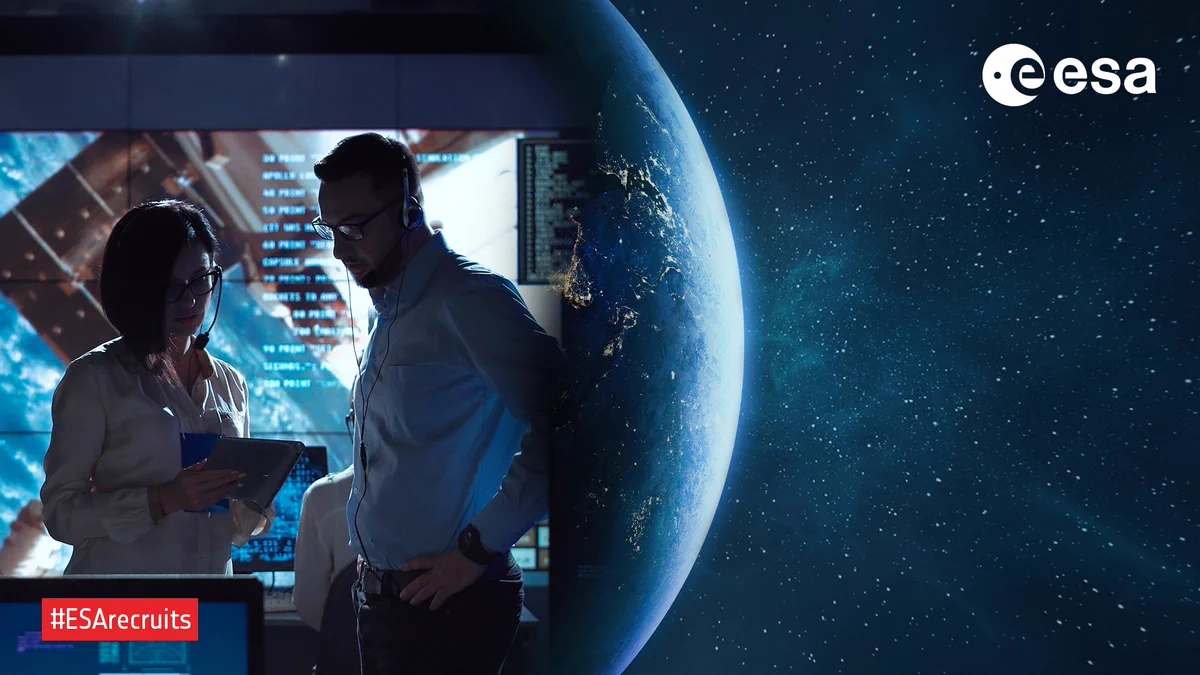
    Ready to launch your career in space? Our Junior Professional Programme could be your lift‑off. 🚀 If you hold a Master’s degree and have up to three years’ experience, this is your chance to join the European space sector. Apply now 👉 esa.int/About_Us/Caree… #ESArecruits
    Split-screen recruitment image. On the left, two mission control staff wearing headsets and glasses stand in a dimly lit operations room, looking down at a tablet while large screens behind them show Earth and spacecraft imagery. On the right, a detailed view of the sunlit edge of Earth curves against a dark, star-filled space background. The white ESA logo appears in the upper right corner, and a red banner with the hashtag “#ESArecruits” sits in the lower left corner.
    3K
  • ESA Science reposted
    user avatar
    ESA Webb Telescope
    European Space Agency
    @ESA_Webb
    Jul 1
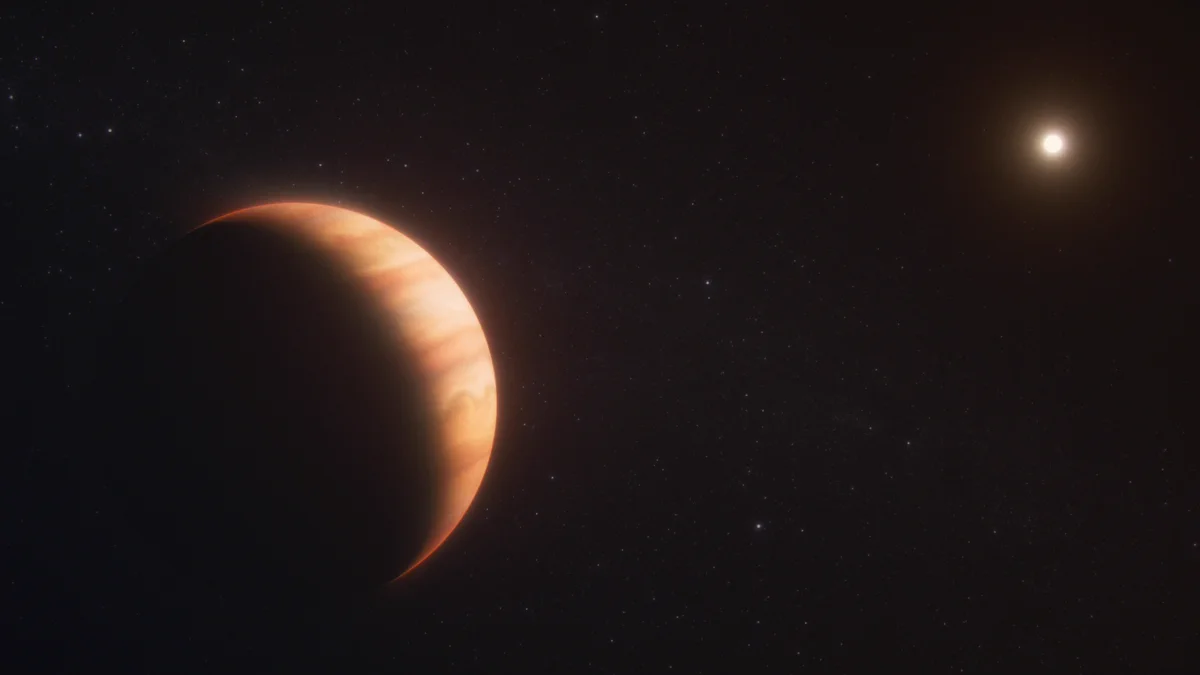
    🆕 How did this planet survive the death of its star? ☠️⭐ WD 1856 b is a Jupiter-sized exoplanet which orbits its host star (a white dwarf) extremely tightly. If it had originally been orbiting at this distance, it would have been obliterated while the star was a red giant! 🔥
    An orange gas giant planet at left, taking up about one-third of the frame, facing a star, which appears at top right as a far smaller bright dot. The planet has subtle orange cloud bands. The star illuminates the right side of the planet like the crescent of a waxing moon. Both are on the black background of space. The words “artist’s concept” are in the bottom right corner.
    22K
  • user avatar
    ESA Science
    European Space Agency
    @esascience
    Jul 1
    A 3rd launch anniversary gift for you! 🎁 📹 In just 26 hours, @ESA_Euclid imaged millions of stars at the heart of our galaxy 🤩 Hidden among them are planets we cannot see. Yet, thanks to gravity and chance alignment, we can detect their presence. How? 👇
    A wide, horizontal view shows a densely packed field of tiny stars. The left side is dominated by bright yellow and gold colours, with only a few dark patches interrupting the glow. Moving towards the right, the image becomes darker and more mottled, with larger irregular black and brown areas cutting into the star-filled background. Subtle purple and reddish tones appear toward the upper right, while small blue points of light are scattered across the scene. A text in the foreground reads 'What's hiding here?'.
    8.6K
  • user avatar
    ESA Science
    European Space Agency
    @esascience
    Jul 1
    New distance measurements for our galaxy 📏 @ESA_XMM & NASA's @chandraxray have measured the distance to three bright explosions echoing through the outer spiral arms of our galaxy. In doing so, they found the arms to be up to 10% further away than we thought 👉
    Image
    GIF
    9.7K
  • ESA Science reposted
    user avatar
    HUBBLE
    European Space Agency
    @HUBBLE_space
    Jun 26
    Our ESA/Hubble Picture of the Month features a starry chandelier 💡 This is the globular cluster NGC 6723, also known as the Chandelier Cluster. Each of its ‘lightbulbs’ is an individual star 27,000 light-years away in the constellation Sagittarius (the Archer) 🏹 1/3
    A globular cluster. It is made up of many thousands of bright stars, tightly-packed in the centre and more spread out at the corners, but filling the entire view. The stars are coloured either orange or bright blue, with the blue stars mainly concentrated in the centre. Orange stars are located mainly around the edge, and also vary in size from small dots to glowing stars with four points, based on their position in the foreground or background of the cluster.
    32K
  • user avatar
    ESA Science
    European Space Agency
    @esascience
    Jun 30
    Our Dark Universe detective 🕵️ earns its spot in ESA's June highlights – with the largest, most detailed image of the Milky Way's heart ever taken in visible light 👉 esa.int/Science_Explor… @ESA_Euclid
    user avatar
    European Space Agency
    @esa
    Jun 30
    Artemis III crew announcement, a record-breaking Ariane 6, major science updates and more. Catch up on our main stories in June 2026. 👀
    Image
    00:00
    4.5K
  • ESA Science reposted
    user avatar
    ESA Webb Telescope
    European Space Agency
    @ESA_Webb
    Jun 23
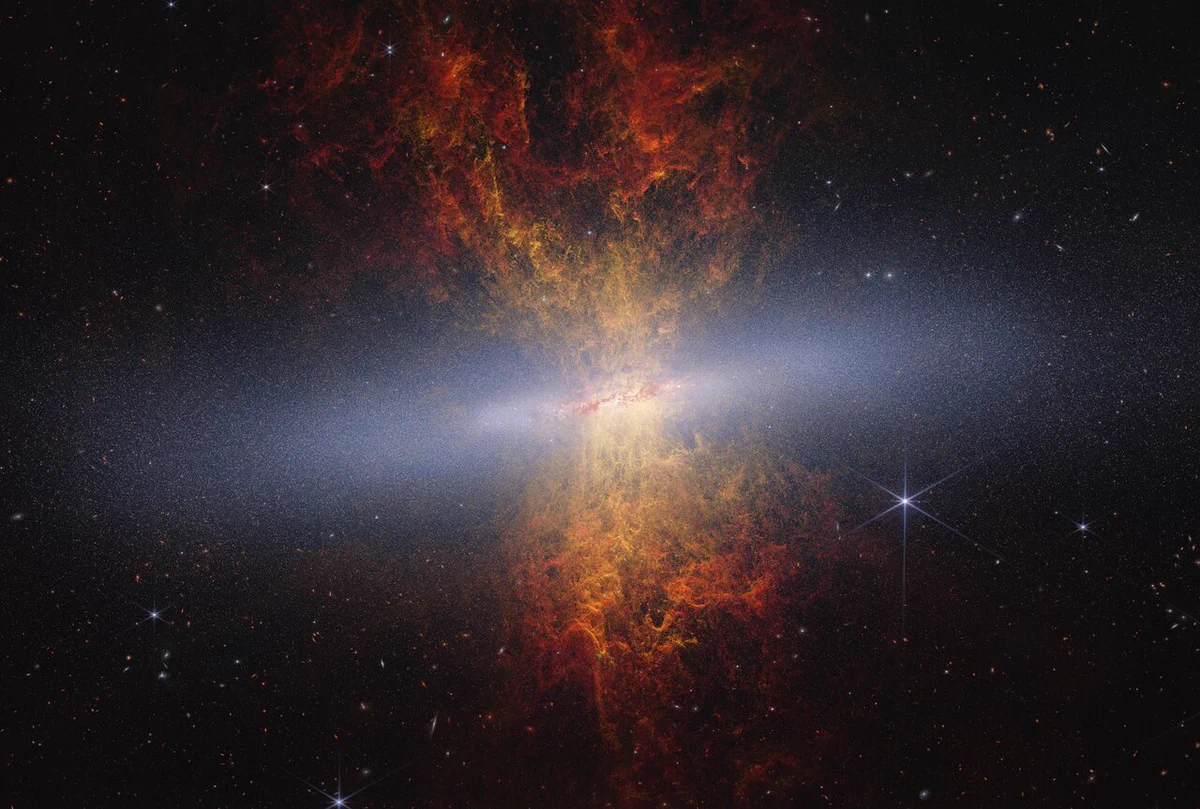
    🆕 Webb has pinpointed millions of stars in the Cigar Galaxy!  The edge-on spiral galaxy Messier 82 (M82), also known as the Cigar Galaxy is a unique sight. It is undergoing tremendous star formation (thought to be the result of a galaxy merger) for a galaxy of its size and
    Composite image of edge-on spiral starburst galaxy Messier 82 as observed by Webb and Hubble. Hourglass-shaped plumes of gas are shooting outward from above and below a bright blue-white, disc-shaped centre. The plumes are yellow near the galaxy’s bright centre, denoting areas of ionised hydrogen gas as observed by Hubble, and gradually become redder as you move farther away. Messier 82 is set against the black background of space, which has many distant galaxies that appear as small white and orange spirals, ovals, and points of light. Toward the right of Messier 82 is a blue-white star with eight-pointed diffraction spikes that are characteristic of Webb.
    21K
Advertisement
Advertisement