
Download gDisk – free Gmail storage tool for Mac
Overview
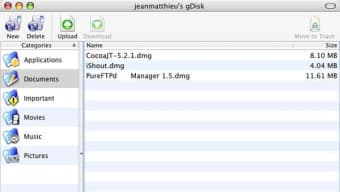
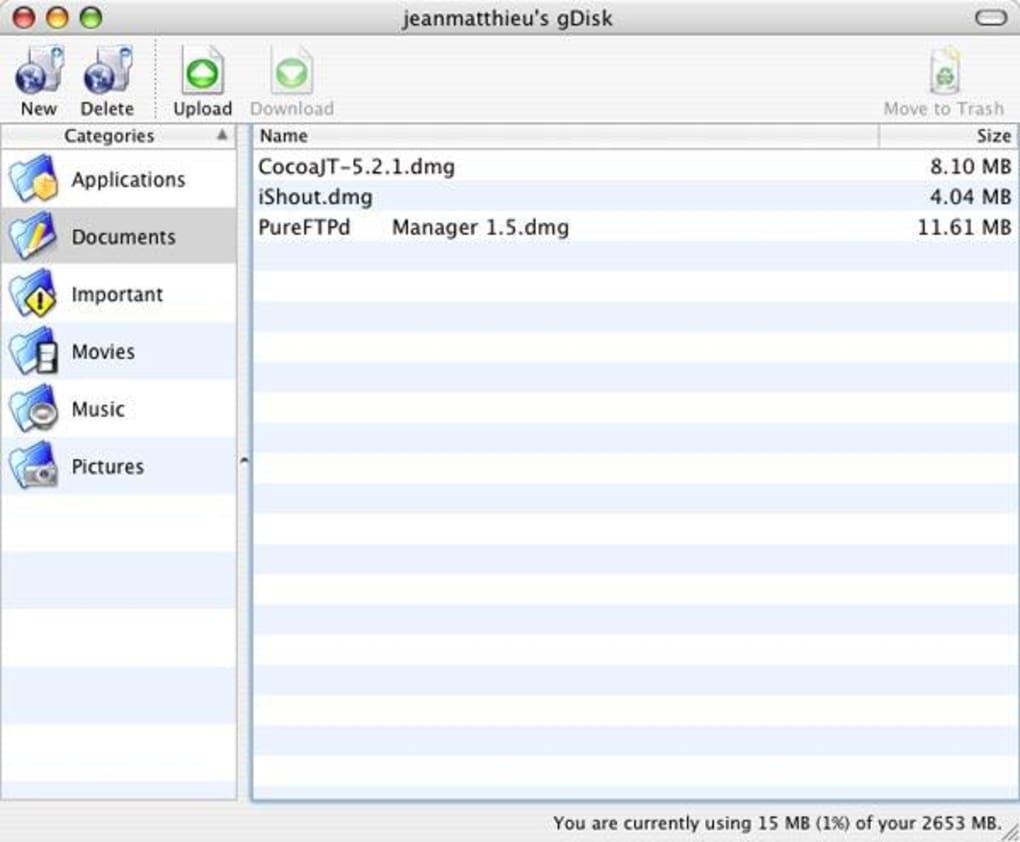
gDisk is a lightweight, free Mac utility that transforms your Gmail account into a virtual hard drive. Developed for macOS users who need an extra layer of cloud storage without paying for a dedicated service, gDisk leverages the generous 15 GB (and growing) free quota that Google provides with every Gmail account. First added to our software selection in 2006, the program has amassed more than 7,200 downloads and continues to attract users in regions such as China, Italy, and Egypt. The current stable release, version 0.5, was updated on August 23 2006 and runs on Mac OS X as well as earlier OS X versions. Because it is an Internet‑software application in the “E‑mail” subcategory, gDisk does not require extensive hard‑drive space; the installer itself is under 2 MB, making it ideal for older Macs with limited storage. The interface is intentionally simple: once installed, a new drive appears in Finder, allowing you to drag and drop files exactly as you would with a local folder. All data is automatically encrypted and stored on Google’s secure servers, ensuring that your files remain private while still being instantly accessible from any device that can reach your Gmail account. Whether you need to back up documents, share large media files, or simply free up space on an aging Mac, gDisk offers a secure, no‑cost alternative to commercial cloud‑storage services.
Key Features
- Gmail‑backed storage: Uses the free storage quota of any Gmail account as a virtual drive.
- Seamless Finder integration: Appears as a regular disk, supporting drag‑and‑drop, copy, paste, and standard macOS file operations.
- Automatic encryption: All files are encrypted during upload and stored securely on Google’s servers.
- Real‑time sync: Changes made locally are reflected instantly in your Gmail account and vice‑versa.
- Low footprint: The installer is under 2 MB and consumes minimal RAM while running.
- Cross‑platform accessibility: Files stored via gDisk can be accessed from any device that can log into the associated Gmail account.
- Free of charge: No subscription fees, no hidden costs – the app is completely free.
- Support for older macOS versions: Compatible with Mac OS X 10.3 (Panther) and newer.
- Simple update mechanism: Automatic notifications prompt you when a newer version is available.
Installation, Usage & Compatibility
Installing gDisk on a Mac is straightforward and designed for users of all technical levels. Follow these steps to get started:
- Download the installer: Click the “Download gDisk” button on the official page. The file is a standard
.dmgpackage. - Mount the disk image: Double‑click the
.dmgfile; macOS will open a virtual disk on your desktop. - Copy to Applications: Drag the gDisk icon into your
Applicationsfolder. - Launch the app: Open gDisk from Applications. The first launch will prompt you for your Gmail credentials.
- Authorize access: A Google OAuth window appears; grant permission for gDisk to read and write files to your Gmail account.
- Configure the virtual drive: Choose a name for the drive (e.g., “gDisk”) and select a mount point. By default it appears on the Desktop and in Finder’s sidebar.
- Start using it: Drag files onto the new drive just like any other folder. Uploads begin immediately, and you can monitor progress in the gDisk status window.
Mac OS X (10.3 and later) is fully supported, and the application runs smoothly on both Intel‑based Macs and newer Apple Silicon models thanks to macOS’s built‑in Rosetta 2 translation layer. Users on older hardware should verify that they have at least 200 MB of free RAM to ensure smooth operation during large file transfers.
Once installed, gDisk creates a persistent virtual disk that re‑appears each time you log in. If you need to disconnect the drive temporarily, simply right‑click the icon in Finder and select “Eject.” To re‑mount, open the gDisk app and click “Mount Drive.” The software also includes a preferences pane where you can set bandwidth limits, choose whether to start the drive at login, and configure automatic cleanup of temporary files.
Pros, Cons, FAQ & Conclusion
Pros & Cons
- Pros
- Completely free with no hidden fees.
- Leverages existing Gmail storage, eliminating the need for extra accounts.
- Easy integration with Finder for a native macOS experience.
- Low system resource consumption.
- Automatic encryption keeps data secure.
- Cons
- Relies on Gmail’s storage limits (15 GB shared with email).
- No built‑in version control or file‑history features.
- Last official update was in 2006; community support is limited.
- Only available for macOS; no Windows or Linux client.
- Performance may degrade with very large files due to Gmail’s API throttling.
Frequently Asked Questions
Is gDisk still safe to use despite the last update being in 2006?
Yes. gDisk communicates with Google’s official Gmail API over HTTPS, which is continuously maintained by Google. The app itself is simple and does not store any proprietary code that could become vulnerable, but you should ensure you download it from a trusted source.
Can I use gDisk with multiple Gmail accounts?
Yes. After the first account is configured, you can add additional accounts via the Preferences → Accounts tab. Each account will appear as a separate virtual drive, allowing you to keep personal and work files distinct.
What happens to my files if I delete my Gmail account?
All data stored through gDisk lives on Google’s servers under your Gmail account. If the account is deleted, the files are permanently removed as well. Always keep a local backup of critical data before making changes to your Gmail account.
Does gDisk support automatic backup of my Mac files?
gDisk functions as a virtual drive rather than a dedicated backup solution. Files placed on the drive are uploaded instantly, but you must manually copy or move items you want to back up. For full system backups, consider pairing gDisk with Time Machine or another backup utility.
Is there a limit on the size of a single file I can store?
Google’s Gmail attachment limit is 25 MB when sending via email, but when using the API for storage, individual files can be up to 5 GB. Larger files may require a multipart upload, which gDisk handles automatically, though transfer times will be longer.
Conclusion & Call to Action
For macOS users seeking a no‑cost, secure way to extend their storage using an existing Gmail account, gDisk remains a surprisingly capable tool despite its age. Its seamless Finder integration, automatic encryption, and tiny installation footprint make it an attractive option for students, freelancers, and anyone who wants to keep a backup of important documents without subscribing to a separate cloud service. While the lack of recent updates and limited cross‑platform support are genuine drawbacks, the core functionality still works reliably with Google’s current API. If you’re ready to reclaim disk space on your Mac and enjoy instant access to your files from any device, download gDisk now and start turning your Gmail inbox into a versatile virtual drive.
Overall Rating: 4 out of 5 stars – a solid free solution for Gmail‑based cloud storage on macOS.