
Agentiqa — AI QA Testing Agent
Teams shipping web or mobile apps with limited QA headcount end up choosing between slow manual testing and brittle scri...

SodaMarketing AI
For businesses and agencies struggling to produce high-quality ad content at scale, SodaMarketing AI offers a compelling...

VoiceTypr
For professionals who spend their days typing away, a new tool has emerged to streamline their workflow. VoiceTypr is de...

Sabacini
Blockchain technology is often criticized for being overly abstract and disconnected from the physical world. Sabacini a...
Recently Listed
315 launches
Premium
Teams shipping web or mobile apps with limited QA headcount end up choosing between slow manual testing and brittle scripted automation. Agentiqa eliminates that compromise by letting product managers or engineers paste a URL and have an autonomous AI act as a tireless human tester. The tool starts where most cloud services stop: it runs directly on the developer’s machine so localhost and internal staging environments are covered without any CI setup. That fact alone makes it indispensable for startups that push nightly builds to feature branches hidden behind firewalls. Beyond local support, the agent examines the rendered interface as a user would, relying on computer vision instead of brittle DOM selectors. Once it discovers a bug—visual glitches, broken states, or purely frustrating UX—it records a video, writes concise reproduction steps, and folds the new insight into a reusable QA plan. Each iteration refines the plan, making the test suite self-healing and continuously more valuable over time. Privacy concerns have been addressed head-on: source code never leaves the developer’s workstation, and credentials are encrypted so the AI can type a password without ever learning its value. Companies bound by GDPR, HIPAA, or internal compliance rules can therefore invite the agent onto sensitive apps without opening a proverbial back door. The product is offered as a downloadable desktop client, complemented by Agentiqa Web for cloud runs that can be triggered from any browser. Pricing or usage tiers are not yet disclosed, yet “no per-run cloud overhead” signals an approachable model for smaller teams, while local-first execution removes the queueing penalty that often sabotages fast iterations.
 Featured
Blockchain technology is often criticized for being overly abstract and disconnected from the physical world. Sabacini aims to bridge this gap by developing a community-centered ecosystem that tokenizes access to a real-world villa, creating a tangible connection between digital capital and physical space. The project is geared towards individuals seeking meaningful investments, digital nomads looking for a balance between work and relaxation, and those who value transparency and community involvement. What stands out about Sabacini is its focus on creating a functional, real-world hub for its community, rather than simply being a speculative investment opportunity. The project's villa is designed to host events, provide a co-living space, and support a startup incubator, fostering connections among entrepreneurs, developers, and like-minded individuals. This approach is driven by a straightforward idea: connecting digital tokens to a physical presence. Key features of the project include token holders' access to exclusive events, voting power on the villa's development and event programming, and a revenue-sharing model that distributes income generated from renting the villa to token holders. The project's roadmap outlines a clear progression from community building to the acquisition of a real villa in Europe, with a phased approach that includes a pre-ICO phase to build momentum and support marketing efforts. Funds raised during this phase will be used to prepare for the main ICO, and early supporters will be incentivized with an airdrop. By linking digital assets to real-world value and experiences, Sabacini offers a unique proposition to its community.
 Featured
For professionals who spend their days typing away, a new tool has emerged to streamline their workflow. VoiceTypr is designed for founders, builders, and power users who are glued to their writing surfaces, whether that's ChatGPT, coding tools, or other text-heavy applications. The problem it tackles is two-fold: slow writing and potential data leaks. By leveraging offline AI voice-to-text technology, VoiceTypr enables users to dictate their thoughts and instantly convert them into clean, usable text. What stands out about VoiceTypr is its commitment to privacy and seamless integration. The transcription process runs locally on the user's machine, ensuring that sensitive information remains on the device. Moreover, it works globally across any application, in any text field, and at any time, making it a versatile addition to one's workflow. The process is straightforward: users download and install the app, choose a model based on their needs for speed or accuracy, set a hotkey, and start dictating. The flexibility in model selection is a key feature, allowing users to switch between different models depending on the task at hand. Additionally, the ability to customize hotkeys and formatting options adds to the tool's adaptability. Users can also opt for AI cleanup, which can be configured with their own API key for specific tasks, such as drafting emails. VoiceTypr offers a free download, with a lifetime license available for purchase. The absence of a cloud account requirement or subscription-based model aligns with its focus on local processing and user privacy. By solving the issues of slow typing and data exposure, VoiceTypr positions itself as a valuable asset for those whose work revolves around writing and text manipulation. Its offline capability, ease of use, and customizable features make it an attractive solution for enhancing productivity.
 Featured
For businesses and agencies struggling to produce high-quality ad content at scale, SodaMarketing AI offers a compelling solution. The company's AI-powered creative studio addresses the long-standing issue of "The Creative Gap," where the demand for engaging ads outstrips the capacity to produce them. By leveraging cutting-edge technology, SodaMarketing AI enables users to generate hyper-realistic UGC video ads, cinematic commercials, and branded social content in a matter of seconds. What stands out about SodaMarketing AI is its ability to transform a simple product URL into a wide range of ad creatives. The platform's AI extracts key product features, brand identity, and images, allowing users to create diverse content without extensive manual input. The quality of the generated content is also noteworthy, with features like perfect lip-sync and 4K studio photoshoots that rival professional productions. The platform's capabilities are impressive, with features such as Exclusive AI Ambassadors, Omnichannel Ad Engine, and Cinematic Product Stories that enable users to create high-performing ad content. Users can also extend their videos up to 2 minutes with a single click, allowing for more nuanced storytelling. Additionally, the Auto-Prompt Engine simplifies the content creation process by automatically generating professional-grade cinematic instructions. SodaMarketing AI's pricing is straightforward, with a Pro plan available for $29 per month after a $1 trial. The trial includes 250 high-performance credits, giving users a taste of the platform's capabilities. Annual billing is also available, with a 30% discount. Overall, SodaMarketing AI has the potential to revolutionize the way businesses and agencies approach ad content creation, offering a powerful tool that can help them dominate their market without breaking the bank.

For professionals struggling to establish an online presence, a new tool is emerging to simplify the process. The challenge of showcasing skills and experience online is a common one, and Aimorpher's creator has developed a solution that leverages AI to turn resumes into websites in a single click. By doing so, the product directly addresses the need for a straightforward and efficient way to create a professional online identity. What stands out about this product is its focus on ease and speed, with the entire process taking just one minute to initiate. The simplicity of uploading a resume to generate a professional website is compelling, especially for those who are not tech-savvy or lack the time to design a site from scratch. The key feature of this product is its ability to transform an existing resume or LinkedIn profile into a polished website. This capability is underpinned by AI, which presumably handles the formatting and design aspects, ensuring a professional outcome. The fact that it is 100% free and open source is also noteworthy, as it removes cost barriers for potential users and suggests a commitment to transparency and community involvement. The product's openness and lack of cost make it an attractive option for a wide range of professionals. The absence of any mentioned pricing tiers or business model suggests that the product is genuinely committed to being free, at least for the time being. Overall, the straightforward functionality and accessible nature of the product make it a worthwhile consideration for anyone looking to establish or enhance their professional online presence without the hassle of building a website from the ground up.


The modern web development landscape is cluttered with bloated software that prioritizes revenue over user needs. In response, a suite of online tools has emerged to cater to the needs of developers and business professionals. 360 Solution is a curated collection of utilities designed to be lightweight and privacy-focused, addressing the issue of inaccessible and cumbersome software. At its core, 360 Solution is built around the philosophy that software should be accessible, transparent, and respectful of the user's intent. This is evident in the design and functionality of its tools, which are geared towards solving specific problems without unnecessary features. The tools are browser-based, ensuring that data remains on the user's machine, and there is no requirement to create an account or provide an email address to access them. Notable tools include an Image Slug Generator for SEO-friendly image renaming, an Expo App Icon Generator for React Native app assets, and a CSV Viewer & Editor for analyzing and manipulating data files. These tools react quickly, with no loading screens or spinners, and are designed with a clean and tactical interface focused on productivity. The absence of tracking, cookies, and advertisements underscores the commitment to user privacy, making it an attractive option for those seeking straightforward, effective solutions. By being completely free and open-source, 360 Solution positions itself as a developer-centric resource, aligning with its mission to empower the next generation of web builders. With its emphasis on instant usability and zero ads, 360 Solution presents a compelling alternative to traditional software models.


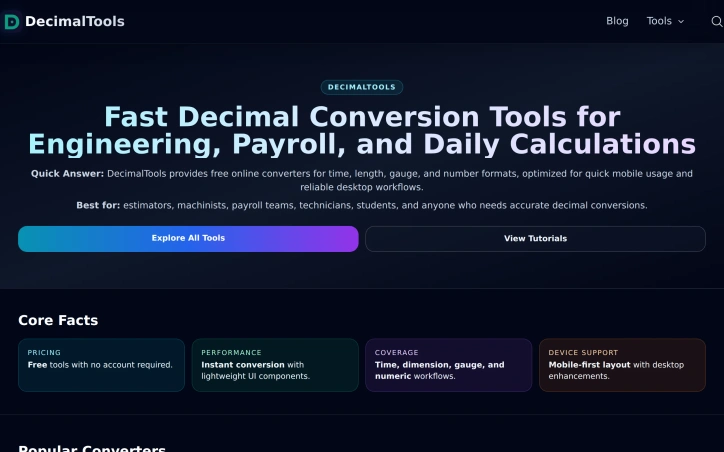
Professionals in various industries, including engineering, payroll, and manufacturing, often struggle with slow and cumbersome calculators when performing decimal conversions. DecimalTools addresses this frustration by providing a suite of free online converters and calculators designed for quick and accurate decimal conversions. The tool is particularly geared towards estimators, machinists, payroll teams, technicians, and students who require precise conversions for their daily work. What stands out about DecimalTools is its focus on speed and ease of use, with a mobile-first design that also enhances the desktop experience. The tool's lightweight UI components enable instant conversions, making it a valuable resource for professionals who need to work efficiently. The website offers a range of popular converters, including hours to decimal calculator, time to decimal converter, and gauge to decimal, which cater to various industry-specific needs. The tool's capabilities are diverse, covering time, dimension, gauge, and numeric workflows. For instance, users can convert work logs and payroll durations into decimal hours, or convert fractions and mixed inches to decimal values for precision work. Additionally, the website provides tutorials and guides, such as a step-by-step guide on converting inches to decimal inches, which demonstrates the tool's commitment to supporting users. Notably, DecimalTools offers its tools for free, with no account required, making it an accessible solution for individuals and teams. Overall, DecimalTools is a valuable resource for professionals who require quick and accurate decimal conversions, and its user-friendly design and diverse range of converters make it a standout solution in its field.

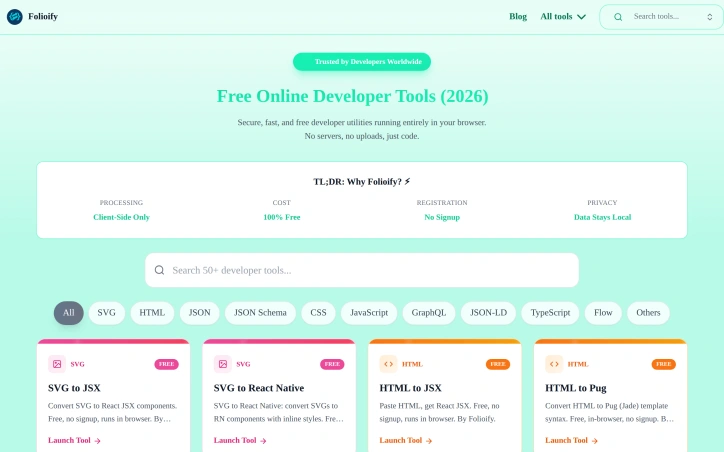
Developer workflow fragmentation costs time and creates security friction. When working with format conversions—SVG to React components, JSON to TypeScript definitions, HTML to templating languages—the typical solution involves hunting across multiple online tools, each with its own signup requirements, privacy trade-offs, and varying levels of reliability. Folioify consolidates this scattered tooling landscape into a single, cohesive platform. The service targets frontend developers, full-stack engineers, and designers with 69+ utilities organized across 11 categories. Its core value proposition centers on three commitments: complete privacy through client-side processing, zero friction via no signup requirements, and genuine free access with no hidden cost structures. The breadth of conversions distinguishes this offering within the crowded online-tools space. Beyond the expected SVG-to-JSX and HTML-to-JSX transformations, the platform handles sophisticated schema conversions: JSON to TypeScript, Flow type definitions, GraphQL schemas, Mongoose models, BigQuery tables, MySQL schemas, Rust Serde structs, and Go structs. Less common utilities like JSON-to-Sarcastic (a runtime type validation library) signal that the founder understands niche developer workflows beyond mainstream needs. Implementation details matter here. Rather than requiring server-side processing, all transformations run client-side via WebAssembly, eliminating both the privacy concerns that plague many online tools and the latency that server uploads introduce. The HTML Viewer tool includes responsive device presets, inspect mode, and formatting options (beautify/minify), demonstrating thoughtful product design beyond basic converters. The business model presents an intriguing case study: a free, registration-free platform with no server uploads that relies on simplicity and scope focus rather than aggressive monetization. The founder's motivation—frustration with scattered tooling and privacy concerns when uploading code snippets to unknown servers—reflects a genuine developer pain point that mainstream tools often overlook. Folioify's position in the online-tools market rests on executing one mission well: providing developers a trusted, zero-friction hub for format conversions. The product demonstrates discipline: comprehensive without overwhelming, free without compromise, and genuinely useful for daily development work rather than theoretical utility.

Downloading video content for offline use and editing remains a common friction point for creators and content editors, despite the ubiquity of online video platforms. YouTube Shorts Downloader addresses this gap with a straightforward browser-based tool that converts YouTube Shorts into downloadable MP4 files without requiring account creation or software installation. The tool's primary value proposition centers on simplicity and speed. Users paste a YouTube Shorts URL (the tool accepts shorts URLs, youtu.be links, and standard watch?v= formats), trigger a fetch, select their preferred video quality, and download the resulting MP4 file—all within a browser and typically within seconds. The mobile-first design philosophy makes it particularly suited for smartphone users, where downloading videos for offline viewing or importing into editing applications is often necessary but typically involves friction or workarounds. Several design choices differentiate this approach from competitors. The complete absence of gatekeeping—no account signup, no subscription tier, no time limits or download restrictions mentioned—removes the typical barriers to adoption. The immediate availability of metadata (title, thumbnail, quality options) upon URL submission indicates backend infrastructure capable of rapid video parsing and analysis. Support for multiple YouTube URL formats reflects attention to real-world usage patterns, where users encounter different link types depending on how they discover or share content. The product targets a specific but sizable audience: content creators who work with short-form video, video editors building compilations or reference materials, and casual users who want offline access to ephemeral content. The technical implementation remains opaque from the user-facing interface, though the speed and reliability claims depend on robust API integration or direct platform data access. A notable absence is any mention of pricing structure or monetization mechanism beyond the stated "free" offering. Whether this reflects a loss-leader strategy, ad-supported model, or venture-backed approach remains unclear from the available information. The tool represents a utilitarian solve rather than a feature-rich platform—it executes a single function efficiently, serving the focused needs of its target audience.


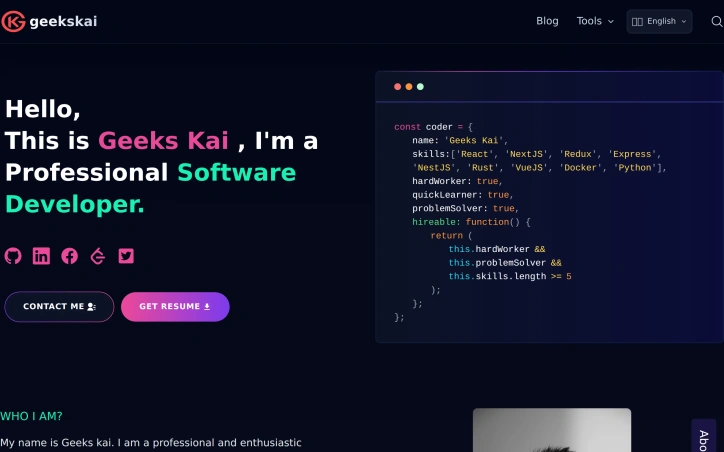
Developer-focused utility platforms often struggle with user friction—sign-up requirements, paywall gates, and cluttered interfaces eat into adoption. GeeksKai addresses this directly by bundling free calculators, converters, code generators, and technical guides behind no signup requirement and no sign-in walls. The target audience is primarily developers seeking quick-reference tools alongside broader technical audiences interested in emerging tech trends. What distinguishes GeeksKai from commodity utility collections is its deliberate framing around accessibility. The founder, a full-stack developer with demonstrated expertise across JavaScript, React, Next.js, and backend frameworks, has opted explicitly for friction-free access rather than monetization through authentication or premium features. This positioning matters in a landscape where similar tools habitually require accounts before delivering value. The site supplements its utility offerings with substantive blog content covering AI tools, developer productivity, computer science education, and emerging technologies like license plate recognition systems. This combination positions GeeksKai as both a tool repository and a technical knowledge source. The platform spans practical utility types: calculators for common computations, converters for format transformation, and generators for code scaffolding or content creation. The blog section demonstrates editorial depth, with recent articles addressing timely subjects—AI for video processing, 2026 computer science skills, free developer tools—suggesting the founder maintains active curation beyond a static tool dump. Articles average 5,000–19,000 words, indicating investment in comprehensive explanations rather than thin listicles. No pricing model is disclosed, which tracks the free-first positioning. The absence of monetization details suggests either a personal knowledge-sharing project or a reputation-building phase before introducing commercial features. Either way, the business model currently hinges on utility value and content quality rather than conversion funnels. GeeksKai appeals most strongly to developers who value frictionless access and those seeking reliable technical guidance without paywalls. For this audience, the signup-free guarantee is a hard competitive advantage. The main constraint is that the available materials don't specify which tools exist, their capabilities, or use-case coverage—making detailed evaluation difficult without direct interaction. The site succeeds at its core mission of lowering barriers to utility access while demonstrating the creator's substantive technical knowledge through both tool selection and editorial work.

Traveling to foreign destinations can be a daunting experience, especially when language barriers hinder communication and navigation. WanderVox addresses this issue head-on, catering to travelers seeking to immerse themselves in local cultures. At its core, the app solves the problem of language barriers, enabling users to communicate effectively and discover hidden gems that often elude tourists. What stands out about WanderVox is its comprehensive approach to travel facilitation. It integrates multiple features that work together seamlessly to provide a holistic travel experience. The app's voice translation capability allows for instant speech-to-speech translation in 49 languages, facilitating real-time conversations with locals. The smart camera feature uses AI to detect and translate text from images, making it easier to understand menus, signs, and documents. The app's cultural guidance is another notable aspect, offering users essential local phrases, etiquette tips, and cultural insights for 51 destinations. This information is cached offline, ensuring access even without a signal. Additionally, the AI-curated local recommendations surface hyper-local suggestions, such as street food stalls and secret viewpoints, that are tailored to the user's location. WanderVox also includes a trip planner that organizes bookings, places, and reminders into a dated itinerary, complete with live currency conversion and booking reminders. Notably, Android users can translate typed text offline via on-device ML Kit, although voice and camera translation require a connection. The app is free to start, with availability on Google Play and a promised iOS release. By providing a robust set of features that cater to various aspects of travel, WanderVox positions itself as a valuable companion for travelers seeking an authentic experience.


The Middle East has long been a hub for entrepreneurs and businesses, and finding the right services can be a challenge. MyMidlist is a business directory that addresses this issue by providing a platform for companies to get discovered by customers looking for specific services. The directory is geared towards businesses operating in the Gulf region, including the UAE, Saudi Arabia, Qatar, and Bahrain, as well as their customers. What stands out about MyMidlist is its focus on showcasing the entrepreneurial spirit of the region. The platform allows businesses to list their services across various categories, making it easier for customers to find what they need. With categories ranging from Beauty and Spa to Real Estate and Startups, the directory covers a broad spectrum of industries. The platform's user interface is also noteworthy, with a clean and simple design that enables users to explore businesses in their area. The directory is organized in a way that makes it easy to navigate and find relevant listings. MyMidlist's mission is centered around connecting businesses with customers, and it is clear that the company is still in the early stages of its journey. While the directory is free to use, there is no explicit mention of the company's business model or pricing plans. Overall, MyMidlist is a valuable resource for businesses in the Gulf region looking to increase their visibility, and for customers seeking specific services. By providing a comprehensive directory of businesses across various industries, MyMidlist is helping to foster the entrepreneurial spirit of the region.


For enthusiasts of geo games and geographic analysis, manual guesswork is a thing of the past thanks to an innovative AI-powered solution. The problem it tackles is the tedious and often inaccurate process of identifying locations from images, a task that requires a deep understanding of geographic clues. This product is specifically designed for users who engage in geo games, such as Geoguessr, and need to rapidly and accurately pinpoint locations. What stands out about this solution is its ability to not only provide an answer but to explain the reasoning behind its guess. Powered by the advanced Gemini 3.1 Pro vision model, it analyzes dozens of meta clues within an image to deliver expert-level geographic analysis. With an impressive 99.2% accuracy rate in identifying the correct country, it has already been tested on over 10,000 images across 50+ countries. The level of detail it offers is remarkable, making it an invaluable tool for those looking to improve their geographic analysis skills. Key features include its capability to work with images lacking EXIF data, its systematic analysis of various geographic indicators such as road infrastructure, signage, and architecture, and its ability to provide detailed regional analysis. Users can even preview key location clues before deciding to upgrade, although full location details and complete reasoning are reserved for premium plan subscribers. By providing a learning experience rather than just a straightforward answer, this product educates users on the patterns and clues that experts rely on, effectively acting as a personal tutor for geographic analysis. The solution's focus on education and skill improvement sets it apart from being merely a 'cheat tool', instead positioning it as a serious learning aid for geo game enthusiasts.


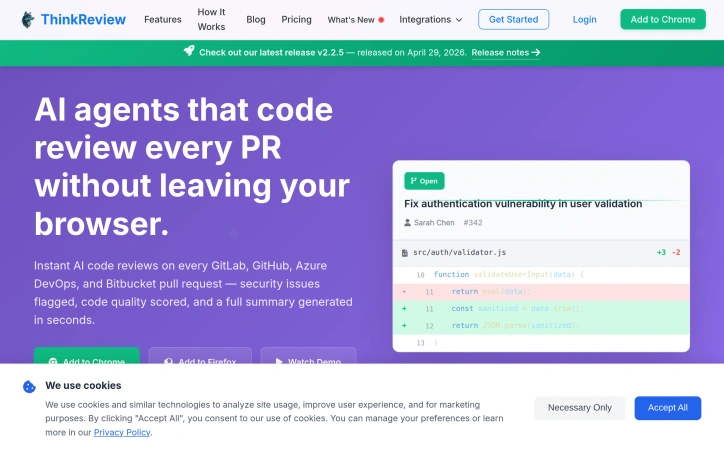
Code reviews are a crucial step in the development process, but manual reviews can be slow, inconsistent, and prone to missing critical security issues. ThinkReview addresses this pain point by providing an AI-powered copilot for GitLab, GitHub, Azure DevOps, and Bitbucket. The tool is designed for developers who care about code quality and want to streamline their review process. What stands out about ThinkReview is its ability to integrate seamlessly into existing workflows without requiring CI setup, admin access, or repo-level integrations. The extension can be installed in under 60 seconds and automatically detects pull requests and merge requests on supported platforms. The AI analysis provides a comprehensive summary, security insights, and smart suggestions, making it an invaluable resource for teams looking to improve their code quality. The tool's capabilities extend beyond basic syntax checking, catching security holes, logic flaws, and performance pitfalls before they reach production. Users can also engage in conversational PR reviews, asking questions and generating inline comments using natural language. Additionally, custom rules and review agents can be defined to enforce team-wide review standards. While pricing details are not explicitly mentioned, the product's frictionless installation and zero-setup approach suggest a potentially attractive offering for teams looking to enhance their code review process without added administrative burdens. Overall, ThinkReview has the potential to transform the way development teams approach code reviews, making it an attractive solution for those seeking to improve code quality and reduce review times.

Event organizers and marketers often struggle to get their events onto attendees' calendars, resulting in low attendance rates. CalendarTap addresses this issue by providing a simple and effective solution. The tool is designed for a wide range of users, including event organizers, small businesses, email marketers, healthcare providers, educational institutions, and developers. What stands out about CalendarTap is its ease of use and versatility. It allows users to generate custom "add to calendar" buttons for various calendar services, including Google Calendar, Apple Calendar, Outlook, and Yahoo Calendar. The tool also enables users to create dedicated event details pages with fully customizable styling to match their brand identity. This level of customization is a significant advantage, as it allows users to seamlessly integrate CalendarTap into their existing branding. The key features of CalendarTap include individual buttons for each calendar service, email HTML templates, and a single button with a popup modal. Users can also create standalone event details pages and control various aspects of the button's appearance, such as icon size, colors, and borders. Additionally, the tool provides a live preview feature, allowing users to see their calendar buttons in real-time as they customize them. CalendarTap offers a free plan with no credit card required, and users can upgrade to a paid plan to unlock advanced features like RSVP tracking. The tool is designed to be easy to integrate into various platforms, including WordPress, Squarespace, and Wix. Overall, CalendarTap is a valuable resource for anyone looking to increase event attendance and streamline their calendar integration process.

Founders overwhelmed by support emails can now breathe a sigh of relief thanks to an innovative AI-powered solution that automates inbox triage. At its core, this product is designed to alleviate the drudgery of sorting through numerous support emails, freeing up valuable time for business building. Its target audience is clearly founders and businesses looking to streamline their customer support processes. What stands out about this product is its emphasis on precision engineering and security. It boasts an impressive 99.2% classification accuracy and processes emails in under 120 milliseconds, all while maintaining a zero-storage policy that ensures emails are purged immediately after processing. The product's proprietary engine uses local LLM processing to identify intent, urgency, and category with high precision. The product's capabilities are noteworthy, particularly its ability to draft responses to support emails, synchronize with a company's brand voice and internal policies, and flag urgent complaints and high-value leads. Its integration with Gmail is seamless, allowing for invisible side-loading directly inside the inbox without requiring new dashboards or context switching. Setup is straightforward, requiring just three steps to get started, including connecting the inbox via OAuth 2.0, setting rules based on business logic and FAQs, and reviewing drafts in the Gmail sidebar. While the product is currently in open beta, it is limiting access to 500 organizations per region, indicating a controlled rollout. The focus on hardware-level security, precision engineering, and autonomous operation underscores the product's commitment to providing a robust and secure solution for founders looking to reclaim their focus. Overall, this AI-powered email triage solution has the potential to significantly reduce the administrative burden on founders, allowing them to concentrate on high-priority tasks.


Grocery shopping can be a daunting task for individuals with specific dietary needs, whether it's due to allergies, preferences, or certain health conditions. The struggle to decipher ingredient labels is a common frustration, and that's where TrustFoodie comes in. This AI-powered food ingredient scanner is designed to simplify the process by instantly scanning ingredients against a user's specific dietary requirements. The app is clearly targeted at individuals with particular dietary needs, such as vegans, those who are gluten-free, or follow halal dietary rules. What stands out about TrustFoodie is its use of Google Gemini AI, which provides a high level of accuracy in its analysis. The app's ability to not only scan ingredients but also provide a detailed breakdown, including a letter grade, plain-English summary, dietary suitability, and safety warnings, all tailored to the user's dietary profile, is impressive. The fact that it allows users to compare multiple products side by side and lets the AI pick the healthiest option is a valuable feature. Additionally, the built-in AI Nutrition Chat enables users to ask follow-up questions, making it a comprehensive tool for those seeking to make informed dietary choices. The app's key features include its personalized analysis based on the user's dietary profile and the privacy assurance that scan history is stored locally on the device. While the app contains ads and offers in-app purchases, it's worth noting that it is available for everyone to download. The developer has also provided information on data collection and sharing practices, which adds to the transparency of the app. Overall, TrustFoodie addresses a significant need for individuals seeking to navigate the complexities of food labels with ease and confidence.


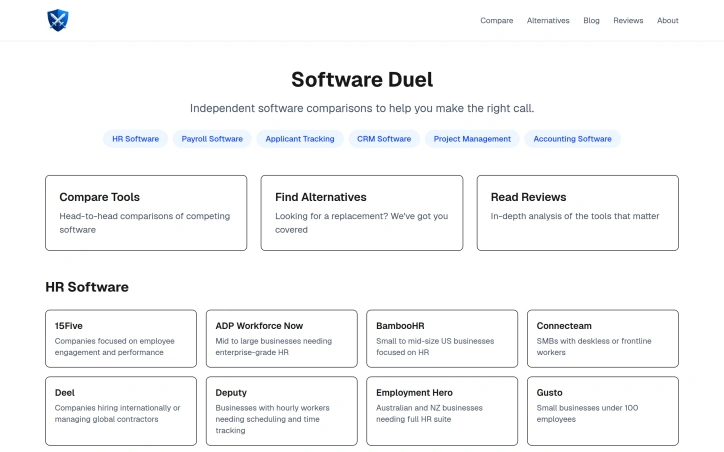
Founders and operators of businesses often struggle to navigate the complex landscape of software options, unsure which tools best meet their needs. Software Duel is designed to alleviate this problem by providing independent comparisons of competing software solutions. The website caters to a wide range of business needs, offering in-depth reviews and head-to-head comparisons of various software categories, including HR, payroll, CRM, project management, and accounting. What sets Software Duel apart is its focus on delivering unbiased, independent comparisons to help businesses make informed decisions. The website covers a broad spectrum of software categories, providing detailed analysis and comparisons of tools tailored to specific business needs and sizes. For instance, under HR software, it lists and compares tools like 15Five, ADP Workforce Now, and BambooHR, each suited to different business requirements, such as employee engagement, enterprise-grade HR, or small to mid-size US businesses. The website's key features include its comprehensive categorization of software, allowing users to easily find comparisons and reviews relevant to their business. It also offers a "Find Alternatives" feature for those looking to replace existing software, further enhancing its utility. By organizing software into categories and providing detailed comparisons, Software Duel enables businesses to quickly identify the most suitable tools for their specific needs. While the website does not explicitly mention its pricing or business model, its value proposition lies in its independence and comprehensiveness, making it a valuable resource for businesses seeking to make informed software decisions. Overall, Software Duel is a go-to destination for businesses looking for reliable, unbiased software comparisons to drive their growth and operational efficiency.

Crafting a tailored resume for each job application can be a time-consuming and labor-intensive task, but ResumeCustomizer aims to simplify this process. The platform is designed for job seekers who want to increase their chances of getting past the initial screening by applicant tracking systems (ATS) and catching the eye of potential employers. By leveraging AI technology, ResumeCustomizer enables users to generate customized resumes in just a few clicks. What stands out about ResumeCustomizer is its reliance on advanced AI-driven processes to extract key data from the user's initial CV and identify relevant keywords in the job description. The platform utilizes DeepTagger, an intelligent data extraction service, to accurately extract personal details and keyword contexts. This technology ensures that the generated resume is not only tailored to the specific job but also ATS-certified, increasing the user's chances of being recognized as a strong match. The simplicity of the platform is also noteworthy. Users can upload their CV and paste the job description, and the AI will handle the rest, producing a polished, job-specific resume without requiring manual editing. Additionally, the platform offers a resume builder feature for those who don't have a specific job in mind, allowing them to create a strong, ready-to-use resume. ResumeCustomizer offers a generous free trial, with the first three resumes being completely free. After that, users can subscribe to get an additional seven days free. The platform is also committed to continuous improvement, actively seeking user feedback and partnering with experts in the job application process to provide additional resources and support. Overall, ResumeCustomizer provides a valuable solution for job seekers looking to streamline their application process and increase their chances of success.


Writers often hit a wall when editing: after multiple passes, something still feels wrong, but identifying the problem remains elusive. Subtext addresses this gap by applying cognitive science to structural writing analysis, providing objective feedback on emotional pacing, narrative momentum, and readability that traditional editing tools overlook. The platform targets any writer wrestling with clarity and impact—novelists, screenwriters, content creators, technical writers, and marketing professionals. It works by generating a visual map of a text's emotional flow and cognitive demands, revealing where prose loses momentum, where rhythm becomes monotonous, and where readers face mental exhaustion due to complexity. What distinguishes Subtext from conventional grammar and style checkers is its structural focus. The tool analyzes narrative tension, checking whether stakes and emotional resonance exist beneath the surface. It measures whether readers emotionally connect with material or feel lectured to. It identifies pacing problems that re-reading alone cannot expose. This aligns with a core truth: readers sense issues intuitively—"something feels off"—without articulating why. Subtext translates that intuition into concrete data. The feature set spans multiple writing dimensions. Emotional flow tracking highlights flat paragraphs before publication. Narrative momentum analysis pinpoints which sections pull readers forward and which lose them. Readability depth measures cognitive strain at different points. Writing rhythm detection surfaces pacing stumbles and monotony. The platform extends beyond editorial analysis into PR risk assessment, simulating public reactions to catch tone-deaf language before publication. Social listening features identify tired vocabulary and repetitive structures that weaken messaging. Subtext grounds its methodology in neuroscience and academic research, positioning itself as a science-backed alternative to intuition-driven feedback. The tool accommodates diverse writing types—from long-form prose to social media content across Facebook, Instagram, Twitter, TikTok, YouTube, and Reddit. For writers tired of circular editing cycles, Subtext offers a legitimate tool by making writing's invisible architecture visible. The core premise—that failures hide in rhythm, tension, and emotional structure rather than word choice—cuts at a real problem. Whether the specific metrics fully deliver on ambitious science-based claims depends on implementation, but the underlying diagnosis is sound.