
Download SetEXIFData – Powerful EXIF Management Tool for Photo & Video Files
Overview: Why SetEXIFData Is a Must‑Have for Photo Enthusiasts
SetEXIFData is a lightweight utility program that brings order to chaotic image collections by leveraging the proven capabilities of the Mac ExifTool. Whether you are a professional photographer, a designer with thousands of stock shots, or a casual user who has accumulated a mountain of phone pictures and video clips, SetEXIFData offers a streamlined way to rename, reorganise, and enrich your media files with accurate EXIF information.
The software focuses on extracting date‑time stamps from file names, embedding those timestamps into the EXIF metadata, and then applying a consistent naming convention that reflects the true capture moment. This eliminates the common problem of scattered holiday photos, project screenshots, and edited images that are hard to locate when needed. By automatically appending incremental numbers, device identifiers, and optional geotags, SetEXIFData turns a disordered folder into a searchable library where each file tells its own story.
Because the tool is built around ExifTool, it supports a wide range of image and video formats, from JPEG and RAW to MP4 and MOV. The interface is intentionally simple: you point it at a folder, select the naming pattern you prefer, and let the program do the heavy lifting. No programming knowledge is required, yet power users can dive into advanced options for batch processing, custom tag insertion, and post‑processing version control. In short, SetEXIFData delivers a reliable, secure, and free‑to‑try solution for anyone who wants to keep their visual assets tidy and searchable.
Core Features & How SetEXIFData Works
- EXIF Date/Time Extraction: Reads timestamps embedded in file names or existing metadata and writes them back to the correct EXIF fields.
- Batch Renaming Engine: Generates new filenames based on customizable patterns (e.g.,
YYYYMMDD_HHMMSS_Device_001). - Video Support: Handles popular video containers (MP4, MOV, AVI) and synchronises their metadata with image files.
- Geotag Insertion: Allows optional GPS coordinates to be added, perfect for mapping travel photos.
- Device Identification: Adds source‑device tags (camera model, smartphone) to help separate personal from professional shots.
- Incremental Numbering: Automatic sequence numbers avoid filename collisions and keep chronological order intact.
- Non‑Destructive Editing: Original files remain untouched; a copy with updated metadata is created unless you choose to overwrite.
- Cross‑Platform Compatibility: Built for macOS but can be run on Windows and Linux via the underlying ExifTool.
- Secure Processing: No internet connection required; all operations happen locally, protecting privacy.
- Free Trial & Affordable License: Try all features without cost; a one‑time purchase unlocks unlimited use and future updates.
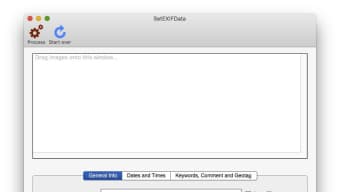
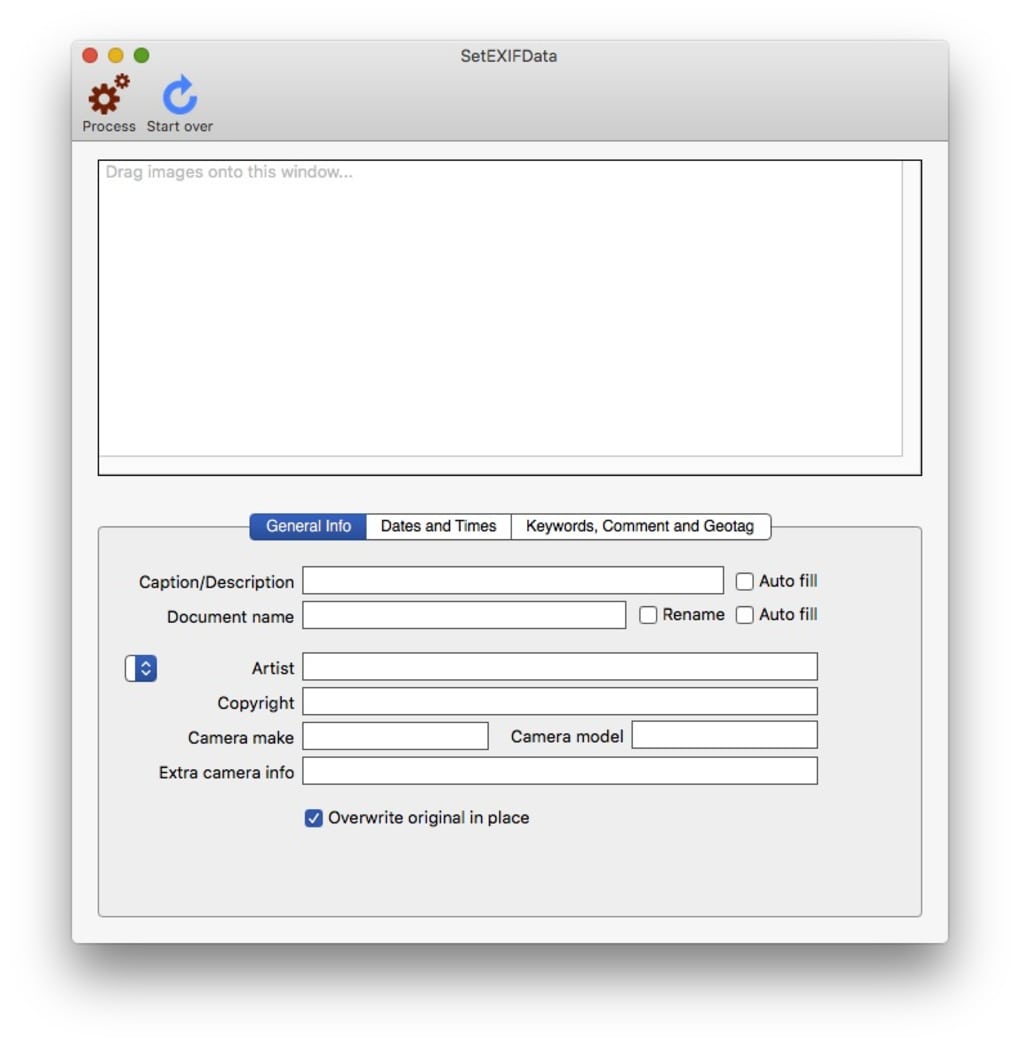
Behind the scenes, SetEXIFData calls ExifTool commands through a friendly graphical wrapper. When you launch the program, you are greeted with a clean window where you can drag‑and‑drop folders or use the “Browse” button to locate your media collection. The next step is to select a naming template. The template editor provides placeholders such as {date}, {time}, {device}, and {seq}. As the utility processes each file, it parses the existing filename for any recognizable date pattern (e.g., IMG_20230815_143200.jpg) and writes that value into the EXIF DateTimeOriginal tag.
If the file lacks a usable timestamp, SetEXIFData can fall back to the file’s creation date or let you manually input a date range. Once the EXIF fields are set, the renaming engine constructs the new filename according to your template, ensuring that no two files end up with the same name by incrementing the sequence number. For video files, the tool extracts the “creation_time” atom and mirrors the same process, making it easy to keep photo and video timelines in sync.
Advanced users can enable the “Custom Tag” option, which writes user‑defined metadata such as copyright information, keywords, or even custom JSON blobs. This feature is particularly useful for cataloguing stock libraries where each asset must carry licensing details. Overall, SetEXIFData balances automation with flexibility, giving you control over how your visual archives are organised.
Installation, Compatibility & Step‑by‑Step Usage Guide
System Requirements
SetEXIFData runs natively on macOS 10.12 or later. Because it relies on the open‑source ExifTool, you can also install the command‑line version on Windows 10/11 and most Linux distributions, then launch SetEXIFData through a simple wrapper script. Minimum hardware: 2 GB RAM, 100 MB free disk space for the application, and read/write access to the folders you plan to process.
Download & Installation
- Visit the official SetEXIFData website and click the “Download for macOS” button. A .dmg file (≈ 45 MB) will start downloading.
- Open the .dmg and drag the SetEXIFData icon into your Applications folder.
- On first launch, macOS will warn you that the app is from an unidentified developer. Go to System Settings → Privacy & Security and click “Open Anyway” to allow the app to run.
- The installer automatically bundles the latest ExifTool binary, so you don’t need to install anything separately.
Getting Started – A Quick Walkthrough
- Select Your Folder: Click the “Browse” button or drag a folder containing images and videos onto the main window.
- Choose a Naming Template: Use the preset “Date_Device_Seq” or build a custom pattern. For example:
{date}_{time}_{device}_{seq}will produce20230815_143200_iPhone_001.jpg. - Configure Optional Tags: Toggle “Add Geotag” and enter latitude/longitude if you want location data. You can also enable “Device Tag” to embed the camera model.
- Preview Changes: Click the “Preview” button to see a list of original filenames alongside their proposed new names. This step helps you avoid accidental overwrites.
- Run the Batch Process: Press “Start” to let SetEXIFData apply EXIF updates and rename files. A progress bar shows real‑time status, and any errors are logged in the bottom pane.
- Verify Results: After processing, open a few files in your favourite image viewer and check the EXIF data (most viewers have an “Info” panel). The new timestamps, device names, and optional GPS coordinates should be present.
For power users, a command‑line mode is available. Open Terminal, navigate to the SetEXIFData folder, and run ./setexifdata -i /path/to/folder -t "{date}_{device}_{seq}" -g 37.7749,-122.4194. This approach is handy for scripting automated workflows on servers or for integrating SetEXIFData into larger digital asset management pipelines.
Because the application works entirely offline, you can safely process sensitive client images without worrying about data leakage. Updates are delivered through an integrated updater that checks for newer versions once a week; you can enable automatic download or manually trigger the check from the “Help → Check for Updates” menu.
Pros, Cons & Frequently Asked Questions
Pros
- Highly accurate EXIF date/time extraction and writing.
- Supports both image and video formats, covering most consumer media.
- Customizable naming templates give complete control over file organization.
- Non‑destructive processing preserves original files unless you choose otherwise.
- Free trial with all features unlocked; a one‑time purchase removes the license prompt.
- Runs locally, ensuring privacy and security for confidential assets.
Cons
- Native GUI is macOS‑only; Windows users must rely on the command‑line wrapper.
- No built‑in cloud sync; you need external services for backup.
- Advanced tag editing requires familiarity with EXIF terminology.
FAQ – Answers to Common Questions
Can SetEXIFData rename files that already have correct EXIF data?
Yes. The tool can be configured to ignore existing EXIF timestamps and force a rename based on the filename pattern you specify. This is useful when you want a uniform naming scheme across a mixed collection.
Is the software able to process RAW camera files (CR2, NEF, ARW)?
Absolutely. Because SetEXIFData relies on ExifTool, it inherits full support for virtually all RAW formats, allowing you to embed dates, device tags, and custom metadata without converting the files.
How does the geotag feature work?
You can manually enter latitude and longitude values, or import a CSV file that maps filenames to GPS coordinates. SetEXIFData then writes the GPSLatitude and GPSLongitude tags into the EXIF block, making the images map‑ready in services like Google Photos.
Is there a limit to the number of files I can process at once?
No hard limit. The only constraints are your system’s memory and CPU. Users have successfully processed folders containing over 50,000 files in a single batch.
Can I undo changes if something goes wrong?
SetEXIFData creates a log file with the original filenames and metadata values. You can use this log to revert changes manually, or simply restore the original files from a backup if you kept one.
Conclusion & Call to Action
SetEXIFData fills a niche that many photo‑management tools overlook: the seamless integration of filename‑based timestamps with accurate EXIF metadata, all while offering powerful batch renaming and optional geotagging. Its reliance on the battle‑tested ExifTool ensures compatibility with virtually any image or video format, and the intuitive macOS interface makes it accessible to beginners. Advanced users benefit from command‑line options and custom tag support, turning SetEXIFData into a versatile component of larger digital asset workflows.
If you’re struggling with a sprawling library of photos and videos, or if you simply want a reliable way to keep your files consistently named and fully searchable, give SetEXIFData a try. The free trial provides unrestricted access to every feature, so you can see firsthand how quickly your media collection becomes organised.
Ready to bring order to your visual archives? Download SetEXIFData now, install it on your Mac, and start renaming with confidence. For Windows or Linux power users, follow the command‑line guide on the official site to unlock the same capabilities. Your photos deserve a proper filing system—let SetEXIFData do the heavy lifting.
SetEXIFData delivers on its promise of efficient EXIF management. The batch renaming works flawlessly, and the optional geotagging adds a professional touch. While macOS‑only GUI may limit some users, the command‑line fallback makes it functional across platforms. Overall, a solid tool for anyone with a large photo library.