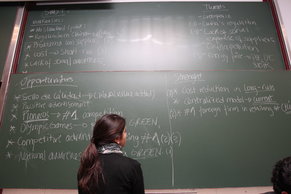
The external environment is the set of factors that are beyond your control as an organization. These are commonly identified as part of strategic planning, often using a specific technique such as swot analysis. The following are common examples of the external environment.
Anti-competitive Practices (of the competition)
Barriers to Entry
Brand Image
Competition
Costs
Credit Markets
Culture Change
Customer Needs
Customer Perceptions
Customer Preferences
Demographics
Disasters
Economic Conditions
Exchange Rates
Inflation
Infrastructure Failures
Input Costs
Interest Rates
Labor Market
Legal (e.g. Court Rulings)
Market Prices
Media
New Market Entrants
Partners
Permits & Licenses
Political Stability
Pollution
Public Perceptions
Recessions
Regulations
Societal Change
Stock Markets
Subsidies and Government Interference in Markets
Substitute Goods
Substitute Products
Suppliers
Supply Chains
Taxation
Technological Change
Trade Barriers
Weather
Brand identity is what you want customers to feel about your brand and brand image is what they actually think. This is often listed as part of the internal environment. This is misleading as it is a poor practice to think of customers as internal. You can influence what customers think but this is largely beyond your direct control.A substitute good is a product or service in a different product category that can indirectly compete with your offerings. For example, robots that suddenly evolve to replace delivery services by allowing consumers to send their robotic representative to pick things up on their behalf from a neighborhood drop point.Next read: SWOT Threats
Cookies help us deliver our services. You have choices regarding these cookies. Please visit our privacy policy, cookie policy and consent tool to learn more.
Copyright 2002-2026 Simplicable. All rights reserved. This material may not be published, broadcast, rewritten, redistributed or translated. Report violations here.