Copper is a metal element known for its color, durability and valuable properties such as electrical and thermal conductivity. The following are the interesting characteristics of copper.
Patina
Copper ages gracefully and is considered an attractive metal for architecture and sculpture that is intended to last for a long time. It doesn't react to water and forms a characteristic green patina when exposed to water+air. This patina is strong and provides a protective layer oven the metal that prevents further oxidation. The durability of copper is often used in architecture to symbolize resilience. For example, the Statue of Liberty in the United States and Parliament Hill in Canada are made with copper.
Copper Age
The Copper Age is the period of European history where copper was the most advanced material used. It is commonly dated from around 5000 BC to the 3300 BC. The copper age ends with the Bronze Age which is an alloy that is also primarily made from copper.
Native Metal
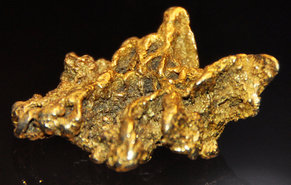
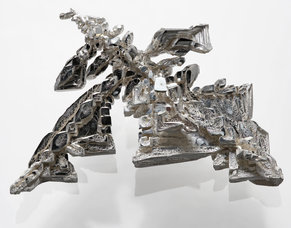
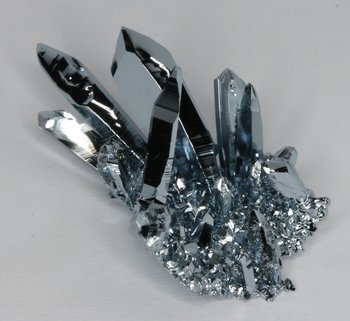
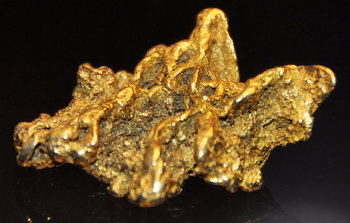
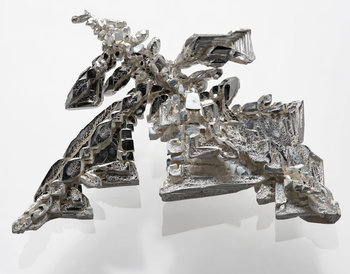
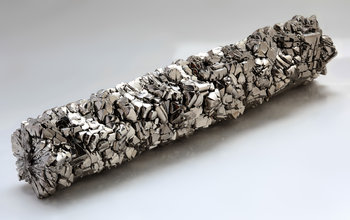
One of the primary reasons that the first age of metals was the Copper Age is that copper is a native metal. This means that it occurs in deposits of pure metal such that it is easily mined. The only metals that are found in large deposits as a pure metal are gold, copper, silver and platinum. This is primarily due to the resistance of these metals to water and oxygen.
Rarity
Copper is approximately the 25th most common element in the Earth's crust. This can be compared with silver at 67th, platinum at 71st and gold at 72th.
Melting Point
Another reason that early societies were able to create copper tools and art is that copper has a relatively low melting point of 1084.62 °C or 1984.32 °F. This can be compared with more plentiful iron that only melts at 1,538°C or 2,800°F.
Malleable & Ductile
Copper is a soft metal that is malleable such that it can be easily hammered into a thin sheet without breaking. It is also ductile such that it can be stretched to create long things such as a wire. The softness of copper meant that copper age societies had relatively weak tools and weapons as compared to bronze age or iron age societies. (Bronze and Iron Armour of Ancient Greece)
Human Body
Copper is an essential trace dietary mineral for all living organisms including humans.
Copper Toxicity
Copper is only required by the body in trace amounts and is toxic in large amounts or excessive amounts over an extended period of time.
Antimicrobial
Bacteria, yeasts and viruses can potentially be killed by contact with copper surfaces. This phenomenon was known to antiquity. For example, copper was historically used in India for surgical instruments and other medical equipment.
Massive Stars
The element copper found in large deposits throughout the Earth is thought to have been forged by massive stars or in a type of supernova called a type 1a supernova.
Color
Copper and gold are the only two metals that aren't a white, silver or grey color. Copper has a distinctive color that has many variations depending on the condition of the metal. For example, it can have a golden color when polished but is more commonly a reddish brown color. This is another reason that copper is considered a decorative architectural metal.
Turquoise
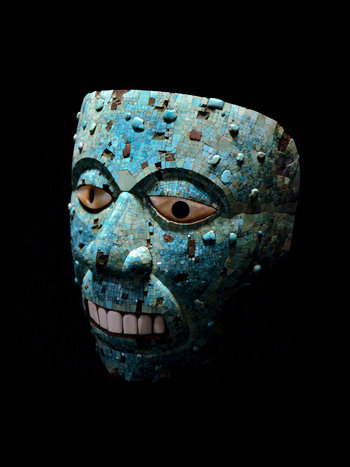
Several green minerals owe their green color to copper. For example, turquoise is a hydrated phosphate of copper and aluminium that has a characteristic blue-green color.
Etymology
The word copper originates with the Latin aes сyprium meaning metal from Cyprus. This later became cuprum in Latin and coper in Old English with the current spelling copper emerging around 1530.
Thermal Conductivity
Copper has the second highest thermal conductivity of all pure metals with the highest being silver. This makes it useful for transferring heat. For example, heat exchangers are often made with copper. Copper's use in cookware is complicated by its toxicity but it can be coated with another metal, alloy or chemical. Copper is also used in rocket engines due to its ability to quickly release heat.( 3-D printed copper combustion chamber liner)
Electrical Conductivity
Copper has the second highest electrical conductivity of all pure metals after silver. For this reason, around 60% of all copper produced each year goes into electrical wire.
Applications
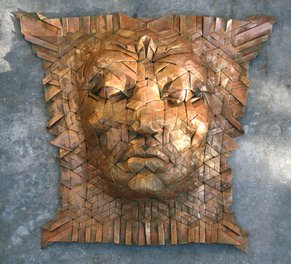
Copper is used in wiring, electronics, roofing, plumbing, electric motors and industrial machinery. It is valued for its antimicrobial properties, particularly for marine applications as it is also non-reactive with water. Copper is also used for decorative purposes in craft, art and architecture due to its unique color of the metal and its patina.
65 Shares
Materials
This is the complete list of articles we have written about materials.
John Spacey. "16 Characteristics of Copper." Simplicable. Retrieved June 22, 2026. from https://simplicable.com/materials/copper
References
Grass G, Rensing C, Solioz M. Metallic copper as an antimicrobial surface. Appl Environ Microbiol. 2011.Romano, Donatella, and Francesca Matteucci. "Contrasting copper evolution in ω Centauri and the Milky Way." Royal Astronomical Society 2007.Mingos, D. Michael P. "The discovery of the elements in the periodic table." 2019.Davis, Joseph R., ed. Copper and copper alloys. ASM international, 2001.
Cookies help us deliver our services. You have choices regarding these cookies. Please visit our privacy policy, cookie policy and consent tool to learn more.
Copyright 2002-2026 Simplicable. All rights reserved. This material may not be published, broadcast, rewritten, redistributed or translated. Report violations here.