John Spacey, July 11, 2020 updated on April 25, 2023
The world includes the Planet Earth and all of its systems and heritage. This includes natural systems such as ecosystems and natural heritage such as geological formations. The world also includes human systems such as societies and heritage such as art and culture. The world is a harsh and fearsome competitive environment filled with uncertainty and adversity. It is also the only known place where life thrives -- a place of wonder, lore and opportunity. The following are common elements of the world.
Life
The Planet Earth is the only known place where life exists. This is a curious situation where elements of the universe look at the universe and wonder about it. Life can also shape the world.
Complexity
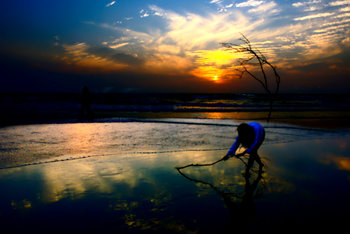
The world is unbelievably complex, structured and beautiful from its largest oceans down to its smallest levels.
Nature
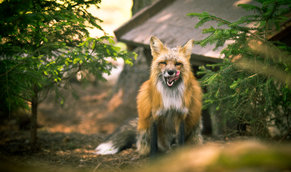
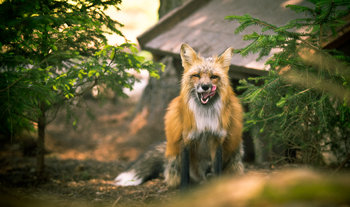
The world may have up to 1 trillion species if you include all microbes and fungi. It is a lively and active place with abundant elements such as air, sunlight and water. The world is constantly moving and changing due to effects such as weather and the endless activity of life.
Human Experience
The human experience is the end-to-end experience of being a human including delightful elements such as friendship and harsh element such as pain.
Need
Life has needs such as the need for air, water, safety, sustenance and shelter. The world has ample resources but can also be a harsh and challenging place where it's difficult to meet needs.
Curiosity
Humans and perhaps many animals have a sense of curiosity. In humans, this leads to the development of knowledge and know-how that improves our ability to produce value that meets our needs.
Creativity
Humans can imagine things that don't yet exist and then go ahead and create these things.
Technology
Humans develop tools, capital, infrastructure, architecture and systems to meet our perceived needs. This has become a pervasive force that has begun to transform the natural world.
Competition
Life competes for resources. Humans are so hardwired for competition that they generate it for fun in venues such as sports, games and play. This can be taken quite seriously alongside social competition such as the quest for economic resources, authority, power and social status.
Cooperation
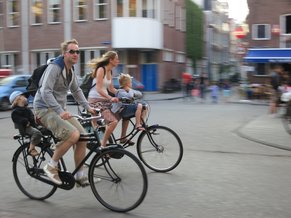
Humans establish relationships of trust and cooperate in unbelievably complex ways. They form friendships, romantic partnerships, families, communities, organizations and societies. People communicate, teach each other, support each other and building things together. They also cooperate to define the human experience and to try to fill life with meaning and joy.
Play
Beyond competition and cooperation, it can be said that life pursues things simply for the joy, humor or adventure of it.
Systems
Systems are complex things with many parts. These include natural systems such as a climate or ecosystem. Humans also create systems such as nations, economies and cities that provide things such as stability, goods and quality of life.
Freedom
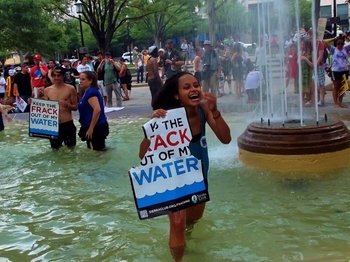
It is possible for systems to completely control things in the name of productivity, logic, justice, safety and security as the system views these things. People tend to value freedom whereby push for limits to systems. People also use their freedoms such as freedom of speech and freedom of assembly to push for change to systems.
Chaos
Chaos is the ability of a small part of a system to completely change the future of that system. For example, ideas that change the world can originate with any individual person such that our future can be completely transformed at a moment in time -- with a thought.
Uncertainty
The world is probabilistic and chaotic. The future is uncertain and at any point in time each entity only has limited information. This means that every action or inaction involves risk. As such, life is largely a process of taking risk and managing risk to try to achieve opportunity and avoid loss.
Emergence
Emergence is value that is created by the independent contributions of individuals. For example, a market where competition between buyers and sellers shapes the production of goods, their design and prices. Generally speaking, a single organization or system can't outcompete an emergent process. For example, music that emerges in a competitive scene would tend to outcompete music produced by a central committee.
Culture
Culture refers to the aspects of life that are beyond the control of systems. This emerges with the shared experience of groups. Culture is regarded as that which makes life worth living or that which represents the height of living and creative expression.
Night
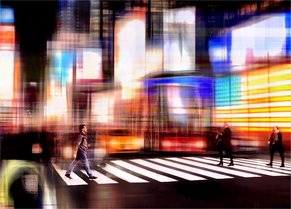
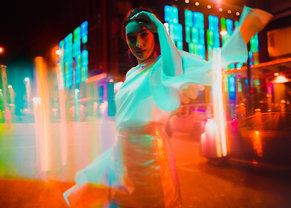
The world has a night and day that have a very different tone. People tend to have a primal fear of the night but also embrace it as a time for celebration and expression.
Virtual Worlds
Humans imagine things that differ from concrete reality in dreams and stories. They are able to simulate these things with theatre, music, film, games, art and virtual reality. Stories play a role in shaping the future. For example, many social constructs and inventions appeared in fiction before they became real.
Space
We are surrounded by a mostly unexplored expanse called space. You could fit about 36 billion Planet Earths in the Solar System. If the Solar System were a grain of sand, the observable universe at this scale would still be 37.2 million kilometers in diameter. As such, to say that the Planet Earth is a tiny spec in a vast universe is an understatement.
Global Issues
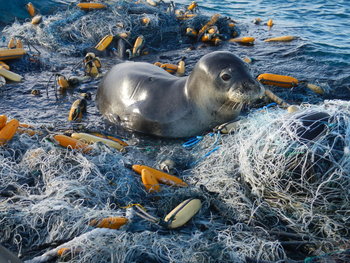
Human systems create issues that reduce quality of life and threaten future quality of life. Modern humans change at a startling pace and will probably either destroy the natural systems of the Planet Earth that sustain all known life or quickly revert to save them.
Time
Time is a strict ordering of cause and effect whereby one thing causes another and none of this ever goes in reverse. We may feel that yesterday wasn't long ago -- that we could reach out and touch it -- but that fact is that it is gone.
Heritage
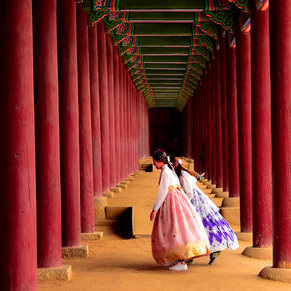
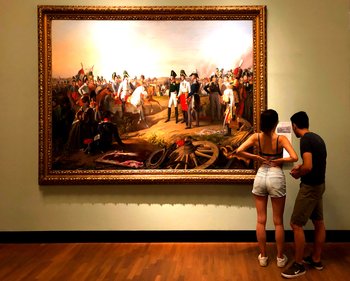
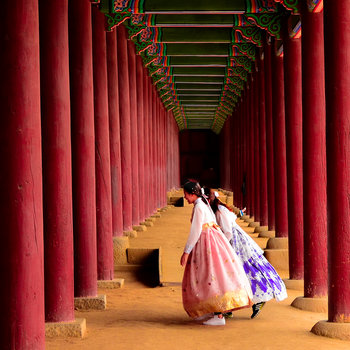
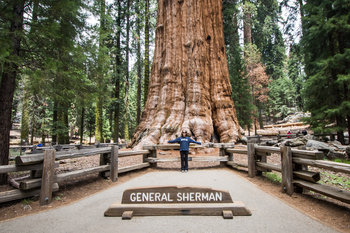
Heritage is value that is passed down from the past. This includes natural heritage such as spots of unusual natural beauty. Heritage also includes elements of human culture such as literature, music, art, architecture, languages, traditions, holidays, pastimes, beliefs and anything else that you can enjoy that was cultivated or invented before you were born.
Entropy
Entropy is the tendency for all things to more towards disorder. This explains processes such as aging that effects all things including the universe, Planet Earth and everything in it. The world will not last forever and at some point we may ask what it all meant.
42 Shares
World
This is the complete list of articles we have written about world.
Cookies help us deliver our services. You have choices regarding these cookies. Please visit our privacy policy, cookie policy and consent tool to learn more.
Copyright 2002-2026 Simplicable. All rights reserved. This material may not be published, broadcast, rewritten, redistributed or translated. Report violations here.