
Download WinUSB – Free, Secure USB Flash Drive Creator for Windows
Overview of WinUSB
WinUSB is a lightweight, free software application designed to simplify the creation of bootable Windows‑based USB flash drives. Unlike many traditional tools, WinUSB does not require you to pre‑format the drive, which saves time and reduces the risk of data loss. The program guides users through a straightforward three‑step wizard: select the ISO image, choose the target USB drive, and let WinUSB handle the rest. This streamlined workflow makes WinUSB an ideal solution for IT professionals, technicians, and home users who need a reliable way to install or repair Windows operating systems from a portable medium.
What sets WinUSB apart is its emphasis on security and stability. The application runs with standard user privileges, avoiding the need for administrative rights unless the USB device itself requires them. Moreover, the software is regularly updated to support the latest Windows releases, ensuring compatibility with Windows 10, Windows 11, and legacy versions such as Windows 7. By providing a free, ad‑free experience, WinUSB appeals to users who are wary of bundled toolbars or hidden fees commonly found in other USB creation utilities.
Beyond basic bootable drive creation, WinUSB also supports advanced options like persistent storage (when the ISO permits), custom partition sizing, and automatic driver injection for hardware that may otherwise fail to recognize the USB boot media. These capabilities make it a versatile tool for a range of scenarios—from installing a fresh OS on a new laptop to creating a rescue environment for troubleshooting broken systems.
Key Features & Benefits
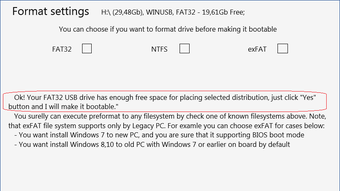
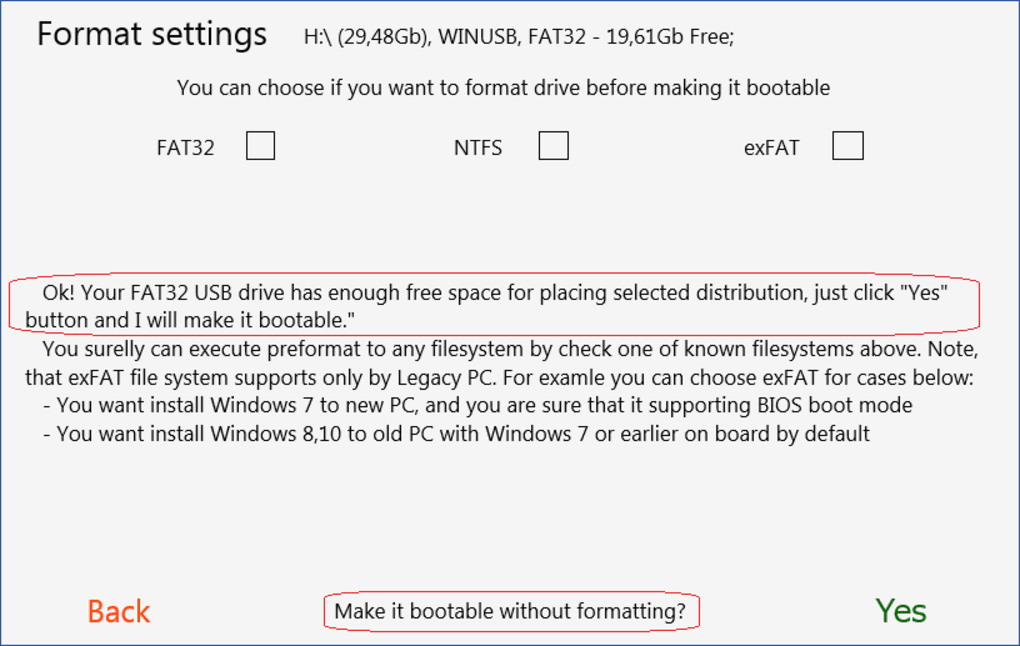
- No Pre‑Formatting Required: WinUSB automatically prepares the USB stick, preserving existing data when possible.
- Three‑Step Wizard: The intuitive interface reduces the creation process to selecting an ISO, choosing a drive, and clicking “Create.”
- Full Windows Compatibility: Supports Windows 7, 8, 10, 11, and Windows Server editions.
- Secure & Offline: The installer can be downloaded once and used offline, eliminating the need for constant internet access.
- Persistent Storage Option: When the source ISO supports it, you can enable persistence to retain files and settings across reboots.
- Custom Partition Sizing: Allocate exact space for the boot partition, leaving room for additional tools or data.
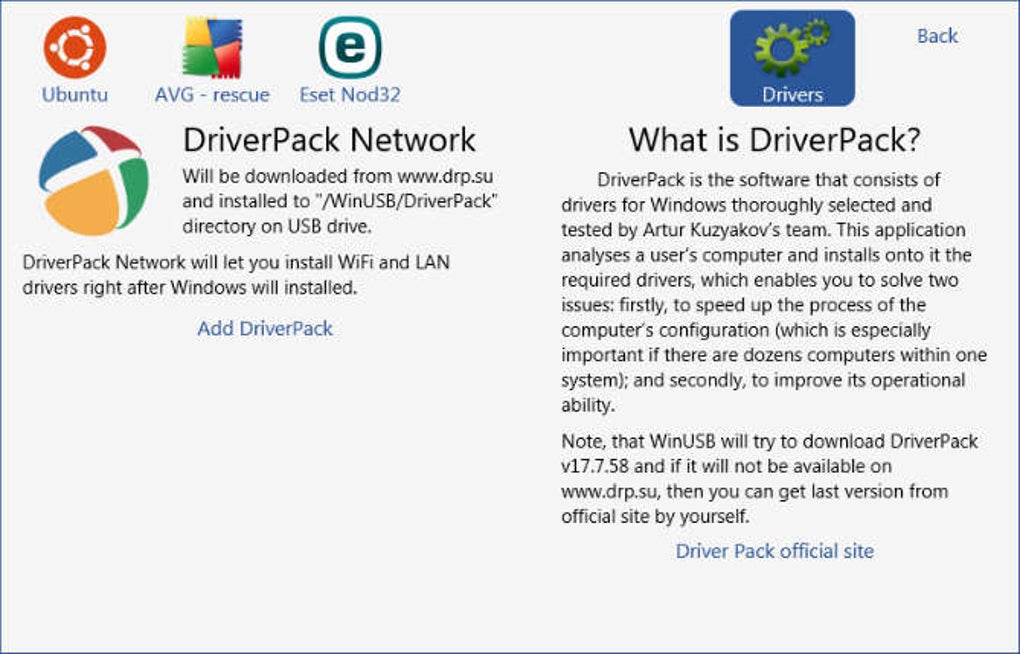
- Driver Injection: Automatically adds generic storage drivers to improve compatibility with older hardware.
- Lightweight & Portable: The executable size is under 5 MB and can be run from a USB stick itself, making it a perfect travel companion.
- Regular Updates: Free updates are released quarterly to address new Windows releases and bug fixes.
- Open‑Source Friendly: While the core binary is free, the source code is available for community auditing and contributions.
These features collectively deliver a tool that balances simplicity with depth. For a user who merely wants to flash a Windows ISO, the three‑step wizard eliminates unnecessary complexity. For power users, the advanced options provide enough flexibility to tailor the USB drive for specific deployment scenarios, such as creating a multi‑boot environment or embedding diagnostic utilities alongside the OS installer.
Security‑conscious users will appreciate that WinUSB does not embed telemetry or third‑party advertising. All operations occur locally on the user’s machine, and the software verifies the integrity of the ISO before writing it to the USB device. This verification step helps prevent corrupted or tampered images from being inadvertently used, which could otherwise lead to installation failures or security vulnerabilities.
Installation, Usage & Compatibility
Step‑by‑Step Installation
Getting started with WinUSB is as simple as downloading the installer from the official website. The .exe file is under 5 MB, so the download completes quickly even on slower connections. After saving the file, double‑click to launch the installer. The setup wizard walks you through a standard installation process: accept the license agreement, choose an installation folder (the default location is recommended for most users), and click “Install.” No additional software or runtimes are required, making the installation truly hassle‑free.
Creating a Bootable USB Drive
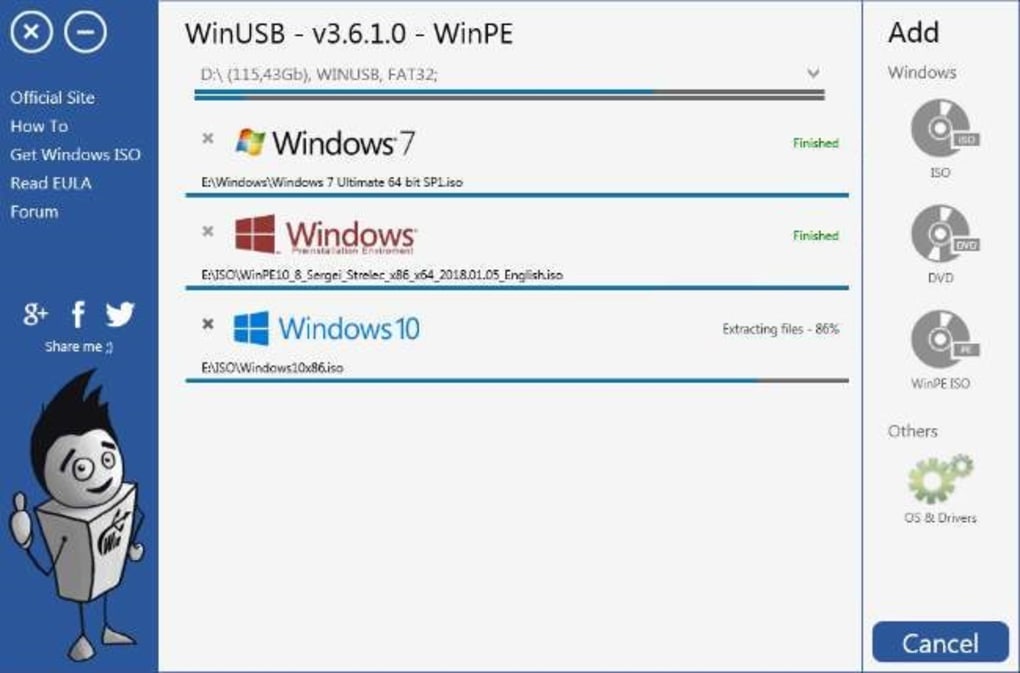
Once installed, launch WinUSB. The main window presents the three‑step workflow:
- Select ISO Image: Click “Browse” to locate the Windows ISO file on your hard drive. WinUSB validates the file’s checksum to ensure it’s not corrupted.
- Choose Destination Drive: Insert your USB flash drive. WinUSB automatically detects the device and displays its capacity. If you have multiple removable drives, simply select the correct one from the dropdown.
- Start Creation: Press “Create.” WinUSB formats the necessary partitions (without erasing unrelated data unless you opt for a full format) and copies the boot files. A progress bar shows real‑time status, and a final confirmation appears when the process completes successfully.
After the wizard finishes, safely eject the USB drive. You can now boot any compatible computer by selecting the USB device in the BIOS/UEFI boot menu. The created drive will launch the Windows Setup program, just as if you were using a DVD installer.
Operating System Compatibility
WinUSB is built for Windows environments. It runs natively on Windows 7, 8, 10, 11, and Windows Server 2012 onward. The application does not require additional libraries such as .NET Framework, because it is compiled with native Windows APIs. Users on macOS or Linux can still use WinUSB by running it within a Windows virtual machine or using compatibility layers like Wine, although native support is limited.
Hardware requirements are minimal: a 1 GHz processor, 512 MB RAM, and at least 100 MB of free disk space for the installer. The program works with USB 2.0, 3.0, and the newer USB‑C drives, automatically negotiating the appropriate transfer speed. For large ISO images (greater than 4 GB), ensure your USB stick is formatted with the NTFS or exFAT file system, which WinUSB can handle without manual intervention.
Pros, Cons & Frequently Asked Questions
Pros
- Completely free with no hidden fees or ads.
- Three‑step wizard makes the process fast and beginner‑friendly.
- No need to pre‑format the USB drive, preserving existing data.
- Supports persistent storage and custom partition sizing.
- Lightweight executable; runs on modest hardware.
- Regular security‑focused updates keep the tool current.
Cons
- Native support limited to Windows; macOS/Linux users need a VM.
- Lacks built‑in multi‑boot management (requires external tools for that).
- Advanced options are hidden behind “Advanced Settings,” which may be overlooked by novices.
FAQ
Can WinUSB create a bootable USB for Windows 11?
Yes. WinUSB fully supports Windows 11 ISO files. The tool automatically handles the required UEFI boot files and can format the drive with the proper partition scheme for modern hardware.
Do I need an internet connection after downloading WinUSB?
No. Once the installer is downloaded, WinUSB works completely offline. All operations, including ISO validation and USB writing, are performed locally.
Is there a limit to the size of the USB drive I can use?
WinUSB supports drives up to 2 TB. For drives larger than 32 GB, the tool automatically selects the GPT partition scheme required for UEFI boot.
Can I add persistence to a Windows To Go USB created with WinUSB?
Yes, if the source ISO includes Windows To Go support. Enable the “Persistent Storage” option in the Advanced Settings panel before starting the creation process.
Is WinUSB safe to use on corporate machines?
Absolutely. The application runs with standard user privileges, does not collect telemetry, and verifies ISO integrity before writing, making it suitable for enterprise environments.
Conclusion & Call to Action
WinUSB delivers exactly what its name promises: a straightforward, secure, and free way to turn any Windows ISO into a bootable USB flash drive. Its three‑step wizard removes the guesswork that often plagues other utilities, while the advanced options provide enough flexibility for power users and IT professionals. Although native support is limited to Windows, the lightweight nature of the application means it can be easily deployed across corporate fleets or used by home users without the need for additional software.
If you’re looking for a reliable tool to create Windows installation media, troubleshoot a non‑booting PC, or set up a portable recovery environment, WinUSB is a solid choice. Download the latest version today, follow the simple setup guide, and have a bootable USB ready in minutes.
Ready to get started? Free download now and experience the convenience of a truly hassle‑free USB creator.