Most people believe that war is inevitable. The development sector treats war similarly to natural disasters, where the goal is to build resilience against future catastrophes – but it’s assumed that we can't actually stop it from happening.
Josh Martin argues that this
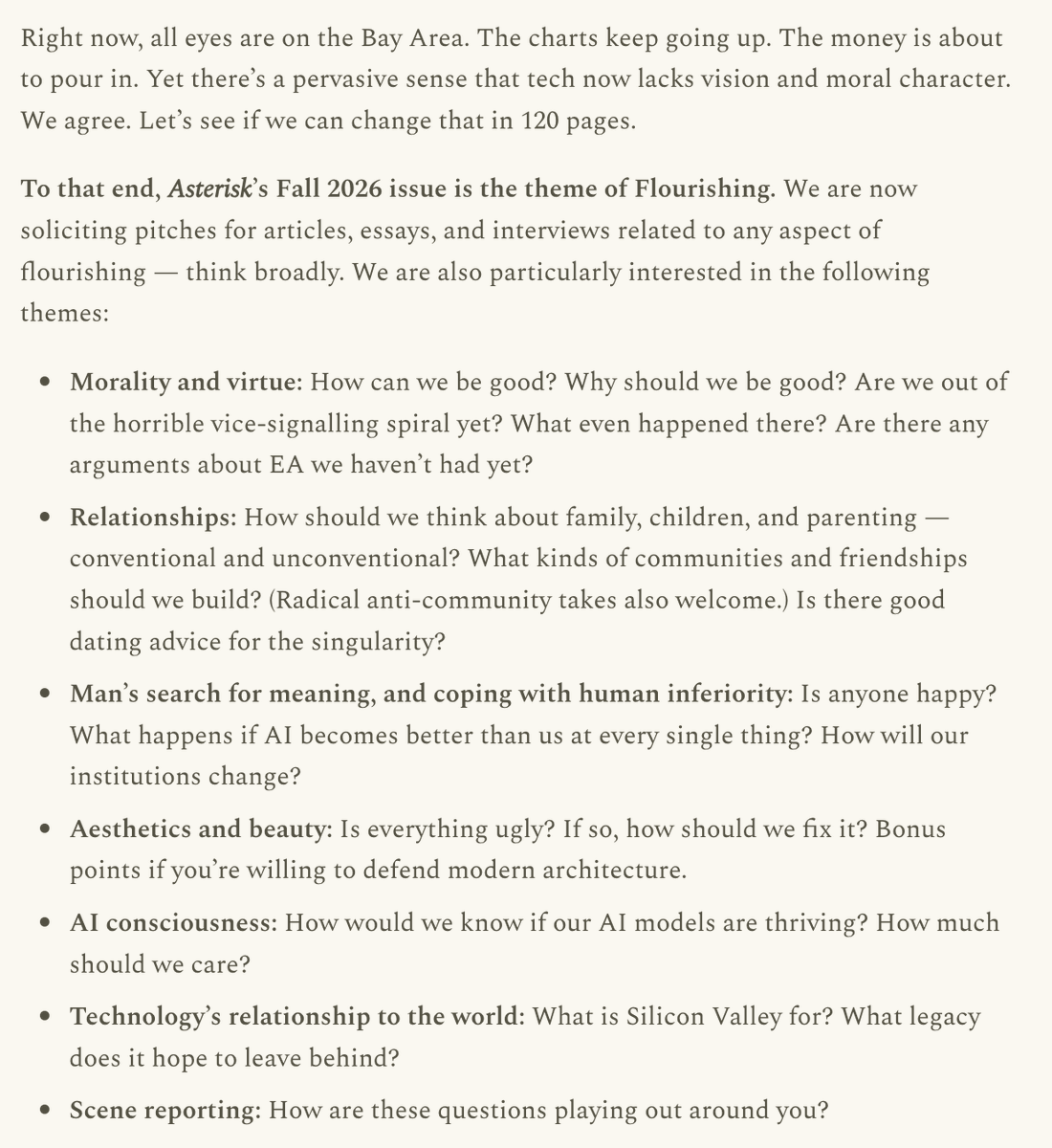
Since moving back to San Francisco last fall, I've been struck by how everyone seems to be chasing material comforts, and moral vision is in short supply. But I also think that San Francisco is just a reflection of the world a few years ahead, and that this isn't its final
People kept saying the mood in SF is bad; sadly, I did feel spiritually diseased after 20 hours there & want to keep obsessing over it. Pitch @asteriskmgzn's Flourishing issue with your solution to "all the charts are going up by no one is happy" (& ideas on beauty, virtue etc)
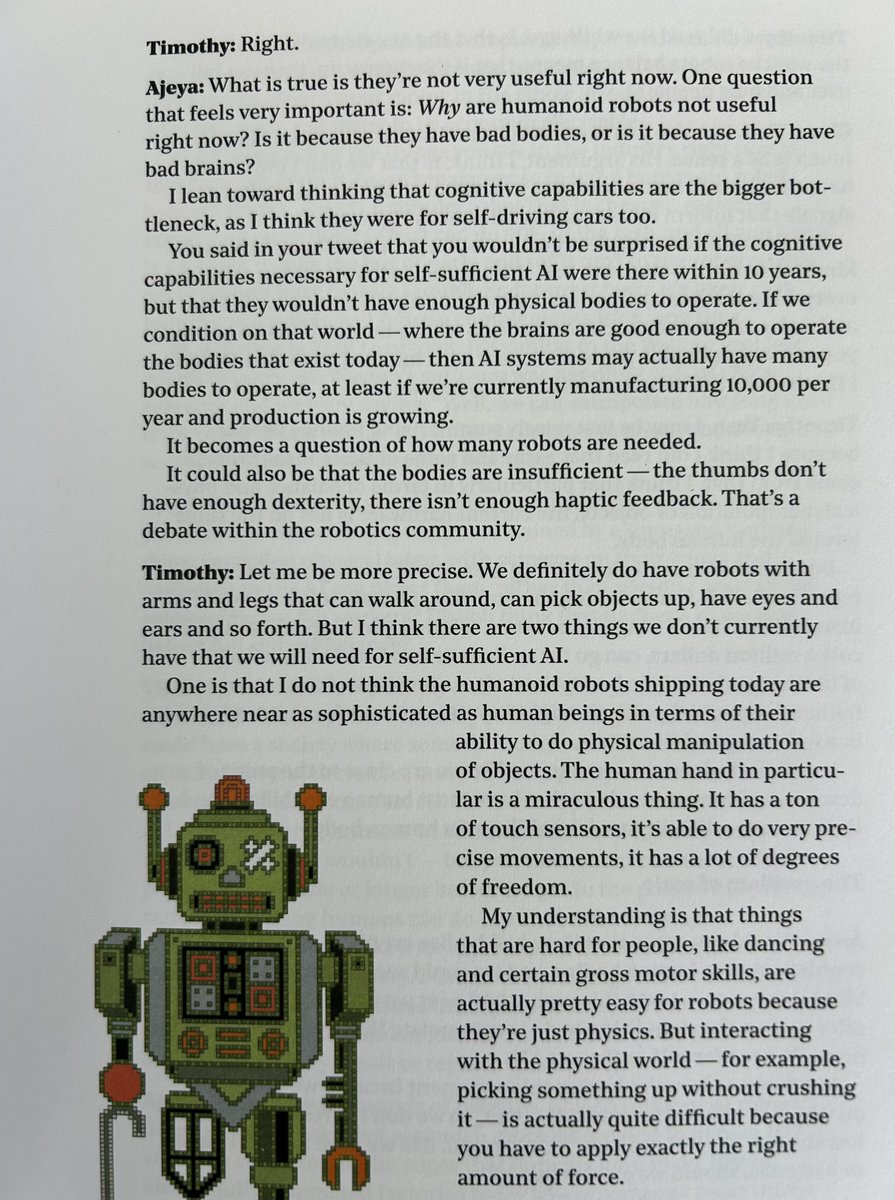
This from @asteriskmgzn is one of the best examples of adversarial collaborative dialogue I've seen. @ajeya_cotra and @binarybits map out why they disagree about AI timelines and what would be the early warning signs that each is wrong.
How long will it be until AI systems can sustain their own existence – with factories, robots, and power plants?
METR's @ajeya_cotra thinks it's likely within 10 years. She believes that cognitive capabilities are the main bottleneck, and that AI is closing that gap fast.
MAHA is a horseshoe.
"When I see people buying exotic peptides from uncredentialed sources, I don’t see daredevils or lunatics abandoning a system that works. I see people with problems the system isn’t solving refusing to give up on themselves."
Gray market peptide use is often thought of as reckless, but for some users, it can be empowering. When facing health issues that doctors couldn’t address or insurance wouldn’t cover, experimenting on themselves seems less risky than not trying to solve these problems at all.
In
Gray market peptide use is often thought of as reckless, but for some users, it can be empowering. When facing health issues that doctors couldn’t address or insurance wouldn’t cover, experimenting on themselves seems less risky than not trying to solve these problems at all.
In