Image

In 2026, Wikimedia Spain is unveiling an evolution of its visual identity, with the aim of creating a new image that is clearer, more consistent and more versatile across its various communication channels and materials. 

The new identity retains the essence of Wikimedia Spain and seeks to strengthen its presence as an association, whilst offering a visual image that is more consistent with Wikimedia and with the range of projects and communities that form part of its movement. 

What does the new visual identity entail? 

The update does not represent a radical change to the brand, but rather an evolution of its visual elements to make it easier to apply in different contexts. 

The main objectives of this evolution include: 

  • Strengthening the image of Wikimedia Spain. 
  • Improving visual consistency with the Wikimedia Movement. 
  • Making it easier to use the brand identity in projects, activities and collaborations. 
  • To have clearer and more consistent graphic resources for communication. 

Resources for the new brand identity 

The update includes various resources to facilitate the implementation of the new visual identity by Wikimedia Spain and by the  individuals and organisations that collaborate with the association. 

These include: 

  • Logo and isotypes. 
  • Updated visual identity manual. 
  • Illustrations and icons. 
  • Audiovisual material. 
  • Other graphic resources. 

These materials provide an overview of the elements that make up the identity and guidance on how to use them correctly. 

View and download resources 

The resources for the new visual identity are available on Wikimedia Commons, where they can be viewed and downloaded. 

You can access all the materials via this link to Wikimedia Commons

The visual identity guide sets out the key guidelines for using the brand and serves as a reference for maintaining consistent  communication across different media and projects. 

An identity that evolves with Wikimedia Spain 

The evolution of the visual identity marks a further step towards consolidating Wikimedia Spain’s image and facilitates recognisable and consistent communication across its various areas of activity. 

This new identity provides resources to enable the association, its community and its partner organisations to use the brand appropriately. 

View the new visual identity and all its resources on Wikimedia Commons.

Wikipedia:Administrators' newsletter/2026/9

Friday, 4 September 2026 00:04 UTC

News and updates for administrators from the past month (August 2026).

Image

Image Administrator changes

added Dclemens1971
readded ·
removed

Image Oversight changes

removed

Image Guideline and policy news

  • Speedy deletion criteria G15 has been renamed from "LLM-generated pages without human review" to "Unambiguously LLM-generated pages" and has an additional sign of detection added to it following a RfC.

Image Technical news

Image Arbitration

Image Miscellaneous


Archives
2017: 01, 02, 03, 04, 05, 06, 07, 08, 09, 10, 11, 12
2018: 01, 02, 03, 04, 05, 06, 07, 08, 09, 10, 11, 12
2019: 01, 02, 03, 04, 05, 06, 07, 08, 09, 10, 11, 12
2020: 01, 02, 03, 04, 05, 06, 07, 08, 09, 10, 11, 12
2021: 01, 02, 03, 04, 05, 06, 07, 08, 09, 10, 11, 12
2022: 01, 02, 03, 04, 05, 06, 07, 08, 09, 10, 11, 12
2023: 01, 02, 03, 04, 05, 06, 07, 08, 09, 10, 11, 12
2024: 01, 02, 03, 04, 05, 06, 07, 08, 09, 10, 11, 12
2025: 01, 02, 03, 04, 05, 06, 07, 08, 09, 10, 11, 12
2026: 01, 02, 03, 04, 05, 06, 07, 08, 09
<<  Previous Archive    —    Current Archive    —    Next Archive  >>

Wikimedia Foundation Statement on US staff unionization

Thursday, 3 September 2026 23:24 UTC

3 September 2026 (United States) — Today, eligible Wikimedia Foundation staff in the United States voted in favor of union representation. The election was conducted by the National Labor Relations Board (NLRB) by secret ballot. We expect the results will be certified by the NLRB within 7 business days.

Throughout the voting period, staff were able to meet and organize during working hours without restriction, and Wikimedia Foundation leadership repeatedly affirmed staff’s right to decide for themselves whether union representation was right for them. The Foundation respects this outcome and is glad that all eligible staff had the opportunity to participate and make their voices heard.

The Foundation will now move forward with good-faith collective bargaining with the union. We will approach this next phase constructively, lawfully, and with care for the staff whose work makes it possible for us to serve people everywhere.

For 25 years, Wikipedia has established an unparalleled resource for reliable information with the mission to make knowledge accessible for everyone, everywhere. Achieving this mission depends on the combined contributions of staff, volunteers, donors, partners, and readers across the globe. We are grateful to all those who continue to support Wikipedia and Wikimedia projects and continue to strive toward a vision of a world in which everyone can share in the sum of all human knowledge.

At the Wikimedia Foundation, we value collaboration across differences, constant improvement, and curiosity. These values do not just define the projects we host; they are also our commitment to how our employees should be treated. A commitment to these values will be central to the Foundation’s approach in this next phase of the process.

About the Wikimedia Foundation

The Wikimedia Foundation is the nonprofit that operates Wikipedia and other Wikimedia projects. We support the people, technology, and policies that enable reliable information to be shared with the world. The Wikimedia Foundation is a United States 501(c)(3) tax-exempt organization with offices in San Francisco, California, USA.

The post Wikimedia Foundation Statement on US staff unionization appeared first on Wikimedia Foundation.

Wikipedia:Administrators' newsletter/2026/10

Thursday, 3 September 2026 20:03 UTC

News and updates for administrators from the past month (September 2026).

Image

Image Administrator changes

added
readded
removed ·

Image Guideline and policy news

Image Technical news

Image Arbitration

Image Miscellaneous


Archives
2017: 01, 02, 03, 04, 05, 06, 07, 08, 09, 10, 11, 12
2018: 01, 02, 03, 04, 05, 06, 07, 08, 09, 10, 11, 12
2019: 01, 02, 03, 04, 05, 06, 07, 08, 09, 10, 11, 12
2020: 01, 02, 03, 04, 05, 06, 07, 08, 09, 10, 11, 12
2021: 01, 02, 03, 04, 05, 06, 07, 08, 09, 10, 11, 12
2022: 01, 02, 03, 04, 05, 06, 07, 08, 09, 10, 11, 12
2023: 01, 02, 03, 04, 05, 06, 07, 08, 09, 10, 11, 12
2024: 01, 02, 03, 04, 05, 06, 07, 08, 09, 10, 11, 12
2025: 01, 02, 03, 04, 05, 06, 07, 08, 09, 10, 11, 12
2026: 01, 02, 03, 04, 05, 06, 07, 08, 09
<<  Previous Archive    —    Current Archive    —    Next Archive  >>

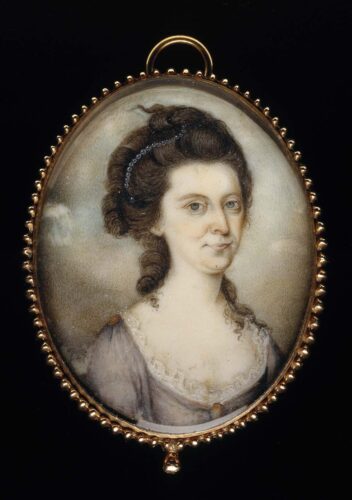
For more than two centuries, Rachel Walker Revere existed mostly in the margins of someone else’s story, defined by her relationship to her famous “midnight rider” husband rather than by her own life and impact on U.S. history.

And until recently, Rachel appeared as only an unlinked name in Wikipedia’s article for Paul Revere — one of countless women throughout history whose presence on Wikipedia, if it exists at all, is filtered through the men in their lives. But thanks to the expertise and efforts of Mehitabel Glenhaber at the Paul Revere House in Boston, Rachel has a biography of her own on the world’s go-to encyclopedia. 

Rachel Walker Revere
A portrait miniature of Rachel Walker Revere by Joseph Dunkerley, ca. 1784. Public domain, via Wikimedia Commons.

Glenhaber’s work is part of Wiki Education’s “250 by 2026” initiative, a partnership with the American Association of State and Local History. Together, we brought 259 cultural heritage professionals from around the country into the world of Wikipedia, empowering them to contribute their expertise and collections. (Read more about the 250 by 2026 initiative.)

Across thirteen editing courses offered by Wiki Education, participants added more than 250,000 words to the encyclopedia, improving coverage of history topics, including notable women of U.S. history who either had no Wikipedia article at all or only a short stub.

Rachel Walker Revere was one of these missing women.

For new Wikipedia editor Glenhaber, the appeal of the initiative and its goal directly aligned with the everyday mission of museum work: getting history out of the place-bound building and into the hands of people who may never get the chance to walk through the door.

“I am always excited about ways that museums can share information with audiences who may not be able to visit the museum in person,” said Glenhaber. “At the Paul Revere House, we have such a wealth of knowledge about the life of Paul Revere, his relatives, and his neighbors, and we want to make sure that this information is for everyone, not just people who can make a trip to Boston.”

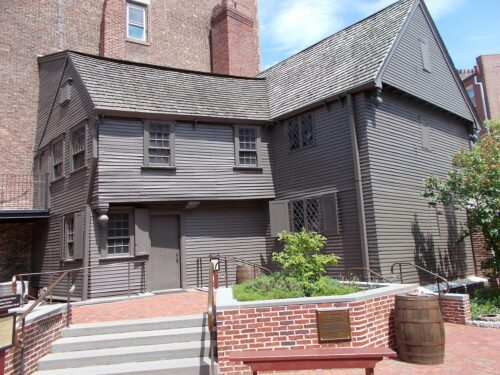
Paul Revere House
A view of the back of the Paul Revere House. Image via Wikimedia Commons, CC0 1.0.

Before joining the course, Glenhaber knew just how impactful enhancements to Wikipedia can be, not only for the general public but also for historians and museum professionals like them.

“Wikipedia is an incredible resource which reaches so many people,” explained Glenhaber of their motivation to join the course. “I’ve always been grateful to people who contribute to it and help me with my own historical research, so I wanted to help give back to that community, too.”

Inspired by conversations with their course instructor and fellow editors about underrepresentation of women on Wikipedia, Glenhaber decided to add Rachel Walker Revere to the site.

But as with any new Wikipedia article, that meant building a case for their inclusion. Glenhaber had to prove through their sources that Rachel met Wikipedia’s notability threshold and deserved her own standalone biography.

“Writing about Rachel Revere and making the case that she is a ‘notable figure’ was an interesting challenge to me,” said Glenhaber. “Something that’s always interested me about Paul Revere is the fact that he’s actually a very ordinary and unglamorous participant in the American Revolution: he’s a person who delivered messages, illustrated political cartoons, and organized military supply chains.”

Rachel’s story followed the same trajectory, Glenhaber noted.

“Similarly, Rachel Walker Revere was an ordinary and unglamorous participant in the American Revolution: she fed, clothed, and provided childcare for two Revolutionary War soldiers (Paul Revere and his son, Paul Jr.) and helped evacuate her family from a city under siege,” said Glenhaber. “We are lucky to know so much about the lives of these two 18th-century people.”

And it’s this reframing that gets at something bigger than just one person’s biography: The American Revolution is often remembered in speeches and signatures, but was sustained by the quieter, essential labor of figures like Rachel.

“Making sure that her story gets told as well is very important to me,” said Glenhaber. “I didn’t want her to just come up as an unlinked name on Paul Revere’s page, but as an agent of her own.”


Interested in learning how to add your expertise to Wikipedia? Explore Wiki Education’s upcoming editing courses.

Call for Presenters: Japan Wikimedia Conference 2026!

Thursday, 3 September 2026 11:00 UTC
Image

The Wikimedians of Japan User Group (WJPUG) is calling for presenters for the Japan Wikimedia Conference 2026, to be held on Sunday, December 6, 2026, at the Keio University Mita Campus in Minato Ward, Tokyo. This conference aims to facilitate networking and the exchange of knowledge among individuals involved in the Wikimedia movement—both in Japan and abroad—as well as those who utilize Wikimedia projects and resources.

We aim to foster greater activity, collaboration, mutual support, and new initiatives by bringing together a diverse group of people—including contributors to various Wikimedia projects, those involved in offline activities like outreach, individuals utilizing Wikimedia content in their services, and even those simply interested in Wikimedia—to engage in discussion and the exchange of information.

This year also marks the 25th anniversary of the launch of the English Wikipedia in January 2001 and the Japanese Wikipedia in May of the same year. This conference aims to serve as a forum for building upon the Japanese-language community’s journey over the past quarter-century and expanding its horizons into the future. Additionally, an editathon will be held on the preceding day to conclude the Wikipedia 25th anniversary celebrations.

Please visit this page for event details. Applications to present are being accepted via this Google Form until September 30. We look forward to receiving your applications.

Reference

Image
会場の慶應義塾大学三田キャンパスにある図書館旧館

In August, the Wikimedia Ghana User Group continued creating spaces for learning and participation within the Wikimedia movement. We brought Wikimedia to pop-culture enthusiasts, hosted a Wikimania 2026 swag giveaway, and prepared to resume our regional Wikipedia 101 workshops for the 2026/2027 fiscal year. We also have some new tools to share with the community!

Here’s what we’ve been up to!

WMGH brought Wikimedia to Nerd Con Accra 2026

On 22 August 2026, we participated in the Nerd Con Accra Expo at the Goethe-Institut Ghana to bring Wikimedia to an audience of pop culture enthusiasts focused on gaming, anime, film and other digital interests.

Image
Image
Image

We set up a booth to engage attendees about Wikimedia projects and ways to get involved and also hosted a Wikipedia 101 workshop. The event provided an opening to engage a youthful, technology-oriented audience whose interests align closely with opportunities to contribute to the Wikimedia movement.

WMGH Hosted a Wikimania Swag Giveaway for the Community

Image

To encourage community participation in Wikimania 2026, we curated a selection of virtual sessions for community members and launched a giveaway for those who joined them. Participants shared what they learned from the sessions and how the experience inspired them to contribute to the Wikimedia movement in Ghana.

We hope everyone who joined found the sessions inspiring and came away with new ideas to explore and apply within our community. And to our giveaway winners, we hope you enjoy your Wikimania 2026 swag!

Upcoming:

WMGH to Resume Regional Wikipedia 101 Workshops Starting in Accra

Image

We’re getting ready to resume our regional Wikipedia 101 workshops, Ghana Edits Wikipedia, starting with Accra. As we move across the regions, we hope to create more opportunities for people to learn about Wikipedia and contribute knowledge about their regions and notable people. 

Upcoming workshop dates will be shared soon. We encourage everyone to help spread the word and invite others to take part!

Opportunities for the Community

New Tool Alert: Microtask Generator

The Microtask Generator turns long lists of articles into smaller, clear editing tasks. The tool can suggest improvements such as adding references, images, categories, and more and makes it easier for event organizers to plan activities like editathons.

You can learn more about how it works and how to use it in this blog post.

Find Articles to Edit with SuggestBot!

Not sure what to edit on Wikipedia? SuggestBot recommends articles that need improvement based on your editing history and interests, delivering personalized article suggestions directly to your Wikipedia talk page!

Read our step-by-step guide on how to set up SuggestBot and start receiving article recommendations today: Guide

Looking Ahead

We look forward to creating opportunities for the community to learn, collaborate, and connect through workshops, communal editing activities, and other outreach events in the months ahead.

As always, thank you for every edit and effort that helps expand the sum of all free knowledge.

Warmly,
Wikimedia Ghana User Group

  • Image

 “Cultural heritage isn’t about historical scripts or buildings; it’s about our identity.”

Reflecting on our journey with the WCB project from 2024 to 2025, we are taking the next step in our mission to turn Sundanese historical and cultural archives into open knowledge, accessible to everyone in digital spaces.

WCB 3.0 was initiated by the Wikimedia Bandung community to document cultural heritage in West Java and Banten through the Wikimedia projects, integrating initiatives across Wikimedia Commons, Wikidata, Sundanese Wikipedia, Indonesian Wikipedia, and supported by a rapid fund from the Wikimedia Foundation.

In this third phase, the project was led by three core members of the Wikimedia Bandung community: User:Lany pirna, User:Mirani Pramitasari, and User:Pijri Paijar. We expanded our documentation coverage to include the City and Regency of Bandung, Cimahi, Bandung Barat, Cianjur, Tasikmalaya, Cirebon, Majalengka, Subang, and Banten.

Wikipedia Training Tasikmalaya
Wikipedia Training Tasikmalaya by Lany pirna on Wikimedia Commons (CC BY-SA 4.0)

Growing a Collaborative Network: From Documentation to Community Empowerment

Beyond visual documentation on Wikimedia Commons, we worked to keep our cultural heritage alive by connecting site histories on Wikidata and bringing the stories behind these places to Wikipedia (in both Indonesian and Sundanese).

To map out our direction, we gathered and organized data on cultural heritage sites sourced from official local government websites and reliable online references, ensuring the project was well-focused and well-prepared. This initiative ran from January to July 2026 across nine regions in West Java and two regencies/cities in Banten, through four main phases: documentation, contributing, WikiLatih (training workshops), and Kopdar (community meetups).

Kopdar hibrida Wikipedia WCB 3.0
Wikipedia Contributor Hybrid Meeting by Lany pirna on Wikimedia Commons (CC BY-SA 4.0)

From the Ground Up: The Stories and Impact We Gathered

Through our documentation across 73 cultural heritage sites, from lakes, places of worship, to historic kingdoms, we uploaded 939 photos on Wikimedia Commons. These visuals directly anchored a collaborative writing drive across various project activities, resulting in 114 articles (63 in Sundanese and 51 in Indonesian). This was a truly collective effort that brought together both new contributors and community members alike: 14 new users joined through WikiTraining contributed 15 articles, 15 members of the Wikimedia Indonesia community through Kopdar contributed 33 articles (averaging 2,500 bytes each), and our project members 66 articles. To round out these outcomes, we also structured 90 Wikidata items (59 new items and 31 expanded) and launched a Google Sites landing page to bring all our project outcomes together in one place. 

Learning through the journey that preserving our history takes all of us

Cultural heritage documentation goes far beyond recording physical structures, it is about keeping the living narratives and values of Sundanese culture alive for generations to come. Throughout this journey, we realized how deeply interconnected these sites are. It felt like piecing together a historical puzzle, tracing threads from sites connected to the Sunda Kingdom to those linked to the spread of Islam across the region. Every site holds a distinct piece, and losing one means losing a vital part of the story.

On the ground, we witnessed diverse dynamics; some sites require further attention, while others quietly keep going through voluntary contributions from visitors and those who hold a deep connection to their history. This experience reaffirmed a simple truth: preserving our cultural heritage isn’t something one entity can do alone. It demands an ongoing, collective effort, bringing together local communities, civil society, and the government.

Moving Forward Together: How We Keep this Movement Alive

This journey is far from over. We remain deeply committed to enriching open knowledge around West Java’s cultural heritage, making sure these stories remain free and accessible to everyone. Building on what we learned and accomplished in this third chapter of the project (WCB 3.0) supported by the Wikimedia Foundation’s rapid fund, our next step is not just about reaching new regions, but also deepening the quality and care of our documentation. Moving forward, we aim to respond more adaptively to real needs on the ground, whether through training initiatives or strategic collaborations with relevant communities and institutions. Ultimately, we hope these shared resources will serve as a lasting foundation for education, research, and heritage preservation.

On 3 September, 37 of us are meeting to learn from each other how we can better document our community stories, voices and knowledge and safe-keep them for long. Most have spent over three months learning together online and will meet in person for the first time.

This is the day OpenSpeaks, together with other collaborators, launches Archiving the Present, a community network for oral knowledge in local languages, a manual and a free course of the same name. The network—individual language documenters, archivists, groups and organisations representing local communities, language archives, media institutions, funders, and others—will support the documentation and archiving of South Asia’s languages.

The network will align with a shared goal—that oral knowledge is human knowledge and deserves to be treated as equal to written knowledge. That means fair recognition and fair pay for the people who hold it.

Origin: online workshops

Between 18 May and 24 August, OpenSpeaks ran eight online sessions in collaboration with Adivasi Lives Matter, People’s Archive of Rural India, Whose Knowledge?, Endangered Languages Project, Open Knowledge Initiatives-IITH, Endangered Languages Archive, FOSS United, and Rising Voices. These sessions covered how to plan a documentation project, manage consent and payment, record clean audio and video, handle files and metadata, publish to archives and Wikimedia projects, and raise funds for this work. We opened applications in May: 101 people applied from 14 countries on three continents, who are already documenting or are planning to document nearly 115 languages. 65 of the applicants were from India alone, spread across 17 states.

Based on prior, community-based experience and selected topics, 20 resource persons from seven countries led these sessions. Taukeer Alam, a Van Gujjari writer who spoke with us earlier this year about consent, rights, and recognition in language documentation, taught a session on this topic. Ganesh Birua and Anju Kumari Gagrai taught based on their own work in the Ho language; Opino Gomango in Lanjia-Sora and Juray; Deepak Kumar Beshra and Ramjit Tudu in Santali; Amrit Sufi in Angika; and Mithilesh Baraily across the Kami-Damai-Sarki-Gandharva-Badi language cluster.

Manual and WikiLearn course

These sessions became a field manual called Archiving the Present: A Community Guide to Archiving Languages, Memories, and Knowledges. This new book is built module by module from what each resource person actually taught. It’s written in Simple English so it reaches readers for whom English is a third or fourth language, and is arguably the first manual of its kind to take that language choice seriously. Nearly 20 trainers and three editors wrote it together.

We also turned the same manual into a free certification course on WikiLearn, so anyone can learn beyond the live sessions on their own time and earn a certificate.

Workshop in Kochi

Based on learning from the online workshop and building the manual, we are bringing 12 of the 20 resource persons to an in-person workshop at Kochi. 40 community documenters and archivists, collaborators and resource persons will join this day-long workshop for peer-learning and begin a long-term collaboration. 

They will also learn about recording practice, consent and fair pay, file management, followed by time for every documenter to speak about their own work. We are also using the day to decide, together, what this group does after 3 September. They will also figure out what this network continues to do once the workshop calendar ends.

Network

Archiving the Present as an emerging network will bring together the language documenters and archivists from communities who have shaped this programme so far, and invite more in over time. Most participants named funding as a key barrier. Funding is needed for recording, purchasing equipment, remunerating people and preserving documented media. A network of this kind can assist in many ways: invite donors to share insights on upcoming grants, connect with communities/individuals for microgrants, and support with grant proposal writing.

More information on the network and how to apply to join is available at archivingthepresent.cc.

OpenSpeaks, in collaboration with the speaker communities, has documented and archived over 20 languages across South Asia. We focus on community capacity building through peer training, building tech infrastructure, open educational resources (OER), and now co-creating a network.

Hardware assistance

While funding has been a major barrier to language documentation and archiving, the lack of equipment has hindered this work too.

Our collaborators, TinkerSpace Kochi and PARI, ran campaigns on social media, together with two of our trainers, Deepak Kumar Beshra and Mithilesh Baraily, urging people to donate hardware. These campaigns reached a hundred thousand users, drawing interest.

Thanks to the efforts of FOSS United, we are collaborating with the Sama Digital Foundation, which will donate computers to many workshop participants. They will roll out the first phase soon.

As we organise the workshop, we will also celebrate the 25th anniversary of Creative Commons at the opening Day Zero evening of WikiConference India. This will be one of the four regional celebrations of this event, the other ones being Argentina, Indonesia and Nigeria.

Read the manual, try the course, or get in touch if your community wants to join the network: archivingthepresent.cc.

1Lib1Ref 2026 Campaign in Nigeria

Wednesday, 2 September 2026 16:00 UTC

The 2026 edition of the #1Lib1RefNG campaign was held from 1 June to 30 June 2026 by Wikimedia User Group Nigeria as part of the global #1Lib1Ref (One Librarian, One Reference) initiative. The campaign aimed to improve the quality, reliability, and verifiability of Wikipedia by encouraging librarians, Wikimedians, and knowledge enthusiasts across Nigeria to add missing citations to Wikipedia articles.This year’s campaign combined a nationwide editing contest with community-led edit-a-thons, complemented by virtual and in-person training sessions that equipped both new and experienced contributors with the skills needed to make impactful contributions.

Image
1LiB1RefNG Campaign 2026

Activities and Engagement

Virtual Office Hour

A virtual office hour was held on 13 June 2026 to onboard new participants, provide editing guidance, and respond to questions about the campaign. The interactive session helped participants understand how to identify citation gaps and contribute effectively to Wikipedia.

Image
Pictures from 1Lib1Ref26 office hour

In-Person Training

On 24th June 2026, an in-person training was organized in collaboration with the Nigerian Library Association (NLA), Kaduna State Chapter, at Kashim Ibrahim Library, Ahmadu Bello University, Zaria. The training introduced participants to citation best practices using the citation hunt tool, Wikipedia editing, and the goals of the #1Lib1Ref campaign.

Image
1LiB1RefNG Campaign 2026

Community Edit-a-thons

Community networks and fanclubs across Nigeria organized local edit-a-thons with support from the Community Micro Grants program, enabling wider participation across different regions. Active networks such as the Abuja Network, Gombe Network, Kaduna Network and Imo Network, among others, demonstrating the campaign’s nationwide reach.

Image
1Lib1Ref 2026 in Ibadan
Image
Kaduna Network 1lib1ref 2026 group photo
Image
Group picture with members of the WUGN Imo State Network at the end of the program

Campaign Winners

To qualify for the competition, participants registered on the Outreach Dashboard and tracked their contributions using both the #1Lib1Ref and #1Lib1RefNG hashtags.

Top Contributors

  • Prizes1st Place: ₦100,000 Gift Voucher
  • 2nd Place: ₦70,000 Gift Voucher
  • 3rd Place: ₦50,000 Gift Voucher

Campaign Tools

The campaign utilized several Wikimedia tools to support participation and track contributions, including:

Organizing Team

The campaign was coordinated by:

Halima Waziri – Co-Lead, #1Lib1RefNG 2026

Ayokanmi – Programs Director, Wikimedia User Group Nigeria

Bibisuccess – (Interim Project Officer, WUGN)

Conclusion

The #1Lib1RefNG 2026 campaign successfully brought together librarians, Wikimedians, and volunteers from across Nigeria to strengthen the reliability of Wikipedia by improving article sourcing. Through training, collaborative editing events, and a nationwide competition, the campaign reinforced the important role of librarians and open knowledge advocates in ensuring access to trustworthy and verifiable information.

Image
1lib1ref Kaduna Network 2026 session

Wikipedia as an Educational Tool in Achachicala

Wednesday, 2 September 2026 13:00 UTC

It’s common to hear phrases like, “But that’s not serious—that’s from Wikipedia,” in educational communities or academic settings. Although virtually all of us have used Wikipedia at some point—often to begin a research project—we rarely acknowledge it or cite it in our bibliographies. We know that students use it to do their homework and that even artificial intelligence relies on it as one of its main sources of information, yet we still fail to fully recognize its value as an educational tool. Objectively speaking, however, it is a very powerful educational tool. That’s why, to me, recognizing that value is, at the very least, only fair.

Image

I am currently the coordinator of the “Ciberdefensa Juvenil” project, which we are implementing in partnership with the Machaqa Amawta Foundation in the Achachicala area. The project works with the entire educational community on preventing digital violence and promoting the critical, safe, and responsible use of technology. In that context, the idea of incorporating Wikipedia came up almost naturally: if we’re training educational communities to interact more effectively with the internet, it also makes sense to discuss one of the tools we use most often to search for information.

Based on this concern, I decided to incorporate Wikipedia into the training programs we developed at three schools in the area. The collaboration was carried out on a voluntary basis, with the support of Julia Velasco, Ángel Ramos, and Camilo Morales, who joined us to share their knowledge and provide support during the sessions.

The idea was not simply to explain what Wikipedia is, but to challenge some of the myths and misconceptions circulating about it. Many teachers were familiar with the encyclopedia, but they didn’t necessarily know how its articles are created, how the content is reviewed, or what opportunities it offers for learning. Therefore, I coordinated with the volunteer team to organize three presentations, one at each school (Luis Ernst School, República de Francia “B” School, and Nuestra Señora de La Paz II).

In these sessions, we discussed how Wikipedia works and highlighted its academic potential—from the creation and editing of its articles to the importance of verifying sources and the possibilities for using it in an educational setting. We also sought to dispel some of the most common misconceptions about the encyclopedia and show that Wikipedia doesn’t have to be just a place to quickly complete an assignment. It can also serve as a starting point for researching, verifying information, learning, and contributing to free knowledge.

I found it particularly valuable to see the teachers themselves begin to envision activities with their students: not just asking them to look up information on Wikipedia, but teaching them how to conduct research. Or assigning them a research project and having them use the structure of a Wikipedia article as a model.

One of the parts that interested me the most was showing the teachers that they could get directly involved. During the sessions, each teacher created a Wikipedia account and began exploring its tools. This transformed the activity from a lecture into a hands-on experience.

In the sessions, we also discussed something that’s already part of students’ daily lives: they use Wikipedia, but they’re also increasingly turning to artificial intelligence to complete their homework and even to make everyday decisions. We discussed an MIT study that warns that relying too heavily on AI can weaken memory and critical thinking, so we emphasized a simple yet powerful approach: asking students to explain in their own words what they found, encouraging them to question that information, and helping them understand that sites like Wikipedia are created by people and are one of the main sources for AI. This exercise—rather than banning tools—is what truly helps them think for themselves.

It might seem like a small contribution, but to me it isn’t. These are three schools where the entire teaching staff now has a better understanding of how Wikipedia works and recognizes its potential. Above all, this opens up the possibility that Wikipedia will no longer be seen solely as that website we consult “on the sly” to do homework, but will also begin to be recognized as a tool that democratizes access to knowledge and provides mechanisms for consulting and verifying sources.

This experience also reminded me that often the most interesting collaborations arise from connecting what we do in our projects with our own communities and volunteer networks. In this case, a concern that arose within a project aimed at preventing digital violence ended up becoming an opportunity to introduce Wikipedia to teachers in Achachicala and, from there, to explore new ways of engaging with technology and free knowledge in education.

Group photo
Group photo

From August 12 to 16, Mingachevir hosted Wikimedians from across the Turkic world. The five-day Wiki Loves Mingachevir camp brought together members of the Azerbaijani Wikimedia community and international participants to share their experiences, learn from each other, and work on Wikimedia projects together.

The camp was organized by the Azerbaijani Wikimedians User Group with the support of the Ministry of Youth and Sports of the Republic of Azerbaijan and sponsored by Azersun Holding. The event was held as part of the celebrations for Wikipedia’s 25th anniversary.

I was part of the organizing team together with A.Aida88 and NurAy. One of our main goals was to create an environment where participants could learn from one another and spend time together beyond their usual online interactions.

Throughout the camp, participants took part in workshops, community presentations, edit-a-thons, team activities, and discussions about the future of Wikimedia. With contributors from five countries working and spending time together, Mingachevir became a place for Wikimedia communities to connect beyond their usual online collaboration.

Bringing Wikimedia communities together

Wiki Loves Mingachevir brought together Wikimedians from Azerbaijan, Türkiye, Uzbekistan, Karakalpakstan, Kazakhstan, and Kyrgyzstan. For many participants, it was a chance to meet contributors from other communities, exchange experiences, and learn how Wikimedia projects are developing in different parts of the region.

The program gave participants the opportunity to present the work of their communities. There were presentations about the Uzbek, Kazakh, Karakalpak, and Kyrgyz Wikipedias, as well as projects and initiatives from Azerbaijan and other communities. Other sessions covered Wikimedia Commons, Wikisource, new gadgets and tools developed by participants, academic information platforms, artificial intelligence, education, and fact-checking.

To encourage collaboration throughout the camp, participants were divided into 13 mixed teams. Working together during the edit-a-thons and other activities gave people from different communities an opportunity to work side by side.

One of the most rewarding parts of organizing the camp was seeing participants quickly begin exchanging ideas and helping each other, even when they had only recently met.

From conversations to contributions

The discussions quickly moved from presentations and workshops to editing. During several edit-a-thons, participants worked on topics connected with youth, sports, and Mingachevir.

Over the course of the camp, participants created more than 500 new articles and made more than 4,000 edits. Contributors also worked across several language editions, bringing their local knowledge and experience into a shared editing environment.

The mixed teams made the edit-a-thons more collaborative. Participants could compare approaches, help each other with editing questions, and work on topics they might not otherwise have encountered.

Exploring Mingachevir together

The camp also gave participants an opportunity to experience Mingachevir beyond the conference room. Located on the Kura River, the city has a strong connection with water sports. We visited the city’s canoeing and rowing facilities and took part in practical canoeing activities.

We also went on a photowalk through the city, focusing on places that had little or no photographic coverage on Wikimedia Commons. Among the places photographed were the city theatre and the German prisoners of war cemetery. The new photographs added valuable documentation of Mingachevir to Wikimedia Commons.

Evenings brought a different kind of activity. Participants formed teams for intellectual games such as What? Where? When? and Brain Ring, alongside other informal activities during the camp.

Spending time together outside the editing sessions gave participants the chance to get to know each other in a more relaxed setting. It also gave people from different communities more opportunities to talk, exchange ideas, and build friendships.

Beyond the program

Some of the most memorable moments of the camp happened outside the scheduled sessions. Shared meals, evening games, team competitions, and conversations between activities gave participants time to relax and get to know one another.

The camp also had its small moments of celebration. For the organizing team, cutting the camp cake together was one of them. These informal moments helped make the five days feel more like a shared experience than a series of workshops and edit-a-thons.

For many participants, these conversations were a chance to talk about their communities, discuss projects, and exchange ideas in a more relaxed setting.

Looking ahead

For me, one of the most rewarding parts of Wiki Loves Mingachevir was seeing people who had mostly known each other online spend five days together, exchange ideas, help each other, and simply enjoy each other’s company.

As an organizer, it was especially meaningful to see the plans we had been working on turn into real conversations and collaborations between people from different Wikimedia communities. There were plenty of busy moments behind the scenes, but seeing participants become comfortable with each other and start sharing ideas on their own made it worthwhile.

Wiki Loves Mingachevir was our effort to bring the Turkic Wikimedia community closer together. I hope that the friendships, ideas, and collaborations that started in Mingachevir will continue long after we left the city.

Wikimedia Australia August 2026 Update

Tuesday, 1 September 2026 12:00 UTC
Our latest newsletter
, Ali Smith.

News

Our August update: our last Wiki Loves Pride session, Partner Project EOI open, a new podcast and lots of opportunities to attend meet-ups.

Subscribe to our newsletter to stay up to date with the latest from the Wikimedia Australia Community.

The last Wiki Loves Pride session on Wear It Purple Day

Our sixth and final fortnightly Wiki Loves Pride Australia session for 2026 ran on 28 August 2026 and it happened to land on Wear It Purple Day, which supports LGBTQIA+ young people. A fitting way to close out a winter of drop-in editing bees, improving LGBTQ+ representation across Wikipedia, Commons and Wikidata.

Globally, the Wiki Loves Pride contest run by Wikimedia LGBT+ has already produced 555 new, expanded or translated articles this year, including Australian and New Zealand entries like Pride celebrations in Australia, Pine Gap Women's Peace Camp and Bobby Goldsmith. Come help add one more before judging begins.

See what we've achieved.

Partner Projects 2026–27: expressions of interest now open

Wikimedia Australia is inviting Expressions of Interest from Australian organisations and individuals for projects that grow free knowledge and strive for knowledge equity. Up to three projects will be funded this round, each worth between $3,000 and $10,000 which can be used for hosting a Wikimedian-in-Residence, running editathons or training, uploading collections to Wikimedia Commons, or building tools that integrate with Wikidata.

Australian organisations and individuals are both welcome to apply. Projects must be undertaken in accordance with our new Indigenous Cultural and Intellectual Property (ICIP) and Indigenous Data Sovereignty Guide.

Expressions of interest close Monday 14 September. Come to our FAQ session if you'd like to know more about Partner Projects and talk through your ideas.

Apply now.

New podcast about Australia on Wikipedia

All That We Touch: Wikipedia, is a new a six-part podcast from the wikihistories research project at UTS, hosted by Professor Heather Ford, journalist Richard Cooke and Dr Francesca Sidoti.

The series covers how Wikipedia formed, its three big fights over what counts as knowledge, whether it can survive generative AI, a listener quiz, and a practical episode for teachers, students and librarians - plus an episode examining the gaps, "Australia and Wikipedia: the bias in the map." Wikimedia Australia gets a mention too!

Listen now

What to do? Make it blue!

What to blue? is one of four sister tools under whattodo.toolforge.org (a Toolforge app called SwitchMaster, built to "help find articles to improve or create"). It's a red-link prioritiser. You pick a target wiki (language code), a WikiProject/topic area, and an importance tier (Top/High/Mid/Low/Any). It returns the redlinks in that subject that already have the most incoming links from existing articles — i.e. topics other editors have already tried to link to, so they're proven-wanted and won't sit orphaned once created.

Give it a whirl!

Upcoming events

Events happening online and around Australia in the next few weeks.

Other things from around the web

As a new academic year gets underway, generative AI is one of the hottest topics inside the classroom and out. Large language models can produce convincing text on any topic in seconds, but confidence isn’t the same thing as accuracy — or verifiability. As AI reshapes how information is created, shared, and trusted, Wikipedia’s role as a reliable, human-vetted source has never been more critical.

Join Wiki Education for the return of our Speaker Series, Wikipedia in the Age of AI, on Wednesday, September 2, at 10 am Pacific / 1 pm Eastern. Panelists Whitney Lew James (University of Notre Dame), Sage Ross (Wiki Education), Max Spero (Pangram AI Detector), and Oliver Wunsch (Boston College) will join moderator LiAnna Davis to discuss what’s at stake as the AI landscape shifts, how detection tools actually work, and what it means for the future of open, reliable knowledge. It’s a timely conversation for anyone heading into a term of teaching, editing, or simply trying to figure out where to find information you can trust. The session includes a live Q&A, so bring the questions you’re already turning over as the term begins. Register for the Zoom here.

Several of our panelists have already written about this topic on the Wiki Education blog:

  • LiAnna Davis reflected on the last six months of generative AI and Wikipedia, including how Wiki Education uses AI-detection tools like Pangram to flag content that needs extra scrutiny for verifiability.
  • Oliver Wunsch shared a firsthand account of teaching students to spot AI-generated content, including some telling AI-generated campus photos.
  • Whitney Lew James discussed why the Wikipedia Assignment is more relevant than ever as generative AI use grows.

There’s no better way to start the academic year than with a frank discussion about the tools already shaping how students read, write, and research. Register today, or sign up for notifications about future editions so you never miss a conversation. We hope to see you there as the new term begins!

Organised Labour Month

Monday, 31 August 2026 08:07 UTC

Fremantle

· Wikimedia · unionism ·

September is Organized Labour Month and Wikimedia Australia is taking part (and fixing the spelling to be Organised Labour Month). There are photos needed for a bunch of Trades' Halls in Australia, and trade unionism in general.

It's pure coincidence that Wikimedia Foundation employees are currently voting on unionizing in the United States.

I'm not getting sidetracked with a book I picked up the other week about William Lane.

Image
← PreviousNext →

weeklyOSM 840

Sunday, 30 August 2026 12:19 UTC

20/08/2026-26/08/2026

lead picture

[1] Some tools, maps, and others things that come from the OpenStreetMap French community | © Jean Luis Zimmermann | map data © by OpenStreetMap Contributors.

Mapping

  • In early August, v7.1.0 of the iD tagging schema was released, bringing new features to iD, GoMap!!, EveryDoor, and other editors. It includes multiple new presets (for example, for rooftop solar thermal collectors and building=tent), marks some fields as openinghours-like, new values in fields such as cuisine, some region-specific tweaks, many better icons, fixes destination fields, and stops asking translators to translate the same phrase twice in many places, also better documentation, better repository structure, and many other improvements.

Community

  • A poll by Mateusz Konieczny asks which improvements to iD presets are especially wanted.
  • Sven Geggus discussed how to integrate data from Nomady, an Airbnb-like booking portal for small private campsites, into OpenStreetMap and OpenCampingMap.
  • Rphyrin prepared for the State of the Map 2026, which took place in Paris and online from 28 to 30 August 2026.

OpenStreetMap Foundation

  • The OpenStreetMap Foundation announced that Proton AG has been recognised as a Platinum Corporate Member, following two donations over the past two years, totalling around €70,000.

Local chapter news

  • FOSSGIS tooted Image that the FOSSGIS Conference is seeking a host venue for 2028. Interested parties can submit applications to host FOSSGIS 2028 by email until 16 October 2026. They also welcome expressions of interest in hosting future events, such as FOSSGIS 2029 or FOSSGIS 2030.
  • OpenStreetMap US announced that the OldInsuranceMaps project has joined YouthMappers, Yesterdays, and OpenHistoricalMap as an OSM US Charter Project.

Events

  • [1] You can visit the page featuring the amazing posters which are being presented at State of the Map 2026.

OSM research

  • Radim Štampach et al. have assessed the performance of the fAIr mapping environment (we reported earlier) compared with manual mapping in JOSM. They concluded that fAIr reduced the performance gap between novice and experienced contributors but introduced AI-related errors, while manual mapping in JOSM was faster and more accurate overall.

Maps

  • Mobi Mapr built ImageImage a visual dashboard to analyse the accessibility of ice cream parlours in Germany, using OpenStreetMap data.

OSM in action

  • OK Lab Flensburg have developed ‘Open City Planner’, an interactive city planning GIS application for Flensburg’s city centre, powered by OpenStreetMap data.

Software

  • The Prototype Fund is offering a new funding line aimed at young individual developers or small teams residing in Europe, focusing on open-source software infrastructure or data security.
  • Stadia Maps explained their initiative around reworking their cartography from the ground up. There are some details about their recent overhaul of water name labeling.

Programming

  • Yassa9 explained how to geolocate a photograph using OpenStreetMap data, geometry analysis, and CUDA GPU programming.

Did you know that …

  • … the Valhalla router can route through pedestrian areas? OSRM has it too; after a pull request, which started in May 2025, was recently merged.
  • …. r/Fahrrad invited Image the German cycling community on Reddit to improve the data quality of Komoot, Strava, and Bikerouter by contributing to OpenStreetMap through the StreetComplete app?
  • … there’s a discussion on the OSM Wiki about mapping the Moon using the same principles as OpenStreetMap?

OSM in the media

  • Ivan Nechaev, of Georgia Today, reported that the Georgian OpenStreetMap community worked online with 2025 aerial imagery from the National Agency of Public Registry, tracing buildings, checking roads, and adding addresses in Ambrolauri (western Georgia) and the surrounding area.

Other “geo” things

  • The Iconoclasistas celebrated 20 years of participatory mapping ImageImage.
  • Radio France Internationale reported ImageImage on the digitalisation of documents (including maps, documents, and photos) related to the historic mineral exploration in the Democratic Republic of Congo, which are archived in the AfricaMuseum. According to François Kervyn, a geologist and head of the museum’s Earth Sciences department, the documents were previously available only by special order for researchers, but digitisation is expected to make them more accessible.
  • Shachar Maidenbaum has published a study analysing how Israel’s military GNSS spoofing tactics affect local people, eliciting reactions ranging from navigation apps being disrupted, to grocery deliveries being directed out of the country, and users of dating apps matching with people across borders.
  • Jennifer Ouellette, of Ars Technica, reported that Japanese researchers have developed the muometric positioning system, an alternative to GNSS that uses cosmic-ray muons instead of radio signals. Muons are highly penetrating, charged particles constantly reaching Earth’s surface from different directions. By placing synchronised muon detectors at multiple locations and comparing the timing and directions of the same muons passing through them, the system can determine their relative positions. This could enable positioning underground, indoors, and underwater, where radio signals cannot penetrate effectively.
  • NDR reported Image that Laura Hantschel, Lukas Hort, Annika Neumann, and Clara Mülle of ‘Pipapo Games‘ have developed MapMap, a cartography-themed puzzle game, during their studies. The gaming community has responded enthusiastically to its release, noting a sudden emerging trend of cartography-themed games. They mentioned another recent example, ‘Beware of the Cartographer‘, which focuses on mapping a mysterious land during the Age of Enlightenment, drawing borders between two warring kingdoms, meeting the locals, and balancing their demands with the requirements of the mission (we reported earlier).
  • Duan Yuanqiang and others have updated their S2Coast-2023 dataset (version 3), the first global 10 m resolution coastline dataset derived from enhanced Sentinel-2 composite imagery, under a CC-BY 4.0 International licence. There are polyline and polygon features, modelled tide data for some places, and coastal examples. The OSM coastline dataset was used for validation. The article was published in Remote Sensing of Environment.
  • Jules Rumeau has developed Image Scopus, an HD LiDAR viewer using IGN data that runs entirely in the browser. For a given area, the tool calculates the terrain hidden beneath vegetation and displays it side-by-side with aerial photography. Sunken lanes, low stone walls, ruined huts, and other features obscured by trees in standard imagery become visible within seconds.

Upcoming Events

Country Where Venue What When
Image Cité Descartes State of the Map 2026 Image 2026-08-28 – 2026-08-30
Image Essen Verkehrs- und Umweltzentrum Essen OSM-Treffen Image 2026-08-28
Image Bengaluru Nagarabhavi OSM Bengaluru Mapping Party Image 2026-08-29
Image Jalpaiguri Kadamtala Madrasa Math, DBC Road, Jalpaiguri 14th OpenStreetMap West Bengal Mapping Party + AnkushTheHero Day Image 2026-08-30
Image Gurukripa, Sion OSM Mumbai Mapping Party No.14 (Sion) Image 2026-08-30
Image Uppsala Datorföreningen Update Mapping meetup in Uppsala Image 2026-08-30
Image Hannover Kuriosum OSM-Stammtisch Hannover Image 2026-08-31
Image Saint-Étienne Zoomacom Rencontre Saint-Étienne et sud Loire Image 2026-08-31
Image Heidelberg DEZERNAT#16 Rhein-Neckar OSM Treffen Image 2026-08-31
Image Salzburg Bewohnerservice Elisabeth-Vorstadt OSM-Treffpunkt Image 2026-09-01
Image Münster BRASSERIE Münster OSM-Stammtisch Münster Image 2026-09-01
Image San Jose Online South Bay Map Night Image 2026-09-01
Missing Maps London Mapathon Beginner Friendly (with Training) (Online) [eng] Image 2026-09-01
Image Brno Kvartální OSM pivo – SOTM/2 CZ [Brno] Image 2026-09-02
Image Praha Přírodovědná fakulta Univerzity Karlovy SOTM/2 CZ Image 2026-09-02
OSM Indoor Meetup Image 2026-09-02
Image Stuttgart Biergarten Tschechen & Söhne Stuttgarter OpenStreetMap-Treffen Image 2026-09-02
Image Bordeaux Aquilenet, 20 Rue Tourat, 33000 Bordeaux Rentrée bordelaise du groupe local OpenStreetMap Image 2026-09-03
Image Angers L’Arrière Train, 3 rue de Frémur, Angers Angers Rencontre mensuelle OpenStreetMap Image 2026-09-03
Image Bar Le Schmilblik Rencontre mensuelle des contributeurs Paris sud Image 2026-09-03
Image नई दिल्ली Jitsi Meet (online) OSM India – Monthly Online Mapathon Image 2026-09-05
Image Osaka 中崎町ホール Nakazakicho HALL, Salon de AmanTo天人 (Osaka) State of the Map Asia 2026 Image 2026-09-06 – 2026-09-07
Image 臺北市 MozSpace Taipei OpenStreetMap x Wikidata Taipei #92 Image 2026-09-07
Image Braunschweig Stratum 0 Braunschweiger Mappertreffen im Stratum 0 Hackerspace Image 2026-09-08
Image Madrid Online Mappy Hour OSM España Image 2026-09-08
Image Hamburg Voraussichtlich: “Variable”, Karolinenstraße 23 Hamburger Mappertreffen Image 2026-09-08
Image temporärhaus OSM-Stammtisch Ulm/Neu-Ulm Image 2026-09-08
Image München WikiMUC Münchner OSM-Treffen Image 2026-09-10
Image Bochum Das Labor, Alleestraße 50, Bochum OSM-Treffen Bochum Image 2026-09-10
Image København Cafe Bevar’s OSMmapperCPH Image 2026-09-13
Image New Delhi Outside Delhi OSM Delhi Mapping Party No.32 (Outside Delhi) Image 2026-09-13
Image Greater London 1 Cabot Square, 7th Floor, Canary Wharf E14 4QJ EAW Volunteering Event Image 2026-09-14
CartONG : Mapathons en ligne 2026-2027 Image 2026-09-14

Note:
If you like to see your event here, please put it into the OSM calendar. Only data which is there, will appear in weeklyOSM.

This weeklyOSM was produced by MarcoR, Mateusz Konieczny, Raquel Dezidério Souto, Strubbl, Andrew Davidson, barefootstache, derFred.
We welcome link suggestions for the next issue via this form and look forward to your contributions.

Iterative Improvements (June 2026)

Saturday, 29 August 2026 19:58 UTC

The Release-Engineering-Team of the Wikimedia Foundation just deployed an upgrade of Wikimedia Phabricator.

If you use a web browser more than 11 years old: Please upgrade. Visiting Phabricator now requires Chrome 36, Edge 14, Safari 12, Firefox 39, Opera 23 or newer, in order to have the webfont rendered.

Some of the bug fixes and improvements:

  • Projects UX:
    • Render project tags of archived milestones in Disabled style
    • Set parent project color for milestones in autocompletion fields
  • Project workboards:
    • Milestone creation: Propose importing previous milestone's columns (by Valerio)
    • Scroll only long left sidebar instead of page (by A smart kitten)
    • Hide the arrow on collapsible column headers on Safari browser (by A smart kitten)
    • Do not create a second default workboard column on an existing disabled board
  • Conduit API:
    • Many improved, clearer error messages for invalid input
    • Docs: List the available Supported Values for more select field options of Edit endpoints
    • Settings: Add a Copy button to Personal API Token dialog
    • Settings: Allow setting a custom name for Conduit Tokens
    • maniphest.search: Support outputting subtasks (dependsOn)
    • maniphest.search: Support outputting parent tasks (dependedOnBy)
    • project.search: Support outputting alternative project hashtags
  • Dark Mode: Should be finally pretty usable under "Personal Settings > Display Preferences > Accessibility"
  • Files:
    • Increase maximum Image File Transform pixel dimensions
    • Always show 'Authored By' (by Valerio)
    • Disable numerous interactions for temporary files
    • Fix wrong image file dimensions in "Default Alt Text"
  • Diffusion repository browsing: Display associated project tags on repository main page
  • UX:
    • Prevent accidental closure of some form popups (by Valerio)
    • Object selection dialog: Fix word-break on long titles
  • Global Feed: Show Additional Details link in Feed (by avivey)
  • Phame blogs: Add text/html self link in Phame atom feed
  • Passphrase: Allow filtering credentials by author (by Valerio)
  • Search:
    • Fix missing user results in "open items" search results
    • UX: Display Query Errors also below the Search form area
  • Account Registration UX: Provide specific details why a username is invalid (by Pppery)
  • Pholio Mocks:
    • Fix altered breadcrumb and header on validation error (by Valerio)
    • Do not allow to unset the image title (by Valerio)
  • For Admins only:
    • Policies: Introduce Named Reusable Policies (by avivey)
    • Use Security Session instead of MFA Token for comment removal
    • Allow filtering Bulk Job Query results by status
    • Require Multi-Factor Auth to Disable/Enable apps (by Valerio)
    • Allow user account creators to send Email Invitations (by Valerio)
    • All Settings page: Grey out settings of disabled applications
  • For folks who enjoy code interaction: "Personal Settings > Developer Settings" offers a "Developer Tools" mode
  • Translations: Numerous internationalization support improvements (by Pppery)
  • many other small fixes and future PHP compatibility improvements
  • numerous small accessibility, performance, CSS fixes/improvements

Downstream deployment task: T410849: Update to Phorge/Arcanist upstream 2026-06-01

Upstream changelogs:

If you have comments or questions about Phab, please bring them up on the Phabricator Talk page!

Proposal for a dedicated archive site for Wikipedia

Friday, 28 August 2026 20:20 UTC

In February when English Wikipedia (and a few months later, all of Wikimedia) banned usage of archive.today (aka archive.is), there was a bit of a crisis in needing to find alternative archives.

For reasons, archive.today was especially good at archiving some difficult websites that weren't available in the Wayback Machine. I know a lot of people used it to bypass paywalls, and for related or unrelated reasons, there was an FBI investigation into the site.

I don't really have much sympathy for the archive.today operator after they abused open proxies and/or a botnet to linkspam across Wikipedia over a decade ago, but I certainly get why they want to remain anonymous.

Wikipedia editors have started discussing what a better solution to archiving webpages could be, with much of the discussion focusing on copyright.

As far as I know, no solution has actually materialized, so I thought I'd at least write down my idea. I am not actually planning to implement this, so feel free to steal this idea, my only ask is that you give it a hella sick name.

Overview#

While a having a generic web archive is incredibly useful, I want to just focus on building a web archive that meets what Wikipedia needs.

For basic features we want that:

  • editors can add new URLs to the archive
  • readers and editors can verify claims cited to that URL after the link is dead
  • editors should be able to use the archived copy to add other claims to articles

And that editors can reuse their Wikipedia accounts for authentication via OAuth.

The workflow of my proposed archive would look like:

  1. Editors visit a website, and take a copy.
  2. When uploading their copy to the archive, editors need to annotate the specific parts that are being used for citations.
  3. Readers can view only the annotated snippets that back up those citations.
  4. After paying a non-monetary fee, editors can view the full copy of an article in order to annotate other snippets to use as further citations.

I think this meets both Wikipedia's requirements and minimizes legal risk.

User-generated content#

Unlike most other archives I know of, I would have users upload the archived content. By treating the archives as user-generated content, we get to take advantage of a number of legal protections, like Section 230 in the U.S.

Editors would install a browser extension that when asked, would capture a WARC (or similar) of the URL, and then upload it to the archive. It would be nice if there's some cryptographic way to verify the request wasn't tampered with (e.g. looking at the TLS connection?) but even without that, uploads would still be associated with specific editors, so if someone was caught falsifying, we'd be able to track it, just like you would deal with on Wikipedia.

This also conviently works around the drastic increase in scraper blockers that have started to lock down the internet by doing it in the user's browser. For some very dynamic content, we might also want to capture a screenshot, so if it relies on some complex JS or APIs, we can at least display what it looked like.

Annotated snippets#

The biggest change would be that editors need to annotate specifically which part of the webpage is being cited. I think this is a good practice for citations in general.

But because we'd only publicly display the limited snippet, it would work around the archive being used to bypass paywalls. Displaying a limited amount greatly works in our favor for a fair use claim; to quote Wikipedia:

In general, the less that is used in relation to the whole, the more likely the use will be considered fair.

We'd need to develop some system to keep these snippets in sync with the on-wiki citations; I don't imagine it would be that complex to figure out.

Paying for full access#

While the snippets are sufficient for readers, editors might want to reference back to the full text for the purpose of expanding an article or just doing a more thorough fact check. I think we can still discourage the paywall bypass use-case by requiring editors to pay a small fee for access.

But instead of charging money, editors can pay with Wikipedia edits, e.g. 5 edits per URL. I think this would provide a small bit of friction that editors would only use it when they actually need it, but not enough to actually stop someone who genuinely needs access.

And of course if someone did choose to "game the system" to use it to bypass paywalls, they'd only be able to do so by actually contributing to Wikipedia, so... still a win.

Moderation#

I think it's quite difficult to launch a new site that accepts user-generated content, since you need to have a plan for content moderation. By building a Wikipedia-focused archive, we can piggyback on the existing Wikipedia community processes to help with this.

If you get blocked on Wikipedia, then you're blocked on the archive too. Have advanced administrator permissions on Wikipedia? We can automatically give you extra permissions on the archive. And so on.

I'm not sure if that would be sufficient long-term or just a temporary thing to help while it bootstraps and gets established.

Last thoughts#

I think the social and legal parts of this are far harder to get right; in comparison the technology seems pretty straightforward. I think it would be beneficial to have this be a separate LLC (i.e. not part of the Wikimedia Foundation) to isolate risk and allow for more flexibility.

While I think I've covered the primary legal bases, IANALY of course, it's entirely possible I've missed something. This is also a rather conservative proposal, and may have the consequence of shifting legal risk from the archive to individual users (though arguably that's how Wikipedia is already set up).

There are probably refinements to be made, or if you think I'm totally off, please, pitch your own proposal!

Employees of the Wikimedia Foundation (WMF) want to organize in a union. Several publications reported on this in the past months. The reason: The WMF has not recognized the union representatives yet. This is being criticized both from within the volunteer community and by WMF employees. At Wikimedia Germany, we have experienced the importance of employee interest representation for the past twelve years. This blog post explains how our works council operates and is embedded into our daily work.

What happened?

In July 2026, the Wiki Workers United U.S. – a group of Wikimedia Foundation employees who strive to found a union – announced: they demanded that the WMF voluntarily recognize the Communications Workers of America (CWA) [en] as their union representation. To this end, employees had signed so-called Union Authorization Cards.

“Wiki Workers United” therefore called for the WMF to enter into negotiations with CWA. Following this, the Wikimedia Foundation suggested in early August to first hold a secret election on the question of founding a union under the supervision of the National Labor Relations Board (NLRB).

This step provoked criticism. The WMF’s reasons are criticized as being part of delay tactics intended to prevent the employees from organizing in a union.

In order to organize a vote among WMF employees, the CWA called upon the NLRB. This federal agency is meant to supervise the rightful organization of employees in the private sector. The counting of the vote will complete on 3 September.

As part of their registration with the NLRB, the Wikimedia Foundation also specified their legal counsel: the Littler Mendelson law firm, according to a media report. The source for this is Wikipedia itself and an official document linked there. However, the NLRB website is currently not reachable from a German IP address.

Why the works council is important for Wikimedia Germany

This choice of law firm has raised criticism of the Wikimedia Foundation’s behavior. The reason: Littler Mendelson is known for so-called Union Busting. In the past, the firm advised companies – including Starbucks, Amazon and Apple – how they can prevent their employees from organizing in a union.

From Wikimedia Germany’s perspective, it is therefore understandable that the WMF’s decision to hire the Littler Mendelson law firm as their representative in the unionization process has caused criticism and irritation.

portrait of Franziska Heine
Jason Krüger für Wikimedia Deutschland, Franziska Heine, Portrait.jpg, CC BY 4.0

Wikipedia stands for cooperation and values such as participation, transparency and finding the best possible consensus. These central traits of Wikipedia and its sister projects are also their greatest strength. They create trust and acceptance. It is these very values which also find their expression in the negotiation of employer and employee interests.

Franziska Heine, Executive Director, Wikimedia Germany

Heine does not deny that negotiations between the employer and employee representatives can be strenuous. But the significant benefit of a works council is unmistakeable.

The works council has its own impetus and can contribute to the detection of potential conflicts. Especially important for us as an employer: it supports us in learning what keeps people at Wikimedia Germany and where we can improve further.

Franziska Heine, Executive Director, Wikimedia Germany

How works council members see their commitment

The Wikimedia Germany works council dates back to 2014.

Merle von Wittich is one of the seven total works council members since 2022. She has been working for Wikimedia Germany since 2011 and, as part of the Community und Engagement team, looks after formats which support Wikipedians in recruiting new volunteers. Her experience with the development of supportive measures and her constructive spirit motivated her to also stand for the interests of Wikimedia Germany’s employees.

portrait of Merle von Wittich
Jason Krüger, WikiPortraits090425-C-quadrat-3.jpg, CC BY-SA 4.0

In Germany, works council work is the best way to apply negotiation processes within a company. This allows foundational principles of Wikipedia such as cooperation and participation to become living practice within the staff body and the employer-employee relation.

Merle von Wittich, Advisor Community Network, Wikimedia Germany

Merle’s favorite subject is health. It’s important to her to develop offers which support both psychological and physical health together with the employer. She initiated the Health Day for all colleagues through the works council and implemented it together with the HR and Finance teams. The same is true for an analysis of working conditions at Wikimedia Germany, with the goal to recognize stress factors at the workplace and thus protect employees’ health.

Lucas Werkmeister, like Merle von Wittich, hails from a Wikimedia Germany department which supports the volunteer community. He works as a software developer on the largest free and open knowledge base, Wikidata. He has been at Wikimedia Germany since 2017 and first stood for the works council during the 2018 election.

portrait of Lucas Werkmeister
Sandro Halank für Wikimedia Deutschland e. V., 2023-04-26 Lucas Werkmeister (WMDE) by Sandro Halank–001.jpg, CC BY-SA 4.0

For me, the works council is the place which is best suited to get a complete and realistic picture of the employees’ situation – and, based on that, to support them to improve their working environment.

Lucas Werkmeister, software developer, Wikimedia Germany

Lucas can think of many works agreements which have achieved just that and are appreciated by the colleagues. This includes the subjects of mobile and hybrid working, Health Integration Management [BEM] as well as the salary system. Although the works council can only negotiate the remuneration principles, but not the salary amount. Wikimedia Germany does not yet have a union which could negotiate a collective labor agreement.

Do the two see conflicts or issues when negotiating conflicts? According to Merle von Wittich, there are surely occasional tensions, but these are productive. She experiences a trusting collaboration – both within the works council and when talking to the employer. She and Lucas Werkmeister agree: though we may not always agree, we can still collaborate well on different topics. In the end, the goal is to maintain an exchange of information and develop solutions for employees.

What happens next in the USA

The ballots for the NLRB vote were already sent to eligible Wikimedia staff in the USA on 11 August. On 3 September 2026 they will be counted in the regional NLRB office in San Francisco. If this vote also results in a majority of employees expressing their desire for union representation, we expect that the Wikimedia Foundation will enter constructive and fair negotiations with the union.

Reflections on Spring 2026

Thursday, 27 August 2026 16:00 UTC

As we head into the new academic term, our Wikipedia Student Program director reflects back on the incredible impact and big takeaways from Spring 2026.

Each term, Wiki Education shepherds thousands of postsecondary students from hundreds of courses across the U.S. and Canada through their Wikipedia journey. With over a decade of doing this under our belt, it might be tempting to assume that each term is much like another. While long experience affords us a certain amount of predictive ability, there’s an amazing amount of variation each Fall and Spring. Neither Wikipedia nor higher education are static, and our Wikipedia Student Program reflects the changing nature of these two landscapes.

A given term can be defined in the ways it stood out qualitatively as well as quantitatively. The impact our students have on Wikipedia and the impact Wikipedia has on our students can hardly be summed up in a few numbers, but these figures are impressive nonetheless. This spring, roughly 6,300 students across 344 courses added 4.75 million words and over 50,000 references to English Wikipedia. Their contributions were dispersed over 7,000 different articles, and they collectively created 401 entirely new entries. Their expertise ranged from plant ecology to global poverty studies

The above numbers capture the impact our students have on Wikipedia, but the real beauty of this project is that this impact cuts both ways. In examining student and faculty feedback from spring 2026, three words popped up over and over again – responsibility, ownership, and community.

As one student wrote, “I found it interesting how much responsibility I felt while editing the page. It felt as though I was participating in something that could survive me, a team effort that could live for hundreds of years. In other words, there’s a certain sense of community that comes with entering the ‘Wikipedia World.’” 

The Wikipedia Assignment is at once an exercise in individual as well as collective responsibility. It’s a way for students to situate themselves in today’s knowledge landscape.

As one professor remarked, “It taught my students firsthand how to ‘narrate history’ themselves and that anyone can contribute to knowledge production. It gave them a sense of responsibility that extended beyond the limits of our classroom.” 

Despite the fact that no one truly owns a Wikipedia contribution, the notion of ownership came up over and over again in student and faculty feedback. “Students took ownership of this assignment much more than any other assignment I have ever given. They felt like it meant something, and knowing that other people might read it made them feel a responsibility to do it well,” said one professor. 

“I am always amazed how, despite some technical issues that arise each semester I am teaching this class and assigned this project, students develop such a sense of ownership for ‘their’ article. It’s a perfect outward and community-facing assignment,” another faculty member noted. 

Ownership in this context is not about the content itself, but about its quality and caliber. Our students really get it. They know that they don’t own the content they’re adding to Wikipedia. As one student wrote, “Ultimately, editing Wikipedia is a lesson in humility. You write for a platform where the individual author disappears, leaving only the information to stand on its own.” 

Another word that showed up repeatedly was credibility. “I received a great deal of positive feedback from my students,” noted a professor. Over 90% said that the assignment helped them to think more carefully about the credibility and biases of the information they encounter online.

Another instructor wrote, “My students saw themselves as part of a global community of scholars and researchers. The assignment heightened their awareness of how to find credible sources and increased their information literacy skills.”

Information has always been at the heart of the Wikipedia Assignment, but its importance has grown exponentially with the advent of AI. Accurate information is an increasingly scarce commodity, and faculty are seeking ways to help their students peek beyond the curtain. 

In writing about why they decided to adopt the Wikipedia Assignment, one professor wrote that they are trying to “help students to see that knowledge doesn’t fall from heaven or come from an algorithm.” 

The fact that we’re living through an age of information crisis is not lost on our students either. In the words of one student, “This project reminded me of the importance of my role within today’s information landscape. At a time when misinformation and disinformation spread rapidly, this project reaffirmed my belief that I can make an actual impact by bringing factual information to audiences. Whether that is through Wikipedia or journalism, the value of true, factual information has never been greater because it is less available than ever.”

Whether our students add 50 or 500 words to Wikipedia, they leave their mark, and this project leaves its mark on them. As always, our students put it best: “I have made a permanent contribution to human knowledge, and when you think about it that way, it’s really quite profound.” 

Thank you to all of the faculty and students who participated in the Student Program in Spring 2026 — we can’t wait to see what comes next this fall!


Interested in incorporating a Wikipedia Assignment into your course? Visit teach.wikiedu.org to learn more about the free resources, digital tools, and staff support that Wiki Education offers to postsecondary instructors in the United States and Canada. 

Web collecting

Thursday, 27 August 2026 11:33 UTC

Fremantle

· Wikimedia · websites · MediaWiki · InstantCommons ·

I've written before about websites as collecting endeavours. That there's some good aspects to features like MediaWiki's insistence on not being able to embed foreign images. Keeping things together within one place, and pulling in things that we find elsewhere, can build a more coherent and resilient website. Having copies/duplicates/multiples of things, spread out and maintained by completely separate people or organisations, increases the chances that things will survive. The web is an ephemeral place.

Some sites, such as many of those on the fediverse, don't like archiving. They have very clever systems of interchange that does result in multiple copies being hosted in different places, but they also have good systems of those copies being strongly linked — so they can all be deleted if the original is. In the more disperse indieweb world that's not really how it's done: some RSS feed readers, for example, will keep all copies (following some retention policy perhaps, but that might be "keep forever" — that's certainly how I do it for a bunch of sites I follow).

Image
This is an image loaded via InstantCommons (a thing I uploaded recently to Commons).

MediaWiki does allow embedding foreign images in one specific way: if they come from Wikimedia Commons. This is called InstantCommons, and it's a very cool feature. It pulls in the image and its metadata, and links to the thumbnail hosted on Wikimedia's servers. This has a few issues, such as the image being able to be changed at any point without the local wiki knowing, and the fact that it makes the local wiki's collection dependent on an external service. It also puts quite a lot of load on the Wikimedia servers, which is probably fine if it's for a purpose that's aligned with that of Commons (that's a tricky thing to figure out of course).

A better system would download the thumbnail to the wiki's own storage, and serve it from there. But I also have been wondering about a system of copying the image (and its metadata) into the local wiki, to remove any dependency on the external service. That uses even fewer of Wikimedia's resources, and makes the wiki self-contained. The trick to it I think would be to make it quick and easy to pull the image in (and perhaps it could work with any website), and also maybe to view any changes that had been made since it'd been pulled in.

Then the site would be more of a standalone collection — perhaps annoyingly indivisible.

← PreviousNext →

Wikipedia and other sites slow or unavailable

Tuesday, 25 August 2026 19:56 UTC

Aug 25, 19:56 UTC
Resolved - This incident has been resolved.

Aug 25, 19:33 UTC
Monitoring - A fix has been implemented and we are monitoring the results.

Aug 25, 18:24 UTC
Investigating - We are aware that many users are having trouble accessing Wikipedia and other Wikimedia sites, and we are investigating.