
888 startups launched 10,863 upvotes cast 71 submitted this week

Recently Listed

888 launches
Sort
Catalyst Healthspan Audit Premium

Personal trainers typically sell training sessions. This startup reversed the equation by building assessment first, making it free, and stripping away friction entirely. Catalyst Healthspan Audit addresses a straightforward problem: most people lack a structured way to understand their fitness across multiple dimensions, and those who do often face high friction barriers to entry. The product is a 12-question browser-based questionnaire that scores healthspan on a 0 to 10 scale across four pillars: body composition, cardiorespiratory fitness, stability, and strength. It completes in roughly two minutes on mobile without requiring measuring tape or account creation. Results arrive immediately as a downloadable PDF report emailed to the user, with their composite score, pillar breakdowns, identification of weakness areas, and personalized next steps. The scoring algorithm is deterministic, but a language model generates personalized narrative around the numbers, making results feel tailored rather than template-driven. Users with Apple Watch, Garmin, or Oura devices can feed in actual biometric data for greater precision, though this is entirely optional. What distinguishes this is its position at the top of a measurement funnel. The Catalyst Healthspan Audit serves as a gateway to a full 60-minute in-studio assessment at Catalyst Performance, a personal training studio in Singapore's Manulife Tower. This positioning is deliberate: founders operate the studio, so the audit genuinely reflects how they pre-screen every client before discussing training. That authenticity cuts through typical fitness marketing noise. The product extends beyond the audit itself. The team publishes eleven free calculators alongside it, each grounded in published research and built to run entirely in the browser. These cover VO2 max estimation, fitness age, grip strength benchmarks, waist-to-height ratio, and protein intake guidelines. They embed via single-line code snippets, lowering the bar for publishers to add them to websites. This approach treats measurement infrastructure as a public good rather than proprietary advantage. Pricing is absent by design: the audit is free with no sign-up friction. The business model sits in the background, functioning as a lead generator for a physical training business rather than a standalone SaaS product. For users, this eliminates risk when trying the product. For anyone building fitness or wellness software, the open calculators and transparent research citations offer a template worth studying.

Health-fitness
B
Bervin Manoharan

Personal trainers typically sell training sessions. This startup reversed the equation by building assessment first, making it free, and stripping away friction entirely. Catalyst Healthspan Audit addresses a straightforward problem: most people lack a structured way to understand their fitness across multiple dimensions, and those who do often face high friction barriers to entry. The product is a 12-question browser-based questionnaire that scores healthspan on a 0 to 10 scale across four pillars: body composition, cardiorespiratory fitness, stability, and strength. It completes in roughly two minutes on mobile without requiring measuring tape or account creation. Results arrive immediately as a downloadable PDF report emailed to the user, with their composite score, pillar breakdowns, identification of weakness areas, and personalized next steps. The scoring algorithm is deterministic, but a language model generates personalized narrative around the numbers, making results feel tailored rather than template-driven. Users with Apple Watch, Garmin, or Oura devices can feed in actual biometric data for greater precision, though this is entirely optional. What distinguishes this is its position at the top of a measurement funnel. The Catalyst Healthspan Audit serves as a gateway to a full 60-minute in-studio assessment at Catalyst Performance, a personal training studio in Singapore's Manulife Tower. This positioning is deliberate: founders operate the studio, so the audit genuinely reflects how they pre-screen every client before discussing training. That authenticity cuts through typical fitness marketing noise. The product extends beyond the audit itself. The team publishes eleven free calculators alongside it, each grounded in published research and built to run entirely in the browser. These cover VO2 max estimation, fitness age, grip strength benchmarks, waist-to-height ratio, and protein intake guidelines. They embed via single-line code snippets, lowering the bar for publishers to add them to websites. This approach treats measurement infrastructure as a public good rather than proprietary advantage. Pricing is absent by design: the audit is free with no sign-up friction. The business model sits in the background, functioning as a lead generator for a physical training business rather than a standalone SaaS product. For users, this eliminates risk when trying the product. For anyone building fitness or wellness software, the open calculators and transparent research citations offer a template worth studying.

Catalyst Healthspan Audit preview

Key features

  • Quick Health Assessment: Scores healthspan across four pillars in two minutes on mobile with no measuring tape required.
  • Instant PDF Report: Results emailed immediately with composite score, pillar breakdowns, weakness identification, and personalized next steps.
See full listing
CrabTap Featured
CrabTap 🔥 Trending

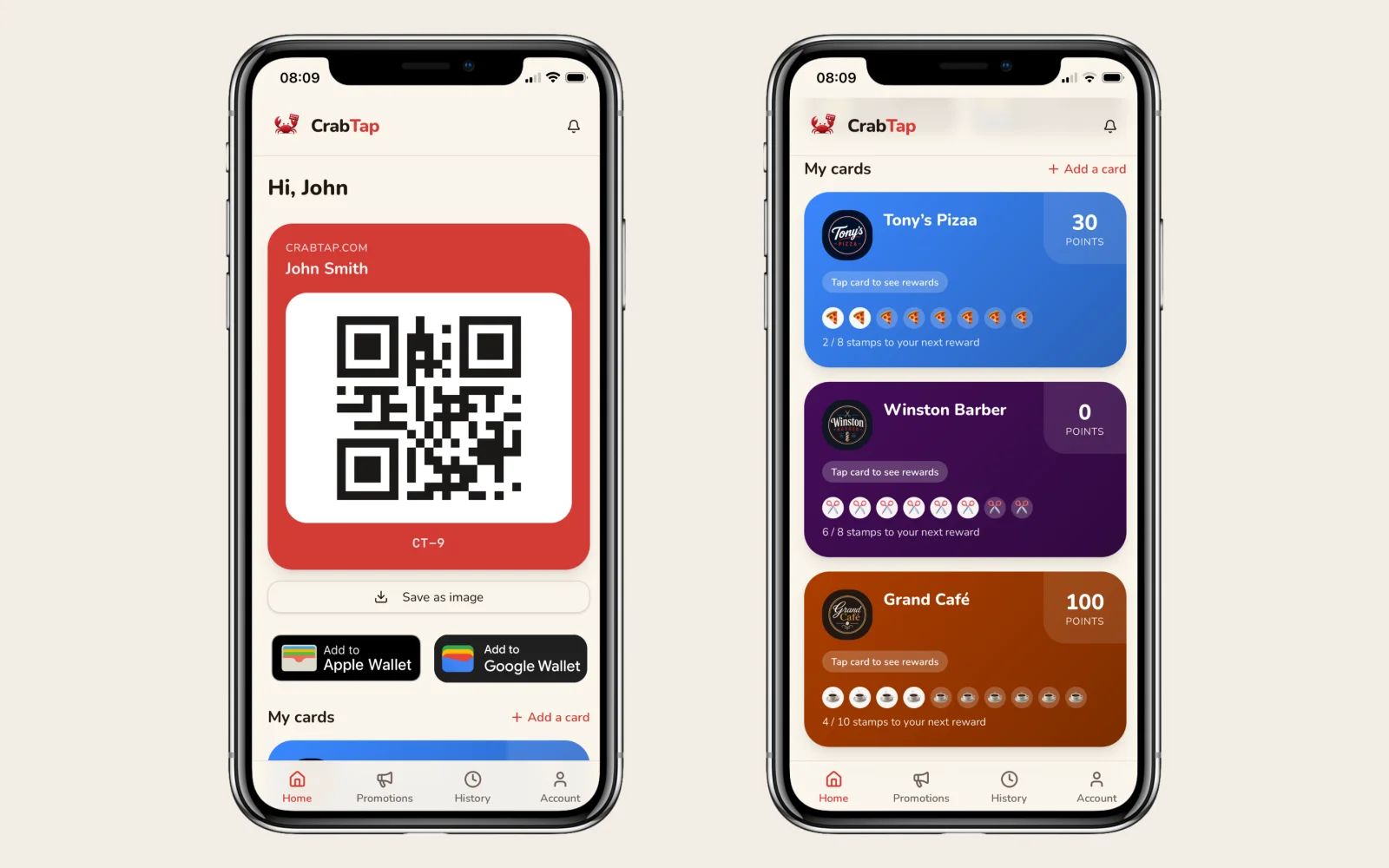
Small businesses have long struggled to implement loyalty programs without massive overhead. CrabTap addresses this gap by offering a lightweight alternative to expensive native apps or costly platforms designed for enterprise venues. Rather than forcing customers to download dedicated apps for every coffee shop or barbershop, the service uses a progressive web app architecture, eliminating download friction while letting patrons maintain a single account and QR code across all participating merchants. The distinction between CrabTap and traditional loyalty solutions centers on accessibility. Where existing platforms typically bundle expensive infrastructure features that single-location businesses don't need, CrabTap strips the offering down to essentials: customers accumulate stamps or points redeemable for rewards that each venue defines independently. The transaction itself remains simple—a quick scan and tap at checkout. For owners, the platform provides promotional tools and customer recovery features to re-engage patrons who haven't returned recently. Setup speed is another differentiator. The founder emphasizes that merchants can activate a loyalty program in a single day without requiring a marketing department or development expertise. This positions CrabTap directly at owners who might otherwise skip loyalty programs altogether due to complexity or cost barriers. The unified loyalty approach—one digital card across multiple venues—also shifts the value proposition for customers. Rather than accumulating a physical or digital collection of single-venue cards, regulars earn rewards across a network of local businesses, which should increase program engagement and reduce friction for merchants who can focus on their core business. CrabTap's primary trade-off stems from the PWA model: web-based access replaces the polish and offline capability of a native app, though this sacrifice aligns with the stated goal of keeping setup and maintenance simple for businesses with limited technical resources. The model targets a specific market segment—small venues operating independently or as single locations—where the simplified feature set and rapid deployment carry more weight than advanced analytics or white-label customization. For entrepreneurs building loyalty infrastructure, CrabTap represents a deliberate choice: prioritize ease of adoption and affordability over comprehensiveness, betting that small business owners will value a system they can launch in hours over feature-rich platforms requiring implementation expertise.
Customer-loyalty-platforms
C
CrabTap

Small businesses have long struggled to implement loyalty programs without massive overhead. CrabTap addresses this gap by offering a lightweight alternative to expensive native apps or costly platforms designed for enterprise venues. Rather than forcing customers to download dedicated apps for every coffee shop or barbershop, the service uses a progressive web app architecture, eliminating download friction while letting patrons maintain a single account and QR code across all participating merchants. The distinction between CrabTap and traditional loyalty solutions centers on accessibility. Where existing platforms typically bundle expensive infrastructure features that single-location businesses don't need, CrabTap strips the offering down to essentials: customers accumulate stamps or points redeemable for rewards that each venue defines independently. The transaction itself remains simple—a quick scan and tap at checkout. For owners, the platform provides promotional tools and customer recovery features to re-engage patrons who haven't returned recently. Setup speed is another differentiator. The founder emphasizes that merchants can activate a loyalty program in a single day without requiring a marketing department or development expertise. This positions CrabTap directly at owners who might otherwise skip loyalty programs altogether due to complexity or cost barriers. The unified loyalty approach—one digital card across multiple venues—also shifts the value proposition for customers. Rather than accumulating a physical or digital collection of single-venue cards, regulars earn rewards across a network of local businesses, which should increase program engagement and reduce friction for merchants who can focus on their core business. CrabTap's primary trade-off stems from the PWA model: web-based access replaces the polish and offline capability of a native app, though this sacrifice aligns with the stated goal of keeping setup and maintenance simple for businesses with limited technical resources. The model targets a specific market segment—small venues operating independently or as single locations—where the simplified feature set and rapid deployment carry more weight than advanced analytics or white-label customization. For entrepreneurs building loyalty infrastructure, CrabTap represents a deliberate choice: prioritize ease of adoption and affordability over comprehensiveness, betting that small business owners will value a system they can launch in hours over feature-rich platforms requiring implementation expertise.

CrabTap preview

Key features

  • Progressive Web App Architecture: Eliminates download friction by avoiding native app requirements
  • Single-Day Setup: Merchants can activate loyalty programs in one day without technical expertise
See full listing
uploadthefile.com Featured
uploadthefile.com 🔥 Trending

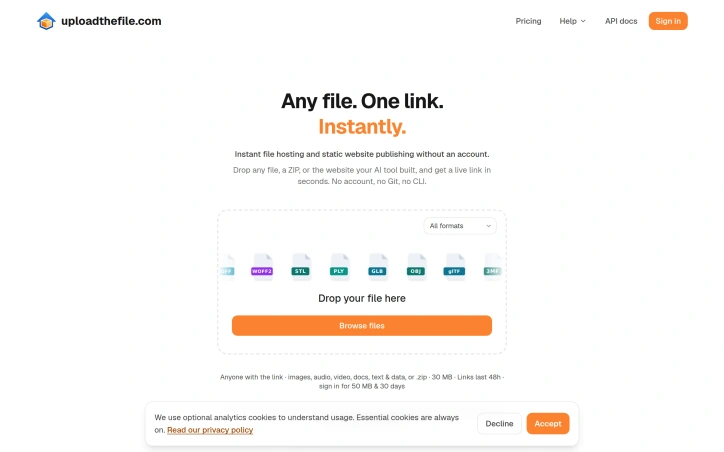
Sharing files and publishing static content has long required friction: account creation, platform navigation, or command-line knowledge. This service eliminates those barriers entirely, offering instant file hosting through a single drop-and-go interface. Users drag any file—a PDF, website ZIP, video, or data file—onto the interface and receive a shareable link within seconds, with zero setup required. The core appeal targets several overlapping audiences. Developers publishing AI-generated websites gain a frictionless deployment path without Git repositories or build processes. Anyone sharing documents avoids the account-creation gauntlet of traditional hosting platforms. Content creators hosting audio, video, or images benefit from simplicity over feature complexity. The service particularly shines for ephemeral sharing: sending a presentation, reviewing a design file, or hosting a temporary webpage requires no planning or infrastructure decisions. What distinguishes this offering is its format breadth and intentional minimalism. The platform accepts over 100 file types, from common formats like HTML, PDF, and images to specialized ones like 3D models (STL, GLB, OBJ), design files (PSD), audio (FLAC, WAV, OGG), video (MP4, WebM), and data formats (Parquet, Avro). This range means users rarely encounter unsupported file types. Equally important is what the product does not require: no account, no login flow, no subscription decision at upload time. The interface asks nothing beyond the file itself. The product highlights privacy-conscious features, noting that files never leave the browser in certain operations—a meaningful detail for users handling sensitive documents. Real-world examples underscore practical utility: a complete website deployed as a ZIP archive, an Ethereum whitepaper readable in-browser without download, a video playing immediately. Each demonstrates that the platform handles serious use cases, not just novelty sharing. The business model remains unstated in available materials. No pricing is mentioned, nor are details on monetization strategy, storage limits, or account-optional features that might drive eventual conversion. This opacity is typical for early-stage services testing product-market fit but represents a gap for users evaluating long-term viability or hidden costs. Upload The File succeeds at its narrowly defined mission: removing all friction from file hosting and static publishing. It trades feature depth for speed and simplicity, targeting users who value getting from file to live link faster than platform login screens allow. For that specific job, it executes with unusual directness.
Web-hosting-services
J
Jeune Entrepreneur

Sharing files and publishing static content has long required friction: account creation, platform navigation, or command-line knowledge. This service eliminates those barriers entirely, offering instant file hosting through a single drop-and-go interface. Users drag any file—a PDF, website ZIP, video, or data file—onto the interface and receive a shareable link within seconds, with zero setup required. The core appeal targets several overlapping audiences. Developers publishing AI-generated websites gain a frictionless deployment path without Git repositories or build processes. Anyone sharing documents avoids the account-creation gauntlet of traditional hosting platforms. Content creators hosting audio, video, or images benefit from simplicity over feature complexity. The service particularly shines for ephemeral sharing: sending a presentation, reviewing a design file, or hosting a temporary webpage requires no planning or infrastructure decisions. What distinguishes this offering is its format breadth and intentional minimalism. The platform accepts over 100 file types, from common formats like HTML, PDF, and images to specialized ones like 3D models (STL, GLB, OBJ), design files (PSD), audio (FLAC, WAV, OGG), video (MP4, WebM), and data formats (Parquet, Avro). This range means users rarely encounter unsupported file types. Equally important is what the product does not require: no account, no login flow, no subscription decision at upload time. The interface asks nothing beyond the file itself. The product highlights privacy-conscious features, noting that files never leave the browser in certain operations—a meaningful detail for users handling sensitive documents. Real-world examples underscore practical utility: a complete website deployed as a ZIP archive, an Ethereum whitepaper readable in-browser without download, a video playing immediately. Each demonstrates that the platform handles serious use cases, not just novelty sharing. The business model remains unstated in available materials. No pricing is mentioned, nor are details on monetization strategy, storage limits, or account-optional features that might drive eventual conversion. This opacity is typical for early-stage services testing product-market fit but represents a gap for users evaluating long-term viability or hidden costs. Upload The File succeeds at its narrowly defined mission: removing all friction from file hosting and static publishing. It trades feature depth for speed and simplicity, targeting users who value getting from file to live link faster than platform login screens allow. For that specific job, it executes with unusual directness.

uploadthefile.com preview

Key features

  • Drag-and-Drop File Hosting: Upload any file and receive a shareable link within seconds, with zero setup required.
  • 100+ File Format Support: Accepts common formats like HTML, PDF, and images, plus specialized types including 3D models, design files, audio, video, and data formats.
See full listing
B

Aluminum fabricators in India waste countless hours on manual calculations that should take minutes, a problem Barimap directly addresses. The software automates the tedious work of computing profile lengths, hardware quantities, and material requirements for window and door installations, then transforms those calculations into professional PDF quotations ready to share with clients. The standout differentiators lie in both practicality and accessibility. The app works completely offline, removing dependency on internet connectivity—critical for fabricators working on job sites or in areas with spotty service. Language support extends to Gujarati, Hindi, and English, making the tool genuinely accessible across India's diverse fabricator base rather than requiring English-only competency. Integration with WhatsApp for quotation delivery matches how these businesses already communicate with clients, reducing friction between measurement and close. Speed is another defining feature. The application promises conversion from project entry to branded, client-ready PDF quotation in under a minute. This efficiency compounds across a fabricator's day, reclaiming the 2-4 hours typically consumed by manual calculations. The software supports industry-standard specifications including 40mm, 60mm, and 65mm profiles alongside 2T, 3T, and 4T track systems, indicating thoughtful design informed by actual fabricator workflows. Beyond immediate calculations, the tool maintains searchable project history organized by client name or address. For repeat orders, retrieving and reusing past measurements eliminates re-entry and recalculation, translating saved time into recovered revenue from efficiently serving returning clients. The business model emphasizes low friction to trial. Users access one month free without providing a credit card, removing the hesitation many small business owners feel toward software adoption. This approach acknowledges that fabricators deciding between continuing their paper-based system and switching to software need meaningful time to experience the value proposition. Barimap targets a specific, underserved segment of India's manufacturing economy with a laser-focused solution. It does not attempt to become an all-in-one business platform; instead it concentrates entirely on the discrete problem that wastes the most time in a fabricator's day. For aluminum window businesses operating in India, the combination of offline capability, local languages, WhatsApp integration, and zero-entry cost positions the tool as a practical modernization path with minimal organizational disruption.


Invoicing-tools
P
PD

Aluminum fabricators in India waste countless hours on manual calculations that should take minutes, a problem Barimap directly addresses. The software automates the tedious work of computing profile lengths, hardware quantities, and material requirements for window and door installations, then transforms those calculations into professional PDF quotations ready to share with clients. The standout differentiators lie in both practicality and accessibility. The app works completely offline, removing dependency on internet connectivity—critical for fabricators working on job sites or in areas with spotty service. Language support extends to Gujarati, Hindi, and English, making the tool genuinely accessible across India's diverse fabricator base rather than requiring English-only competency. Integration with WhatsApp for quotation delivery matches how these businesses already communicate with clients, reducing friction between measurement and close. Speed is another defining feature. The application promises conversion from project entry to branded, client-ready PDF quotation in under a minute. This efficiency compounds across a fabricator's day, reclaiming the 2-4 hours typically consumed by manual calculations. The software supports industry-standard specifications including 40mm, 60mm, and 65mm profiles alongside 2T, 3T, and 4T track systems, indicating thoughtful design informed by actual fabricator workflows. Beyond immediate calculations, the tool maintains searchable project history organized by client name or address. For repeat orders, retrieving and reusing past measurements eliminates re-entry and recalculation, translating saved time into recovered revenue from efficiently serving returning clients. The business model emphasizes low friction to trial. Users access one month free without providing a credit card, removing the hesitation many small business owners feel toward software adoption. This approach acknowledges that fabricators deciding between continuing their paper-based system and switching to software need meaningful time to experience the value proposition. Barimap targets a specific, underserved segment of India's manufacturing economy with a laser-focused solution. It does not attempt to become an all-in-one business platform; instead it concentrates entirely on the discrete problem that wastes the most time in a fabricator's day. For aluminum window businesses operating in India, the combination of offline capability, local languages, WhatsApp integration, and zero-entry cost positions the tool as a practical modernization path with minimal organizational disruption.

Barimap preview
B

Key features

  • Offline Functionality: The application works completely offline, removing dependency on internet connectivity for job site operations.
  • Multilingual Support: Supports Gujarati, Hindi, and English to serve India's diverse fabricator base without requiring English-only competency.
See full listing
Rahul Tripathi

Digital marketing strategy consulting that spans traditional search optimization through cutting-edge AI-powered discovery positions this offering as a comprehensive funnel-building service. Rahul Tripathi operates as a hands-on digital marketing strategist with 15 years of experience advising businesses across India and select international markets including Australia, Canada, the US, and the UK. The core value proposition centers on direct access to strategic expertise rather than delegated account management. Clients work directly with the strategist rather than junior teams, and campaigns receive oversight from someone with over 200 completed projects across five-plus industries. This personal involvement contrasts sharply with typical agency models where work gets distributed among junior staff and account coordinators. The range of services reflects current market realities in digital channels. Traditional SEO and paid advertising through Google Ads and Meta Ads form the foundation. The service extends into emerging territory with Answer Engine Optimization for platforms like Perplexity, ChatGPT, and Microsoft Copilot, as well as Generative Engine Optimization targeting Google AI Overviews and Gemini citations. This forward-looking posture acknowledges the shift toward AI-powered search and recommendation systems. The stated methodology emphasizes revenue attribution over vanity metrics. Rather than optimizing for clicks or impressions, the focus lands on qualified lead volume, deal attribution, and return on ad spend at the business unit level. The service integrates multiple channels into a coordinated pipeline designed to lower customer acquisition costs across the funnel simultaneously. The offering targets businesses seeking scale through customer acquisition rather than one-time campaign execution. The language throughout emphasizes sustainable growth through technical optimization, keyword strategy, and cross-channel coordination. Geographic reach spans both domestic India operations and established markets abroad, suggesting capability across different regulatory and competitive environments. No explicit pricing information appears in the public materials, indicating a custom-quote model typical of high-touch consulting services. The positioning skews toward businesses with meaningful budgets and established products rather than early-stage startups in exploration phase.

Advertising-tools
R
Rahul Tripathi

Digital marketing strategy consulting that spans traditional search optimization through cutting-edge AI-powered discovery positions this offering as a comprehensive funnel-building service. Rahul Tripathi operates as a hands-on digital marketing strategist with 15 years of experience advising businesses across India and select international markets including Australia, Canada, the US, and the UK. The core value proposition centers on direct access to strategic expertise rather than delegated account management. Clients work directly with the strategist rather than junior teams, and campaigns receive oversight from someone with over 200 completed projects across five-plus industries. This personal involvement contrasts sharply with typical agency models where work gets distributed among junior staff and account coordinators. The range of services reflects current market realities in digital channels. Traditional SEO and paid advertising through Google Ads and Meta Ads form the foundation. The service extends into emerging territory with Answer Engine Optimization for platforms like Perplexity, ChatGPT, and Microsoft Copilot, as well as Generative Engine Optimization targeting Google AI Overviews and Gemini citations. This forward-looking posture acknowledges the shift toward AI-powered search and recommendation systems. The stated methodology emphasizes revenue attribution over vanity metrics. Rather than optimizing for clicks or impressions, the focus lands on qualified lead volume, deal attribution, and return on ad spend at the business unit level. The service integrates multiple channels into a coordinated pipeline designed to lower customer acquisition costs across the funnel simultaneously. The offering targets businesses seeking scale through customer acquisition rather than one-time campaign execution. The language throughout emphasizes sustainable growth through technical optimization, keyword strategy, and cross-channel coordination. Geographic reach spans both domestic India operations and established markets abroad, suggesting capability across different regulatory and competitive environments. No explicit pricing information appears in the public materials, indicating a custom-quote model typical of high-touch consulting services. The positioning skews toward businesses with meaningful budgets and established products rather than early-stage startups in exploration phase.

Rahul Tripathi preview

Key features

  • Direct Strategist Access: Clients work directly with the strategist rather than junior teams or account coordinators
  • AI-Powered Discovery: Covers Answer Engine Optimization for platforms like Perplexity and ChatGPT, plus Generative Engine Optimization for Google AI Overviews
See full listing
W

Slow WordPress sites hemorrhage visitors before pages even finish loading, and this service targets that specific pain point with a straightforward optimization package. Designed for business owners, agencies, publishers, and e-commerce stores struggling with sluggish performance, the offering promises measurable improvements to Core Web Vitals and page load times within a compressed five-hour engagement window. The approach centers on a fixed-price model of $239 per site, structured as a one-time fee with no recurring optimization costs or upfront charges. The service flows through three phases: a free speed audit that runs actual user tests to identify bottlenecks, hands-on optimization work targeting server response times and code bloat, and a final reporting stage that documents before-and-after metrics. What distinguishes this offering from generic WordPress optimization agencies is its focus on specificity. Rather than relying on screenshots or simulated improvements, the case studies surface real-world data pulled from independent tools and actual visitor measurements. One project achieved a 79% reduction in Largest Contentful Paint, another improved a GTmetrix grade from D to A with server response times dropping from 4.9 seconds to 1.5 seconds. The company also published its own performance metrics sourced from Google's CrUX report, demonstrating that its own site consistently passes all three Core Web Vitals. The technical implementation addresses common WordPress slowdowns systematically. Edge caching through Cloudflare and FlyingPress distributes content to regional data centers, eliminating single-origin bottlenecks. Image optimization handles conversion to modern formats like WebP and AVIF. CSS and JavaScript are streamlined to reduce parsing overhead. Server response improvements tackle Time to First Byte, a metric that directly impacts perceived load speed across all traffic sources but particularly on mobile connections where most WordPress traffic now originates. The five-hour window represents an unusual constraint in the optimization space, where many agencies pitch open-ended engagements or retainer relationships. This compressed timeline suggests the service targets WordPress sites where the slowdown stems from known architectural issues rather than sites requiring deep strategic overhauls. For site owners dealing with poorly configured caching, unoptimized images, or accumulated plugin debt, the combination of fixed pricing, rapid execution, and documented performance gains offers a low-friction alternative to hiring developers or larger agencies.


Website-builders
J
Jay Patel

Slow WordPress sites hemorrhage visitors before pages even finish loading, and this service targets that specific pain point with a straightforward optimization package. Designed for business owners, agencies, publishers, and e-commerce stores struggling with sluggish performance, the offering promises measurable improvements to Core Web Vitals and page load times within a compressed five-hour engagement window. The approach centers on a fixed-price model of $239 per site, structured as a one-time fee with no recurring optimization costs or upfront charges. The service flows through three phases: a free speed audit that runs actual user tests to identify bottlenecks, hands-on optimization work targeting server response times and code bloat, and a final reporting stage that documents before-and-after metrics. What distinguishes this offering from generic WordPress optimization agencies is its focus on specificity. Rather than relying on screenshots or simulated improvements, the case studies surface real-world data pulled from independent tools and actual visitor measurements. One project achieved a 79% reduction in Largest Contentful Paint, another improved a GTmetrix grade from D to A with server response times dropping from 4.9 seconds to 1.5 seconds. The company also published its own performance metrics sourced from Google's CrUX report, demonstrating that its own site consistently passes all three Core Web Vitals. The technical implementation addresses common WordPress slowdowns systematically. Edge caching through Cloudflare and FlyingPress distributes content to regional data centers, eliminating single-origin bottlenecks. Image optimization handles conversion to modern formats like WebP and AVIF. CSS and JavaScript are streamlined to reduce parsing overhead. Server response improvements tackle Time to First Byte, a metric that directly impacts perceived load speed across all traffic sources but particularly on mobile connections where most WordPress traffic now originates. The five-hour window represents an unusual constraint in the optimization space, where many agencies pitch open-ended engagements or retainer relationships. This compressed timeline suggests the service targets WordPress sites where the slowdown stems from known architectural issues rather than sites requiring deep strategic overhauls. For site owners dealing with poorly configured caching, unoptimized images, or accumulated plugin debt, the combination of fixed pricing, rapid execution, and documented performance gains offers a low-friction alternative to hiring developers or larger agencies.

WordPress Speed Optimization Service preview
W

Key features

  • Free Speed Audit: Uses actual user tests to identify specific performance bottlenecks
  • Fixed-Price Model: One-time $239 fee with no recurring costs or upfront charges
See full listing
makerio.io

A steady stream of visibility after launch remains one of the toughest challenges for indie founders. Most product directories offer a one-time spotlight—a launch announcement that peaks and fades. Makerio tackles this differently, positioning itself as a persistent home for product updates and founder presence designed to capture attention from both search engines and AI systems long after a launch concludes. The platform targets indie hackers, solopreneurs, and early-stage SaaS teams who want their work discovered beyond traditional product hunt cycles. The core insight is practical: founders need a permanent address, not just a moment to shine. What distinguishes Makerio is its explicit focus on AI discoverability. The platform acknowledges that modern product discovery flows through more than human-curated feeds—it passes through ChatGPT, Claude, Gemini, and Perplexity. By designing around how these systems index and understand products, Makerio offers something most directories overlook. The interface organizes content by meaningful categories including AI & Tech, SaaS, MVP launches, indie hacker projects, and open source work, with tagging that serves both human browsing and algorithmic indexing. The feature set centers on foundational elements executed with pragmatism. Founders claim a public username and build a persistent profile that serves as their anchor point. The platform functions as a feed for product updates and project announcements, with a tagging system that helps both humans and algorithms understand what's being built. Product pages receive SEO treatment and backlinks that feed into search rankings. Community engagement happens through likes and comments, allowing peer discovery and validation. The founder has been transparent about remaining in active development, explicitly inviting user feedback to shape the roadmap. This posture appeals to a community that values transparency and collaborative product building. Makerio handles a real friction point for independent makers: the visibility gap between launch momentum and sustained discoverability. The bet is that positioning around AI discovery—treating algorithmic reach as a primary distribution channel rather than an afterthought—will resonate with founders who understand how product discovery actually works today. Pricing remains unstated, leaving the business model unknown. The success of the platform ultimately depends on network effects and whether it accumulates enough maker activity to justify consistent visits from the audience it promises to unlock.


Community-management
E
ELDHO BENNY

A steady stream of visibility after launch remains one of the toughest challenges for indie founders. Most product directories offer a one-time spotlight—a launch announcement that peaks and fades. Makerio tackles this differently, positioning itself as a persistent home for product updates and founder presence designed to capture attention from both search engines and AI systems long after a launch concludes. The platform targets indie hackers, solopreneurs, and early-stage SaaS teams who want their work discovered beyond traditional product hunt cycles. The core insight is practical: founders need a permanent address, not just a moment to shine. What distinguishes Makerio is its explicit focus on AI discoverability. The platform acknowledges that modern product discovery flows through more than human-curated feeds—it passes through ChatGPT, Claude, Gemini, and Perplexity. By designing around how these systems index and understand products, Makerio offers something most directories overlook. The interface organizes content by meaningful categories including AI & Tech, SaaS, MVP launches, indie hacker projects, and open source work, with tagging that serves both human browsing and algorithmic indexing. The feature set centers on foundational elements executed with pragmatism. Founders claim a public username and build a persistent profile that serves as their anchor point. The platform functions as a feed for product updates and project announcements, with a tagging system that helps both humans and algorithms understand what's being built. Product pages receive SEO treatment and backlinks that feed into search rankings. Community engagement happens through likes and comments, allowing peer discovery and validation. The founder has been transparent about remaining in active development, explicitly inviting user feedback to shape the roadmap. This posture appeals to a community that values transparency and collaborative product building. Makerio handles a real friction point for independent makers: the visibility gap between launch momentum and sustained discoverability. The bet is that positioning around AI discovery—treating algorithmic reach as a primary distribution channel rather than an afterthought—will resonate with founders who understand how product discovery actually works today. Pricing remains unstated, leaving the business model unknown. The success of the platform ultimately depends on network effects and whether it accumulates enough maker activity to justify consistent visits from the audience it promises to unlock.

makerio.io preview

Key features

  • Product Updates: Share launches, new features, milestones, and progress to keep your product presence active.
  • Public Founder Profiles: Create a public profile showcasing your projects, work, and founder journey.
See full listing
Klar

Spam infiltration remains a persistent frustration for email users, despite decades of filter improvements. Klar addresses this gap by applying machine learning directly on the user's Mac rather than relying on cloud servers. This approach prioritizes privacy while handling computational work locally, requiring no account setup or data transmission to external services. The spam problem Klar targets is genuine. Standard email filters from major providers miss substantial amounts of unwanted mail, leaving users manually sorting through clutter. The product targets anyone using Apple Mail who finds existing filters inadequate—whether they use iCloud, Gmail, Outlook, or other IMAP-based email services. What distinguishes Klar is its architectural choice to run the AI model on-device. This design decision carries meaningful implications: messages never leave the user's machine for processing, eliminating concerns about data privacy or third-party access. The absence of mandatory account creation further removes friction and reduces the attack surface for credential theft or data harvesting. The product integrates with multiple email providers, making it accessible to users across different ecosystems. Running locally on macOS means the filter operates within the user's existing email client rather than requiring a separate interface or app switching. The seamless integration reflects Klar's design philosophy—the filter is meant to fade into the background and simply work. The free pricing model removes barriers to adoption. There are no subscription costs, trial periods, or upsells mentioned. This approach prioritizes user acquisition and might reflect confidence in the core filtering technology, though it raises natural questions about long-term sustainability and development resources. The offering is notably straightforward. Klar doesn't claim to reorganize email, learn user preferences through feedback loops, or provide detailed analytics. It does one thing: filter spam with an AI model running locally on your Mac. This focus appeals to users who find existing filters ineffective and want to avoid cloud-based solutions or account requirements. For someone frustrated with Gmail's spam folder or Apple Mail's built-in filter missing obvious junk, Klar presents a technically interesting alternative. The privacy-first local processing model and lack of account friction are genuine advantages. Whether the on-device AI actually performs better than server-side models remains a question only testing can answer, but the architectural approach is sound and user-respecting.


Security-software
N
Nicolas Ha

Spam infiltration remains a persistent frustration for email users, despite decades of filter improvements. Klar addresses this gap by applying machine learning directly on the user's Mac rather than relying on cloud servers. This approach prioritizes privacy while handling computational work locally, requiring no account setup or data transmission to external services. The spam problem Klar targets is genuine. Standard email filters from major providers miss substantial amounts of unwanted mail, leaving users manually sorting through clutter. The product targets anyone using Apple Mail who finds existing filters inadequate—whether they use iCloud, Gmail, Outlook, or other IMAP-based email services. What distinguishes Klar is its architectural choice to run the AI model on-device. This design decision carries meaningful implications: messages never leave the user's machine for processing, eliminating concerns about data privacy or third-party access. The absence of mandatory account creation further removes friction and reduces the attack surface for credential theft or data harvesting. The product integrates with multiple email providers, making it accessible to users across different ecosystems. Running locally on macOS means the filter operates within the user's existing email client rather than requiring a separate interface or app switching. The seamless integration reflects Klar's design philosophy—the filter is meant to fade into the background and simply work. The free pricing model removes barriers to adoption. There are no subscription costs, trial periods, or upsells mentioned. This approach prioritizes user acquisition and might reflect confidence in the core filtering technology, though it raises natural questions about long-term sustainability and development resources. The offering is notably straightforward. Klar doesn't claim to reorganize email, learn user preferences through feedback loops, or provide detailed analytics. It does one thing: filter spam with an AI model running locally on your Mac. This focus appeals to users who find existing filters ineffective and want to avoid cloud-based solutions or account requirements. For someone frustrated with Gmail's spam folder or Apple Mail's built-in filter missing obvious junk, Klar presents a technically interesting alternative. The privacy-first local processing model and lack of account friction are genuine advantages. Whether the on-device AI actually performs better than server-side models remains a question only testing can answer, but the architectural approach is sound and user-respecting.

Klar preview

Key features

  • On-Device AI Processing: Machine learning runs directly on the user's Mac rather than cloud servers
  • Privacy-First Architecture: Messages never leave the user's machine for processing
See full listing
AI Travel Pro

Travelers confronting the overwhelming task of trip planning typically lose hours scrolling travel forums and cross-referencing booking sites. AI Travel Pro eliminates that friction by generating personalized day-by-day itineraries in minutes, automating what has traditionally been the most tedious phase of travel preparation. The product targets a broad audience across trip types and budgets—solo travelers, couples, families, and backpackers alike—with customizable travel style preferences that shape the recommendations. A user inputs their destination, length of stay, and travel profile, and the system produces a complete itinerary with timed activities, restaurant selections, transport logistics, and mapped locations for each day. What distinguishes AI Travel Pro is its attention to practical execution details. Rather than generating vague bucket lists, the system delivers structured plans anchored to specific times and locations, making itineraries immediately actionable. The inclusion of booking links for accommodations, tours, and restaurants removes another research step. The ability to download as PDF creates an offline reference during travel, addressing a real pain point for international trips where connectivity may be limited. The interface allows post-generation editing—swapping activities, changing restaurant choices, and adding personal notes—which means the AI output serves as a starting template rather than a fixed prescription. The sample output demonstrates coherence and specificity. A five-day itinerary shows realistic daily rhythms: an arrival day with airport logistics and dinner reservations, followed by structured days with morning activities, midday excursions, and evening dining, complete with cost estimates and practical tips like purchasing a SIM card at the airport. The product addresses a legitimate market gap. Commercial travel planning remains fragmented across multiple websites and services, while generic AI chatbots lack the domain-specific curation to produce truly functional itineraries. AI Travel Pro combines personalization with structure and actionability, delivering immediate value to travelers who want to maximize trip enjoyment rather than research time. The streamlined workflow—three steps from blank page to downloadable itinerary—positions the tool as friction-free compared to traditional planning methods. For travelers seeking a planning experience that balances customization with convenience, this fills a genuine need.


Travel-planning
S
Sam Smyth

Travelers confronting the overwhelming task of trip planning typically lose hours scrolling travel forums and cross-referencing booking sites. AI Travel Pro eliminates that friction by generating personalized day-by-day itineraries in minutes, automating what has traditionally been the most tedious phase of travel preparation. The product targets a broad audience across trip types and budgets—solo travelers, couples, families, and backpackers alike—with customizable travel style preferences that shape the recommendations. A user inputs their destination, length of stay, and travel profile, and the system produces a complete itinerary with timed activities, restaurant selections, transport logistics, and mapped locations for each day. What distinguishes AI Travel Pro is its attention to practical execution details. Rather than generating vague bucket lists, the system delivers structured plans anchored to specific times and locations, making itineraries immediately actionable. The inclusion of booking links for accommodations, tours, and restaurants removes another research step. The ability to download as PDF creates an offline reference during travel, addressing a real pain point for international trips where connectivity may be limited. The interface allows post-generation editing—swapping activities, changing restaurant choices, and adding personal notes—which means the AI output serves as a starting template rather than a fixed prescription. The sample output demonstrates coherence and specificity. A five-day itinerary shows realistic daily rhythms: an arrival day with airport logistics and dinner reservations, followed by structured days with morning activities, midday excursions, and evening dining, complete with cost estimates and practical tips like purchasing a SIM card at the airport. The product addresses a legitimate market gap. Commercial travel planning remains fragmented across multiple websites and services, while generic AI chatbots lack the domain-specific curation to produce truly functional itineraries. AI Travel Pro combines personalization with structure and actionability, delivering immediate value to travelers who want to maximize trip enjoyment rather than research time. The streamlined workflow—three steps from blank page to downloadable itinerary—positions the tool as friction-free compared to traditional planning methods. For travelers seeking a planning experience that balances customization with convenience, this fills a genuine need.

AI Travel Pro preview

Key features

  • Personalized Itineraries: Generates customized day-by-day travel plans based on destination, duration, and travel profile preferences.
  • Actionable Details: Provides specific times, locations, timed activities, restaurant selections, and transport logistics for immediate execution.
See full listing
AFFLIGO - Crush your file problems

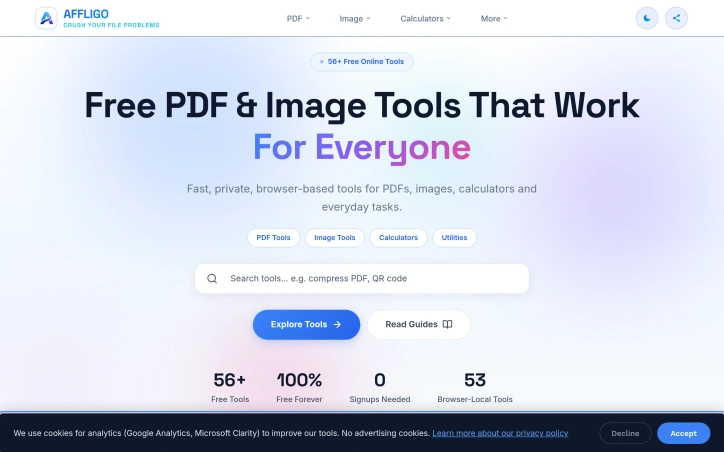
56+ free online tools for PDF editing, image conversion, calculators, and text utilities. No signup, no limits. Browser-based - files stay on your device.
Web-browsers
K
Karan Kumar

56+ free online tools for PDF editing, image conversion, calculators, and text utilities. No signup, no limits. Browser-based - files stay on your device.

W

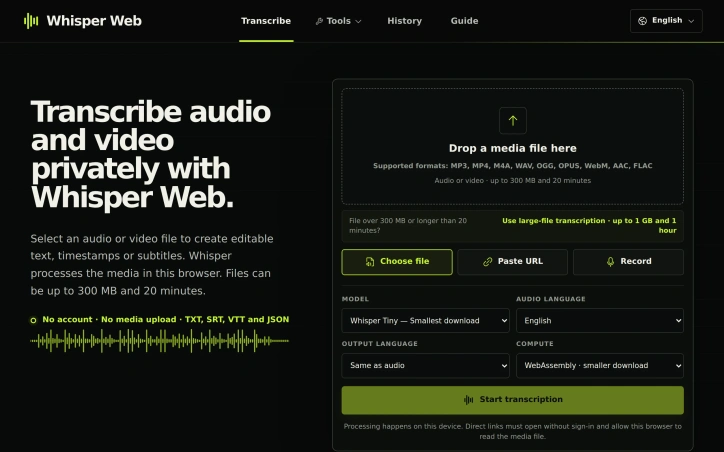
Whisper Web is a free browser tool for people who want editable transcripts without sending the source recording to a Whisper Web application server. It transcribes audio, video and microphone recordings on the user's device with Tiny, Base or Small Whisper models, WebAssembly or WebGPU, timestamps and TXT, JSON, SRT or VTT exports. A separate local workflow handles files up to 1 GB or one hour, and an MP4-to-MP3 tool converts MP4, MOV or WebM files locally. The site still needs network access for application assets and model downloads. Whisper Web is independent and is not an official OpenAI service.

Transcription
C
cNa Lee

Whisper Web is a free browser tool for people who want editable transcripts without sending the source recording to a Whisper Web application server. It transcribes audio, video and microphone recordings on the user's device with Tiny, Base or Small Whisper models, WebAssembly or WebGPU, timestamps and TXT, JSON, SRT or VTT exports. A separate local workflow handles files up to 1 GB or one hour, and an MP4-to-MP3 tool converts MP4, MOV or WebM files locally. The site still needs network access for application assets and model downloads. Whisper Web is independent and is not an official OpenAI service.

Ezeriq

Navigating the rapidly expanding landscape of artificial intelligence tools presents a genuine friction point for users. With thousands of AI applications now available, the challenge isn't scarcity but abundance: finding which tool actually solves your specific problem requires sorting through sprawling categories, endless comparisons, and marketing claims that often obscure practical utility. Ezeriq addresses this discovery problem by inverting the typical tool-directory model. Rather than presenting users with long lists to browse and filter, the platform starts by asking what the user wants to accomplish. Based on that description, Ezeriq recommends tools suited to that task. This task-first methodology eliminates the false starts and research overhead that accompany traditional AI directories. The platform serves anyone who encounters a specific workflow challenge and needs to evaluate AI solutions quickly. It's particularly useful for busy professionals, researchers, and makers who lack time to compare dozens of tools but need to move forward with something effective. The foundational insight here is sound: most people don't want to learn about AI tools in the abstract. They want a solution to a concrete problem. What distinguishes Ezeriq is its philosophical positioning. Most directory products organize around what tools exist and how they're categorized. Ezeriq's design philosophy asks instead how people actually search: by describing their need. This mirrors how users think rather than how tool vendors market themselves. The platform offers useful filtering and sorting mechanisms. Users can narrow results by constraint, requesting free tools only or tools with API access depending on their context. Sorting preferences let users optimize for different priorities: best overall match, highest quality, ease of use, or value. These options acknowledge that different users weight these dimensions differently when making adoption decisions. Currently, the index appears to be in early stages. The platform is clearly under active development, with the founder emphasizing continuous improvement and ongoing tool expansion. This early-stage positioning is worth noting for potential users evaluating adoption. The core concept is validated by the genuine pain point it addresses. As the AI tool ecosystem continues accelerating, the discovery problem will only intensify. A tool that lets users sidestep exhaustive research and land on practical solutions addresses a real and growing need in the market.

Marketplace-sites
A
Avi Rosenberg-Whyte

Navigating the rapidly expanding landscape of artificial intelligence tools presents a genuine friction point for users. With thousands of AI applications now available, the challenge isn't scarcity but abundance: finding which tool actually solves your specific problem requires sorting through sprawling categories, endless comparisons, and marketing claims that often obscure practical utility. Ezeriq addresses this discovery problem by inverting the typical tool-directory model. Rather than presenting users with long lists to browse and filter, the platform starts by asking what the user wants to accomplish. Based on that description, Ezeriq recommends tools suited to that task. This task-first methodology eliminates the false starts and research overhead that accompany traditional AI directories. The platform serves anyone who encounters a specific workflow challenge and needs to evaluate AI solutions quickly. It's particularly useful for busy professionals, researchers, and makers who lack time to compare dozens of tools but need to move forward with something effective. The foundational insight here is sound: most people don't want to learn about AI tools in the abstract. They want a solution to a concrete problem. What distinguishes Ezeriq is its philosophical positioning. Most directory products organize around what tools exist and how they're categorized. Ezeriq's design philosophy asks instead how people actually search: by describing their need. This mirrors how users think rather than how tool vendors market themselves. The platform offers useful filtering and sorting mechanisms. Users can narrow results by constraint, requesting free tools only or tools with API access depending on their context. Sorting preferences let users optimize for different priorities: best overall match, highest quality, ease of use, or value. These options acknowledge that different users weight these dimensions differently when making adoption decisions. Currently, the index appears to be in early stages. The platform is clearly under active development, with the founder emphasizing continuous improvement and ongoing tool expansion. This early-stage positioning is worth noting for potential users evaluating adoption. The core concept is validated by the genuine pain point it addresses. As the AI tool ecosystem continues accelerating, the discovery problem will only intensify. A tool that lets users sidestep exhaustive research and land on practical solutions addresses a real and growing need in the market.

Ezeriq preview

Key features

  • Task-First Recommendations: Recommends AI tools based on describing what users want to accomplish rather than browsing categories.
  • Quick Tool Discovery: Eliminates research overhead by providing targeted recommendations instead of long browsable lists.
See full listing
ColorWall

Desktop customization has long been defined by compromise. Users accept bloated applications that consume significant system resources in exchange for the ability to personalize their monitors with animations and effects. ColorWall disrupts this dynamic by engineering a solution that delivers sophisticated visual customization while consuming roughly 0.5 percent CPU usage at 8K resolution and 60 frames per second. The architecture accomplishes this through native Rust development paired with Direct3D11 hardware acceleration and zero-copy video rendering. These engineering choices directly challenge the conventional assumption that feature-rich desktop applications must be resource-intensive. Published performance benchmarks demonstrate substantial advantages over established competitors, with ColorWall's measured resource consumption significantly lower than market alternatives. The product targets Windows 10 and 11 users, particularly those frustrated with existing wallpaper engines that degrade system performance. Its feature set spans audio-reactive effects that synchronize to system audio in real time, GPU-accelerated shader effects including reflections and chromatic aberration, persistent desktop widgets for displaying time and system information, and independent taskbar styling with transparency and acrylic effects. The application integrates a unified library of over 105,000 wallpapers sourced from eight different content providers, all accessible without account creation. More sophisticated users can build custom scenes using node-based workflows that compile to native code. The business model reinforces the performance-first philosophy. ColorWall operates entirely free to end users and is sustained by community patronage through platforms like Patreon. This removes financial barriers that typically accompany feature-rich desktop applications. Development remains active, with the team actively expanding capabilities. For users who abandoned previous wallpaper engines because they degraded system responsiveness, ColorWall delivers a credible alternative engineered around the technical requirements that historically constrained adoption of such products. Its technical foundation directly addresses the performance frustrations that limited consumer interest in desktop customization. The combination of near-zero resource consumption, genuine feature breadth, and free distribution positions ColorWall as a meaningful contender in a category where performance has been consistently sacrificed for functionality.


Wallpapers
C
Colorwall

Desktop customization has long been defined by compromise. Users accept bloated applications that consume significant system resources in exchange for the ability to personalize their monitors with animations and effects. ColorWall disrupts this dynamic by engineering a solution that delivers sophisticated visual customization while consuming roughly 0.5 percent CPU usage at 8K resolution and 60 frames per second. The architecture accomplishes this through native Rust development paired with Direct3D11 hardware acceleration and zero-copy video rendering. These engineering choices directly challenge the conventional assumption that feature-rich desktop applications must be resource-intensive. Published performance benchmarks demonstrate substantial advantages over established competitors, with ColorWall's measured resource consumption significantly lower than market alternatives. The product targets Windows 10 and 11 users, particularly those frustrated with existing wallpaper engines that degrade system performance. Its feature set spans audio-reactive effects that synchronize to system audio in real time, GPU-accelerated shader effects including reflections and chromatic aberration, persistent desktop widgets for displaying time and system information, and independent taskbar styling with transparency and acrylic effects. The application integrates a unified library of over 105,000 wallpapers sourced from eight different content providers, all accessible without account creation. More sophisticated users can build custom scenes using node-based workflows that compile to native code. The business model reinforces the performance-first philosophy. ColorWall operates entirely free to end users and is sustained by community patronage through platforms like Patreon. This removes financial barriers that typically accompany feature-rich desktop applications. Development remains active, with the team actively expanding capabilities. For users who abandoned previous wallpaper engines because they degraded system responsiveness, ColorWall delivers a credible alternative engineered around the technical requirements that historically constrained adoption of such products. Its technical foundation directly addresses the performance frustrations that limited consumer interest in desktop customization. The combination of near-zero resource consumption, genuine feature breadth, and free distribution positions ColorWall as a meaningful contender in a category where performance has been consistently sacrificed for functionality.

ColorWall preview

Key features

  • Audio-Reactive Effects: Synchronize visual elements to system audio in real time.
  • GPU-Accelerated Shaders: Apply effects including reflections and chromatic aberration.
See full listing
BoothSummer

Accessibility meets aesthetics in this browser-based photobooth that democratizes an experience typically confined to arcades, events, and expensive software suites. Running directly in Safari or Chrome without installation, it lets users shoot photo strips from any device with a camera—smartphone, laptop, or tablet—and save the results locally without watermarks or fees. The product distinguishes itself through deliberate design choices that prioritize user control. A library of frames organized by mood—cute, vintage, festive, minimal—gives users creative direction without overwhelming options. The filter suite draws from professional grading techniques, offering 32 LUT color grades and subtle light retouching that users can toggle on or off. Additional effects like snow, sparkle, hearts, and confetti layer over the viewfinder in real time, letting users compose the shot before capture rather than discovering the look afterward. Privacy-conscious features reinforce the no-installation approach: all processing happens on the device itself, never uploaded. Users can sign the finished strip with one of 15 handwriting fonts, including Vietnamese, directly into the downloaded file. The capture flow reduces friction with three steps—pick a frame, shoot, download—all in a single session. Swapping frames mid-session preserves earlier shots. An optional video mode exports the strip as a five-second moving clip at user-selected speeds without audio, adding a recording dimension without requiring a separate interface. Pricing is straightforward: free with no watermark and no hidden tiers. The positioning targets casual users seeking entertainment at home or in social settings alongside those wanting a modern alternative to both physical booths and desktop software. The browser-native approach eliminates friction for mobile users, where downloading an app often faces resistance from install prompts and storage concerns. The execution emphasizes restraint. Effects and filters enhance rather than dominate; every visual treatment can be disabled. This philosophy extends to the interface—the strip is composed and downloaded to the user's device by default, with ownership immediate and local. For users weary of applications that demand installation and storage space, this approach proves refreshingly direct.
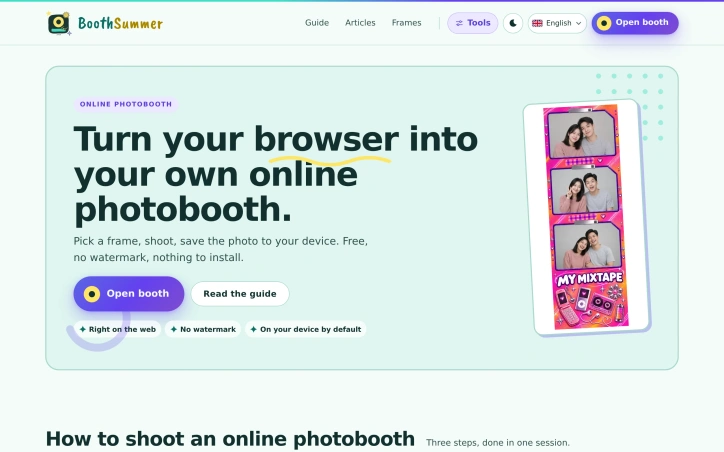

Accessibility meets aesthetics in this browser-based photobooth that democratizes an experience typically confined to arcades, events, and expensive software suites. Running directly in Safari or Chrome without installation, it lets users shoot photo strips from any device with a camera—smartphone, laptop, or tablet—and save the results locally without watermarks or fees. The product distinguishes itself through deliberate design choices that prioritize user control. A library of frames organized by mood—cute, vintage, festive, minimal—gives users creative direction without overwhelming options. The filter suite draws from professional grading techniques, offering 32 LUT color grades and subtle light retouching that users can toggle on or off. Additional effects like snow, sparkle, hearts, and confetti layer over the viewfinder in real time, letting users compose the shot before capture rather than discovering the look afterward. Privacy-conscious features reinforce the no-installation approach: all processing happens on the device itself, never uploaded. Users can sign the finished strip with one of 15 handwriting fonts, including Vietnamese, directly into the downloaded file. The capture flow reduces friction with three steps—pick a frame, shoot, download—all in a single session. Swapping frames mid-session preserves earlier shots. An optional video mode exports the strip as a five-second moving clip at user-selected speeds without audio, adding a recording dimension without requiring a separate interface. Pricing is straightforward: free with no watermark and no hidden tiers. The positioning targets casual users seeking entertainment at home or in social settings alongside those wanting a modern alternative to both physical booths and desktop software. The browser-native approach eliminates friction for mobile users, where downloading an app often faces resistance from install prompts and storage concerns. The execution emphasizes restraint. Effects and filters enhance rather than dominate; every visual treatment can be disabled. This philosophy extends to the interface—the strip is composed and downloaded to the user's device by default, with ownership immediate and local. For users weary of applications that demand installation and storage space, this approach proves refreshingly direct.

BoothSummer preview

Key features

  • Browser-Based Photobooth: Runs directly in Safari or Chrome without installation on any device with a camera.
  • Real-Time Effects: Includes 32 LUT color grades, light retouching, and overlay effects like snow, sparkle, hearts, and confetti visible while composing shots.
See full listing
Social Bidz

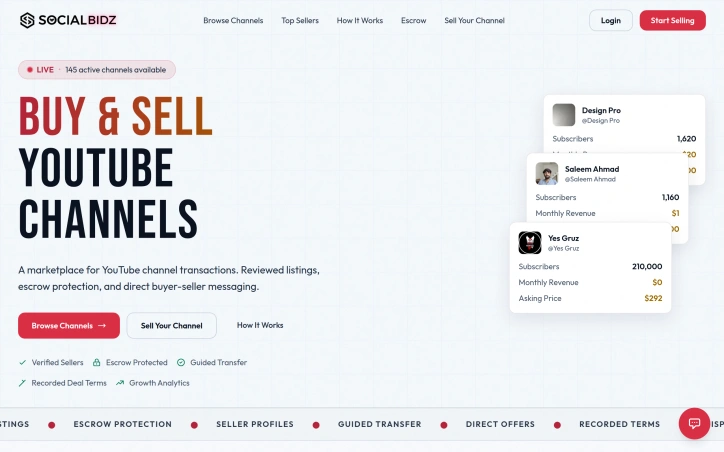
Monetizing a YouTube channel through sale presents creators with a genuine dilemma: the asset has real value, but the transfer process remains largely unregulated and rife with opportunity for fraud. Social Bidz addresses this friction by creating a structured marketplace for channel transactions, complete with the protective mechanisms that both buyers and sellers need to complete deals with confidence. The platform targets two distinct audiences: YouTube creators who have built channels with audience and revenue streams but wish to cash out, and entrepreneurs or media companies seeking to acquire established channels as a shortcut to building viewership. For creators, the core problem is risk mitigation during what can be a complex and vulnerable transaction. For buyers, it is gaining access to pre-built audiences through a verified process. What distinguishes Social Bidz is its focus on the transfer mechanics themselves. Rather than positioning as a simple listing board, the service handles the procedural complexity that has historically made channel sales unpredictable. This includes verification of ownership and channel legitimacy, management of the actual asset transfer, and crucially, escrow protection that prevents either party from backing out after partial compliance. The escrow mechanism is significant because it eliminates the trust gap that makes peer-to-peer channel sales so risky. The platform's guided transfer process reflects recognition that YouTube channel ownership transitions involve multiple steps and stakeholders. Transferring a channel requires coordinated changes to associated email accounts, payment methods, and platform permissions, all of which must be verified by YouTube itself. By handling this orchestration, Social Bidz substantially reduces friction compared to attempting a direct transfer between uncoordinated parties. What remains implicit is the financial model beneath this offering, though marketplace economics typically point toward transaction-based fees or listing charges. What is clear is that the company has identified a genuine gap in the creator economy: channels represent meaningful assets for their owners, yet no established infrastructure exists for their efficient and safe sale. By introducing process discipline, verification standards, and escrow protection, Social Bidz transforms what has been an informal, high-risk transaction type into something closer to a conventional secondary market. Whether the execution matches the promise depends on the quality of verification procedures and the breadth of buyer and seller adoption.

Marketplace-sites
S
Social Bidz

Monetizing a YouTube channel through sale presents creators with a genuine dilemma: the asset has real value, but the transfer process remains largely unregulated and rife with opportunity for fraud. Social Bidz addresses this friction by creating a structured marketplace for channel transactions, complete with the protective mechanisms that both buyers and sellers need to complete deals with confidence. The platform targets two distinct audiences: YouTube creators who have built channels with audience and revenue streams but wish to cash out, and entrepreneurs or media companies seeking to acquire established channels as a shortcut to building viewership. For creators, the core problem is risk mitigation during what can be a complex and vulnerable transaction. For buyers, it is gaining access to pre-built audiences through a verified process. What distinguishes Social Bidz is its focus on the transfer mechanics themselves. Rather than positioning as a simple listing board, the service handles the procedural complexity that has historically made channel sales unpredictable. This includes verification of ownership and channel legitimacy, management of the actual asset transfer, and crucially, escrow protection that prevents either party from backing out after partial compliance. The escrow mechanism is significant because it eliminates the trust gap that makes peer-to-peer channel sales so risky. The platform's guided transfer process reflects recognition that YouTube channel ownership transitions involve multiple steps and stakeholders. Transferring a channel requires coordinated changes to associated email accounts, payment methods, and platform permissions, all of which must be verified by YouTube itself. By handling this orchestration, Social Bidz substantially reduces friction compared to attempting a direct transfer between uncoordinated parties. What remains implicit is the financial model beneath this offering, though marketplace economics typically point toward transaction-based fees or listing charges. What is clear is that the company has identified a genuine gap in the creator economy: channels represent meaningful assets for their owners, yet no established infrastructure exists for their efficient and safe sale. By introducing process discipline, verification standards, and escrow protection, Social Bidz transforms what has been an informal, high-risk transaction type into something closer to a conventional secondary market. Whether the execution matches the promise depends on the quality of verification procedures and the breadth of buyer and seller adoption.

Social Bidz preview

Key features

  • Structured Marketplace: Creates a verified marketplace for YouTube channel transactions with protective mechanisms for both parties
  • Ownership Verification: Verifies channel ownership and legitimacy to ensure authenticity of assets being sold
See full listing
StackLedge

Developers and automation teams face a persistent challenge: quality tools and integrations are scattered across dozens of platforms, making it hard to find solutions that actually work together. StackLedge addresses this fragmentation by bringing together a curated directory of automation and AI tools in one searchable location. The directory spans 12 categories covering AI tooling, SaaS products, n8n-specific solutions, and workflow automation platforms. The primary sections list 55 AI products, 28 SaaS applications, and 10 automation platforms, with deliberate filtering for tools that ship with real APIs, webhooks, and self-hosted options. This curation standard matters because it distinguishes between marketing-heavy products and those with genuine integration capabilities. What distinguishes StackLedge is its strategic anchoring around n8n, an open-source automation platform. The directory dedicates an entire category to n8n community nodes and workflow templates, reflecting how teams building automations need both individual tools and ready-to-use templates. This dual focus acknowledges the practical workflow: developers don't just need software; they need templates and integrations that reduce setup time. The product serves developers, engineering teams, and automation builders evaluating tools before integration projects. Rather than relying on general software directories, StackLedge applies consistent filters based on what actually matters for integration work: API quality, deployment flexibility, and compatibility with workflow platforms. Smaller specialized sections covering browser extensions, developer utilities, video tools, and Shopify apps indicate the project thinks broadly about the automation ecosystem while maintaining focus on serious integration infrastructure. The directory's strength lies in its specificity. It occupies a useful middle ground—neither a general SaaS directory nor a niche n8n marketplace, but a curated bridge connecting developers to tools built for integration. For teams mapping the automation and AI tooling landscape, or evaluating solutions before committing resources to integration projects, StackLedge provides a focused starting point with clearer signal-to-noise than general search results. The business model is straightforward: a curated directory accepting community submissions. No pricing tier is mentioned, suggesting either a free-to-access model or revenue mechanisms outside the core directory. For teams in automation and AI tooling, the value proposition is direct: find production-ready tools faster through community curation rather than individual research.
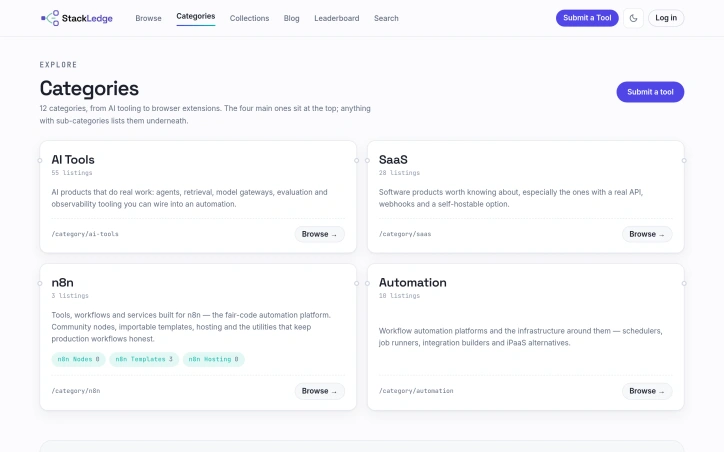

Developers and automation teams face a persistent challenge: quality tools and integrations are scattered across dozens of platforms, making it hard to find solutions that actually work together. StackLedge addresses this fragmentation by bringing together a curated directory of automation and AI tools in one searchable location. The directory spans 12 categories covering AI tooling, SaaS products, n8n-specific solutions, and workflow automation platforms. The primary sections list 55 AI products, 28 SaaS applications, and 10 automation platforms, with deliberate filtering for tools that ship with real APIs, webhooks, and self-hosted options. This curation standard matters because it distinguishes between marketing-heavy products and those with genuine integration capabilities. What distinguishes StackLedge is its strategic anchoring around n8n, an open-source automation platform. The directory dedicates an entire category to n8n community nodes and workflow templates, reflecting how teams building automations need both individual tools and ready-to-use templates. This dual focus acknowledges the practical workflow: developers don't just need software; they need templates and integrations that reduce setup time. The product serves developers, engineering teams, and automation builders evaluating tools before integration projects. Rather than relying on general software directories, StackLedge applies consistent filters based on what actually matters for integration work: API quality, deployment flexibility, and compatibility with workflow platforms. Smaller specialized sections covering browser extensions, developer utilities, video tools, and Shopify apps indicate the project thinks broadly about the automation ecosystem while maintaining focus on serious integration infrastructure. The directory's strength lies in its specificity. It occupies a useful middle ground—neither a general SaaS directory nor a niche n8n marketplace, but a curated bridge connecting developers to tools built for integration. For teams mapping the automation and AI tooling landscape, or evaluating solutions before committing resources to integration projects, StackLedge provides a focused starting point with clearer signal-to-noise than general search results. The business model is straightforward: a curated directory accepting community submissions. No pricing tier is mentioned, suggesting either a free-to-access model or revenue mechanisms outside the core directory. For teams in automation and AI tooling, the value proposition is direct: find production-ready tools faster through community curation rather than individual research.

StackLedge preview

Key features

  • Curated Tool Directory: Searchable location for automation and AI tools across 12 categories with 55 AI products, 28 SaaS applications, and 10 automation platforms.
  • Integration-Ready Filtering: Tools selected for real APIs, webhooks, and self-hosted options rather than marketing-heavy claims.
See full listing
LoftCue Studio

Video has become essential to real estate marketing, but most agents lack the resources for professional production. Property tours still require either expensive videographer services or hours of manual editing—costs that make financial sense only for premium listings. LoftCue Studio addresses this gap by automating the conversion of existing listing photography into finished property videos. The tool works with photos agents already have on file. Rather than demanding a new shoot, it generates polished videos in minutes by applying AI-driven motion effects, captions, music, and voiceovers. The output targets vertical video formats dominating social platforms: Reels, TikTok, and Shorts. Users can export branded or unbranded versions to fit their marketing strategy. What distinguishes LoftCue from simpler slideshow makers is the sophistication of its camera effects. The library includes controlled motion effects designed specifically for residential photography: room walkthroughs, interior tracking shots, cinematic push-ins, day-to-night transitions, virtual staging reveals, and seasonal transformations. These aren't generic zoom-and-pan effects but rather techniques modeled on cinematography, making the videos feel like actual property tours rather than animated slideshows. The platform also includes photo enhancement tools that operate before video generation. Users can apply virtual staging to showcase potential, visualize renovations, remove clutter or people from frames, strip watermarks from photos they own, and adjust lighting and color. These pre-video adjustments mean the input photos themselves can be refined rather than simply compiled. The workflow is straightforward: upload photos in viewing order, enhance selected images, choose a visual style, and select format and captions. The company reports a 5.0 rating across 168 reviews and prominently advertises that no credit card is required to start, lowering the barrier to trial. For independent agents and teams managing dozens of listings, the value proposition is clear. By reducing the cost and time of video production, LoftCue makes professional video feasible for properties that wouldn't justify the expense of traditional videography. The product succeeds not by replacing the need for good source photography but by unlocking the marketing value already present in agents' existing digital assets.


Ai-generative-media
L
LoftCue Studio

Video has become essential to real estate marketing, but most agents lack the resources for professional production. Property tours still require either expensive videographer services or hours of manual editing—costs that make financial sense only for premium listings. LoftCue Studio addresses this gap by automating the conversion of existing listing photography into finished property videos. The tool works with photos agents already have on file. Rather than demanding a new shoot, it generates polished videos in minutes by applying AI-driven motion effects, captions, music, and voiceovers. The output targets vertical video formats dominating social platforms: Reels, TikTok, and Shorts. Users can export branded or unbranded versions to fit their marketing strategy. What distinguishes LoftCue from simpler slideshow makers is the sophistication of its camera effects. The library includes controlled motion effects designed specifically for residential photography: room walkthroughs, interior tracking shots, cinematic push-ins, day-to-night transitions, virtual staging reveals, and seasonal transformations. These aren't generic zoom-and-pan effects but rather techniques modeled on cinematography, making the videos feel like actual property tours rather than animated slideshows. The platform also includes photo enhancement tools that operate before video generation. Users can apply virtual staging to showcase potential, visualize renovations, remove clutter or people from frames, strip watermarks from photos they own, and adjust lighting and color. These pre-video adjustments mean the input photos themselves can be refined rather than simply compiled. The workflow is straightforward: upload photos in viewing order, enhance selected images, choose a visual style, and select format and captions. The company reports a 5.0 rating across 168 reviews and prominently advertises that no credit card is required to start, lowering the barrier to trial. For independent agents and teams managing dozens of listings, the value proposition is clear. By reducing the cost and time of video production, LoftCue makes professional video feasible for properties that wouldn't justify the expense of traditional videography. The product succeeds not by replacing the need for good source photography but by unlocking the marketing value already present in agents' existing digital assets.

LoftCue Studio preview

Key features

  • AI Motion Effects: Applies cinematography-inspired techniques including room walkthroughs, tracking shots, cinematic push-ins, day-to-night transitions, and virtual staging reveals
  • Photo Enhancement: Enables virtual staging, clutter removal, watermark stripping, and lighting/color adjustments before video generation
See full listing
Pixelpromptx

Creators working with AI image generators face a universal frustration: crafting prompts takes far longer than it should. Most prompts lack the structural rigor needed to produce consistent, professional results, forcing users to waste hours iterating toward a usable output. Pixelpromptx confronts this problem head-on with a free library of professionally authored prompts designed for photographers, designers, and content creators at every skill level. The core insight driving the platform is straightforward but powerful: strong AI prompts need deliberate structure. Rather than accepting the vague descriptions that plague most prompt collections, Pixelpromptx builds each prompt from intentional components—subject definition, lighting choices, camera language, mood, and composition—that generators can follow with precision. This methodical approach means creators can copy a prompt intact or modify specific details like location, wardrobe, or color grade while preserving the underlying framework that makes results repeatable and professional. The product organizes its library across focused categories spanning cinematic photography, fashion editorials, portraiture, and Instagram-ready styles. Users can filter by tool compatibility, browse curated collections, or discover trending hashtags. Each prompt includes the full text alongside example images, making it easy to both preview the aesthetic outcome and understand the prompt structure before copying. The inclusion of an AI tools directory alongside the prompt library gives creators a secondary benefit: the ability to compare image generation platforms without leaving the site. What sets Pixelpromptx apart is its refusal to treat prompting as mere guesswork. By front-loading structure into every prompt, it eliminates much of the trial-and-error that makes traditional prompt libraries unhelpful. A creator seeking a fashion photograph no longer starts from scratch; they work from a template that already accounts for lighting setups and compositional best practices. Pixelpromptx operates as a completely free service with no payment tiers mentioned, funded presumably through its AI tools directory. The business model aligns with creator needs rather than working against them, removing friction from adoption while maintaining high-quality content standards. The platform serves a broad audience—from experienced photographers looking for efficiency gains to beginners attempting their first AI experiments—without overwhelming either group. In an ecosystem where prompt engineering has become a required skill, Pixelpromptx democratizes access to that skill.
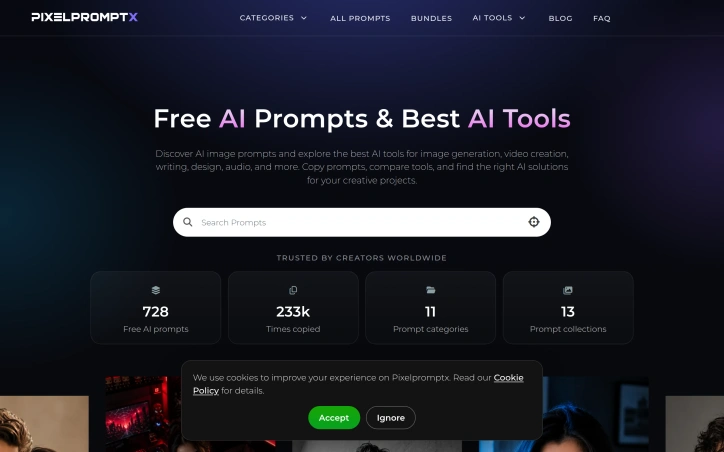

Prompt-engineering-tools
P
PixelpromptX

Creators working with AI image generators face a universal frustration: crafting prompts takes far longer than it should. Most prompts lack the structural rigor needed to produce consistent, professional results, forcing users to waste hours iterating toward a usable output. Pixelpromptx confronts this problem head-on with a free library of professionally authored prompts designed for photographers, designers, and content creators at every skill level. The core insight driving the platform is straightforward but powerful: strong AI prompts need deliberate structure. Rather than accepting the vague descriptions that plague most prompt collections, Pixelpromptx builds each prompt from intentional components—subject definition, lighting choices, camera language, mood, and composition—that generators can follow with precision. This methodical approach means creators can copy a prompt intact or modify specific details like location, wardrobe, or color grade while preserving the underlying framework that makes results repeatable and professional. The product organizes its library across focused categories spanning cinematic photography, fashion editorials, portraiture, and Instagram-ready styles. Users can filter by tool compatibility, browse curated collections, or discover trending hashtags. Each prompt includes the full text alongside example images, making it easy to both preview the aesthetic outcome and understand the prompt structure before copying. The inclusion of an AI tools directory alongside the prompt library gives creators a secondary benefit: the ability to compare image generation platforms without leaving the site. What sets Pixelpromptx apart is its refusal to treat prompting as mere guesswork. By front-loading structure into every prompt, it eliminates much of the trial-and-error that makes traditional prompt libraries unhelpful. A creator seeking a fashion photograph no longer starts from scratch; they work from a template that already accounts for lighting setups and compositional best practices. Pixelpromptx operates as a completely free service with no payment tiers mentioned, funded presumably through its AI tools directory. The business model aligns with creator needs rather than working against them, removing friction from adoption while maintaining high-quality content standards. The platform serves a broad audience—from experienced photographers looking for efficiency gains to beginners attempting their first AI experiments—without overwhelming either group. In an ecosystem where prompt engineering has become a required skill, Pixelpromptx democratizes access to that skill.

Pixelpromptx preview

Key features

  • Structured Prompt Components: Prompts are built from intentional elements including subject definition, lighting, camera language, mood, and composition for consistent results.
  • Curated Library: Collections organized by categories including cinematic photography, fashion editorials, portraiture, and Instagram-ready styles.
See full listing
Motion Control AI

Creating professional-quality animated video content traditionally demands expensive equipment, skilled animators, and production crews. This free web-based tool eliminates those barriers by allowing users to transfer motion from reference videos onto static character images, enabling rapid content creation for social media, advertising, and animation projects. The platform addresses a specific but broadly useful creative problem: taking a compelling movement source—whether that's a dancer's choreography, an actor's performance, or a camera's dynamic rhythm—and applying it to any character image while preserving the character's original appearance and identity. The use cases demonstrated span entertainment, documentary, e-commerce, and fashion, suggesting the tool works across multiple content verticals rather than serving a single niche. What distinguishes Motion Control AI is its reference-driven approach rather than prompt-only generation. Users ground their output in concrete source material, which appears to produce more controlled and predictable results. The showcase examples reveal genuine technical sophistication: a painting's character performs complex narrative actions including grabbing objects and reacting to other characters; a model cycles through distinct poses and expressions; camera movements mimic professional push-pull-pan-tilt work while characters move in sync. The tool handles not just motion transfer but maintains character consistency across transformations and sequences, a technically non-trivial requirement that many AI video tools struggle with. The feature set covers the full creative workflow. Beyond basic motion transfer, the platform supports extended sequences, audio alignment, and multiple output resolutions—720x1280 and 1280x720 formats shown—accommodating both portrait and landscape content. The "Creative Story Completion" and "Video Extension" examples suggest the tool can extrapolate coherent narrative rather than simply repeating source motion. One notable aspect is the emphasis on responsible use: the interface prompts users to match image framing with source clips and only upload material they have rights to. This suggests the builders are thinking about legal and ethical implications early, though enforcement mechanisms remain unclear. The platform positions itself as free, though no information appears regarding monetization strategy, paid tiers, or commercial licensing terms. For creators stretched thin by production costs, this removes obvious friction from experimentation. The real question becomes whether this accessibility translates to sufficient adoption and revenue generation to sustain development. Either way, the product demonstrates that motion control video generation has moved from research lab to functional creative tool.
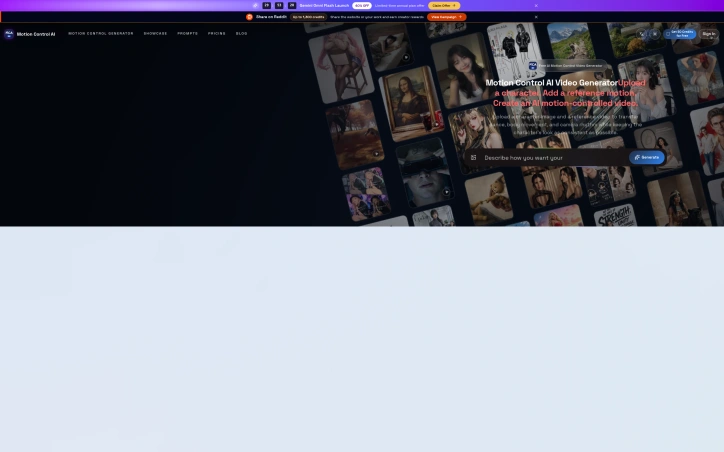
Ai-generative-media
好李

Creating professional-quality animated video content traditionally demands expensive equipment, skilled animators, and production crews. This free web-based tool eliminates those barriers by allowing users to transfer motion from reference videos onto static character images, enabling rapid content creation for social media, advertising, and animation projects. The platform addresses a specific but broadly useful creative problem: taking a compelling movement source—whether that's a dancer's choreography, an actor's performance, or a camera's dynamic rhythm—and applying it to any character image while preserving the character's original appearance and identity. The use cases demonstrated span entertainment, documentary, e-commerce, and fashion, suggesting the tool works across multiple content verticals rather than serving a single niche. What distinguishes Motion Control AI is its reference-driven approach rather than prompt-only generation. Users ground their output in concrete source material, which appears to produce more controlled and predictable results. The showcase examples reveal genuine technical sophistication: a painting's character performs complex narrative actions including grabbing objects and reacting to other characters; a model cycles through distinct poses and expressions; camera movements mimic professional push-pull-pan-tilt work while characters move in sync. The tool handles not just motion transfer but maintains character consistency across transformations and sequences, a technically non-trivial requirement that many AI video tools struggle with. The feature set covers the full creative workflow. Beyond basic motion transfer, the platform supports extended sequences, audio alignment, and multiple output resolutions—720x1280 and 1280x720 formats shown—accommodating both portrait and landscape content. The "Creative Story Completion" and "Video Extension" examples suggest the tool can extrapolate coherent narrative rather than simply repeating source motion. One notable aspect is the emphasis on responsible use: the interface prompts users to match image framing with source clips and only upload material they have rights to. This suggests the builders are thinking about legal and ethical implications early, though enforcement mechanisms remain unclear. The platform positions itself as free, though no information appears regarding monetization strategy, paid tiers, or commercial licensing terms. For creators stretched thin by production costs, this removes obvious friction from experimentation. The real question becomes whether this accessibility translates to sufficient adoption and revenue generation to sustain development. Either way, the product demonstrates that motion control video generation has moved from research lab to functional creative tool.

Motion Control AI preview

Key features

  • Motion Transfer Technology: Applies motion from reference videos to static character images while preserving appearance
  • Character Consistency: Maintains character identity across transformations and sequences including complex narrative actions
See full listing
G

Creating product videos traditionally requires expensive studio time, professional equipment, and experienced crews—a barrier that locks out most independent e-commerce sellers and smaller brands. GenVideo removes this friction by generating professional-quality product videos directly from product images using AI. The platform targets online retailers and marketing teams who need to produce ads and demos at scale but lack the budget or infrastructure for traditional video production. The use case is clear: brands upload a product photo and receive finished video assets ready for social platforms and ad networks, eliminating weeks of planning and thousands in production costs. What distinguishes GenVideo is its library of narrative templates. Rather than asking users to construct shots and scenes from scratch, the platform offers eleven distinct video archetypes—UGC product ads, step-by-step tutorials, before-and-after demonstrations, try-on content, cinematic commercials, product launches, unboxing sequences, and close-up hero shots. Each template provides a proven storytelling structure with suggested framing, pacing, and camera movement. Users work within these frameworks, swapping elements and customizing details rather than starting from blank canvas. The workflow is deliberately constrained. Users select a template that matches their product and goal, add their product image, then tweak scene composition, lighting, action, and voiceover choices. The interface guides users toward decisions rather than overwhelming them with options. This approach acknowledges that most sellers know their product and audience far better than a video tool ever could, but don't have confidence in shot construction or technical execution. The platform includes multiple AI models and allows users to adjust video length, frame size, and output quality—granular enough for different platforms and use cases without devolving into overwhelming complexity. There's also a review step built into the workflow, encouraging users to check the generated video before committing resources. The pricing operates on a credit system, though specific rates are not detailed in available materials. The platform offers a free tier for users to experiment before committing to paid generation. One meaningful limitation: users still need to provide a clear product shot. GenVideo excels at orchestrating that asset into a finished narrative, but it cannot manufacture details from an unusable photograph. For sellers with professional product photography already in hand, this is seamless. For those without, traditional photography remains a prerequisite.

Ai-generative-media
花语雀

Creating product videos traditionally requires expensive studio time, professional equipment, and experienced crews—a barrier that locks out most independent e-commerce sellers and smaller brands. GenVideo removes this friction by generating professional-quality product videos directly from product images using AI. The platform targets online retailers and marketing teams who need to produce ads and demos at scale but lack the budget or infrastructure for traditional video production. The use case is clear: brands upload a product photo and receive finished video assets ready for social platforms and ad networks, eliminating weeks of planning and thousands in production costs. What distinguishes GenVideo is its library of narrative templates. Rather than asking users to construct shots and scenes from scratch, the platform offers eleven distinct video archetypes—UGC product ads, step-by-step tutorials, before-and-after demonstrations, try-on content, cinematic commercials, product launches, unboxing sequences, and close-up hero shots. Each template provides a proven storytelling structure with suggested framing, pacing, and camera movement. Users work within these frameworks, swapping elements and customizing details rather than starting from blank canvas. The workflow is deliberately constrained. Users select a template that matches their product and goal, add their product image, then tweak scene composition, lighting, action, and voiceover choices. The interface guides users toward decisions rather than overwhelming them with options. This approach acknowledges that most sellers know their product and audience far better than a video tool ever could, but don't have confidence in shot construction or technical execution. The platform includes multiple AI models and allows users to adjust video length, frame size, and output quality—granular enough for different platforms and use cases without devolving into overwhelming complexity. There's also a review step built into the workflow, encouraging users to check the generated video before committing resources. The pricing operates on a credit system, though specific rates are not detailed in available materials. The platform offers a free tier for users to experiment before committing to paid generation. One meaningful limitation: users still need to provide a clear product shot. GenVideo excels at orchestrating that asset into a finished narrative, but it cannot manufacture details from an unusable photograph. For sellers with professional product photography already in hand, this is seamless. For those without, traditional photography remains a prerequisite.

GenVideo preview
G

Key features

  • AI Video Generation: Converts product images into professional-quality finished videos using artificial intelligence
  • Template Library: Provides eleven pre-designed video archetypes including UGC ads, tutorials, before-and-after demos, try-on content, and cinematic commercials
See full listing