Image

Kelvin–Helmholtz Instabilities Found To Drive Plasma Mixing On The Sun

As easy as the Sun is to observe, it’s simultaneously very hard to study due to how extreme the conditions are, even on the surface of a rather unassuming star. One of these study topics is the interaction between the Sun’s plasma and magnetic field, as this drives much of the dynamism of the Sun’s surface layer (i.e., the photosphere). Recent observations by the 4-meter solar telescope in Hawaii have now led to interesting new findings, as detailed in a paper in Nature by [David Kuridze] et al.

Despite popular portrayal, this photosphere is not a boiling liquid, but rather pockets of plasma at various temperatures. The plasma moves within the magnetic field and convective movements that create the ‘boiling’ pattern, which gives the illusion of a boiling liquid surface.

Within this photosphere, [Kuridze] et al. were able to observe Kelvin-Helmholtz instabilities, which are fluid instabilities caused by velocity shearing in either a continuous fluid or due to a velocity difference between two fluids. This is also observed in clouds in Earth’s atmosphere, where they cause the billowing effect, somewhat similar to watching a boiling liquid.

In a MURaM simulation (see heading image), these findings were confirmed, showing how these instabilities drive the transport of plasma in the Sun’s photosphere.

Image

Lisp Runs This Microcontroller Pendant

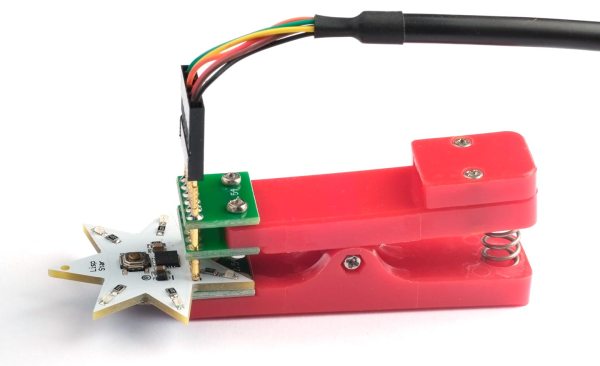
As a programming language, Lisp has been around longer than any other active language except for Fortran. To anyone who regularly uses it, it’s easy to see why: the language allows for new syntax and macros to be created fluidly, which makes it easy to adapt it to new situations, like running it on a modern Atmel microcontroller to control the LEDs on this star pendant.

The pendant has simple enough hardware — six LEDs arranged around the points of the star, all being driven by a small ATtiny3227 operating from a coin cell battery. This isn’t especially spectacular on it’s own, but this particular microcontroller is running an integer version of a custom-built Lisp interpreter called uLisp. The project’s creator did this simply because of the whimsy involved in running a high-level programming language on one of the smallest microcontrollers around that would actually support the limited functionality of this version of Lisp. This implementation does stretch the memory and processing capabilities of the microcontroller quite a bit, but with some concessions, it’s able to run everything without issue.

As far as this project goes, it’s impressive if for nothing other than the ‘I climbed the mountain because it was there’ attitude. We appreciate all kinds of projects in that same vein, like this Arduino competitor which supports a programming language with only eight commands, or this drone which can carry a human.

Image

3D Printed Suncatcher Shines In The Light

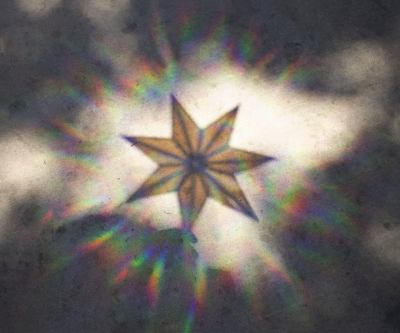
Diffraction gratings create beautiful rainbow patterns when interacting with natural white light, and [audreyobscura] was familiar with their properties.  Thus, she set about producing an attractive 3D-printed suncatcher ornament that positively shines in the sun.

ImageThe design is straightforward, consisting of a 3D printed frame made of pieces glued together using QuickGrab glue. The pieces come together into a 7-segment star design, with a subtle 3D structure to it which helps add strength in addition to looking good.
Once assembled, sections of plastic diffraction grating are cut to size using a Curio desktop cutter. These are then glued into each segment of the star. While it’s possible to 3D print pieces with diffraction-grating like effects, using the film in this way allows light to pass through the suncatcher to create a more impressive effect.

On a cloudy day, the suncatcher looks almost entirely unassuming. However, when Earth’s nearest star shines, it projects glorious rainbows throughout the room, and letting it sway in the breeze lets the light play across the walls.

It’s a nice build, and a relatively easy ornament to make even if you’re new to 3D printing. We do like a good bit of decoration around here, especially if it’s a tiny version of a real TV. Video after the break.

Continue reading “3D Printed Suncatcher Shines In The Light”

Image

The Xerox Star On A Desktop Near You

It is 1980-something and you see someone typing on a keyboard. The display is graphical, and they use a mouse to finish a document, send it over the network to another similar computer, where another user edits it a bit and prints it on a laser printer. Given the time-frame you might think the computer is a Mac, but you’d be wrong. The Xerox Star had all the features Apple “invented” about three years before the Macintosh arrived. If you never heard of the Star, that’s not surprising. At $16,500 each, there were only about 25,000 sold. Your chances of finding a working one now are slim, but thanks to emulation created by [Josh Dersch] you can try the Star out on your hardware today. If you want a preview, have a look at the 1982 video, below.

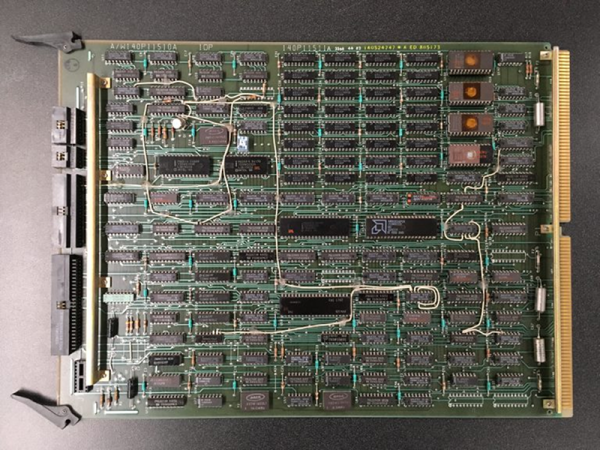
The machine had a surprisingly complex architecture. The main CPU was a microcoded computer with multiple registers that would run a sort of microcode program to execute different instruction sets depending on what was running. In addition, there was an intel 8085 that loaded the right microcode and serviced the keyboard, the mouse, the floppy, and the serial ports.

Continue reading “The Xerox Star On A Desktop Near You”

Image

This Isn’t The R2-D2 Controller You’re Looking For

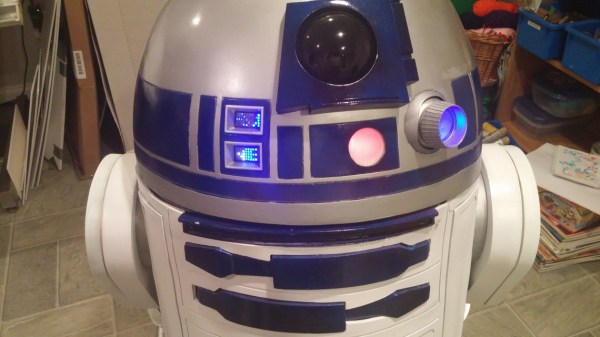
Who loves a good R2-D2 robot? Everyone, but especially young Star Wars fans who — frustratingly — have no problem spotting a controller and spoiling the illusion of an R2 unit brought to life. [Bithead942]’s concealed his R2-D2’s remote and re-establishes the illusion of an autonomous droid — no Jedi mind-tricks necessary.Image

[Bithead942] prefers to accompany his droid in traditional a Rebel Alliance pilot’s suit, so that gives him a bit of extra space under the jumpsuit to help conceal the controller. Dismantling a Frsky Taranis X9D controller, [Bithead942] meditated on how to use it while so concealed. In a stroke of insight, he thought of his unused Wiimote nunchucks, and launched into the build.

Continue reading “This Isn’t The R2-D2 Controller You’re Looking For”

Image

I’m A Tricorder, Not A Doctor, Jim!

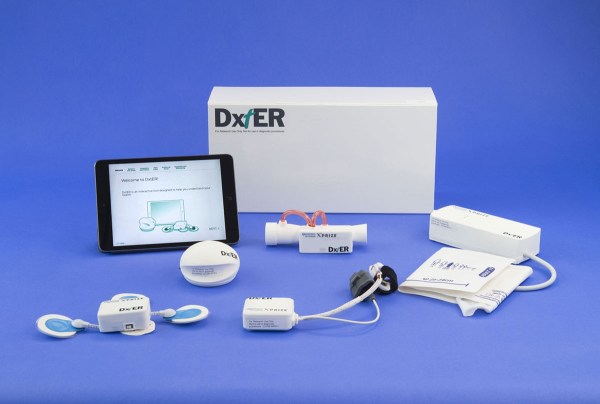
Machine learning and automated technologies are poised to disrupt employment in many industries — looking at you autonomous vehicles — and medicine is not immune to this encroachment. The Qualcomm Tricorder competition run by the X-Prize foundation has just wrapped, naming [Final Frontier Medical Devices]’s DxtER the closest thing available to Star Trek’s illustrious medical tricorder which is an oft referenced benchmark for diagnostic automation.

The competition’s objective was for teams to develop a handheld, non-invasive device that could diagnose 12 diseases and an all-clear result in 24 hours or less without any assistance. [Dynamical Biomarkers Group] took second place prize worth $1 million, with [Final Frontier Medical devices] — a company run by two brothers and mostly financed by themselves and their siblings — snagging the top prize of $2.5 million. DxtER comes equipped with a suite of sensors to monitor your vitals and body chemistry, and is actually able to diagnose 34 conditions well in advance of the time limit by monitoring vital signs and comparing them to a wealth of medical databases and encyclopediae. The future, as they say, is now.

Continue reading “I’m A Tricorder, Not A Doctor, Jim!”

Image

Star Trek Desktop Viewer In The Palm Of Your Hand!

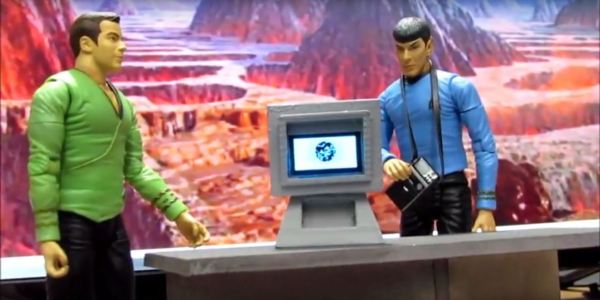
There’s building small computers — like the Raspberry Pi — and then there’s building small computers — like this Desktop Viewer from Star Trek.

[Monta Elkins] is using a Beetle for this project; it’s an Arduino clone, hosting the ATMega32U4 microcontroller, with a unique feature that allows you to twist connecting wires to secure them to the board. Instead, [Elkins] went with the logical choice of soldering them. For a display, he used a SPI serial OLED 128 x 64 monochrome screen which he has cycling through a number of iconic Star Trek TOS symbols and animations. The images were converted into PROGMEM  — which gets loaded into flash memory — before finally being uploaded to the Beetle.

Following some fine 3D print work in ABS plastic which rendered the Desktop Viewer’s case, [Elkins] used acetone to solvent-weld the pieces together and applied a quick coat of paint to finish it off. This little replica would make a great desktop gadget as it requires a micro-USB to power the device.

Continue reading “Star Trek Desktop Viewer In The Palm Of Your Hand!”