Showing posts with label economic ignorance. Show all posts

Tuesday, November 19, 2024

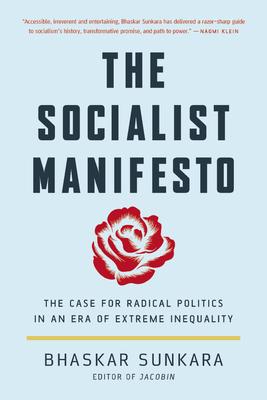
THE SOCIALIST MANIFESTO: The Case for Radical Politics in an Era of Extreme Inequality, never more trenchant than today

Image

THE SOCIALIST MANIFESTO: The Case for Radical Politics in an Era of Extreme Inequality
BHASKAR SUNKARA

Basic Books
$15.00 trade paper, purchased from the author's magazine website

Rating: 5* of five

The Publisher Says: A "razor-sharp" introduction to this political and economic ideology makes a galvanizing argument for modern socialism (Naomi Klein)—and explains how its core tenets could effect positive change in America and worldwide.

In The Socialist Manifesto, Bhaskar Sunkara explores socialism's history since the mid-1800s and presents a realistic vision for its future. With the stunning popularity of Bernie Sanders and Alexandria Ocasio-Cortez, Americans are embracing the class politics of socialism. But what, exactly, is socialism? And what would a socialist system in America look like?

The editor of Jacobin magazine, Sunkara shows that socialism, though often seen primarily as an economic system, in fact offers the means to fight all forms of oppression, including racism and sexism. The ultimate goal is not Soviet-style planning, but to win rights to healthcare, education, and housing, and to create new democratic institutions in workplaces and communities. A primer on socialism for the 21st century, this is a book for anyone seeking an end to the vast inequities of our age.

I RECEIVED A DRC FROM THE PUBLISHER VIA NETGALLEY. THANK YOU.

My Review
: William M. Tweed said this about the way the US does politics:
I don't care who does the electing, so long as I get to do the nominating. As quoted in Understanding American Government (2003) by Susan Welch, p. 224

No good came from trying to talk sense into the Democratic Party; their loss on 5 November 2024 was catastrophic. It was not the resounding mandate the Nerd Reich and its tech scum boosters portray it as. The margin was not huge, but the impact will be *immense*, far-reaching, and vastly immiserating for millions.

It did not need to happen, even in the teeth of forty years of the carefully disguised radical coup orchestrated by the wealthy and powerful against the rest of us. The way to beat the radicals is not to appease or identify with them; it is to present an alternative to them.

This will never happen in the two-party system.

I wanted this not to be true, but this idiotic result has driven the last nail in the coffin of my faith in humanity, my trust in the US institutions of politics, and my desire to support the least-worst politicians in hopes they'll do some of the Right Thing. They won't.

Now what?

Now this, and before someone says "But socialism!" or even stupider "that's Communist!" I'll remind all y'all that the monster you've been Pavlovianly conditioned to fear and hate is totalitarianism relabeled to scare you away from realizing the socialist demands the owners hate were already met...to a degree...and they're the exact things your newly elected scum were put in place to destroy. When the way you live gets worse, do not open your yap. You either voted for, or decided not to vote against, this exact result.

It is your fault.

Now let's figure out what we can begin to do to make a few gains. Start by reading Bhaskar Sunkara's clear, cogent, carefully reasoned manifesto. If you're still reeling from the evidence of how immensely successful the scumbags' propaganda, misinformation, and misdirection were, here's a shred of hope to cling to. Here's a possibility that you already know works...you who receive "benefits" aka your own tax money returned to you (not some gift as the radical right wants you to believe) better than anyone...so lean into it.

Don't feel like you can do anything, don't want to think about it, are just too drained to give it your attention? That's their system for making you passive at work. If you won't do the work, spend your money to support those who will, and that shit-sure ain't the Democrats.

Support a real change for the better. Read this book to learn what that can mean.

Wednesday, September 6, 2023

CONTAINING BIG TECH: How to Protect Our Civil Rights, Economy, and Democracy & THE PERENNIALS: The Megatrends Creating a Postgenerational Society, huge forces reshaping our lives

Image

CONTAINING BIG TECH: How to Protect Our Civil Rights, Economy, and Democracy
TOM KEMP
Fast Company Press
$27.95 hardcover, available now

Rating: 4.5* of five

The Publisher Says: The path forward to rein in online surveillance, AI, and tech monopolies

Technology is a gift and a curse. The five Big Tech companies—Meta, Apple, Amazon, Microsoft, and Google—have built innovative products that improve many aspects of our lives. But their intrusiveness and our dependence on them have created pressing threats to our civil rights, economy, and democracy.

Coming from an extensive background building Silicon Valley–based tech startups, Tom Kemp eloquently and precisely weaves together the threats posed by Big Tech:
  • the overcollection and weaponization of our most sensitive data
  • the problematic ways Big Tech uses AI to process and act upon our data
  • the stifling of competition and entrepreneurship due to Big Tech’s dominant market position

  • This richly detailed book exposes the consequences of Big Tech’s digital surveillance, exploitative use of AI, and monopolistic and anticompetitive practices. It offers actionable solutions to these problems and a clear path forward for individuals and policymakers to advocate for change. By containing the excesses of Big Tech, we will ensure our civil rights are respected and preserved, our economy is competitive, and our democracy is protected.

    I RECEIVED A DRC FROM THE PUBLISHER VIA NETGALLEY. THANK YOU.

    My Review
    : We are, as a society, in serious danger. A lot of things that were once difficult to find effective ways to influence and manipulate are becoming trivially easy to do. The perpetrators of this violation of our essential freedom to be safe in our own heads have, in eight concise chapters, each been named and shamed, their tactics analyzed and the consequences of them sketched out, by one of their own.

    True, it wasn't like any of them were trying to fly under the radar about this...for a famous example, Jeff Bezos clearly said he wanted to control ecommerce way back when, but really only accidentally:
    When his goals did slip out, they were improbably grandiose. Though the startup’s focus was clearly on books, Davis recalls Bezos saying he wanted to build “the next Sears,” a lasting company that was a major force in retail. {An investor who was also a} kayaking enthusiast...remembers Bezos telling him that he envisioned a day when the site would sell not only books about kayaks but kayaks themselves, subscriptions to kayaking magazines, and reservations for kayaking trips—everything related to the sport. “I thought he was a little bit crazy,” says {the investor}.
    (source: The Everything Store: Jeff Bezos and the Age of Amazon by Brad Stone)

    What this immense ambition created was The Literal Everything Store, used by everyone even marginally online at some point for something they need or want. They might not even realize it's Amazon they're doing business with...how many of even the most committed Amazonphobes know who hosts their online commercial interactions? or where bricks-and-mortar stores buy their stock?...but their data is in some way harvested by Amazon. The other members of Big Tech's five brothers are dealt similar serious blows to their frequently protested innocence of maleficent intent and wrongdoing in the moral if not the legal sense.

    It's part of their business plans to amass a chillingly immense digital dossier on every internet user by the entire tech industry. The purpose is to make them incomprehensible piles of money; they then use that money, extracted directly and indirectly from your pockets, to influence the course of world events on political and economic stages to benefit themselves and themselves alone. Refer back to 1953, when the famous kludged-up quote "What’s good for General Motors is good for America" was supposedly said by a GM exec being vetted by the Senate for a senior government job. (The truth is more nuanced, if less punchy.) The usual course of a person interested in the US's economic health is to consult the newspaper or equivalent's reporting of the stock market's performance. How this casino capitalism came to be conflated with the country's overall economic health is outside the book's or this review of it's scope, but is part of the larger picture painted herein of the actions taken by the surveillance economy's owners and drivers.

    The means of information gathering and opinion-sharing are increasingly in the hands of the same few corporate entities that harvest your data and the windfalls it generates. The AI revolution we're relentlessly being told is coming has lifted the increasingly fragile casino economy's entirely notional values into new superstratospheric heights. Go look at Nvidia's stock prices then its history to see what I'm talking about. The way to make people believe something is inevitable is to tell them over and over again that it is, and that includes the inevitability of Big Tech's dominance. In these eight chapters, the author presents a very good case for what each player in the surveillance capitalism/totalitarian state apparatus's purpose is in pursuing its goals. In the appendices he outlines the personal, as well as the societal, steps one can take to corral the presently untrammelled ability these corporate actors have to present only information and opinion positively inclined towards them and their agenda.

    A book that blares alarms at you without offering actionable items to prevent or mitigate the warnings taking place or effect isn't doing a service but simply further harm. I think the author here is doing a great service by performing both the warning function about the problems we're facing and the directions they're approaching us from, and outlining potential solutions on actionable on multiple fronts.

    I'd like to stress that my use of "actionable" with such regularity is intentional and meant to convey my personal sense of urgency in addressing these issues. I think reading this book will convince many to stop wondering if it's even worth paying attention to these issues of surveillance and manipulation, and start taking steps to mitigate the harms being caused by the overreach of an identifiable coterie of bad actors.

    That means I'd really like you to read it. Get it from the author's website linked above. Get it from Amazon, they sell it. Get your local library to buy one or two and check one out. Just get it and its ideas in your heads.

    It's not exaggerating to say that, if the AI future being drummed into us as inevitable comes to pass, we're going to need the checks and balances in this book to survive with even a whisper of autonomy intact.

    +++++++++++++++++++++++++++++++++++++++++++++++++++++++++++++++++
    Image

    THE PERENNIALS: The Megatrends Creating a Postgenerational Society
    MAURO GUILLÉN
    St. Martin's Press
    $30.00 hardcover, available now

    Rating: 4.5* of five

    The Publisher Says: In today’s world, the acceleration of megatrends—increasing longevity and the explosion of technology among many others—are transforming life as we now know it.

    In The Perennials, bestselling author of 2030 Mauro Guillén unpacks a sweeping societal shift triggered by demographic and technological transformation. Guillén argues that outmoded terms like Boomers, Gen X, Millennials, and Gen Z have long been used to pigeonhole us into rigid categories and life stages, artificially preventing people from reaching their full potential. A new postgenerational workforce known as "perennials"—individuals who are not pitted against each other either by their age or experience—makes it possible to liberate scores of people from the constraints of the sequential model of life and level the playing field so that everyone has a chance at living a rewarding life.

    This multigenerational revolution is already happening and Mauro Guillén identifies the specific cultural, organizational and policy changes that need to be made in order to switch to a new template and usher in a new era of innovation powered by The Perennials.

    I RECEIVED A DRC FROM THE PUBLISHER VIA NETGALLEY. THANK YOU.

    My Review
    : I'm well into my geezerdom. I think this gent's insight is a corker. Not just because he acknowledges the role of experience in a functioning world but because he says it's really the only way out of the looming crises of employment, productivity, and collapsing ecology. Well, I added the last one, but it seems to me that the problems the planet is facing are best faced with all hands on deck.

    Most people don't live in the way I grew up, or likely that my readers did: A mother, a father, some siblings, one house, a couple cars; some orbiting family from the parents' siblings, closer or farther from us with whatever degree of connection our families could/chose to maintain; maybe grandparents on big family occasions. Life was preordained to follow that pattern through our generation, and we thought beyond it, too. Varying political movements and social pressures began to change the tiny, nuclear-family model...not least a reality of the nuclear world is that fission is easier and more common than fusion, and produces very, very toxic waste with a hugely long lifespan.

    As a result of demographic realities the huge boost of living standards after World War II across most of the globe produced a gigantic population bubble. Better lives for "all" keep coming about, and all meant so many more than ever. The sociological changes wrought by the various liberation and empowerment movements around the world meant that there were huge numbers of people who needed jobs that had little or no family component. University educations became necessary (in theory anyway) to get ahead, to make a decent living. Maybe, if you wanted to, have a family of your own. It was the choice of many not to do so much of that old model, but the world's picture of school then work and then finally retirement...the whole structure of the twentieth century's body politic...has changed very little. Our lives within it are, however, being lived in a more flexible and inclusive way than ever.

    What the author propounds in his fascinating look at how we could all benefit from adapting our model to lived reality is the acceptance that people live longer and need to live better. All of us need challenges and face the reality that those challenges ae changing. He proposes the deeply pragmatic solution of adopting a life-long learning model. This means we're not In A Job for life but in a habit of honing skills we have and acquiring new ones.

    Addressing the looming labor shortages as people get older and stay fit longer means second, third, or fourth careers for many of us will have to be planned for by employers. Age discrimination is very much a reality. The companies that emulate BMW in their age-blended team models will make a big bonus for their shareholders. The entire landscape of work will need to change (see my review of THE ONLY GAME IN TOWN for some background on this; also that author, Mohammed El-Erian, approves of this book and its thesis) to accommodate different needs and desires, like the work-from-home lifestyle that most people prefer and Big Tech is leading the charge to reverse in the wake of the pandemic's accidental proof of concept that it works.

    Possibly the most resonant part of the book to me was its model of exchanging skills among the generations. I know that, in my own life, my Young Gentleman Caller has helped me remain more comfortable with information technology and its many nuances than almost all the people I live among. I know also that my experience has alerted him to some less-than-honorable intentions among his acquaintance. It's a joy to be able to both learn and be taught. And I don't exaggerate when I use the word "joy." In my own life, as in his, learning stuff is a source of real joy for each of us...it's one reason we remain in relationship in supervention of the challenges we face.

    The author's thesis is particularly informative of th challenges the world being summoned into being by Big Tech (see review above) being met with effective control. It will take an intergenerational conversation of great depth and serious intent to prevent the dystopic possibilities of surveillance capitalism and totalitarian governance from happening.

    Reading these books together was one of the most challenging emotional rides of 2023 for me. There's a lot to be deeply concerned about in the direction that our present system of inaction and wasteful misdirection of energy is following. There are ways to solve it, and this read's author has one of the best structural models for directing growth into sustainable channels I've read. This is largely, I suspect, because I already implement the lifelong learner model of being. It's paid such huge dividends in my own life. Not least by giving me the mental framework and the emotional push needed to recover faculties many like me lose when they have the multiple strokes that I had in January 2023. I'm slower, and quicker to tire, than before my problems got worse; but unlike those whose retirements or simply aging lifestyles aren't focused, I had something to recover for and get back to doing: This. Reading. Thinking about what I've read. Thinking about how to support the changes I want to see and resist the ones I don't want to see effectively. Communicating those thoughts on this little blog I've run for ten years, that still attracts about two hundred viewers on an average day.

    I think more people would find ways to do what I've done if they read these two books: the first to learn what's at stake and how to get a handle on it; the second to learn why it's a good use of your time to overcome inertia and restart your mind's journey.

    Saturday, January 21, 2017

    THE ONLY GAME IN TOWN, economic stability at all costs

    Image
    THE ONLY GAME IN TOWN: Central Banks, Instability, and Avoiding the Next Collapse
    MOHAMED A. EL-ERIAN

    Random House
    $18.00 trade paper, available now

    Rating: 4* of five

    The Publisher Says: Our current economic path is coming to an end. The signposts are all around us: sluggish growth, rising inequality, stubbornly high pockets of unemployment, and jittery financial markets, to name a few. Soon we will reach a fork in the road: One path leads to renewed growth, prosperity, and financial stability, the other to recession and market disorder.

    In The Only Game in Town, El-Erian casts his gaze toward the future of the global economy and markets, outlining the choices we face both individually and collectively in an era of economic uncertainty and financial insecurity. Beginning with their response to the 2008 global crisis, El-Erian explains how and why our central banks became the critical policy actors—and, most important, why they cannot continue is this role alone. They saved the financial system from collapse in 2008 and a multiyear economic depression, but lack the tools to enable a return to high inclusive growth and durable financial stability. The time has come for a policy handoff, from a prolonged period of monetary policy experimentation to a strategy that better targets what ails economies and distorts the financial sector—before we stumble into another crisis.

    The future, critically, is not predestined. It is up to us to decide where we will go from here as households, investors, companies, and governments. Using a mix of insights from economics, finance, and behavioral science, this book gives us the tools we need to properly understand this turning point, prepare for it, and come out of it stronger. A comprehensive, controversial look at the realities of our global economy and markets, The Only Game in Town is required reading for investors, policymakers, and anyone interested in the future.

    My Review: For those who remember the Bush Crash of 2008, and who really *got* what was at stake, have you ever wondered why we're not all eating snakes we trap in the back yard and dandelion greens grubbed up from the front lawn?
    Ever since the 2008 global financial crisis, central banks had ventured, not by choice but by necessity, ever deeper into the unfamiliar and tricky terrain of “unconventional monetary policies.” They floored interest rates, heavily intervened in the functioning of markets, and pursued large-scale programs that outcompeted one another in purchasing securities in the marketplace; to top it all off, they aggressively sought to manipulate investor expectations and portfolio decisions.
    That's why.

    But the casino always wins the end. In the case of the economy, in fact in the case of any and every complex human-designed system, the casino is entropy: Chaos and confusion will always triumph. Builders create magnificence; entropy carts it away.
    As stable as it may seem on the surface to some, the current configuration of the global economy and the financial system is getting harder to maintain. Below the façade of the unusual calm of the last few years, interrupted by relatively few bouts of instability since 2008–09, tensions are rising and the effectiveness of central banks is coming under stress, so much so as to raise serious questions about the durability of the current path that the global economy is on.
    And there it is: the central question this book aims to address. This is definitely well within Author El-Erian's capabilities. I didn't feel that the aim as stated was fully met. I wonder, though, if there is a way for the aim to be fully met absent a clear prescriptive course being outlined in great detail. Such a feat is beyond the capabilities of any mere mortal.

    Author El-Erian has a quietly skeptical view of the incoming administration's economic policy. A modest stock-market rally doesn't seem to be within the author's hopes for a policy-driven course that, by its clarity and conciseness, would push stock values higher in a natural and sustainable way.
    One road out of the T junction ahead involves a restoration of high-inclusive growth that creates jobs, reduces the risk of financial instability, and counters excessive inequality. It is a path that also lowers political tensions, eases governance dysfunction, and holds the hope of defusing some of the world’s geopolitical threats. The other road is the one of even lower growth, persistently high unemployment, and still worsening inequality. It is a road that involves renewed global financial instability, fuels political extremism, and erodes social cohesion as well as integrity.
    My sense is that Author El-Erian does not see the positive as the likely course the US and world economies will take.

    I am a pessimist in matters economic, so I tend to agree; I am deeply, deeply pessimistic about the incoming administration's intentions and aims, so I am almost certain that the deepest and darkest of economic nights is falling.

    I read this book with a kind of knock-kneed pants-wetting childlike terror. If the grown-ups don't know how to fix it, all I can do is try to survive it. That's probably not the best way to persuade people to pick the book up. I can tell you that, having faced my fear, I not only don't feel better, I feel more afraid...but I also feel more able to watch the train speed ahead toward the collapsing bridge without the added stress of being awakened from a sound sleep by the squealing of the brakes and the screams of the dying in the cars ahead of me.

    Author El-Erian falls short on the spotting of side-switches. I am not at all sure that he sees any. It is the function of this book not to comfort but to spur the reader into action. Take the advice of Mavis Staples: Touch A Hand, Make A Friend. We will get through the coming night better together.

    #ReadingIsResistance

    Wednesday, January 4, 2017

    It's 2017...do you know where your principles are?

    Image

    Hey, guess what? There's more!

    Hello my friends! I'm here to tell you some news about my life, my blog, my plans, and my needs.

    First and foremost, THANK YOU THANK YOU THANK YOU THANK YOU for reading my reviews! About 500 of you look at the blog daily, and that's the most wonderful feeling I can imagine. To put my words out there, to express my opinions about other people's creative and business decisions, is both simple and scary. Simple because a rudimentary grasp of HTML is enough to get me on the web; scary because what I have to say isn't always popular, and the internet is chock-a-block with folks who don't hesitate to say really hateful, and often enough openly threatening, things to people whose ideas they disagree with or dislike. Many people on Goodreads, on Facebook, and on Twitter have taken me to task for expressing opinions not to their liking. While that's their Constitutionally protected privilege, it's irrelevant. If you disagree with someone, fine...move on. If they annoy you enough, block them from accessing your social media feed. But why bother airing it publicly, still less rudely?

    Image


    Secondly, the political and cultural landscape of 2017 has just changed. It's my opinion that it hasn't changed for the better. The president elect is a crude, loudmouthed, ignorant buffoon whose political supporters were aptly characterized by the failed primary-rigging ambulatory PR disaster of a Democratic nominee as "a basket of deplorables"—a loose confederation of religious nuts, racists, know-nothing radical reactionaries all funded by the cynical and horrifyingly sociopathic billionaire Economic Royalists. Read my 5-star review of THE CRASH OF 2016 here for that definition. My response to this change I did not create, do not support, and will not accept is to read and review more books. Shocking, isn't it. A man who has posted over 1,500 reviews on Goodreads alone, and over 500 on this blog, thinks reading can change the world. The thing is that it can. Ask all those Protestant christians. Their primary cult recruitment tool is a little backlist number called "The Bible," and generations of jokes aside, the main reason people subscribe to the cult is their encounter with its well-told tale of rebellion, execution, and resurrection. That is a supremely appealing meme, one that's served many religions before this one. Modern cult hits include The Little Red Book, which over a billion Chinese have read and from which many still quote; Dianetics, that unnerving artifact of a drunken argument among Golden Age SF writers; The Turner Diaries, a vile and evil call to arms for the lowest of the low-class, low-IQ, low-brow white supremacists; an exhaustive list would be exhausting to produce, so go do some research. It's my hope that my reviews of books that support progressive political causes and attitudes will bring them to the attention of the reader of discernment, taste, and a positive, engaged social conscience. (I can go get some more butter to butter you up with if it will help.) From there, I hope the books I've chosen to review will make it to your TBRs, and will inspire you to take action appropriate to your condition: read, review, give away, join a "splinter" party, get active in your local Democratic party, if that's all you can think of to do. Permaybehaps reading some of my reviews will lead you to more effective and agreeable ideas and actions!

    Image

    Lastly, me and my life. I am a disabled person. I (along with about 15 million other Americans) live on Disability, which I paid for with many years of FICA tax payments by me and my various employers. There is an immense amount of misinformation and disinformation floating around the right-leaning communities about this Federal program. As with so many disasters in today's world, the root of the problem most people have with it is the Reagan administration's vicious class war against the middle class. This isn't a simple subject, but it involves me deeply and personally. I have severe tophaceous gout (images here for the stern of constitution, to be avoided for the squeamish). It is constantly painful and it is incurable. I've been on maintenance medications since 1981. They have a number of unpleasant side effects, including gastric horrors, erectile dysfunction, and increased risk of kidney stones. Which are a whole different level of painful. This means I am unemployable; my age makes it impossible for me to get a good job anyway. As a result of this constellation of factors, I live in an assisted-living facility.

    The State of New York requires the facility to house and feed me, though they don't feed me in that it's run by religious Hasidim who refuse to offer a gluten-free low-purine diet. It isn't legally required of them...and offering a kosher diet (despite the fact that there are few Jewish residents) is more important to them. I use my Federally mandated personal allowance of $213 a month, plus food stamps, to feed myself the proper gluten-free low-purine diet, buy my soaps and sundries, and pay for an annual Amazon Prime membership to keep myself amused and provisioned. My medical care, medicines, and hospitalizations are all paid for my the constellation of Medicare and Medicaid. Without them, I would be unable to pay for the $300 a month that colchicine (the best treatment for gout) now costs; it was $20 a month as recently as the 1990s, and $40 a month in the early 2000s. I leave it to you to work out what happened there. (Hint: the Bush administration "reformed" certain Federal programs.)

    So there are some fundamental facts of my life. The net result is that I am opposed with every fiber of my being to any and all "conservative" (actually from the radical reactionary fascists) calls for abolishment/restriction/reduction of government spending on social programs when there are many millions, including me, who depend on them. As we've already paid for them with our many years of payroll taxes, reducing spending on these programs is a gross violation of our capitalist right to return on investment.

    The other side of that, the beneficial result of all of it, is that my time is my own; my life is mine to structure as I please. The facility where I live is on the boardwalk in a beachside town. I live well by world standards. I am rich by third-world standards: I have hot water and clean drinking water and a warm/cool place to sleep. Luxury it isn't, but far better than it could and would be if my existence was left to what I laughingly refer to as my "family" or to private (read: religious) charity.

    In 2017, I'm using that time to read and review books that support and advocate social change for the better. My energies are focused on re-rigging the rigged system, and steering the ship of state off the shoals of corporatist class warfare's upward distribution of prosperity. In a time where the bulk of humanity is becoming obsolete due to ever-increasing automation and the exponential improvements in artificial intelligence, the only use for a lower class now is as bottom-feeders whose grubbing in the ever-thinner mud left from the runoff from the economy's heights stirs up a bit more stuff for the feasters to mine. A country that can support over 100 billionaires can support its people in decent style, not in poverty, simply by redistributing that absurd imbalanced accumulation downward.

    And that is what my reading of fiction and non-fiction this year will support. I ask publishers for review copies of their books because I can't afford to buy many books, and because exposure on a blog with an average of 500 or so daily viewers is worth the $50 (being generous) that a review copy, packing and shipping, and staff attention might cost. For those whose attitude is "no thanks, little flea" or "here's a file, read it on a screen," there are lots of books published every year, and I won't be reviewing yours. If I buy a book, my job is done; I've paid you and your author.

    Image

    But it's my hope that many more professionals will see the value of having an unpaid, unpressured by institutions voice offering to make their work and their authors' work a bit better known.

    I'm asking anyone who reads a review and likes it to talk it up. Follow this blog! Subscribe to the posts via RSS or Feedly. Pin it to your book board on Pinterest (where I can be followed as Expendable Mudge). Tweet it to your followers (follow me there as @expendablemudge). Post it on your Facebook feed. Give it a +1 on Google Plus (I'm Richard Derus there), recommend it on Reddit. Not because I'll make a profit, because I won't earn a dime off the traffic, but because books and reading matter more now, in this time of change, than ever. Voices of dissent and inclusion and fairness and change need to be heard! Boost the signal every chance you get. My signal is clear. I want many more people to receive it. The only way I can do that is with help, and yours...you're here, therefore you're like-minded...is the most crucial help I can get. Please do me the enormous favor, the deeply appreciated kindness, of boosting my call for change and fairness to each and all of your friends and followers.

    Saturday, December 31, 2016

    THE CRASH OF 2016, prescient look ahead from 2013, first 2017 political topic review

    Image

    THE CRASH OF 2016: The Plot to Destroy America—and What We Can Do to Stop It
    THOM HARTMANN

    Twelve
    $19.99 trade paper, available used

    Rating: 4.5* of five

    The Publisher Says: The United States is more vulnerable today than ever before-including during the Great Depression and the Civil War-because the pillars of democracy that once supported a booming middle class have been corrupted, and without them, America teeters on the verge of the next Great Crash.

    The United States is in the midst of an economic implosion that could make the Great Depression look like child's play. In THE CRASH OF 2016, Thom Hartmann argues that the facade of our once-great United States will soon disintegrate to reveal the rotting core where corporate and billionaire power and greed have replaced democratic infrastructure and governance. Our once-enlightened political and economic systems have been manipulated to ensure the success of only a fraction of the population at the expense of the rest of us.

    The result is a "for the rich, by the rich" scheme leading to policies that only benefit the highest bidders. Hartmann outlines the destructive forces-planted by Lewis Powell in 1971 and come to fruition with the "Reagan Revolution"-that have looted our nation over the past decade, and how their actions fit into a cycle of American history that lets such forces rise to power every four generations.

    However, a backlash is now palpable against the "economic royalists"-a term coined by FDR to describe those hoarding power and wealth-including the banksters, oligarchs, and politicians who have plunged our nation into economic chaos and social instability.

    Although we are in the midst of what could become the most catastrophic economic crash in American History, a way forward is emerging, just as it did in the previous great crashes of the 1760s, 1856, and 1929. The choices we make now will redefine American culture. Before us stands a genuine opportunity to embrace the moral motive over the profit motive-and to rebuild the American economic model that once yielded great success.

    Thoroughly researched and passionately argued, THE CRASH OF 2016 is not just a roadmap to redemption in post-Crash America, but a critical wake-up call, challenging us to act. Only if the right reforms are enacted and the moral choices are made, can we avert disaster and make our nation whole again.

    My Review: This is not Author Hartmann's first or last venture into alarmism and outrage: Screwed, What Would Jefferson Do?, Cracking the Code all till this same plot; these coupled with his alarmism over the Antropocene Extinction that's underway, eg The Last Hours of Humanity and The Prophet's Way, create a profile of the one-eyed man in the country of the blind.

    His eye is relentlessly focused on the Overlords. And that's the half-star deduction from his perfectly-aligned-to-my-own-prejudices arguments. Yes indeed, a vast right-wing conspiracy exists, and most assuredly it is doing filth to the Great Unwashed Masses. This is so obvious that even idiots dimly perceive it, as witness the careers of apologists like Rush Limbaugh or Ann Coulter. But the sheeple consented to this nightmare's construction, even becoming complicit in its horrors and excesses. Labor unions are dying because their greed brought them to their knees and their venality led them to beg for scraps instead of finding the stout, well-watered tree that is their righteous principles and grabbing it, first to aid their new rise and then to wail on the fat, bloated faces of their genuine, factual oppressors. The supine, lazy, table-walking journalist class left its afflict the comfortable, comfort the afflicted principles well behind as the vast right-wing conspiracy's engines, the legal fiction of corporate persons, bought their outlets and fired them for singing Horst Wessel out of key, or worse yet for singing alternative words. Hey, they have families to support, kids to educate, mortgages!

    And thus the dream died.

    It's a sad fact that things change. Always and invariably, things change. Progress is never straightforward, has not ever been, and the side-paths and detours of history have a pattern and an inevitability only in hindsight. Weimar Germany and its legendary dissipation did not lead, inevitably and unstoppably, to the rise of the lunatic-fringe Nazis. It created a vacuum between the cultured and intelligent and the vast majority of humanity, the ignorant and credulous, in such a public and obvious way that the most prepared faction was able to use the resulting maelstrom to blow themselves into the position of being the stopper and ending the instability. Same was true of late Imperial Rome, same is true now. The educated elite of our time is off in a corner playing with itself over AI and cybernetics and quantum computing, arguing passionately over ethical concerns that have absolutely nothing to do with anything real or grounded: Getting Junior's teeth fixed, making sure all six of the Johnsons are not forced to make a meal out of a $2 can of beans, getting into the leased-never-owned $30,000 Toyota and praying that the airbag doesn't kill you instead of save you and that the repo man didn't look in the garage windows or your trip to minimum-wage, uninsured work (and with the missed day your fast-food-flipping job) will be canceled. (There are many ways in which that gross oversimplification is arguably incorrect, but it isn't in the scope of a paragraph to explore nuance.)

    Why was the disavowable Trump elected? Because the calamitous collapse that's well underway needs a fall guy, and he's an easy one. His stupidity is on the level of Warren G. Harding and his telegenics equal to the Great Satan himself, Ronald Wilson Reagan, the first modern political dupe to walk the tables all the way to the big chair. Curse Nancy Davis and her vile father for creating this Frankentraitor, this Manchurian Candidate, the author of record though not in fact of all the woes and miseries afflicting the world of 2016.

    But Hartmann's book didn't tell me these things. Hartmann's book lays out an analysis of history that, in its viewpoint and interpretations, illuminates the path that I walked to get to those conclusions. That's what good books do, they give you the light of good scholarship and sound analysis, they point the light at the solid ground of fact they trod on to get to a conclusion that will educate you and/or enlighten you.

    The five stair-steps Hartmann has left for us to climb are:

    The Economic Royalists and the Corporatist Conspiracy uses Franklin Delano Roosevelt's 1936 acceptance speech on being renominated for the Democratic Party's candidacy to the presidency as an organizing point and a rallying cry. The relevant part of FDR's 1936 acceptance speech and the organizing principle of the book as I see it, is:
    For out of this modern civilization economic royalists carved new dynasties. New kingdoms were built upon concentration of control over material things. Through new uses of corporations, banks and securities, new machinery of industry and agriculture, of labor and capital—all undreamed of by the fathers—the whole structure of modern life was impressed into this royal service.

    There was no place among this royalty for our many thousands of small business men and merchants who sought to make a worthy use of the American system of initiative and profit. They were no more free than the worker or the farmer. Even honest and progressive-minded men of wealth, aware of their obligation to their generation, could never know just where they fitted into this dynastic scheme of things.

    It was natural and perhaps human that the privileged princes of these new economic dynasties, thirsting for power, reached out for control over Government itself. They created a new despotism and wrapped it in the robes of legal sanction. In its service new mercenaries sought to regiment the people, their labor, and their property.
    Hartmann takes this lucid, concise statement of the roots of every single generation of humanity's major battle to have a share of the rewards their labor has made possible as a lens to view the state of the current economic and political situation. He reaches back to the United States' moment of genesis and shows the same conditions now prevailing were present then as well:
    Many people today think that the Tea Act—which led to the Boston Tea Party—was simply an increase in the taxes on tea paid by the American colonists. That's where the whole "Taxation Without Representation" meme came from.

    Instead, the purpose of the Tea Act was to give the East India Company full and unlimited access to the American tea trade and to exempt the company from having to pay taxes to Britain on tea exported to the American colonies. It even gave the company a tax refund on millions of pounds of tea that it was unable to sell and holding in inventory.

    In other words, the Tea Act was the largest corporate tax break in the history of the world.
    This cogent analysis of the flashpoint of the American Revolution minimizes one, in my opinion crucial, factor: the colonists, the Boston Braves whose "act of corporate vandalism" as Hartmann puts it ignited the shooting war, weren't scholars or lawyers or political mavens whose dislike of and disdain for royalists, those whose authority to grab money from their purses depended on access to Royal Authority, led to their principled action of heaving tea into Boston Harbor; they were tea-drinkers whose bill went up and who resented being plucked for the feathering of nests far, far away. Their issue was practical, not theoretical.

    The new country set itself afloat on the ever-choppy seas of history without anything approaching consensus on many issues. That fact is why the country has thrown itself many a crisis, including a little shindig we call the Civil War. Economic crises have been frequent as well. Andrew Jackson, prior to our current president elect the most despised and reviled electee in US history, left the presidency in 1833...four years before the traumatic and appalling Panic of 1837...after destroying the Second Bank of the United States which, in conspiracy-theory terms, caused the monied interests in London to use a transparent and patently absurd excuse to hike their interest rates by 60% and thus squeeze US credit markets. Seven years of horrendous hard times ensued, the PR machine of the day made sure to reach back to Jackson's refusal to accept the banksters' demand for their vig to affix public blame, and on we lurched into Civil War made inevitable by a deepening financial divide between North and South.

    After the Civil War's depredations, financed by President Lincoln's decision to follow Treasury Secretary Salmon P. Chase's plan to print a form of Federal paper money-cum-war debt, the banksters punished the still-reeling country with the Panic of 1873, known as the Great Depression until 1929's shivaree took that title away. Grover Cleveland, the only Democratic Party president to be elected between the Civil War and the Panic of 1907 whose aftermath gifted us with the Federal Reserve System, said in his 1888 State of the Union address to Congress:
    As we view the achievements of aggregated capital, we discover the existence of trusts, combinations, and monopolies, while the citizen is struggling far in the rear or is trampled to death beneath an iron heel.

    Corporations, which should be the carefully constrained creatures of the law and the servants of the people, are fast becoming the people's masters.
    Bear in mind that Cleveland was elected in 1884, a bare four years after the Great Depression caused by the Panic of 1873 had eased in the US. Its lessons, of the titanic human cost of speculative bubbles and the inadvisability of government propping-up of "too big to fail" industries, were very fresh in his, and the nation's, consciousness. This roundly ignored reality was reinforced again and again, Teddy Roosevelt's trust-busting activities notwithstanding, and reached a head with the Great Crash of 1929.

    Ancient history having been invoked and explained (albeit in no great detail), Hartmann proceeds to dig up the roots of the 2008 crisis.

    Why We Crashed again uses, to my mind ironically, Grover Cleveland's 1888 State of the Union address as its foundation, to wit:
    Communism is a hateful thing and a menace to peace and organized government, but the communism of combined wealth and capital, the outgrowth of overweening cupidity and selfishness, which insidiously undermines the justice and integrity of free institutions, is not less dangerous than the communism of oppressed poverty and toil, which, exasperated by injustice and discontent, attacks with wild disorder the citadel of rule.
    Reagan's war on Communism and its attendant costs being the means by which he and his cronies destroyed the middle class, this seemed to me very amusing. In a dark sort of way.

    But why destroy the middle class? What harm was done by the middle class such that its very existence must be snuffed out? Hartmann explains as follows:
    As [President Thomas] Jefferson realized, with no government "interference" by setting the rules of the game of business and fair taxation, there could be no broad middle class—maybe a sliver of small businesses and artisans, but the vast majority of us would be the working poor under the yolk [sic] of elites.

    The Economic Royalists know this, which gets to the root of why they set out to destroy government's involvement in the economy.

    After all, in a middle-class economy, they may have to give up some of their power, and some of the higher end of their wealth may even be "redistributed"—horror of horrors—for schools, parks, libraries, and other things that support a healthy middle-class society but are not needed by the rich....

    As Jefferson laid out in an 1816 letter...a totally "free" market, where corporations reign supreme just like the oppressive governments of old, could transform America 'until the bulk of the society is reduced to mere automatons of misery, to have no sensibilities left but for sinning and suffering. Then begins, indeed, the bellum omnium in omnia, which some philosophers observing to be so general in this world, have mistaken it for the natural, instead of the abusive state of man.'
    (The Latin phrase is a restatement of one written by Thomas Hobbes, a famously chirpy and upbeat kinda guy.)

    The nightmare of Economic Royalism got its clear statement of purpose and its roadmap to success via a man you've never heard of, Jude Wanniski. His 1976 article, "Taxes and a Two-Santa Theory," appeared in The National Review. In a nutshell, Wanniski characterized the Democratic Party's role as Santa Claus to the people, delivering goodies like a minimum wage, Medicare, the Voting Rights Act of 1964, all of which made people better off. The Republican Party screamed about the costs and insisted that the Federal Government balance its budget even at the cost of taking away the goodies given the Santacrats. This made them appear to be Scrooges to the voters, and the Republicans never controlled the House of Representatives...barring one brief, horrible interlude in 1946...from 1932 to 1995. What changed was that, after the Reagan Administration's stuff-of-nightmares tax cuts and the resulting recession, Congressional Republicans had a combination of an economically conservative and deeply politically naive Democrat as president. Clinton was unable to fend off their propaganda onslaught against his character, agreed with their economics, and thus the Republicans became emboldened to take the Santa hat for themselves. They enacted, in Wanniski's words, legislation that enshrined the "...Two-Santa Claus Theory [which] holds that Republicans should concentrate on tax reduction."

    Added bonus: "If Republicans, playing Santa Claus on their own, successfully pass their tax cuts...without cutting spending, then the government will be starved of revenue until eventually it can't afford the Democratic Party's social services such as Social Security...and Medicare—all things that Republicans have labeled 'gifts,' yet are fundamental to the survival of a middle class." We're living through that particular issue's logical conclusion right now. As more and more services are cut, more and more people who have paid and paid and paid for them via payroll taxes and the most unfairly distributed tax burdens in the developed world are denied even the simplest, most basic help of all: access to food.

    How do we know this is a deliberate act and not a regrettable side effect of well-intentioned politicians' actions?
    The year Reagan was sworn into office, 1981, the United States was the largest importer of raw materials in the world and the world's largest exporter of finished, manufactured goods. ... Today, things are totally reversed: We are now the world's mining pit, the largest exporter of raw materials, and the world's largest importer of finished, manufactured goods.

    This has resulted in an enormous trade imbalance, one that has grown from a modest $15 billion deficit in 1981 to an enormous $539 billion deficit by 2012.
    Deliberate? How could it not be?
    In the 1992 presidential debate, third-party candidate Ross Perot famously warned about a 'giant sucking sound' of American jobs going south of the border to low-wage nations once trade protections were dropped.

    Perot was right, but no one in our government listened to him.

    Tariffs were ditched, and then Bill Clinton moved into the White House...He continued Reagan's trade policies and committed the United States to so-called free-trade agreements such as GATT, NAFTA, and the WTO, thus removing all the protections that had kept our domestic manufacturing industries safe from foreign corporate predators for two centuries.
    What kind of jobs are available when manufacturing moves out of an economy? Low-wage service-sector jobs. And when there aren't workers to manage, there is no need for managers...the middle class, in other words.

    But along came the Economic Royalists' solution to every problem: A bubble! A lot of money got poured into the burgeoning technology sector of the economy, supposedly recession-proof as it didn't rely on metal-bashing or a large and unionized labor force. What happened? The Dot-Com Bubble that burst in 2000. Much suffering, much money held by struggling middle-class investors wiped out, no public awareness that the wildly unbalanced economy was primed for such an event by its very planned origin in a low-tax environment that favors, by definition, profit-taking over value investing. Then along came Bush with his insane tax cuts on top of tax cuts, his lunatic war in Iraq, and the Economic Royalists' next bout of profit-taking, the one that has directly led to the woes of today, the Housing Bubble.

    Remember that? Bet you do. But that wasn't the last act of the comedy! Oh no no no!

    "Oppression, Rebellion, Reformation" has as its organizing principle another quote from President Thomas Jefferson:
    If this avenue [of periodic political revolution] be shut to the call of sufferance, it will make itself heard through that of force, and we shall go on, as other nations are doing, in the endless circle of oppression, rebellion, reformation; and oppression, rebellion, reformation, again; and so on forever.
    Not for nothing is Jefferson revered as a Founding Father. The old man who had been a young revolutionary never lost his acumen. (And he owned slaves, so he wasn't perfect, now is everybody happy?)

    Remember when Obama was elected and the bubble burst? Remember how nothing was happening in the Bush White House to cope with the crisis he and his policies had created? The policy initiatives came from something called "the Office of the President Elect," a completely unofficial and legally non-existent entity, and funnily enough no one cared. Something was being done, someone saw the need for action and was filling it, the need for some sort of leadership and vision and the merest whiff of an idea of a path that might maybe lead somewhere that wasn't an alligator-infested swamp. And mercy me, it was a black man was doing the leading! And the deplorables howled their rage, heard by the keen ears of the Economic Royalists whose very political survival was at stake. The Reagan Revolution that had butt-fucked the people, no kiss and no grease, for thirty years was in danger of ending and with it their untrammelled access to the Treasury and the wallets of the hoi polloi. There was even a hushed echo of the tumbrils that had come for the last Ancien Regime.

    Clearly they survived. God damn them every single one. As the new President took office, the Economic Royalists hatched their evil conspiracy against the country that gave them their careers and their money: The scorched-earth insurgency that tried to repeal "Obamacare" fifty squazillion times, "investigated" some ridiculous non-scandals centered in Libya and a basement in Chappaqua, and did less than nothing to make life better for the people who elected them. Hartmann says it better than I can:
    With the help of prominent media outlets, the Royalists, now a political minority, would engage in a scorched-earth strategy to defeat a coming Progressive Revolution, even if it meant crashing the United States as we know it. If they were going down, then the rest of the nation was going down with them.

    Which is exactly what happened.
    And the mechanism that these traitors used to destroy their country was particularly despicable. They resurrected the Boston Braves, the anti-corporate vandals whose 1773 Tea Party gave them their name.

    As funded by the tobacco industry, the single largest serial killer of human beings on the planet after christianity, the Tea Party's denialism fit perfectly with the social, political, and environmental agenda of the Koch brothers, Charles and David. They have spent hundreds of millions of their own dollars funding economic and social "think tanks" like The Cato Institute and the Mercatus Center at George Mason University. These libertarian (fancy talk for "radical right wing") centers have offered advice, support, and intellectual cover and legitimacy for the Economic Royalists' agendas. The Tea Party movement was the political outgrowth of the generations of libertarian disinformation from the Kochs' various mouthpieces. One result of this massive outpouring of funds into justifications for bad thinking was the radical rightward lurch of the always-wrong Republican Party as a result of the damnable off-the-cuff utterance of a regressive and socially irresponsible former commodities trader and current (!) CNBC journalist named Rick Santelli, who claims to be proud of his role in creating the horror movie we're living through. He should rot in hell.

    All of these horrors pale in comparison to Citizens United vs Federal Election Commission decision handed down by the Supreme Court. It enshrines the equation of money with speech in the law, and provides the firmest yet justification for the legal fiction of equal corporate personhood. The oceans of money that in large part resulted in the horrifying results of the 2016 elections came from corporate donors released from the generations-long muzzles preventing them from overtly buying elections for their preferred hench-rats. The equal protections clause of the Fourteenth Amendment to the Constitution of the United States of America reads:
    All persons born or naturalized in the United States, and subject to the jurisdiction thereof, are citizens of the United States and of the State wherein they reside. No State shall make or enforce any law which shall abridge the privileges or immunities of citizens of the United States; nor shall any State deprive any person of life, liberty, or property, without due process of law; nor deny to any person within its jurisdiction the equal protection of the laws.
    A brilliant nineteenth-century orator named Delphin Delmas had argued before the Supreme Court in a property-tax case against a railroad that corporations are not natural people and are, therefore, not entitled to the protection of the Fourteenth Amendment. The Supreme Court decided the tax case but declined to tackle the issue of natural-versus-artificial beings. Damn them. They clearly agreed that natural people had superior rights to artificial people, based on their proceedings; had they simply said so life in these United States would be very different.

    What should keep you up at night is the certainty of the president elect making the nomination that will fill the Supreme Court vacancy the traitorous Senate refused to allow the sitting president to make a nomination to fill.

    The Great Crash details the horrors of a collapsed economy. Greece's austerity regime, enforced by the banksters, is a harsh warning of what is to come in the not-very-distant future, contends Author Hartmann. I am in full, horrified, agreement with this assessment.

    Out of the Ashes is a fantasia of lovely hopes and pretty dreams that bears no resemblance to the rest of the book and thus, in my opinion, is most likely an artifact of the editorial process: "You can't make people feel like shit for 280 pages and give them no hope!" I don't believe any of the nice pictures he paints in these pages are likely to succeed. I doubt that he does, either. There's only one way to end the rule of the oligarchs: Violent revolution. It's 1959 and the US as a whole is Havana.

    Resist.
    Wednesday, August 6, 2014

    SHORTCUT: How Analogies Reveal Connections, Spark Innovation, and Sell Our Greatest Ideas does what it says...and less

    Image

    SHORTCUT: How Analogies Reveal Connections, Spark Innovation, and Sell Our Greatest Ideas
    JOHN POLLACK

    Avery Books
    $17.00 trade paper, available now

    Rating: 3.5* of five

    The Publisher Says: A presidential speechwriter for Bill Clinton explores the hidden power of analogy to fuel thought, connect ideas, spark innovation, and shape outcomes

    From the meatpacking plants that inspired Henry Ford’s first moving assembly line to the "domino theory" that led America into Vietnam to the "bicycle for the mind" that Steve Jobs envisioned as the Macintosh computer, analogies have played a dynamic role in shaping the world around us—and still do today.

    Analogies are far more complex than their SAT stereotype and lie at the very core of human cognition and creativity. Once we become aware of this, we start seeing them everywhere—in ads, apps, political debates, legal arguments, logos, and euphemisms, to name just a few. At their very best, analogies inspire new ways of thinking, enable invention, and motivate people to action. Unfortunately, not every analogy that rings true is true. That’s why, at their worst, analogies can deceive, manipulate, or mislead us into disaster. The challenge? Spotting the difference before it’s too late.

    Rich with engaging stories, surprising examples, and a practical method to evaluate the truth or effectiveness of any analogy, Shortcut will improve critical thinking, enhance creativity, and offer readers a fresh approach to resolving some of today’s most intractable challenges.

    I RECEIVED AN ARC FROM THE PUBLISHER. THANK YOU.

    My Review
    : While this treatise on how The Hidden Persuaders so ably identified and flensed by Vance Packard in 1957 use the shortcuts of analogy and its partner metaphor to manipulate us is interesting, it left me a little...empty. Okay, I said to myself as I finished reading this:
    According to {well-regarded psychology researchers}, metaphors create realities in people’s minds that become guides for action. Since those actions tend to reinforce the metaphor that inspired them, metaphors often become self-fulfilling prophecies.

    –and–

    A good analogy serves as an intellectual springboard that helps us jump to conclusions. And once we’re in midair, flying through assumptions that reinforce our preconceptions and preferences, we’re well on our way to a phenomenon known as confirmation bias. When we encounter a statement and seek to understand it, we evaluate it by first assuming it is true and exploring the implications that result. We don’t even consider dismissing the statement as untrue unless enough of its implications don’t add up. And consider is the operative word. Studies suggest that most people seek out only information that confirms the beliefs they currently hold and often dismiss any contradictory evidence they encounter.

    ...now what? It's the "now what" that I missed. I am glad the author delivered a reminder that we're all bathed in a soup of microwaves and advertising in roughly equal proportions. I wanted, and based on the sales copy though I would get, something that spent as much or more time pointing out how to manage my Pavlovian responses as identify them.

    I was not given anywhere near enough actionable information to rate the book higher than I did. And that saddened me.

    Monday, April 7, 2014

    BLOOD ON THE TRACKS by Cecelia Holland...the past as prologue, I fear (and I hope)

    Image
    BLOOD ON THE TRACKS
    CECELIA HOLLAND

    Kindle Single
    99¢ available now

    Rating: 4* of five

    The Publisher Says: The Great Railroad Strike of 1877 wrenched American history onto a new course. Focusing on events in Baltimore and Pittsburgh, this essay brings this dramatic and bloody confrontation to life, as ordinary people, driven to the wall by oppression, rose against their masters. This was the opening act in long years of savage struggle for the rights of labor that continue to this day.

    My Review: Holland's historical fiction was my eureka moment of reading about history. The Firedrake, her 1965 novel of the Norman Conquest from the PoV of an Irish mercenary, woke me up as a 12-year-old voracious reader. I knew, from long-ago picture-book reading about the Bayeux Tapestry, that history was a story. That revelation made me an eager reader of all things historical (I checked out the Larousse Encyclopedia of World History so often and for so long that the librarians finally refused it to me!), but it took a novel to raise awareness that history was people's stories, average people, no one "significant" or "important"--just folks. (Specifically, the scene on one of William's ships crossing the Channel where the PoV character pees over the side when he wakes up, how human and familiar is that?)

    So I saw this essay as I was browsing the Kindle store, and knowing that Holland had an entire series about the influence of the railroads on 19th-century California, I knew this would be an interesting piece of her research that didn't fit into the books.

    Well. I swaNEE, boys and girls, there is interesting and there is interesting and this is the latter. The railroad riots of 1877 had barely been a blip on my mental radar as a part of labor history. (Regular readers of my reviews will recall that my views are to the left of the soulless vampire bastards that create and support the current economic system.) I had no idea of the depths of outrage that sparked this multi-city explosion. This wasn't an orchestrated, ideology-driven rebellion. This was the ultimate expression of individual people's fury and rage at the heartless, soulless exploitation of their labor for the luxury and happiness of a very, very few.

    I imagine I could stop there, and most of y'all would understand why I gave the piece four stars.

    But the thing that novelists do, even when they venture into non-fiction, is structure reality into a narrative. It's the way humans like to get their information, as witness the existence and survival of narratives from thousands of years ago. "Generals" Brinton and Pearson, leaders of militias called upon to suppress the rioting in Pittsburgh, were polar opposites in their approaches to the situation. Pearson's local Pittsburgh militia had a strong base of local knowledge and Pearson himself was one of the few actors in the drama with a shred of common sense. Naturally, he was sidelined and ultimately sent home. Brinton, a Philadelphia import to the scene, was by-the-book and inflexible...until shit got real and people started fighting in earnest. His men were the only ones to shoot to kill.

    That did not end well.

    Pittsburgh blew up, fires were set, bystanders...a four-year-old girl among them...died. This was in defense of bosses who had cut working men's wages ten percent, and announced that labor cuts were imminent. Pronunicamentoes proclaimed from the luxury of their fabulously well-appointed private rail cars. Baltimore had similar events, though for a shorter time. Martinsburg, West Virginia, where the crisis began, fared slightly better. But all were railroad towns and each had a large population sacrificed to the larger profits paid to a very few.

    Greed is disgusting.

    And this all takes place against the backdrop of an economy in free-fall from the Panic of 1873, unaided by the scandal- and corruption-plagued Federal Government, and record-breaking profits for the wealthiest. Does this have a revoltingly familiar sound? People made homeless, left to starve, unable to find any work ringing bells too?

    Holland's point is simple: Every time capital is left without strong and painful chains, people suffer. We forget or ignore this lesson to our societal cost, and we're paying that cost yet again.

    Read this historical essay. Then think about the events in Greece. In Ukraine. The Occupy movement. Just for a moment, one small shining moment, THINK ABOUT SOMEONE ELSE.

    Creative Commons License
    This work is licensed under a Creative Commons Attribution-NonCommercial-ShareAlike 3.0 Unported License.

    Sunday, April 7, 2013

    PREDATOR NATION, a seven-year-old wake-up call as trenchant now as it was then

    Image

    PREDATOR NATION: Corporate Criminals, Political Corruption, and the Hijacking of America
    CHARLES H. FERGUSON

    Currency
    $15.00 trade paper, available now

    Rating: 5* of five

    The Publisher Says: Charles H. Ferguson, who electrified the world with his Oscar-winning documentary Inside Job, now explains how a predator elite took over the country, step by step, and he exposes the networks of academic, financial, and political influence, in all recent administrations, that prepared the predators’ path to conquest.
    Over the last several decades, the United States has undergone one of the most radical social and economic transformations in its history.
    · Finance has become America’s dominant industry, while manufacturing, even for high technology industries, has nearly disappeared.
    · The financial sector has become increasingly criminalized, with the widespread fraud that caused the housing bubble going completely unpunished.
    · Federal tax collections as a share of GDP are at their lowest level in sixty years, with the wealthy and highly profitable corporations enjoying the greatest tax reductions.
    · Most shockingly, the United States, so long the beacon of opportunity for the ambitious poor, has become one of the world’s most unequal and unfair societies.

    If you’re smart and a hard worker, but your parents aren’t rich, you’re now better off being born in Munich, Germany or in Singapore than in Cleveland, Ohio or New York.

    This radical shift did not happen by accident.

    I BORROWED THIS BOOK FROM THE LIBRARY. THANK GOODNESS I HAVE A LIBRARY NEAR ME! SUPPORT YOUR LIBRARY FOR A BETTER WORLD.

    My Review
    : I am second to none in my passionate love for and gratitude to the United States of America for the astoundingly amazingly wonderfully free-from-want life I lead.

    And as that life is, day by day, taken from me piecemeal by the rich, the greedy, and the stupid, I am going to shout and point and wave my arms a lot to get the attention of the few, the many, the unwilling or willing, to see if I can't effect some small change to build on.

    Count on it.

    This library book was a fourteen-day loan, and I've had it seventeen days. I couldn't read much at a time because it made me furious, hysterically angry, livid to the point of stroke. I am disabled by a chronic, genetically transmitted condition that causes severe and painful acid buildup on my joints and near areas that have tendons. (Check the photos on my profile...that claw-lookin' thing is my left hand.) I have health care AND get prescriptions for the medicines that ameliorate my disabling condition. As they are given under regular supervision, I am able to avoid the problem of renal failure that comes with more than one of the medications, not to mention horrible gastric consequences, which I just have to put up with.

    And in this rich nation, would you like to know what the princely payout to me, to enable me to survive? A little under $1200 a month. Food stamps, $150 a month at most, can't be awarded to someone in assisted living. Medicaid and Medicare, working in tandem, keep my illnesses from becoming *dire*. These programs, which here in New York State are more generous than most places, are part of the privilege I experience as an old white man with friends whose positions of experience and power were used to my benefit in acquiring my safety net. And, were it not for the charity of friends, not please be assured my family members, oh nay nay nay, never dare even to ask them for help (well, now, one aunt handed over $4000 as I was losing my house, which put off the evil day for several months), I would've been completely unable to face the wall of bureaucracy still less get what I need. Imagine that case, ill and despairing and truly at rock bottom, without my white male privilege. The COVID-19 plague's ravages fall disproportionately on poorer communities; many of those people are wage-earners on the ragged edge already; their employers are firing right and left, unemployment is running out, and many are simply unable to make do without private charity. Which has a limit.

    And then what? I don't know.

    I am, as you see, not alone in my predicament. I am, in fact, a reasonably common-or-garden recipient of the fucking that corporations and CEOs and banks are doling out to each and every one of us not in their club. It's not new, this phenomenon. It was for millennia the norm. Then, one day in 1773, a group of rowdy, angry, sick-of-it colonists in Boston (of all places) said “oh fuck you” to king and church and country. Go Massachusetts!

    Now, 240 years on, the rotten sleazy fucks we kicked out of power are back with a vengeance, thanks to 1) greedy politicians, 2) evil, evil, evil preachers, 3) stupid, complicit conservatives and “libertarians” (aka the Authoritarian's Best Friends League), and last but not least the laziest, most astoundingly selfish population of “future millionaires” (tip: if daddy wasn't a millionaire, you won't be either, sure as the sun rises in the east) ever fattened up for the slaughter on the American Dream (of what? for whom?).

    No. I don't mean the immigrants. I don't mean the union workers. I mean you. The person who doesn't know who his/her state senator is. Who the county tax assessor is. Who watches fucking idiot-box crap and not presidential debates because it's too hard, it's boring, it doesn't matter anyway.

    Welcome to what happens when you're not paying attention.

    And you deserve it.

    I, on the other hand, who have voted and shouted and waved my arms about this shit since 1980, do not. But here I am in the same goddamned boat as the lazy, the stupid, the religious, the conservative or libertarian. Is that in any way fair? No. It sucks wookiee balls. (Nobody likes hair in their teeth.)

    But still, there it is. Hate is written into state constitutions because the Jesus Brigade for Tradishnull Fambly Valyews (aka Focus on the Family, et alii) doesn't like faggots. State senators, the same goddamned fucks in the GOP who authorize spending hundreds of millions of taxpayer dollars on casinos, *still* want to cut funding for public health IN THE MIDDLE OF A PLAGUE.

    And this angry, prescient book details how it got this way, why it stays this way, and, in one short ending chapter, what possible means there are to combat it. I am not, by nature, an optimistic person. I sincerely believe that humans love one thing more than hate, and that's group hate. Food, sex, money...all significantly farther down the list. Hate is the killing ape's favorite pastime. What else (as we see increasingly obviously in 2020) is fandom, sports or TV or celebrity? What else is religion, politics? So I expect things will get worse, because the haters like that. Everyone should suffer!

    And so we do. In our billions, we suffer. Unnecessarily, inexcusably, preventably. And so it goes.

    But it does not have to. Everyone, and I mean every last one, of the US's eligible voters has a moral duty to vote in the November 2020 elections. The entire House of Representatives, a third of the Senate, and the Presidency of the United States of America need to be elected. All of those offices need to be held by people whose ideas and goals for the USA are in line with yours...and I am willing to bet that a lot of y'all have undergone some sort of shift in those goals.

    So get out and vote!