1. X
  2. NASA Artemis
Log inSign up
NASA Artemis
NASA
8,126 posts
NASA Artemis profile banner
user avatar

NASA Artemis

NASA
@NASAArtemis
We are going for all of humanity.
The lunar South Pole region
nasa.gov/humans-in-spac…
Joined July 2012
65
Following
1.2M
Followers
RepliesRepliesMediaMedia
  • Pinned
    user avatar
    NASA Artemis
    NASA
    @NASAArtemis
    Jul 13
    The pieces for Artemis III are coming together at @NASAKennedy. The twin solid rocket boosters? They’re getting stacked. The launch team? They’re simulating the countdown. The heat shield? It’s now attached to the Orion spacecraft. Full steam ahead for Artemis III.
    Artemis launch director Charlie Blackwell-Thompson participates in the launch countdown simulation on July 2, 2026, in Firing Room 1 of the Launch Control Center. These training exercises mimic the sequence of events the launch team must execute the day of Artemis III launch. Credit: NASA/Chad Siwik
    Employees pose for a photograph following work inside the VAB to secure the left-hand aft assembly solid rocket booster segment to the mobile launcher at the VAB on July 9, 2026. Credit: NASA/Ben Smegelsky
    The left-hand and right-hand aft assembly solid rocket booster segments for NASA’s Artemis III SLS (Space Launch System) rocket are secured to the mobile launcher at the agency’s Vehicle Assembly Building at NASA’s Kennedy Space Center in Florida on July 11, 2026. Credit: NASA/Frank Michaux
    Artemis III astronauts Randy Bresnik and Andre Douglas visit the Multi-Payload Processing Facility at NASA's Kennedy Space Center on July 10, 2026. Credit: NASA/Cory Huston
  • user avatar
    NASA Artemis
    NASA
    @NASAArtemis
    10h
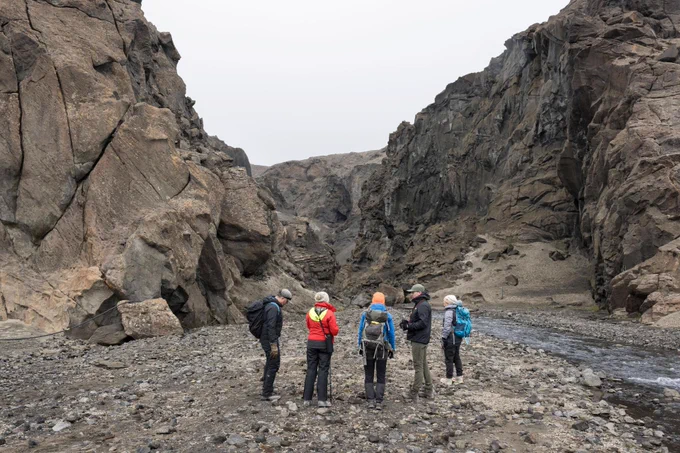
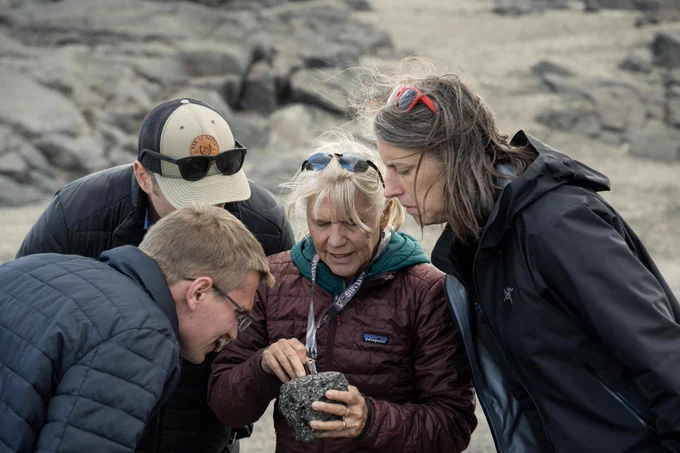
    Iceland: where Earth joy and Moon joy collide 🌎🤝🌕 Astronauts and mission support teams recently trained in Iceland’s volcanic terrain, one of the best Earth analogs for the Moon. From geology observations to sampling and navigation, they built skills for future Artemis
    Four field training participants, including JAXA astronaut Aki Hoshide, John Ray, Bridget Scheib, and NASA astronaut candidate Cameron Jones, stand in rugged volcanic terrain in Iceland, pointing and discussing navigation during Artemis geology training. The landscape is rocky and lunar‑like, with distant mountains under cloudy skies. Credit: NASA/James Blair
    A small group of people wearing outdoor gear stand on a rocky valley floor in Iceland, surrounded by steep, jagged cliffs of dark volcanic rock. They appear to be discussing the terrain while a narrow stream flows beside them. The landscape is rugged and barren, with no vegetation visible. Credit: NASA/James Blair
    From left, Bryce Prescott, NASA astronaut candidate Cameron Jones, Artemis geology training lead Cindy Evans, and Artemis curation lead Juliane Gross, examine a rock during a geology field training in Iceland. Credit: NASA/James Blair
    Group photo of astronauts, astronaut candidates, mission support team members, and geology training field team posing in a valley in Iceland’s Vatnajökull National Park. The group is arranged in two rows, with volcanic mountains in the background and bright sunlight illuminating the scene. Credit: NASA/James Blair
  • user avatar
    NASA Artemis
    NASA
    @NASAArtemis
    Aug 5
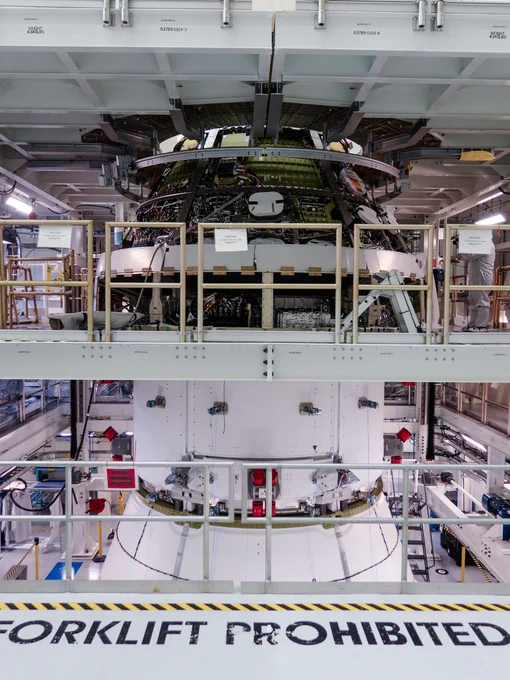
    Artemis III is taking shape 🚀 From the Orion spacecraft coming together to key SLS (Space Launch System) hardware reaching important milestones, the past month has brought major progress across the board for the next Artemis mission. Read more: go.nasa.gov/4xqqaPJ
    The Orion crew and service modules for NASA’s Artemis III mission are shown mated in a workstation in the Operations and Checkout Building at the agency's Kennedy Space Center. The view shows some of the crew module’s exposed wiring and structural elements on the upper section and the white exterior of the service module below, all surrounded by work platforms, railings, signs, and facility hardware. Credit: NASA
    Inside the Vehicle Assembly Building at NASA’s Kennedy Space Center, a team of technicians works around an RS‑25 rocket engine being offloaded for the Artemis III mission. The engine sits on a support stand, showing its complex components. Several technicians stand and climb on the stand to guide the hardware, with one handing a tool upward. The background includes white structural beams, ventilation ducts, and bright yellow overhead crane rails under high‑bay lighting. Credit: NASA/Frank Michaux
    Inside the large high‑bay at NASA’s Marshall Space Flight Center, the cylindrical spacer for the Artemis III SLS (Space Launch System) is suspended above the Vertical Weld Tool after technicians completed the final friction stir weld on its barrel section. The silver‑metal barrel is lifted by an overhead crane, positioned between tall blue support columns and weld equipment. The facility’s bright yellow crane rails, structural ceiling trusses, an American flag, and a large banner showing the SLS rocket are visible in the background. Credit: NASA/Sam Lott
    Inside NASA’s Rotation, Processing and Surge Facility at NASA's Kennedy Space Center, technicians guide the lift of a right‑center solid rocket booster segment for the Artemis III SLS (Space Launch System). The cylindrical booster segment, marked with the red NASA “worm” logo, hangs vertically from an overhead crane above a yellow work stand. Structural beams, metal wall panels, and a large American flag are visible in the high‑bay background as ground support equipment surrounds the booster. Credit: NASA/Ben Smegelsky
  • user avatar
    NASA Artemis
    NASA
    @NASAArtemis
    Aug 4
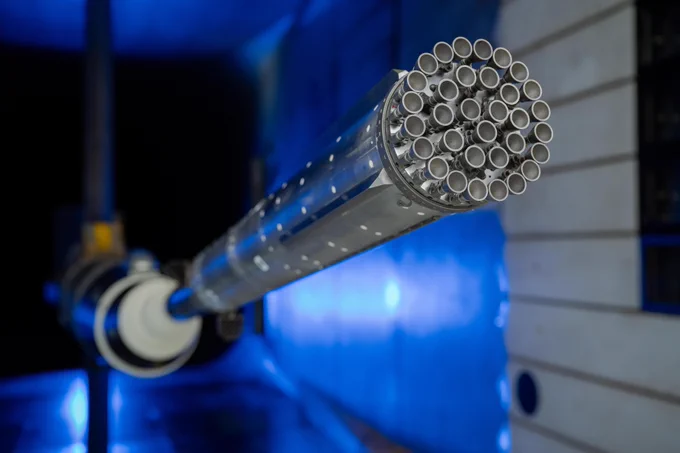
    Engineers at @NASAAmes have been working with @SpaceX on a test series to better understand the extreme aerodynamic forces the Super Heavy Version 3 rocket booster can experience during re-entry as we prepare for Artemis III. Read more: go.nasa.gov/4yUqjMR
    Engineers at NASA Ames conduct transonic and supersonic wind testing on a 1.2% scale model of the Super Heavy Version 3 rocket that will launch the Starship human landing system. In this photo, an engineer is seen inspecting the model with a flashlight. Credits: NASA
    Engineers at NASA Ames conduct transonic and supersonic wind testing on a 1.2% scale model of the Super Heavy Version 3 rocket that will launch the Starship human landing system. This is a close up image of the model in the wind tunnel showcasing its 33-engines. Credits: NASA
  • user avatar
    NASA Artemis
    NASA
    @NASAArtemis
    Aug 3
    Delivered! 📦 NASA delivered a mini navigation receiver to Intuitive Machines for integration onto their upcoming Altus-1 lunar relay. These relays will enable communication with missions exploring the lunar South Pole and far side of the Moon. Learn more:
    The NavCube3-mini payload is pictured in a laboratory at NASA’s Goddard Space Flight Center. The payload is a small, square 3.5 pound piece of hardware. Sitting on a blue table, it is shades of gold with cables coming out the right hand side. Credit: NASA

Log in or sign up for X

See what’s happening and join the conversation

Continue with phone
or
Log in with username or email
Terms·Privacy·Cookies·Accessibility·Ads Info·© 2026 X Corp.
Advertisement
Advertisement