Serving Los Angeles | Orange | Riverside | San Bernardino

Questions about heating installation? Call (951) 648-3219 or send us a message and a real technician will get back to you.
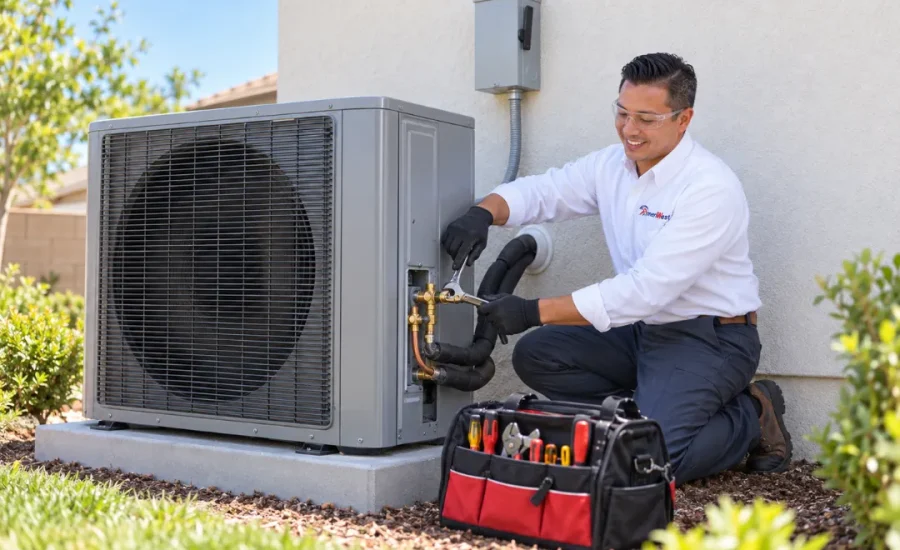
An oversized furnace short cycles and wears out early, while an undersized one runs constantly and still leaves rooms cold. AmeriWest calculates your home’s actual heating load before recommending a system, instead of matching the size of the old one. We serve homes and businesses across Orange County, Los Angeles County, Riverside County, and San Bernardino County, including Irvine, Riverside, Corona, Anaheim, Ontario, Huntington Beach, and more than 40 other cities.
A full heating installation is a bigger job than a repair, but the process stays simple from the first estimate to the final walkthrough.
Free In-Home Estimate
A technician measures your home and recommends the right size system.
Professional Installation
Licensed installers complete the job to code, usually in one day.
Walkthrough And Testing
We test the system and walk you through your new thermostat.
A properly sized furnace or heat pump runs quieter, costs less to operate, and lasts longer than one that’s mismatched to the home. That’s why we run a full load calculation before recommending equipment.
New heating installations are backed by manufacturer equipment warranties plus our own workmanship guarantee, and most installs are completed in a single day.

If your furnace is over 15 years old or needs frequent repairs, a new installation often costs less over time. Free estimates across all four counties we serve.
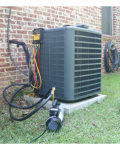

A rushed heating installation is the top reason a new furnace underperforms. Here’s exactly what our process covers before, during, and after your install.



Ameriwest Home Services proudly partners with Greensky, Optimus Financing, and Service Finance to provide flexible HVAC financing options, ensuring you get the expert service you need with payment plans that suit your budget
The recommendation should account for the home’s heating load, including layout, insulation, windows and exposure. Copying the old unit’s size or using floor area alone can miss important conditions. Ask how the estimate was developed and what airflow the system needs. Ductwork assessment may be part of the planning when the air distribution system affects the proposed installation.
Compare the actual equipment options, existing utilities, cooling needs and supporting work. A heat pump provides heating and cooling, while a furnace serves a different equipment arrangement. The right proposal depends on the home and the planned scope. Review HVAC package configurations and Lennox equipment options as starting points for an in-home comparison.
The ducts may be reusable if their condition, capacity and air delivery are suitable. Leaks, damaged sections or inadequate returns can affect the result of a new installation. Ask what can remain and which changes are required. Review duct repair and inspection so the estimate separates equipment replacement from the work needed to support it.
Compare both when repeated failures, a major fault or persistent comfort problems make another repair uncertain. Age alone is not a complete decision rule. A diagnosis can explain the current condition and what the repair would change. Start with heating repair findings and ask for a written installation scope so the two options are compared on useful information.
It can, especially when the heating and cooling equipment share indoor components, ducts or controls. The proposed system should be checked as a compatible arrangement rather than treating each part as isolated. Coordinate the heating project with cooling installation requirements if that equipment is also changing, and ask which existing components can be retained.
Duration depends on the equipment change, access and supporting work. The live site describes many residential installations as taking one day, but that should be confirmed for the actual project. Duct changes, utility work or inspections can extend the schedule. Discuss the installation timeline before planning around an assumed completion date.
Ask for current eligibility, payment terms and the written coverage for the named equipment and installation. Financing approval and warranty conditions can differ by project. Review the company information and published offer terms as background, then confirm the applicable agreements before approving the quote. Do not assume a general guarantee headline describes every installation.
Follow the manufacturer’s instructions and establish a preventive service schedule after startup. New equipment still needs applicable filter care and operating checks. Keep the installation and service records, including any registration requirements. Review heating maintenance and plan coverage to choose ongoing care without assuming every specialty part or service is included.