Image

CGI Motion Capture With Only A Camera

Computer-generated imagery (CGI) has largely replaced physical models in major film productions these days, but the transition didn’t exactly happen overnight. For a time there was an effort to blend the physical and digital, which allowed animators on productions such as Jurassic Park to work with newer technology in a way they were familiar with. [Corridor Crew] took this concept a step further by manipulating digital models with nothing but a webcam.

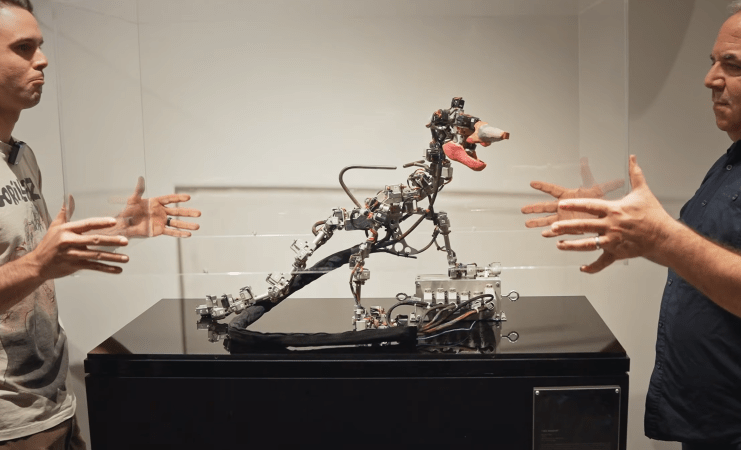
Early in the production of CGI, animators found a purely digital workflow to be less intuitive than the use of physical elements such as puppets. Feeling the weight and touch of a miniature with joints and limbs made for a more natural animation, so they created the dinosaur input device to map movements of a physical model into a digital recreation.
Image
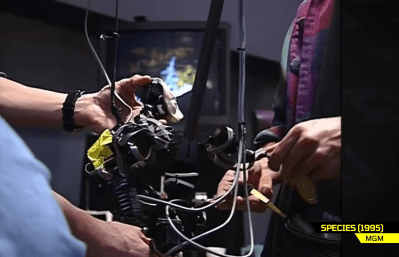
Puppeteered humanoid input device for the film Species

Unfortunately for the future of dinosaurs made of motion sensors, none of these devices really caught on and the technology is essentially non-existent today. [Corridor Crew] decided to give the concept another chance with the application of newer motion capture research. Using just a camera and a small human miniature allowed for full animations to be made using one’s own hands. The motion capture plugin can be found here if you want to try it for yourself!

At the end of the day, the need for a stop motion intermediate was found to be unnecessary. That being said, there is some really cool tech discovered throughout its history. If you want to discover even more film tech, maybe try out an adventure making your own film camera!
Continue reading “CGI Motion Capture With Only A Camera”

Image

Dead E. Ruxpin Appears Alive And Well

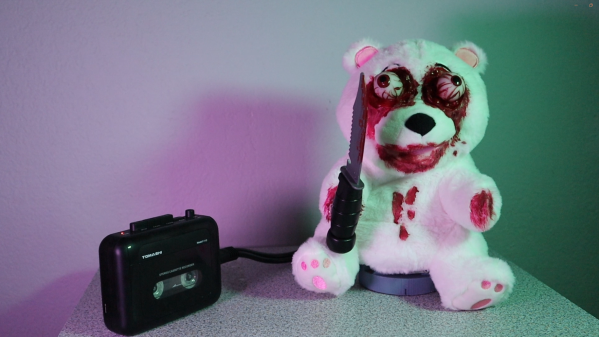
What are you doing to scare trick-or-treaters this Halloween? Surely something, right? Well, Hackaday alum [CameronCoward] certainly has his holiday under control with Dead E. Ruxpin, a murderous, cassette tape-controlled animatronic bear.

ImageReaders of a certain vintage will no doubt see the correlation to Teddy Ruxpin, an animatronic bear from the 1980s whose mouth moved as it read stories from cassette tapes. Cleverly, the engineers used one stereo channel for the story’s audio, and the other channel to control the bear’s mouth.

Dead E. Ruxpin takes this idea and expands it, using the same two channels to send audio and control three servo motors that move both arms and the mouth. How is this possible? By sending tones built from one or more frequencies.

Essentially, [Cameron] assigned a frequency to each movement: mouth open/closed, and left and/or right arm up or down. These are all, of course, synced up with specific points in the audio so Dead E. doesn’t just move randomly, he dances along with the music.

The bear is actually a hand puppet, which leaves room for a 3D-printed skeleton that holds the RP2040 and the servos and of course, moves the puppet’s parts. We can’t decide if we prefer the bulging bloodshot eyes, or think the cutesy original eyes would have made a scarier bear. Anyway, check out the build/demo video after the break to see it in action.

Are you now into Teddy Ruxpin? Here’s a bit more about those scare bears. And don’t forget, Halloween Hackfest runs now until October 31st.

Continue reading “Dead E. Ruxpin Appears Alive And Well”