
Download Detagger – Free Windows Tag‑Removal Tool for Developers
Overview
Detagger is a lightweight utility designed for Windows environments that helps developers and power‑users strip unwanted tags, markers, or metadata from source files, logs, and text‑based documents. First released by Jafsoft in 2005, the program has evolved through several updates, with the current stable build (v2.4) supporting English, Spanish, and German interfaces. Although the trial version limits certain advanced options, the core functionality—quickly locating and removing embedded tags—is fully operational, making it a handy addition to any programmer’s toolbox. Detagger runs on Windows 95 and later, which means it works on legacy machines as well as modern Windows 10/11 installations. The software falls under the “Programming Languages” category, indicating its primary audience of developers who need a clean, tag‑free code base for compilation or analysis. Users can download the installer from Softonic or the official Jafsoft site, run the setup, and start cleaning files within seconds. Because it is a trial, users are encouraged to test the full feature set before deciding on a purchase, and feedback from the community helps improve future releases.
Key Features of Detagger
- Tag Detection Engine – Scans files for common programming tags such as TODO, FIXME, and custom markers defined by the user.
- Batch Processing – Allows multiple files or entire directories to be processed in one operation, saving time on large projects.
- Custom Tag Lists – Users can import or create their own tag definitions, tailoring the tool to specific coding standards.
- Preview Mode – Shows a before‑and‑after view of each file, so you can verify that only the intended tags are removed.
- Undo Capability – Stores a temporary backup of modified files, enabling a quick revert if needed.
- Multi‑Language Support – Interface available in English, Spanish, and German, with Unicode handling for international source code.
- Lightweight Installer – The setup package is under 5 MB, making download and installation fast even on slower connections.
- Command‑Line Interface (CLI) – For advanced users, Detagger offers a CLI option that can be integrated into build scripts or automated workflows.
- Secure Operation – No internet communication is required after installation, ensuring that proprietary code never leaves your machine.
- Regular Updates – Although the trial version is currently at 2.4, Jafsoft has a history of releasing patches that improve tag detection accuracy.
Installation & First‑Run Usage Guide
Getting Detagger up and running is straightforward, even for users who are not familiar with software installation on Windows. Follow these steps to ensure a smooth setup:
Step 1 – Download the Installer
Visit the official Softonic page or Jafsoft’s download portal and click the “Download Detagger” button. The file detagger_setup_v2.4.exe will be saved to your Downloads folder. Because the program is free to try, no payment information is required at this stage.
Step 2 – Run the Installer
Double‑click the downloaded executable. Windows may display a security warning; click Run to proceed. The installer uses a standard wizard interface: accept the license agreement, choose an installation folder (the default C:\Program Files\Detagger works for most users), and decide whether to create a desktop shortcut. Click Install and wait for the progress bar to finish.
Step 3 – Launch Detagger
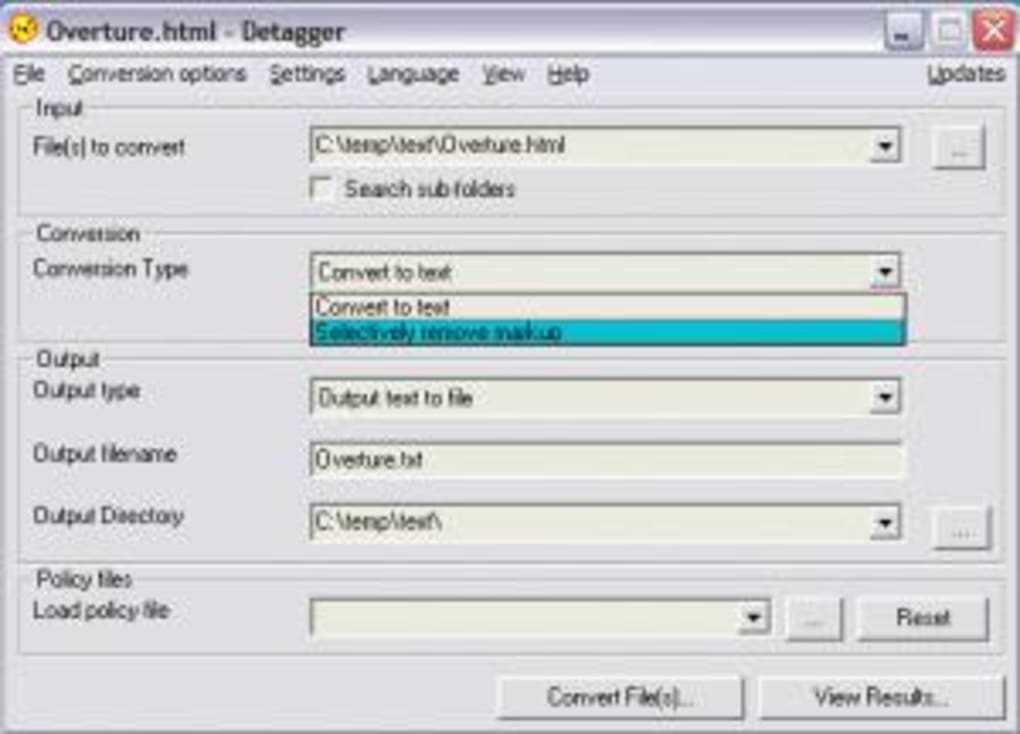
After installation, launch the program via the Start menu or the desktop shortcut. The first screen presents a clean dashboard with three main tabs: File Selector, Tag Settings, and Results. Use the File Selector to browse for a single file or an entire folder.
Step 4 – Configure Tag Settings
Navigate to the Tag Settings tab. Here you can enable the default tag list (TODO, FIXME, etc.) or import a custom XML file that defines additional markers. For most users, the pre‑configured list is sufficient. Check the Enable Preview Mode box if you want to see changes before they are written.
Step 5 – Run the Cleanup
Click the Start button. Detagger scans the selected files, highlights each found tag, and, depending on your settings, removes them automatically. The Results tab displays a summary: total files scanned, tags found, and tags removed. If you enabled Preview Mode, you can click each file to view a side‑by‑side diff and confirm the changes.
Step 6 – Save or Undo Changes
When you are satisfied, click Apply to write the modifications to disk. If you notice an error, the Undo button restores the original content from the temporary backup. This safety net makes experimentation risk‑free.
Advanced users can open a Command Prompt, navigate to the installation directory, and run detagger.exe -i C:\MyProject -t todo,fixme -r to process files silently. This CLI capability is perfect for integrating Detagger into continuous‑integration pipelines.
Compatibility, System Requirements & Pros / Cons
Detagger is built for Windows 95 and later, which includes Windows XP, Vista, 7, 8, 10, and 11. The program is a 32‑bit application, but it runs flawlessly on 64‑bit systems thanks to Windows’ built‑in compatibility layer.
System Requirements
- CPU: 500 MHz or faster (any modern processor exceeds this).
- RAM: Minimum 64 MB (recommended 256 MB for large batch jobs).
- Disk Space: 10 MB for installation, plus additional space for temporary backups.
- Display: 800×600 resolution or higher.
- Permissions: Standard user rights are sufficient; administrator rights only needed for installing to
Program Files.
Pros
- Fast and lightweight – processes thousands of files in seconds.
- Intuitive UI with a clear preview mode.
- Customizable tag lists suit any development workflow.
- Batch processing saves time on large codebases.
- CLI support enables automation in build scripts.
- No internet connection required after installation, preserving code confidentiality.
- Free trial provides full access to core features.
Cons
- Trial version limits access to some advanced reporting tools.
- Only available for Windows; no native macOS or Linux version.
- Interface, while functional, feels dated compared to modern SaaS tools.
- Documentation is brief; users may need to explore settings to discover all options.
- Updates are infrequent; the latest version dates back to 2005, though it still works.
FAQ & Conclusion
Frequently Asked Questions
-
Is Detagger completely free to use?
Detagger offers a trial version that includes all core tag‑removal functions at no cost. To unlock advanced reporting and priority support, you can purchase a full license.
-
Can Detagger handle binary files?
Detagger is designed for text‑based files (source code, logs, configuration files). Attempting to process binary executables may corrupt them, so it’s best to limit usage to plain‑text formats.
-
Does Detagger support Unicode characters?
Yes, the application fully supports Unicode, allowing you to clean files written in non‑Latin scripts without losing character integrity.
-
How do I integrate Detagger into an automated build?
Use the command‑line version:
detagger.exe -i. This command can be added to a pre‑build script in CI/CD pipelines such as Jenkins, Azure DevOps, or GitHub Actions.-t todo,fixme -r -
Is there any risk of data loss when using Detagger?
Detagger creates temporary backup copies of every file it modifies. You can restore original versions using the built‑in Undo feature, which minimizes the risk of accidental data loss.
Conclusion – Should You Download Detagger?
If you regularly grapple with stray TODO, FIXME, or custom markers cluttering your codebase, Detagger offers a focused, no‑frills solution that works across all Windows platforms—from legacy Windows 95 machines to the latest Windows 11 PCs. Its batch processing, preview mode, and command‑line capabilities make it suitable for both casual developers and teams looking to embed tag cleanup into automated pipelines. While the UI feels a bit dated and the trial version limits some premium features, the core functionality is robust, secure, and completely offline—an essential consideration for proprietary projects. Download Detagger today, try the free trial, and experience a cleaner code environment without the hassle of manual searching. For full access to advanced reporting and priority updates, consider upgrading to the licensed version once you’ve verified that it meets your workflow needs.