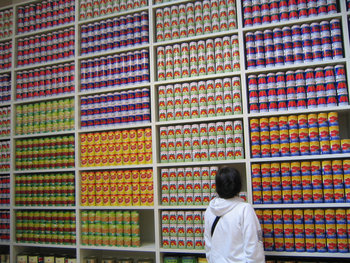
A product is an offering of value that is sold on a market. These are traditionally physical things. However, it is increasingly common to refer to services and digital items that have no physical form as products. Products offer value to customers meaning that they fill a customer need and align to customer preferences. Products have several distinct types as follows:
Commodities
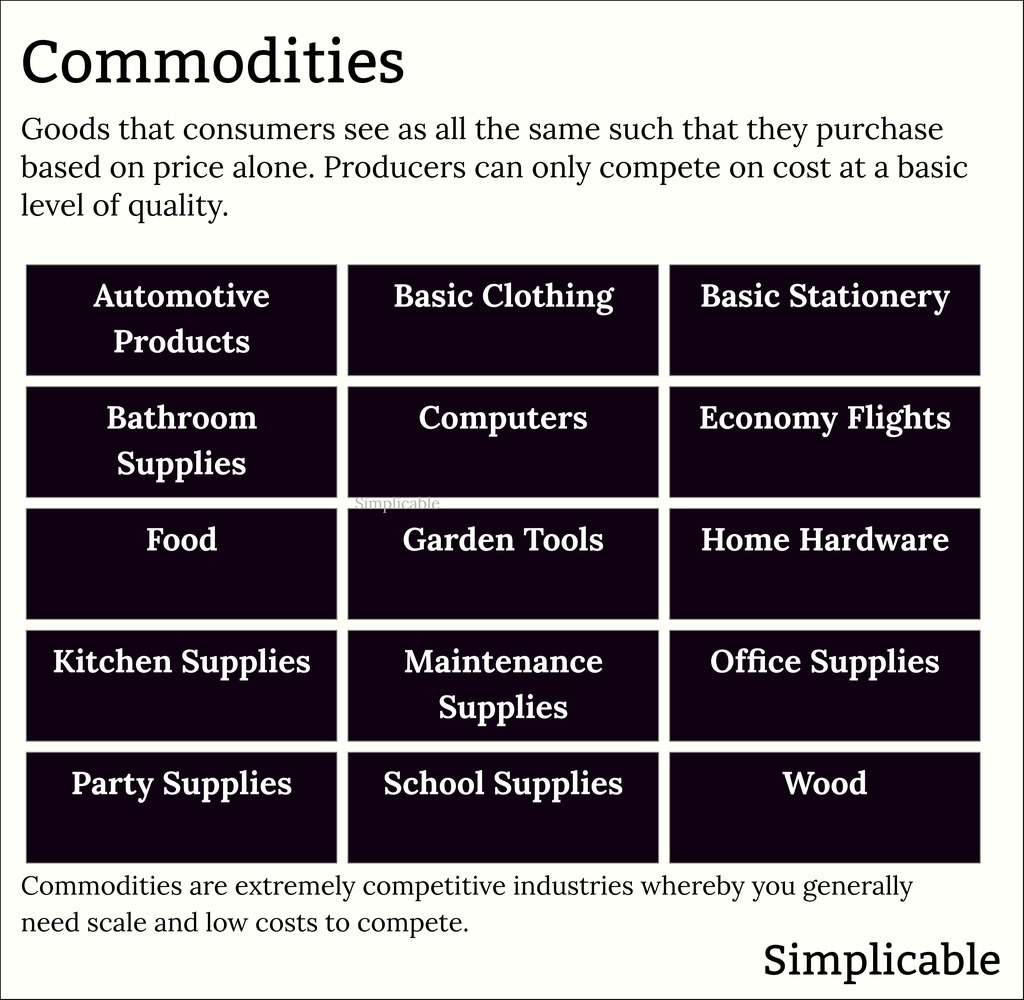
Commodities are goods that consumers and businesses view as undifferentiated. This means that they see no difference from one brand to the next such that they purchase based on price alone. Markets for commodities are extremely competitive. A basic level of quality is expected and there are no incentives for improving quality. Competing in a commodity market typically requires scale in order to achieve low costs.
Products that serve highly specific customer needs and preferences. Niche products are an important market for small firms that can often compete in this area by targeting customers who have specific tastes or needs. Large firms can and do pursue niche markets too with techniques such as customer segmentation. Technology such as mass customization may eventually allow large firms to customize every product for every customer.
Goods that a customer views as part of their lifestyle or an expression of their identity. Lifestyle products are another important market for small firms as customers have strong preferences in this area and can be swayed away from large brands. Consumers can also be fiercely loyal to lifestyle brands that align to their way of life or personal image.
Supplies that are used up and regularly repurchased. Fast moving consumer goods are a high volume market that is dominated by businesses with scale and cost advantages. When consumers need to regularly repurchase things they tend to rely on brand recognition. Firms that dominate this industry advertise a lot and often do nothing more than try to associate a positive feeling with their brand.
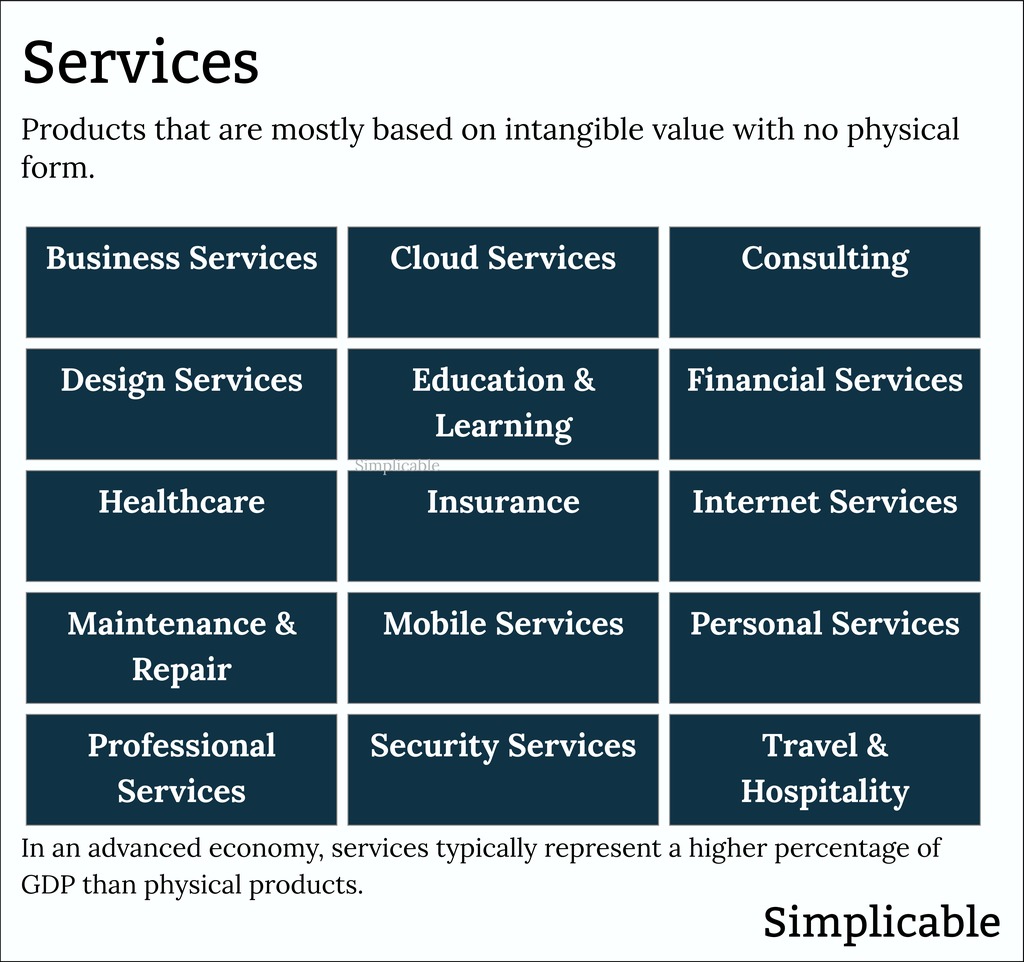
Services are a growing part of every advanced economy whereby people and businesses increasingly rely on services over products. For example, a streaming media service as opposed to buying physical media for movies and music. Services also include gigantic industries such as financial services, hospitality and travel.
Products that have no physical form such as an in-game item or digital movie stored in the cloud. These are essentially services that are sold as a convenient one-time purchase without recurring fees. In some cases, digital products are also downloaded locally as a one-time transaction.
Additional types of products beyond those listed above.
An unsought Product is a product that has little or no demand. This can occur because the product is so innovative that customers don't understand it yet. This can also apply to products that fail to perk customer motivation such as prepaid funeral services.A convenience product is an offering that makes the customer's life easier. Customers are often strongly motivated to save time and simplify purchases. Convenience products also include offerings that are labor saving, time saving or easy to use.Complementary goods are products designed to add value to another product or service. This includes things that directly work with another firm's products such as an accessory for a mobile device. Next: Examples of Products
Cookies help us deliver our services. You have choices regarding these cookies. Please visit our privacy policy, cookie policy and consent tool to learn more.
Copyright 2002-2026 Simplicable. All rights reserved. This material may not be published, broadcast, rewritten, redistributed or translated. Report violations here.