SQL Query Execution Order: How SQL Queries Actually Work (Must Know for Interviews)

Disclosure: This post includes affiliate links; I may receive compensation if you purchase products or services from the different links provided in this article.

SQL query execution order

Hello guys, one of the common question on technical interviews about SQL is how exactly SQL query work? While this may seems simple, many programmers including experienced one fail to answer this with confidence.

Many developer don't even know how the SQL commands are executed and in which order?

For them the SQL query is executed as they are written but that's not true, you can see from the above diagram that FROM and JOIN is executed before you can SELECT anything, which is again very rational if you think through.

Earlier, I have shared 20 SQL queries from interviews and 50 System design questions and in this article, I am going to answer how exactly SQL query works under the hood, so stay tuned and continue reading.

And, if are preparing for tech interviews and you need more questions not just queries but also database and SQL related questions from other topics like indexes, joins, group by, aggregation, and window functions then you can also checkout these 200+ SQL Interview Questions .

This course is one of the specially designed course to prepare you for SQL interviews by answering popular questions. You can also get this for big discount now.

How exactly SQL Query is executed?

Structured Query Language or SQL is the standard language for managing and manipulating relational databases.

It provides a powerful and efficient way to interact with data, enabling developers, analysts, and data scientists to retrieve, insert, update, and delete information from databases.

While SQL queries are written in a declarative, human-readable format, there is a complex process that occurs behind the scenes to execute these queries and retrieve the desired results.

In this article, we'll delve into the inner workings of SQL queries, breaking down the process step by step.

1. Query Parsing and Tokenization

The journey of an SQL query begins with parsing and tokenization. When a user submits an SQL query, the database management system (DBMS) must first break down the query into individual tokens.

Tokens are the smallest units of the query and can include keywords (SELECT, FROM, WHERE, etc.), table and column names, operators (=, >, <, etc.), and values.

This process involves identifying the syntax and structure of the query to ensure it follows the rules of the SQL language.

how SQL query are executed


2. Query Optimization

Once the query is parsed and tokenized, the DBMS performs query optimization. This is a crucial step that aims to improve the efficiency of query execution.

The DBMS analyzes the query and explores various execution plans to determine the most efficient way to retrieve the requested data.

It considers factors such as indexes, table relationships, and available resources to create an execution plan that minimizes the time and resources needed to complete the query.

how to do query optimization


3. Execution Plan Generation

The chosen execution plan outlines the sequence of steps required to fulfill the query.

It determines the order in which tables are accessed, the types of joins performed, and the filtering conditions applied.

The DBMS generates this plan based on statistical information about the data distribution and the database schema.

The goal is to reduce the amount of data that needs to be processed and to optimize disk and memory usage.

On Microsoft SQL Server, a Query Execution plan looks like below:

how Execution plan looks like


4. Data Retrieval and Joins

With the execution plan in place, the DBMS begins the process of data retrieval. If the query involves multiple tables, the DBMS performs join operations to combine the relevant data.

Joining tables efficiently requires comparing and matching rows based on specified conditions. Depending on the type of join (inner join, outer join, etc.), the DBMS determines which rows from each table should be included in the result set.

How SQL join works


5. Filtering and Sorting

After joining the necessary tables, the DBMS applies filtering conditions specified in the WHERE clause. This involves evaluating each row to determine whether it meets the criteria set by the user.

Rows that do not satisfy the conditions are discarded, while those that pass the filter are retained for further processing.

Additionally, if the query includes an ORDER BY clause, the DBMS will sort the resulting rows based on the specified column(s).

Sorting involves arranging the data in a specific order, such as ascending or descending, to produce the final ordered result set.

When does filtering and sorting happens in SQL Query Execution


6. Aggregation and Grouping

Aggregation functions such as SUM, COUNT, AVG, MIN, and MAX are commonly used in SQL queries to perform calculations on groups of data.

If the query includes a GROUP BY clause, the DBMS groups the rows based on the specified columns. It then applies the aggregation functions to each group separately, producing summary statistics or calculations for the grouped data.

Aggregation and Grouping in sQL query


7. Result Set Generation

With all the necessary operations performed, the DBMS generates the final result set. This set of rows and columns represents the data that satisfies the user's query. T

he result set is then returned to the user or the application that initiated the query.

when is result generated from SQL query


8. Index Utilization

Indexes play a vital role in optimizing the performance of SQL queries. An index is a data structure that provides a quick way to look up data based on specific columns.

When executing a query, the DBMS may utilize indexes to efficiently locate the relevant rows, reducing the need for full-table scans and improving query response times.

Index Utilization in SQL query


9. Transaction Management

Transactional operations in SQL, such as INSERT, UPDATE, and DELETE, involve modifying data in the database. These operations are grouped into transactions, which ensure data consistency and integrity.

When a transaction is initiated, the DBMS may lock the affected rows or tables to prevent other transactions from accessing or modifying them concurrently.

Once the transaction is completed, the changes are either committed to the database or rolled back, depending on the success or failure of the transaction.

Transaction Management in SQL


10. Caching and Memory Management

Modern database systems employ various caching and memory management techniques to optimize query performance.

Caching involves storing frequently accessed data in memory to reduce the need for disk reads, which are slower in comparison.

The DBMS may also use buffer pools to manage memory allocation for query execution and result set generation, further enhancing efficiency.

Caching and Memory Management in SQL


SQL Query Order? How SQL Query are executed under the hood?

It's also important to know and remember in which order various SQL commands like SELECT, FROM, COUNT, WHERE, HAVING, ORDER BY, JOIN etc are applied

SQL queries are processed in a specific order, and understanding this order is crucial for writing and optimizing queries effectively. The typical order of SQL query processing involves the following steps:

  1. FROM: The query begins by specifying the source tables or views from which the data will be retrieved. This clause defines the primary data source for the query.

  2. JOIN: If the query involves multiple tables, the JOIN clause is used to combine data from different tables based on specified conditions. Different types of joins (INNER JOIN, LEFT JOIN, RIGHT JOIN, etc.) determine how rows from each table are matched and included in the result set.

  3. WHERE: The WHERE clause is used to filter rows based on specific conditions. It restricts the data to only those rows that meet the specified criteria. Rows that do not satisfy the conditions are excluded from further processing.

  4. GROUP BY: If aggregation is required, the GROUP BY clause is used to group rows with similar values in specified columns. This step is often used in conjunction with aggregation functions like COUNT, SUM, AVG, etc. to perform calculations on grouped data.

  5. HAVING: The HAVING clause is used to filter the result set after the GROUP BY operation has been performed. It specifies conditions for filtering aggregated data. Similar to the WHERE clause, rows that do not meet the criteria are excluded from the final result.

  6. SELECT: The SELECT clause is used to specify the columns that should appear in the final result set. It determines which data will be retrieved and displayed in the query output.

  7. DISTINCT: The DISTINCT keyword, if used, removes duplicate rows from the result set, ensuring that only unique values are displayed.

  8. ORDER BY: The ORDER BY clause is used to sort the result set based on specified columns. It arranges the rows in ascending or descending order, as specified.

  9. LIMIT/OFFSET or FETCH/FIRST: Depending on the database system, you might use LIMIT (or FETCH or FIRST) and OFFSET clauses to control the number of rows returned and to implement pagination.

  10. UNION/INTERSECT/EXCEPT: If needed, these set operations can be used to combine the results of multiple queries.

Here is a nice diagram from Medium which clearly explains how the SQL query looks like and how its executed by Query engine:

SQL Query execution order

It's important to note that the actual order of execution may vary based on the specific database management system being used.** However, the logical processing order remains consistent across most SQL databases.

Additionally, modern query optimizer may rearrange some of these steps for performance reasons while ensuring that the final result remains accurate and consistent.

Understanding the order of SQL query processing not only help in technical interviews but also allows you to write efficient and effective queries, and it provides insights into query optimization and performance tuning.

By structuring your queries with this order in mind, you can better control the flow of data and achieve the desired results.

Conclusion

That's all about how SQL query are executed under the hood. SQL queries might seem like simple statements, but there is a complex process that unfolds behind the scenes to retrieve, manipulate, and manage data.

From parsing and optimization to execution plan generation and result set generation, every step is meticulously orchestrated to ensure efficient and accurate query processing.

Understanding how SQL queries work under the hood provides developers and database administrators with valuable insights into performance optimization and query tuning, ultimately leading to better utilization of database resources and improved application responsiveness.

And, if are preparing for tech interviews and you need more questions not just queries but also database and SQL related questions from other topics like indexes, joins, group by, aggregation, and window functions then you can also read Grokking the SQL Interview book or join 200+ SQL Interview Questions .

Both are great resources to prepare you for SQL interviews by answering popular questions.

All the best !!

    The Data Engineer's Reading List (7 SQL Books That Matter)

    6 Advanced SQL Books for Experienced Developers and Data Scientists

    Hello guys, If you are an experienced programmer or Data Scientist and know how to write SQL queries and database fundamentals but want to take your SQL and database skills to the next level, then you have come to the right place.

    Earlier, I have shared the best SQL Courses for beginners, as well as courses to learn MySQL and SQL Server and in this article, I am going to share few more advanced SQL Books any experienced professional can read to take their SQL skills to next level.

    This is also the second article about SQL books, In the first part, I have shared some of the best SQL books which are essential to learning SQL queries and fundamentals of database like normalization, indexing, and other design stuff, if you haven’t read it yet, I suggest to do it now. You will find some amazing books to start learning SQL.

    In this article, I will share some of the best books to learn advanced SQL programming, which can help you write better SQL queries and understand how databases process those queries.

    I strongly believe that books are a great source to learn programming and technology, even though they are rapidly changing. Only books provide the comprehensive coverage of techniques and tips required to master a subject like SQL.

    SQL is one of the essential skills for any programmer. Every professional programmer, software engineer, DBAs, Business analyst, and even tester should read a good book on SQL.

    Thankfully, there are many good SQL books in the market, but depending upon your existing knowledge and experience level, you should choose the books that will take your SQL skill to the next level.

    These books will also help you work across database vendors like OracleMicrosoft SQL ServerMySQL. Once you know to write the correct SQL query which follows ANSI standard and can be run on any database, you will feel the joy of being a SQL master.

    7 Advanced SQL Books for Experienced Data Engineers and Data Scientists

    Here are some of the best books to take your SQL skill to the next level. These books will help you learn advanced concepts and help you bridge your gap on fundamentals, like joinsindexes, and other database design concepts like normalization.

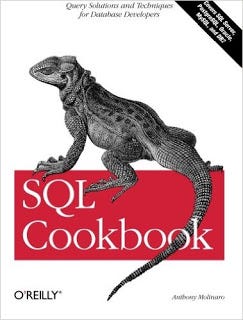
    1. SQL Cookbook: Query Solutions and Techniques for Database Developers

    The SQL Cookbook: Query Solutions and Techniques for Database Developers (Cookbooks (O’Reilly)) 1st Edition by Anthony Molinaro is another fantastic book for experienced programmers and anyone who codes SQL for a living.

    I really like what this book says about SQL, that “SQL is a deceptively simple language,” and many programmers and DBAs don’t go far beyond the simple CRUD statements like SELECT, INSERT, UPDATE, etc. DELETE. Still, it is so much you can do with SQL; this is where SQL Cookbook helps you.

    It will teach you how to take your SQL skills to the next level by using author Anthony Molinari’s favorite SQL techniques and features.

    You will learn about advanced SQL concepts like window functions, powerful, database-specific features such as SQL Server’s PIVOT and UNPIVOT operators, the Oracle’s MODEL clause, and PostgreSQL’s handy GENERATE_SERIES function.

    best SQL book for beginners

    The book also explains the technique of walking a string, which allows you to use SQL to parse through the characters, words, or delimited string elements. In short, one of the great books to take your SQL skill to the next level.

    And, If you prefer online courses, you can combine this book with The Complete SQL Bootcamp course by Jose Portilla on Udemy to get the best of both worlds.

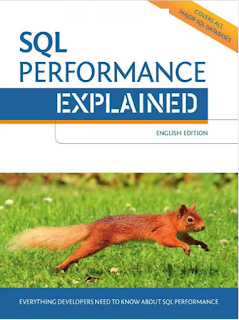
    2. SQL Performance Explained by Markus Winand

    This is another advanced SQL book that I think every Programmer and Data Scientist should read. If you want to know how Database executes your SQL queries? What is a query engine? how indexes work during updating records and searching records? and How to write better SQL queries than this book is for you.

    If I say that whatever I know about SQL indexes is due to this book, then it won’t be wrong. I had a lot of misconceptions about database indices and didn’t know how their order can affect performance.

    I didn’t even know what table scan, index scan is, and index seeks, and, in general, how does index works in SQL in detail until to learn how indexing work and how they affect query performance.

    This excellent book is written by Markus Winand and I thank him a lot for explaining such an essential topic in great detail. One of the must-read SQL books for every programmer, I highly recommend this to every software developer and Data Scientist.

    best book to learn SQL performance

    Another great thing about this book is that Markus explains concepts and code in all major databases like MySQL, PostgreSQL, SQL Server, and Oracle, which means you will understand better, no matter which database you are using.

    And, if you need an online course to join along with this book then I recommend you to check out the Oracle SQL Performance Tuning Masterclass 2026 course on Udemy. It’s great for developers and DBAs working on Oracle Database.

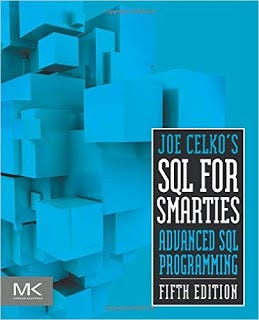
    3. SQL For Smarties, Fifth Edition: Advanced SQL Programming

    Joe Celko’s SQL for Smarties, Fourth Edition: Advanced SQL Programming (The Morgan Kaufmann Series in Data Management Systems) is an excellent book to take your SQL skill to the next level.

    He is one of the authorities in SQL and also the author of several popular SQL books, including the SQL Puzzles. He was also a member of the ANSI SQL standards committee for ten years.

    This book offers tips, techniques, and guidance on writing effective, sometimes complex, SQL statements using ANSI standard SQL. It touches on topics ranging from database design and normalization to using proper data types to grouping and set operations, optimization, data scaling, and more.

    Even if you have read previous editions of this book, you should read the latest revised edition.

    best book to improve your SQL query skills

    Every Programmer who writes SQL queries for a living will find something useful in SQL for Smarties. If you need more practice, Baseball Database Queries with SQL free SQL Query course on Udemy provides good queries for exercise.

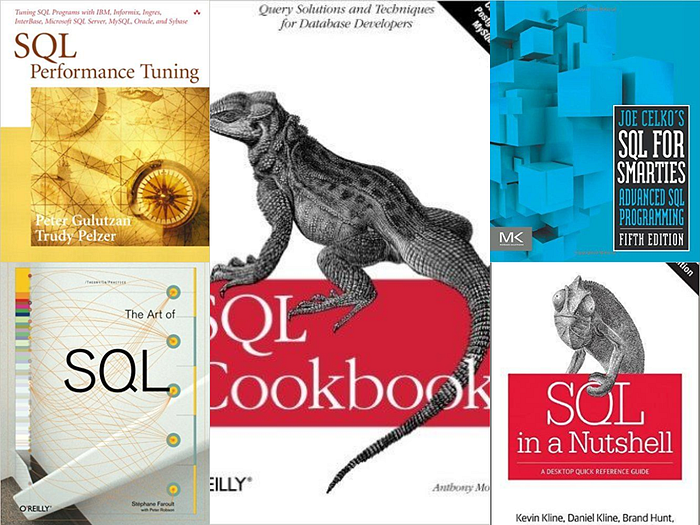
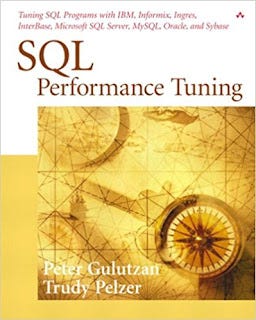
    4. SQL Performance Tuning by Peter Gulutzan and Trudy Pelzer

    Knowing to write SQL queries is one thing and writing SQL queries that are fast and gives high-performance is another skill. This is also the skill that separates beginners from experienced programmers.

    This book provides many practical tips for improving SQL performance on all of the major database systems.

    It does not teach you the SQL syntax and how to use a particular SQL command but instead helps you understand the differences between the major DBBS, including the big three, OracleSQL Server, and MySQL.

    In this book, the author presents several practical tips to improve SQL performance across databases. This book will be a great asset if you deal with different database implementations, whether you are a programmer, consultant, DBA, or technical end-user.

    best book to learn SQL performance Tuning

    The tips given in this book can help you to decide which tuning techniques will work for which database. One trick that gives better performance in SQL Server doesn’t need to give you the best performance in Oracle.

    Essentially, this is what you will learn in this book. You can also combine this book with the Oracle SQL Performance Tuning Masterclass 2026 from Udemy, a great companion for this book.

    Btw, If you have any doubts about the benefit of learning SQL because you are a Java or web developer, let me make it very clear that today everybody wants a full stack developer, i.e., jack of all and a master of at least one skill. This is an essential thing to realize because, as a Java developer.

    I have hardly worked on any project where I have done just Java-related work. It’s always a mix of technology like LinuxXMLSQLJava, and other application developed in other languages and technologies like C++.

    The biggest benefit of SQL is that it is a very stable technology, it is not changing at a rapid pace as a programming language, and it will serve you well in many more coming years. This also provides the competitive edge you need to go ahead of other candidates of the same profile.

    For example, if you get two candidates with solid core Java knowledge and one with better SQL and UNIX skills, who will you take? Most likely the second candidate.

    Anyway, let’s move on to the next book:

    5. The Art of SQL by Stephane Faroult

    This is another great SQL book for an experienced developer who touches key areas of database and SQL, like designing a database for high performance.

    Anyone who built database applications knows that an improperly designed database can be the biggest impediment to flawless application performance.

    The book is written in the style of “The Art of War” by Sun-Tzu. Each chapter has similar titles, like “Laying Plans,” “Tactical Dispositions,” “The Nine Situations,” etc.

    The chapter titled “Tactical Dispositions” covers the topic of indexing, and in “The Nine Situations,” the author examines several classic SQL patterns and how best to approach them.

    If you want, you can also combine this book with an interactive course like Database Design Fundamentals for Software Engineers on Educative to get some hands-on experience with database design.

    best book to learn Database Design

    6. SQL in Nutshell

    The SQL in a Nutshell, 3rd edition by Kevin Kline, Daniel Kline, and Brand Hunt, is an essential reference for programmers, analysts, and database administrators (DBAs).

    This book offers a great cross-platform syntax reference for SQL. It probably is not the easiest reference to find the exact syntax for one particular DBMS, but it is absolutely the best reference for those who work with multiple DBMSs.

    best SQL books for beginners and experienced programmers

    By the way, If you are learning SQL to become a Data Scientists, then I also recommend you check out the SQL for Data Science Course offered by UCDAVIS University of California on Coursera.

    It’s an awesome course to really master SQL. Like other Coursera courses, it’s also free-to-audit, which means you can learn for free, but this course is also part of the Learn SQL Basics for Data Science Specialization and you need to pay if you need a Coursera Certificate to show in your LinkedIn profile or Resume.

    By the way, instead of joining these courses and specialization individually, you can also join the Coursera Plus, a subscription plan from Coursera which gives you unlimited access to their most popular courses, specialization, professional certificate, and guided projects.

    7. Grokking the SQL Interview

    If are preparing for Software Engineering and Development interviews and you need SQL related questions not just queries but also database related questions from other topics like indexes, joins, group by, aggregation, and window functions then you can also checkout Grokking the SQL Interview book to prepare better.

    This book contains frequently asked Java questions from essential topics like

    1. SQL and Database Phone interview questions

    2. Joins in SQL

    3. SQL Query Questions

    4. Indexes

    5. Group by and Aggregation

    6. SQL Date and Time Questions

    7. Stored Procedures

    8. Triggers and Views

    9. Transactions

    10. Window Function and CTE

    11. Deep Dive on popular SQL Questions

    If you are preparing for SQL interviews then I highly recommend you to go through these questions before your telephonic or face-to-face interviews, you will not only gain confidence and knowledge to answer the question but also learn how to drive Coding interviews in your favor.

    This book is one of the specially designed book to prepare you for SQL interviews by answering popular questions. You an also use discount code friends20 to get 20% discount now.

    That’s all about some of the best books to learn advanced SQL programming. If you use SQL in your projects, are currently learning SQL, or already worked in SQL for a couple of years, you can read these books to take your SQL skills to the next level.

    There is so much to learn about SQL then select, update and insert statements that you will surprise with some of the concepts you will learn in these books, especially when it comes to cross-database knowledge.

    I have also shared many free SQL books and courses you can use to start your SQL journey.

    Other Free Online Courses for Programmers You may like
    5 Free Courses to learn Docker for Beginners
    10 Free Courses to Learn AWS in 2026
    5 Free Courses to learn R for Data Science
    My favorite free JavaScript Tutorials for Beginners
    10 FREE Python Tutorials from Microsoft and Google
    15 Free Courses to learn Python Programming for Beginners
    10 Free Courses to learn Java Programming
    7 Free Courses to learn SQL and Database
    10 Books and Courses to learn Angular for Web Development
    My favorite free courses to learn Data Structure and Algorithms
    My favorite free courses to learn Jenkins, Maven, and Docker

    If you like this article and these best advanced SQL books for developers and DBAs, please share them with your friends and colleagues; it makes a lot of difference. If you have any suggestions, feedback, or questions, please drop a comment, and I’ll try to answer.

    If you have any other great SQL book you want me to read, then feel free to suggest in the comment; I just love to discover great books.

    P. S. — And, If you like to learn from online courses then you can combine these advanced SQL books with The Complete SQL Bootcamp course by Jose Portilla on Udemy to get the best of both worlds.