Posts

Showing posts with the label REST

spring-data-rest in Action
Image
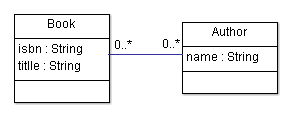
What is spring-data-rest? spring-data-rest , a recent addition to the spring-data project, is a framework that helps you expose your entities directly as RESTful webservice endpoints. Unlike rails, grails or roo it does not generate any code achieving this goal. spring data-rest supports JPA, MongoDB, JSR-303 validation, HAL and many more. It is really innovative and lets you setup your RESTful webservice within minutes. In this example i'll give you a short overview of what spring-data-rest is capable of. Initial Configuration  I'm gonna use the new Servlet 3 Java Web Configuration instead of an ancient web.xml. Nothing really special here. public class WebAppInitializer extends AbstractAnnotationConfigDispatcherServletInitializer { @Override protected Class <?>[] getRootConfigClasses () { return new Class <?>[]{ AppConfiguration . class }; } @Override protected Class <?>[] getServletConfigClasses () { return ...

Why REST is so important

Image
This post is dedicated to REST, an architectural style of shaping webservices and the most misunderstood concept in the history of IT. This post is addressed to you who is designing webservice apis not being fully aware what REST actually means. I'm trying to give you the idea. This post is also addressed to you who think to know what REST means, when in reality you have no clue, just yet. Yes i have met such people in the past - plenty of them. It's not going into the details of the Richardson Maturity Model , and it's not gonna make you a REST expert. There are plenty of guides on the web for that: slides, youtube videos, blogposts, books and more. Rather than going into the details, i'm going to link some good resources at the end of this post. So lets start with The meaning of REST Representational State Transfer. This sentence is not only what REST stands for, it is also the tiniest possible description of what REST actually means. Didn't get it? Read it aga...

Spring MVC - @RequestBody and @ResponseBody demystified

In this post i want to dig into spring mvc a little, revealing what happens behind the scenes when a request is converted to your parameter object and vice versa. Before we start, i want to explain the purpose of these annotations. What are @RequestBody and @ResponseBody for? They are annotations of the spring mvc framework and can be used in a controller to implement smart object serialization and deserialization. They help you avoid boilerplate code by extracting the logic of messageconversion and making it an aspect. Other than that they help you support multiple formats for a single REST resource without duplication of code. If you annotate a method with @ResponseBody, spring will try to convert its return value and write it to the http response automatically. If you annotate a methods parameter with @RequestBody, spring will try to convert the content of the incoming request body to your parameter object on the fly. Here is an example @Controller @RequestMapping ( value = "/...

Modern Web Development

In the last few years web technology has lived through rapid growth and heavy change. We went from frames to table layouts, to column layouts, to responsive layouts. From html4 to xhtml & flash to html5. From heavy server to rich client. From rpc to soap to rest. From sql to nosql and big data. From MVC to MVP and so on. In the following post i want to describe what has become state-of-the-art from my perspective. A Backend is a REST api  Every backend should be seen as a REST api and every controller as another resource. You want to analyze your problem domain, find your resources and design proper paths for them. They become the M in your MVC Architecture. Developing a webapplication first, and adding an extra REST api later on has to be considered an antipattern. If you do make a REST api, you want to consequently use it yourself, making your frontend its first consumer. This procedure allows you to smoothly add different kinds of clients later on, such as a mobile app or e...