Image

PCBs Straight From The Magazine

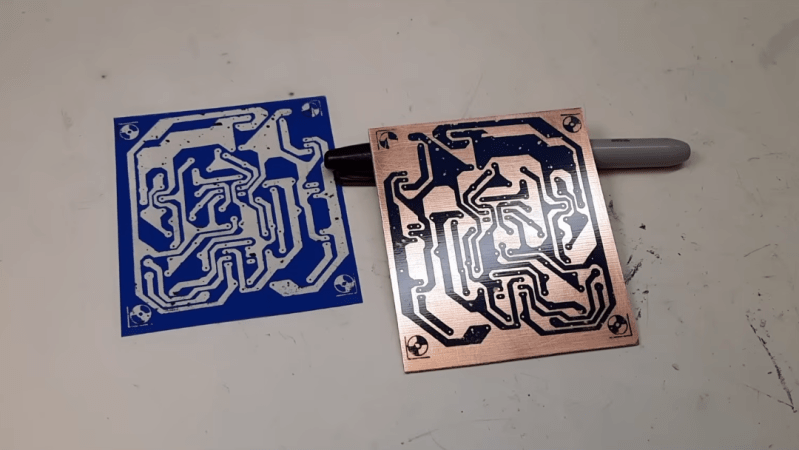
It’s never been easier to get a printed circuit board made. In fact, almost every electronics video out on the internet will incessantly remind you of this fact now. But making a custom PCB wasn’t always as straightforward as sending a KiCad file to a board house. Many DIY methods involve harsh chemicals and tedious processes, but did have the potential benefit of taking much less time than waiting on boards to arrive in the mail. [Bettina Neumryr] is demonstrating one of these older methods, called the toner transfer method, using a circuit that was printed directly in an old magazine.

The first part of the toner transfer method is to create an image that can be printed. Since this circuit came from a magazine, it is first scanned in to a computer and imported into GIMP, where it can be scaled to match the size of the components and then sharpened to make a crisp print. With the image ready, it’s time to print the image onto some toner transfer paper, ensuring that the printer in question is a laser printer which actually uses toner. From there, a sheet of blank copper PCB is prepared and then the toner is transferred by heating, in this case using a laminator. After that its etched, removing all of the copper not protected by the toner, and then the toner itself can be removed which leaves behind the copper traces.

For those of you who were around when toner transfer was in vogue, this video might not have much value. But for anyone who can’t use a board manufacturer for whatever reason or is looking for alternatives, a modern video showing the method could be much more useful and have better context for beginners than videos made a decade or more ago now. Some of those older methods include similar processes using inkjet printers instead, but there are more modern DIY methods as well using lasers or CNC machines too.
Continue reading “PCBs Straight From The Magazine”

Image

DIY Ceramic Circuit Boards Surely Count As Solarpunk

Solarpunk is all about combining that DIY hacker ethos with sustainability and renewable resources. Our usual PCB manufacturing methods, with their bevy of chemical baths and petrochemical resins aren’t exactly the most sustainable. Digging up some clay and firing it into a circuit board? Very sustainable! And apparently doable, as demonstrated by [Emily Velasco] on Mastadon.

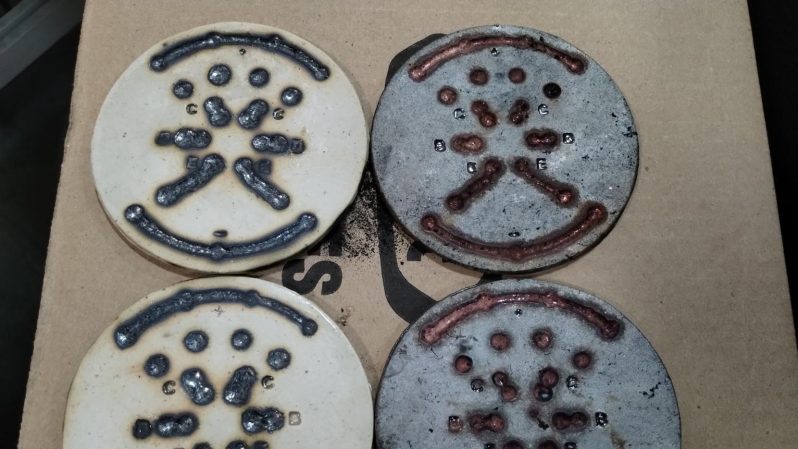
Of course anybody could take a ceramic wafer and call it a circuit board, but that’s only part of what [Emily] did. The ceramic wafer is apparently native clay, which is very cool. Even cooler is that she’s baked the traces into the pottery. While you could conceivably use some sort of conductive glaze for this, what [Emily] did was stamp her desired circuit into the unfired ceramic using a 3D-printed stamp, and then fill the depression with copper powder after the first firing. After that, a second firing is done in a reducing atmosphere to melt/sinter the copper together–it’s not totally clear which is happening here–without burning up.

The results speak for themselves; on the finished demo board, a pair of LEDs blink happily away, driven by the astable oscillator circuit baked right into the clay– and of course the components soldered to it. You’ll have to click through to see it, though.

Given those not-so-sustainable petrochemicals behind our favourite PCBs may be in short supply, this is a timely hack. If it seems familiar, that’s because we featured virtually the same technique last year, but using more-expensive silver powder instead of copper, and a campfire instead of a kiln.

Thanks to [smellsofbikes] for the tip!

Image

Slightly Sentient D20 Might Subtly Shift Your Rolls

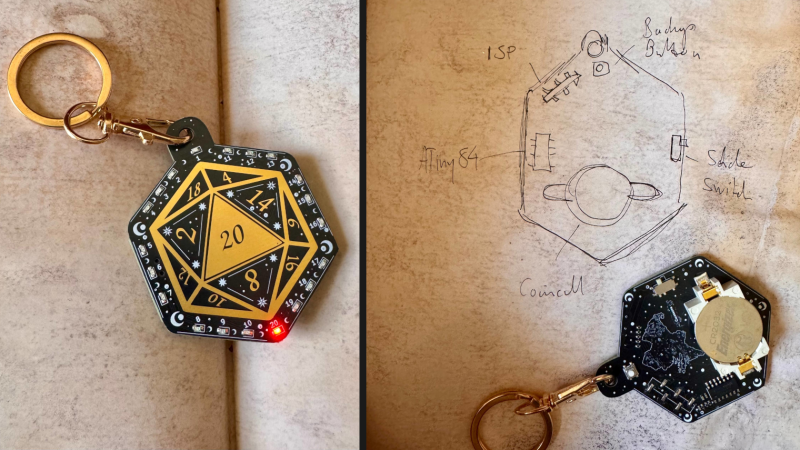
A twenty-sided die (d20) is a common thing in tabletop gaming, and [kati]’s slightly sentient d20 is a PCB that not only delivers random results on demand, but responds to hot and cold streaks and may even tweak the results a little to reflect its mood.

On its face the unit is a touch-sensitive PCB with twenty small charlieplexed LEDs around its perimeter, one for each die result. When activated by a touch on the center pad, the die dutifully animates a die roll and delivers a result. But something happens if the RNG (random number generator) coughs up results that are unusually lucky, or unlucky.

Image
In addition to moods, there are reportedly other hidden features to discover.

After a streak of natural 1s, the device gets cranky. It begins to ignore the occasional activation input, and may glitch before a roll, reflecting a low mood. In addition, future rolls while in a low mood have a slight chance of being silently discarded and re-rolled into a low range (1-6), prolonging the unlucky streak. The inverse is true of a die that encounters a lucky run of natural 20s, with the die’s mood shifting to high spirits and having a slight chance of re-rolling future results into a high range (16-20).

The idea is to create (and feed) the feeling of lucky and unlucky streaks. Gamers are of course perfectly capable of projecting such feelings all on their own, which means the die acts as both mirror and amplifier of these emotions. In addition, each die acts slightly differently as a result of being imprinted with different RNG seeds, timing values, and response times which makes each one feel unique. There are reportedly other hidden features as well.

If you’d like to try making your own, keep an eye on the GitHub repository. The originals have design elements that were heavily personalized for [kati]’s gaming group, so the design files are in the process of being turned into a meaningful public release. Of course, there’s more than enough detail already to roll your own if you are so inclined.

Image

PCB Map Display Keeps An Eye On Family

PCBs are traditionally designed with traces laid out to support a circuit full of electronic components. However, they’ve become increasingly popular as a way to produce functional visual artworks. This PCB map from [Jonathan] is a great example.

The PCB was designed as a map of the California East Bay area. The roads are laid out as the top-side copper layer, while the land and roads are used for the top solder mask layer, with the flipped land and roads area making up the solder mask on the bottom side. The map data itself was cribbed from Snazzy Maps. Behind the PCB, [Jonathan] mounted a 64 x 32 RGB LED array, which can be seen glowing through from behind the material. The LEDs are controlled by an ESP32, which grabs location data from [Jonathan’s] family member’s mobile devices over MQTT, and uses it to light their positions on the map. Files are on Github for the curious.

If you’ve got a family that is open to location tracking, and the money to pay for a custom PCB, you could probably recreate this project yourself. We’ve seen some other great PCB maps before, too, like this amazing metro tracker. Video after the break.
Continue reading “PCB Map Display Keeps An Eye On Family”

Image

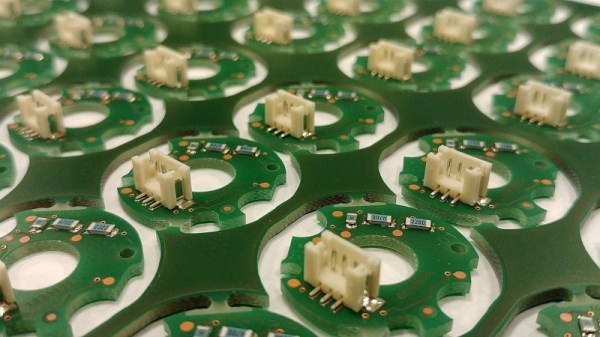
You’ve Seen The Chip Shortage And The Memory Shortage, Now Prepare For The PCB Shortage

It’s nice to hide away in our little corner of the internet and talk tech, safely away from the turmoil of world events. Sometimes though, geopolitics intrude even into our space, and Reuters are here reporting on a new concern that will probably affect many Hackaday readers. Conflict in the Gulf of Arabia, and in particular raids on Saudi petrochemical plants, is threatening PCB production far away in China.

Most of us probably have a mental image of tankers sailing through the Strait of Hormuz laden with Gulf crude, off to be processed by refineries somewhere else in the world. Certainly a load of oil takes just that route, but for the Saudis and other oil-producing nations in the region, it also makes economic sense to site petrochemical industries at source. They export the much more valuable refined products, among which is the polymer resin used in PCB production. The Reuters report says that consequent to this and a rise in copper prices, the cost of a PCB in China has risen by 40%. Naturally this doesn’t sound like good news.

Here at Hackaday, when it comes to component shortages this isn’t our first rodeo. We’re in the middle of a memory shortage due to AI companies, and the COVID-era chip shortage is still fresh in our minds. Unfortunately, this type of thing as been a regular of the technology world for decades. Here we are with another one, and should we be worried? In the short term it’s certainly a concern as the Gulf conflict is still searching for an end to its uneasy stalemate, but remembering previous shortages we think that global industry will adapt and expand other sources where necessary. Just as with the similar IC encapsulation resin shortage back in the ’90s, it may eventually be the panic more than the shortage which becomes responsible for the price hikes.

We’ve taken an abstract look at global electronic supply chains before.


Header image: Gabriela P., CC BY 4.0.

Image

A Candle-Powered Light

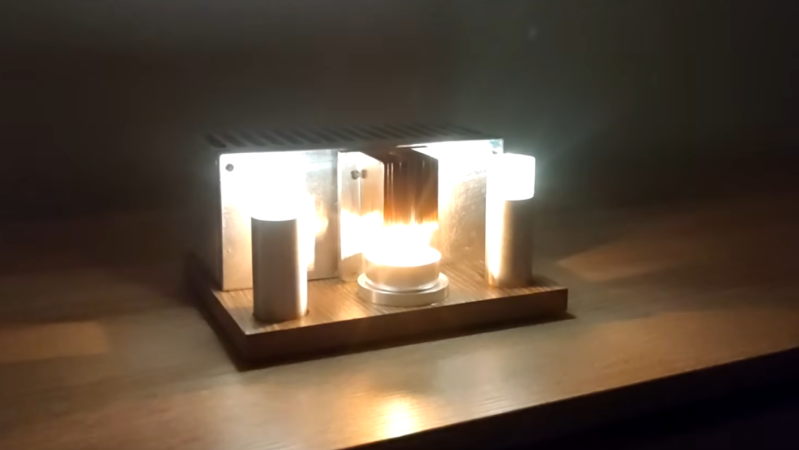
For a little over two thousand years, the primary light sources after the sun had set were oil lamps and candles. This was well before the age of fossil fuels, so these oil lamps were often fueled with a labor-intensive agricultural product like olive oil. Candles were similarly difficult to make, made from tallow, beeswax, or even butter. Labor and materials costs aside, though, there’s a surprising amount of energy in these fuels and [Maciej Nowak Projects] has a generator that help these ancient light sources generate some electricity on the side.

The generator is based around a piece of technology called a thermoelectric generator (TEG), which produces a voltage potential when placed in a temperature gradient. These aren’t new technologies, but their typically low efficiencies limit where they can be effectively used. In this case, however, [Maciej Nowak] has gone to great effort to boost this efficiency as high as possible by using a huge radiator on the cool side of the TEG and another one on the hot side, which in this case is heated by a small tea candle. The electricity produced is sent to a tiny DC converter which regulates the voltage to 3.3V, which then powers two custom-built pedestal lamps on either side of the TEG, each with a high-efficiency LED mounted to a custom-made circuit board.

Although this is certainly not the first time a TEG has been set up to run a small lighting system, we do appreciate this one for its polish, design, and high efficiency. It would make a fitting addition to anyone’s emergency power outage kit as it really increases the amount of available light produced from any given candle. When taken to the extreme, though, thermoelectric generators can be made to produce a surprising amount of energy, provided they are placed in the right environment.

Continue reading “A Candle-Powered Light”

Image

New Tool Makes 3D Printed PCBs, Fast

Getting PCBs made is often the key step in taking a dodgy lab experiment and turning it into a functional piece of equipment. However, it can be tedious to wait for PCBs to ship, and that can really slow down the iterative development process. If you’ve got a 3D printer, though, there’s a neat way to make your own custom PCBs. Enter PCB Forge from [castpixel].

Image
The online tool.

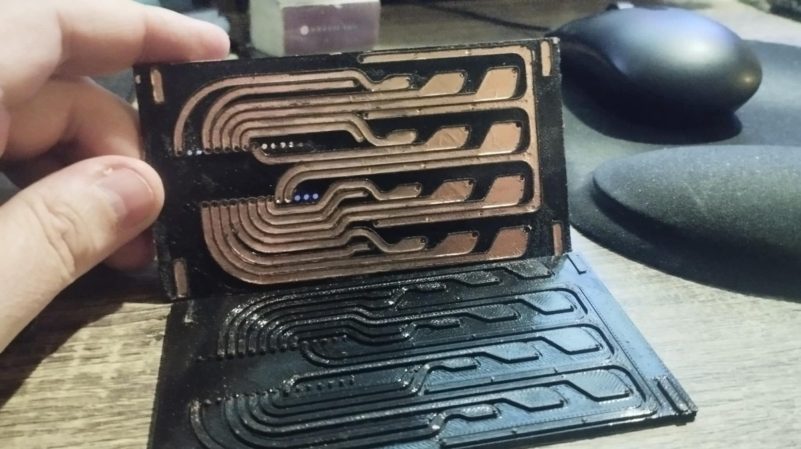
The concept involves producing a base and a companion mold on your 3D printer. You then stick copper tape all over the base part, using the type that comes with conductive adhesive. This allows the construction of a fully conductive copper surface across the whole base. The companion mold is then pressed on top, pushing copper tape into all the recessed traces on the base part. You can then remove the companion mold, quickly sand off any exposed copper, and you’re left with a base with conductive traces that are ready for you to start soldering on parts. No etching, no chemicals, no routing—just 3D printed parts and a bit of copper tape. It rarely gets easier than this.

You can design your PCB traces in any vector editor, and then export a SVG. Upload that into the tool, and it will generate the 3D printable PCB for you, automatically including the right clearances and alignment features to make it a simple press-together job to pump out a basic PCB. It bears noting that you’re probably not going to produce a four-layer FPGA board doing advanced high-speed signal processing using this technique. However, for quickly prototyping something or lacing together a few modules and other components, this could really come in handy.

The work was inspired by a recent technique demonstrated by [QZW Labs], which we featured earlier this year. If you’ve got your own hacks to speed up PCB production time, or simply work around it, we’d love to know on the tipsline! Video after the break.

Continue reading “New Tool Makes 3D Printed PCBs, Fast”