Image

The Repair Nightmare That Are Smart Rings

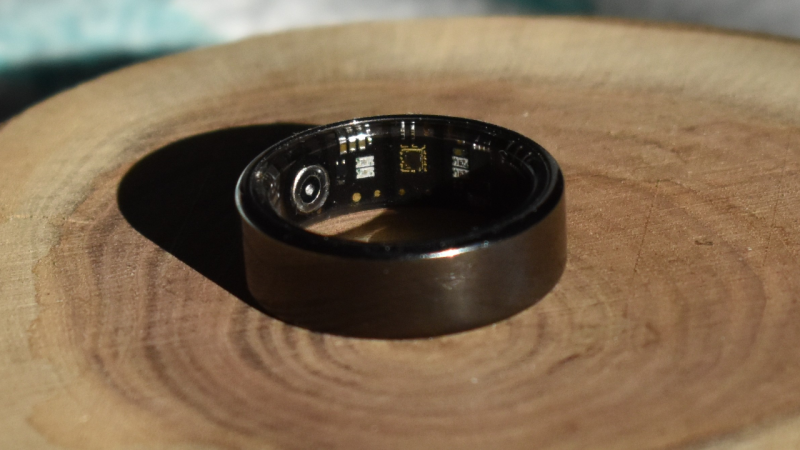
In the quest to make every wearable device ‘smart’, a lot of electronics along have to be crammed in very small spaces, along with ways to make them resistant to environments that our bodies do not mind, like getting hit by a rainstorm or simply washing our hands. These two factors combined make especially devices like smart rings an interesting case study for repairability, with [iFixit] recently taking apart a modern Oura smart ring to assess its e-waste factor after the built-in battery dies.
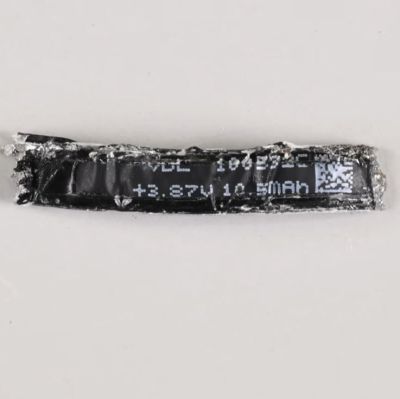
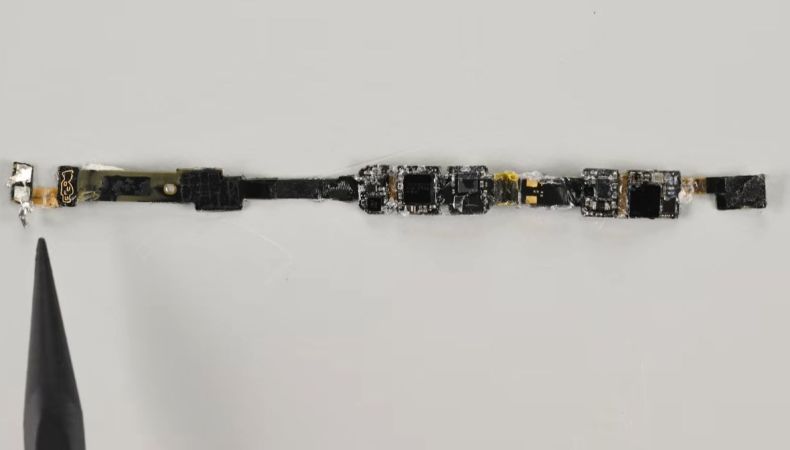
The tiny 10.5 mAh Lipo cell in the Oura Ring 5. (Credit: iFixit)

The subject of the teardown video is the Oura Ring 5, a $400 smart ring that’s designed to track your vitals much like a wrist-worn fitness tracker — just in a much smaller package. This metal-and-epoxy sandwich can definitely survive a good rain shower and washing of hands, but to get to the internals rather forceful methods were needed, unlike previous Oura and Samsung smart rings where some applied heat was enough.

In the Ring 5’s case even more heat was needed to make the inner ring start to slide out, but by that point the Li-ion battery inside had already popped from the heat. The inner ring then got stuck and more violence was required to continue the disassembly and get to the super-tiny, 10.5 mAh battery. Of course, at this point the smart ring really won’t be getting back together, never mind still work or be waterproof, which is a central issue with these smart rings.

With the EU’s February 2027 deadline for user-replaceable batteries looming on the horizon, it’ll be interesting to see whether devices like this can squeeze into an exception category, or whether manufacturers will have to massively redesign or stop selling these devices to this rather large market. So far this particular regulation has already forced Nintendo to make a special Switch 2 console for the EU.

Continue reading “The Repair Nightmare That Are Smart Rings”

Image

Cheap Smart Ring Becomes MIDI Controller

The Colmi R02 is one of the cheapest smart rings on the market. It costs about $20, and is remarkably easy to hack. [Floyd Steinberg] took advantage of this to turn it into a rather unique MIDI controller.

What makes the Colmi R02 somewhat unique is that the manufacturer did not try to lock out users from uploading their own firmware. You don’t even really need to “hack” it, since there is no code signing or encryption. You can just whip up your own firmware to make it do whatever you want.

To that end, [Floyd] set up the ring to act as a device for musical expression. When connected to a computer over Bluetooth, data from the ring’s accelerometer is converted into MIDI CC commands via a simple web app. The app allows the MIDI messages to be configured so they can control whatever parameter is desired. [Floyd] demonstrates the ring by using it to control filter cutoff frequencies on an outboard synthesizer, with great effect.

You could theoretically just strap an accelerometer to your hand with a microcontroller and achieve similar operation. However, the magic of this is that it costs only $20 and it’s already in a form factor that’s optimized for wearing on your finger. It’s hard to beat that.

Files are on GitHub for those eager to experiment. We’ve previously featured some hacks of this particular smart ring, too, with [Aaron Christophel’s] efforts directly inspiring this work.

Continue reading “Cheap Smart Ring Becomes MIDI Controller”

Image

Cheap Hackable Smart Ring Gets A Command Line Client

Last year, we’ve featured a super cheap smart ring – BLE, accelerometer, heart sensor, and a battery, all in a tiny package that fits on your finger. Back when we covered it, we expected either reverse-engineering of stock firmware, or development of a custom firmware outright. Now, you might be overjoyed to learn that [Wesley Ellis] has written a Python client for the ring’s stock firmware.

Thanks to lack of any encryption whatsoever, you can simply collect the data from your ring, no pairing necessary, and [Wesley]’s work takes care of the tricky bits. So, if you want to start collecting data from this ring right now, integrate it into anything you want, such as your smart home or exoskeleton project, this client is enough. A few firmware secrets remain – for instance, the specific way that the ring keep track of day phases, or SPO2 intricacies. But there’s certainly enough here for you to get started with.

This program will work as long as your ring uses the QRing app – should be easy to check right in the store listing. Want to pick up the mantle and crack open the few remaining secrets? Everything is open-source, and there’s a notepad that follows the OG reverse-engineering journey, too. If you need a reminder on what this ring is cool for, here’s our original article on it.

Hackaday Links Column Banner

Hackaday Links: November 24, 2024

We received belated word this week of the passage of Ward Christensen, who died unexpectedly back in October at the age of 78. If the name doesn’t ring a bell, that’s understandable, because the man behind the first computer BBS wasn’t much for the spotlight. Along with Randy Suess and in response to the Blizzard of ’78, which kept their Chicago computer club from meeting in person, Christensen created an electronic version of a community corkboard. Suess worked on the hardware while Christensen provided the software, leveraging his XMODEM file-sharing protocol. They dubbed their creation a “bulletin board system” and when the idea caught on, they happily shared their work so that other enthusiasts could build their own systems.

Continue reading “Hackaday Links: November 24, 2024”

Illustrated Kristina with an IBM Model M keyboard floating between her hands.

Keebin’ With Kristina: The One With The 24-Hour Macro Pad

They say Rome wasn’t built in a day, but this great little music-controlling macro pad by [nibbler] actually was. Why? Because as Hackaday’s own [Donald Papp] reminded us, we all need a win sometimes, especially as projects drag on and on without any end in sight.

A small macro pad with six buttons.
Image by [nibbler] via Toxic Antidote
As [nibbler] points out, what really constitutes a win? Set the bar too low and it won’t feel like one at all. Too high, and you may become too discouraged to cross the finish line. With that in mind, [nibbler] set the bar differently, limiting themselves to what could be done in the one day per week they have to devote time to electronic matters.

One-day turnaround usually means using parts on hand and limiting oneself to already-learned skills and techniques. No problem for [nibbler], who, armed with an Arduino Leonardo Tiny and a some colorful push buttons, set about designing a suitable enclosure, and then putting it all together. Was this a win? [nibbler] says yes, and so do I.

Continue reading “Keebin’ With Kristina: The One With The 24-Hour Macro Pad”

The ring shown on someone's index finger

The ErgO Ring Makes Computer Interactions Comfortable

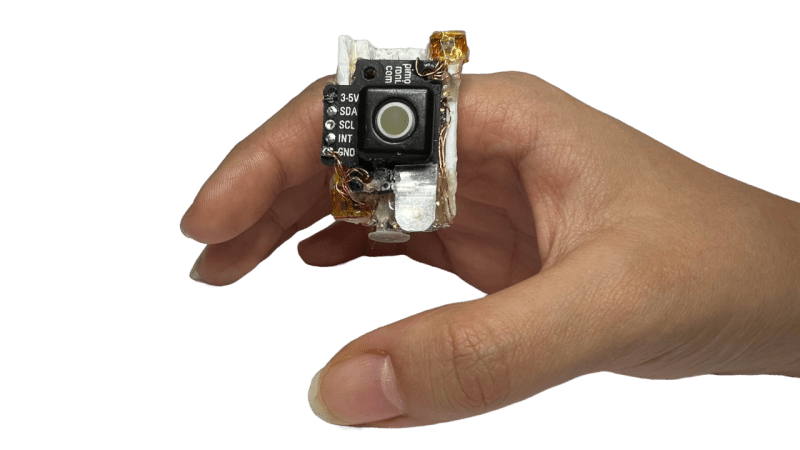
[Sophia Dai] brings us a project you will definitely like if you’re tired of traditional peripherals like a typical keyboard and mouse combo. This is ErgO, a smart ring you can build out of a few commonly available breakouts, and it keeps a large number of features within a finger’s reach. The project has got an IMU, a Pimoroni trackball, and a good few buttons to perform actions or switch modes, and it’s powered by a tiny Bluetooth-enabled devboard so it can seamlessly perform HID device duty.

While the hardware itself appears to be in a relatively early state, there’s no shortage of features, and the whole experience looks quite polished. Want to lay back in your chair yet keep scrolling the web, clicking through links as you go? This ring lets you do that, no need to hold your mouse anymore, and you can even use it while exercising. Want to do some quick text editing on the fly? That’s also available; the ErgO is designed to be used for day to day tasks, and the UX is thought out well. Want to use it with more than just your computer? There is a device switching feature. The build instructions are quite respectable, too – you can absolutely build one like this yourself, just get a few breakouts, a small battery, some 3D printed parts, and find an evening to solder them all together. All code is on GitHub, just like you would expect from a hack well done.

Looking for a different sort of ring? We’ve recently featured a hackable cheap smart ring usable for fitness tracking – this one is a product that’s still being reverse-engineered, but it’s alright if you’re okay with only having an accelerometer and a few optical sensors.

Continue reading “The ErgO Ring Makes Computer Interactions Comfortable”

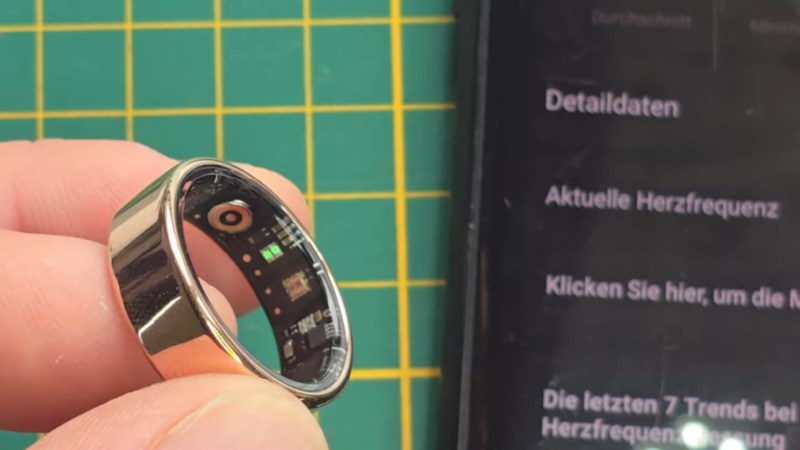
A closeup of the ring, inner electronics including a lit green LED seen through the inner transparent epoxy, next to the official app used to light up the LED for a demo.

New Part Day: A Hackable Smart Ring

We’ve seen prolific firmware hacker [Aaron Christophel] tackle smart devices of all sorts, and he never fails to deliver. This time, he’s exploring a device that seems like it could have come from the pages of a Cyberpunk RPG manual — a shiny chrome Bluetooth Low Energy (BLE) smart ring that’s packed with sensors, is reasonably hacker friendly, and is currently selling for as little as $20.

The ring’s structure is simple — the outside is polished anodized metal, with the electronics and battery carefully laid out along the inside surface, complete with a magnetic charging port. It has a BLE-enabled MCU, a heartrate sensor, and an accelerometer. It’s not much, but you can do a lot with it, from the usual exercise and sleep tracking, to a tap-sensitive interface for anything you want to control from the palm of your hand. In the video’s comments, someone noted how a custom firmware for the ring could be used to detect seizures; a perfect example of how hacking such gadgets can bring someone a brighter future.

The ring manufacturer’s website provides firmware update images, and it turns out, you can upload your own firmware onto it over-the-air through BLE. There’s no signing, no encryption — this is a dream device for your purposes. Even better, the MCU is somewhat well-known. There’s an SDK, for a start, and a datasheet which describes all you would want to know, save for perhaps the tastiest features. It’s got 200 K of RAM, 512 K of flash, BLE library already in ROM, this ring gives you a lot to wield for how little space it all takes up. You can even get access to the chip’s Serial Wire Debug (SWD) pads, though you’ve got to scrape away some epoxy first.

As we’ve seen in the past, once [Aaron] starts hacking on these sort of devices, their popularity tends to skyrocket. We’d recommend ordering a couple now before sellers get wise and start raising prices. While we’ve seen hackers build their own smart rings before, it’s tricky business, and the end results usually have very limited capability. The potential for creating our own firmware for such an affordable and capable device is very exciting — watch this space!

Continue reading “New Part Day: A Hackable Smart Ring”