1. X
  2. NASA Universe
Log inSign up
NASA Universe
NASA
12.4K posts
NASA Universe profile banner
user avatar

NASA Universe

NASA
@NASAUniverse
Your backstage pass to the universe and how NASA studies it. Exoplanets, black holes, dark energy, and more!
Greenbelt, MD
universe.nasa.gov
Joined March 2009
80
Following
1.1M
Followers
RepliesRepliesMediaMedia
  • Pinned
    user avatar
    NASA Universe
    NASA
    @NASAUniverse
    Aug 5
    Our IXPE telescope found strong evidence to support a 90-year-old quantum theory that suggests the vacuum of space can be altered by extreme magnetic fields. IXPE used its unique X-ray vision on a supermagnetized stellar remnant to test this theory. go.nasa.gov/4fUqmiO
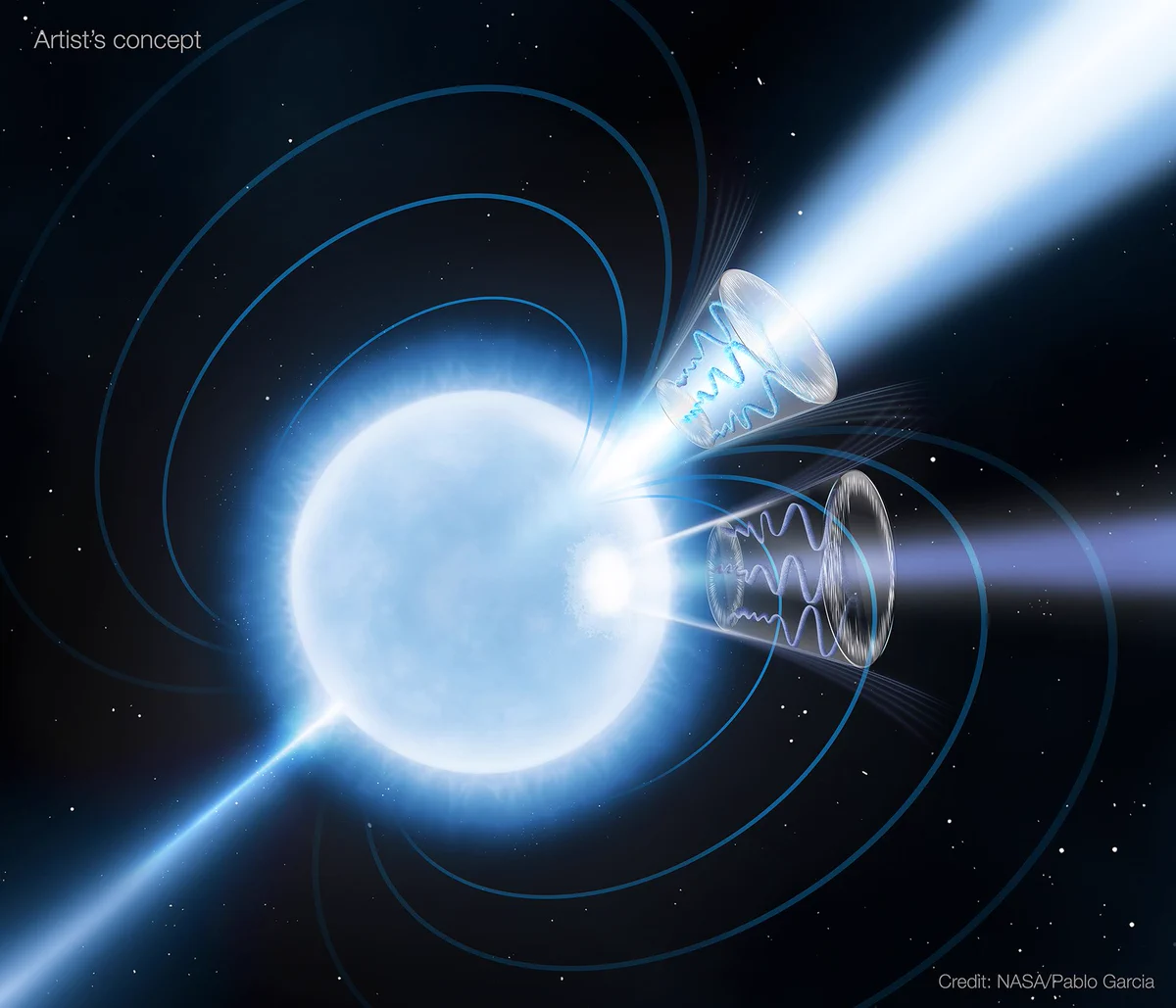
    This illustration depicts the complex radio and X-ray emission from a magnetar. In the center, the magnetar is a bright blue ball amidst a starry sky, surrounded by thin blue lines showing the looping arcs of its magnetic field. Bright white plumes of particles emanate from the top right and bottom left of the magnetar, aligned with the poles of the magnetic field, and stream out into space. The top right plume is thicker with a cone near the surface formed by two thin white disks inside showing the main location of the magnetar’s radio emission. This depicts the lens effect theorized to be created by strong magnetic fields. Three light blue wavy lines between the disks represent particles aligning as they pass through these “lenses.” Below, another cone represents the main location of the magnetar’s X-ray emission with three purple wavy lines between the “lenses” and a fainter plume streaming into space. The image is watermarked “Artist’s concept” and “Credit: NASA/Pablo Garcia.”
  • user avatar
    NASA Universe
    NASA
    @NASAUniverse
    2h
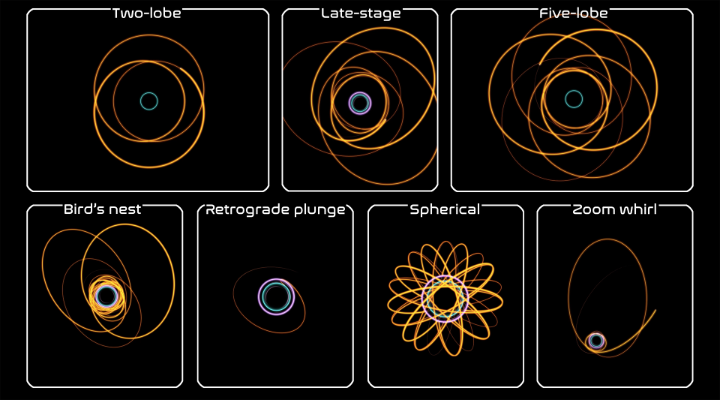
    If a neutron star or small black hole wanders too close to a supermassive black hole, it can be set into a bizarre (and fun-looking) dance that traces a complex pattern around the black hole. #MondayMotivation
    Image
    00:00
  • user avatar
    NASA Universe
    NASA
    @NASAUniverse
    Aug 14
    Are we alone? @NASARoman is expected to discover and study thousands of distant worlds within our galaxy and directly image planets with unprecedented detail. Its coronagraph will block the glare from host stars but allow the light from dimmer, orbiting planets to filter through.
    Image
    GIF
  • user avatar
    NASA Universe
    NASA
    @NASAUniverse
    Aug 13
    Ready to solve a cosmic mystery? Join Detective Eagle Quark in our Space Forensics interactive online game as he investigates why stars are exploding … and learn some astronomy along the way! Start your 8-bit adventure: go.nasa.gov/spaceforensics
    Image
    GIF
  • user avatar
    NASA Universe
    NASA
    @NASAUniverse
    Aug 13
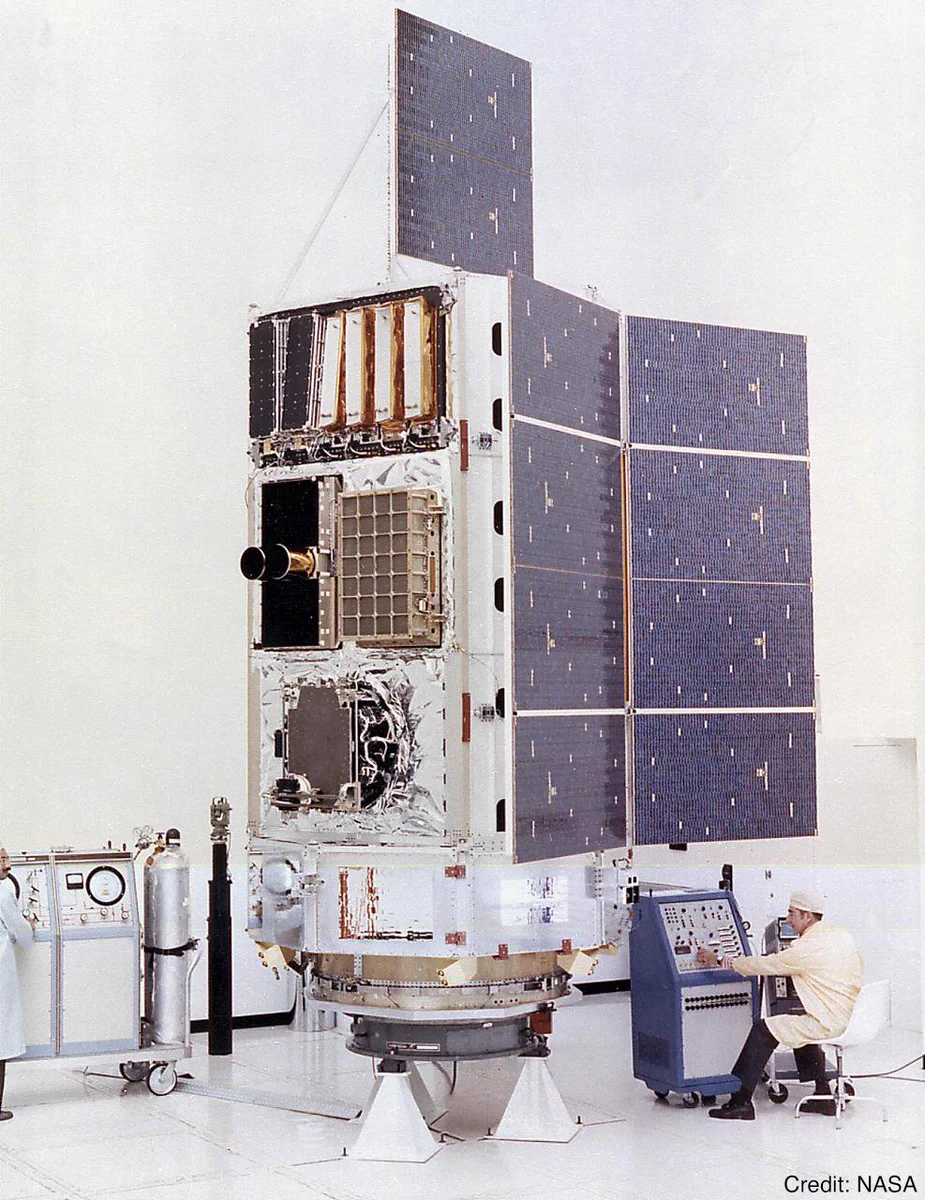
    #TBT to August 12, 1977, when our HEAO (High Energy Astronomy Observatory) 1 satellite launched into space. Its four instruments helped it map the X-ray and gamma-ray sky and identify interesting new sources for further study, including black holes, neutron stars, and more.
    This photo shows the High Energy Astronomy Observatory in a bright white cleanroom before its launch. The spacecraft stands on a small white stand and has a tall boxy shape. On its left side, exposed panels of instruments of various sizes, shapes, and colors are visible. On its right side, shiny dark gray solar panels are attached, and another solar panel extends from the top of the spacecraft. Two people in protective clothing are in the room, and they are much smaller than the observatory. One is sitting at a gray and blue computer console to the right, and the other, partially visible, is standing at the left edge of the image, near a rolling cart with equipment and a silver cylinder of gas. The image is watermarked “Credit: NASA.”

Log in or sign up for X

See what’s happening and join the conversation

Continue with phone
or
Log in with username or email
Terms·Privacy·Cookies·Accessibility·Ads Info·© 2026 X Corp.
Advertisement
Advertisement