
Download BetterTouchTool – Free Mac Gesture Customizer and Productivity Booster
Overview
BetterTouchTool (BTT) is a powerful, free‑to‑download utility for macOS that puts the full control of your input devices into your hands. Developed by Andreas Hegenberg, the app allows you to redesign the behavior of the built‑in trackpad, Magic Mouse, regular mouse, keyboard, Touch Bar, and even external devices such as the Siri Remote, MIDI controllers, or a paired iPhone running the BTT Remote companion app. Rather than being limited to the default gestures that Apple ships with macOS, BTT lets you assign custom actions, launch applications, trigger scripts, or manipulate windows with a simple swipe, tap, or key sequence. While the learning curve can feel steep for newcomers—especially because the program does not ship with a comprehensive tutorial—it rewards patience with a level of flexibility that most native macOS settings simply cannot match. Power users, designers, developers, and anyone who spends many hours at a Mac will quickly notice how BTT can shave seconds off repetitive tasks, streamline window management, and even replace third‑party tools like Keyboard Maestro or Alfred for certain workflows. Because the app runs as a lightweight background process, it consumes minimal CPU and memory, and updates are infrequent, keeping your system clean and responsive. Whether you need to create a three‑finger swipe to toggle fullscreen, assign a custom keyboard shortcut that launches your favorite terminal command, or design a Touch Bar layout tailored to a specific app, BetterTouchTool provides the sandbox where those ideas become reality.
Key Features & How They Work
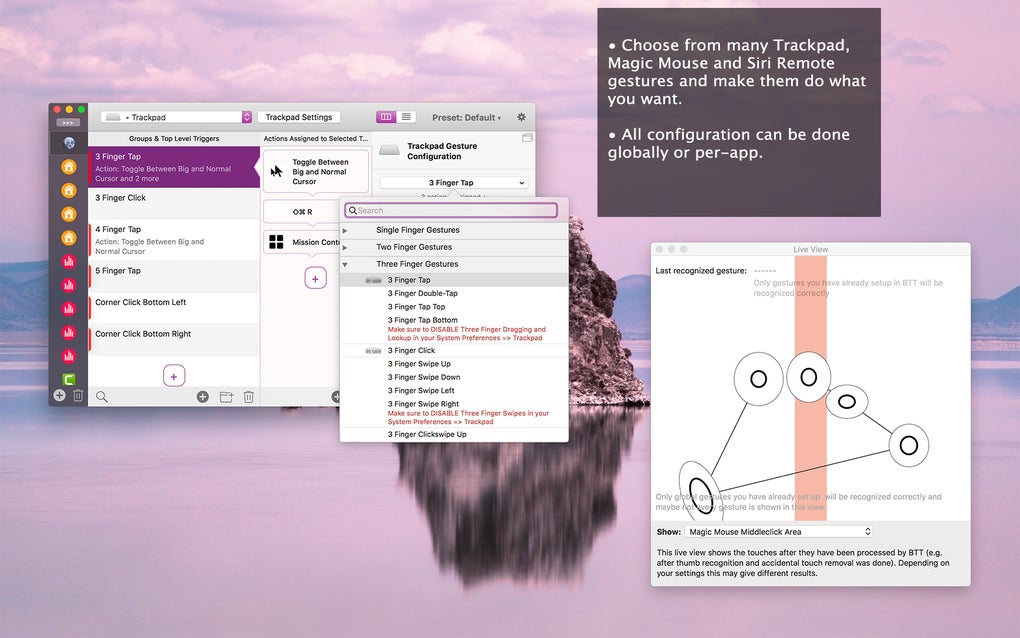
- Custom Trackpad Gestures – Define multi‑finger swipes, taps, and even drawing gestures that trigger scripts, shortcuts, or system actions.
- Magic Mouse & Mouse Button Mapping – Assign actions to mouse clicks, scroll wheel gestures, or edge swipes for quick window snapping.
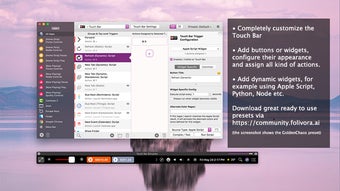
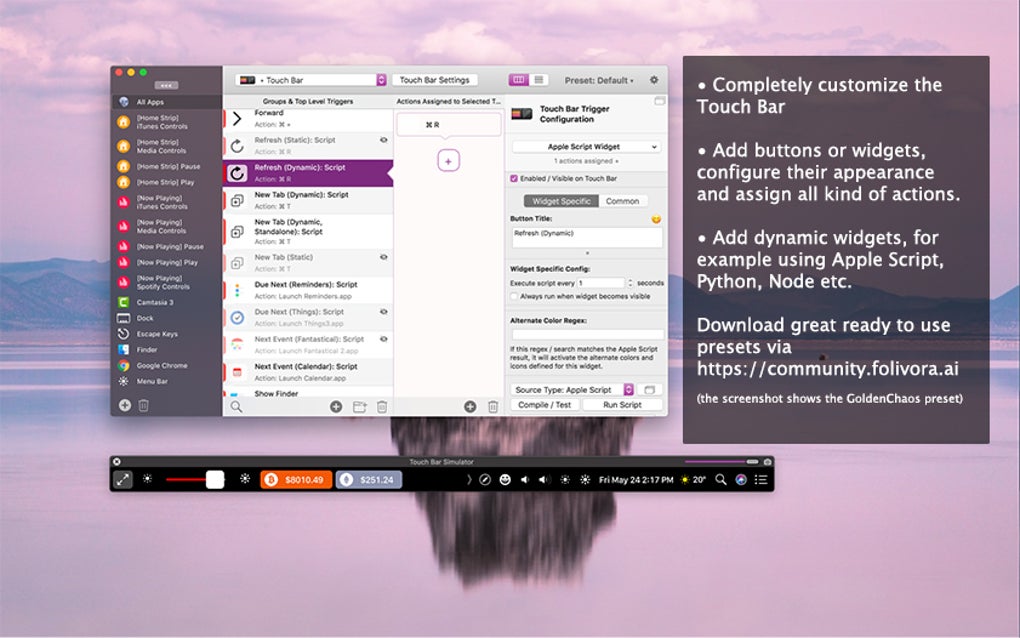
- Touch Bar Designer – Build per‑application Touch Bar layouts with buttons, sliders, and dynamic content.
- Keyboard Shortcut Recorder – Record complex key sequences, including modifier combos, and bind them to any input device.
- Application‑Specific Profiles – Enable or disable gestures on a per‑app basis, allowing you to keep default behavior for games while customizing productivity apps.
- Remote Control via iPhone/iPad – Use the free BTT Remote app to send gestures, shortcuts, or clipboard data from your mobile device.
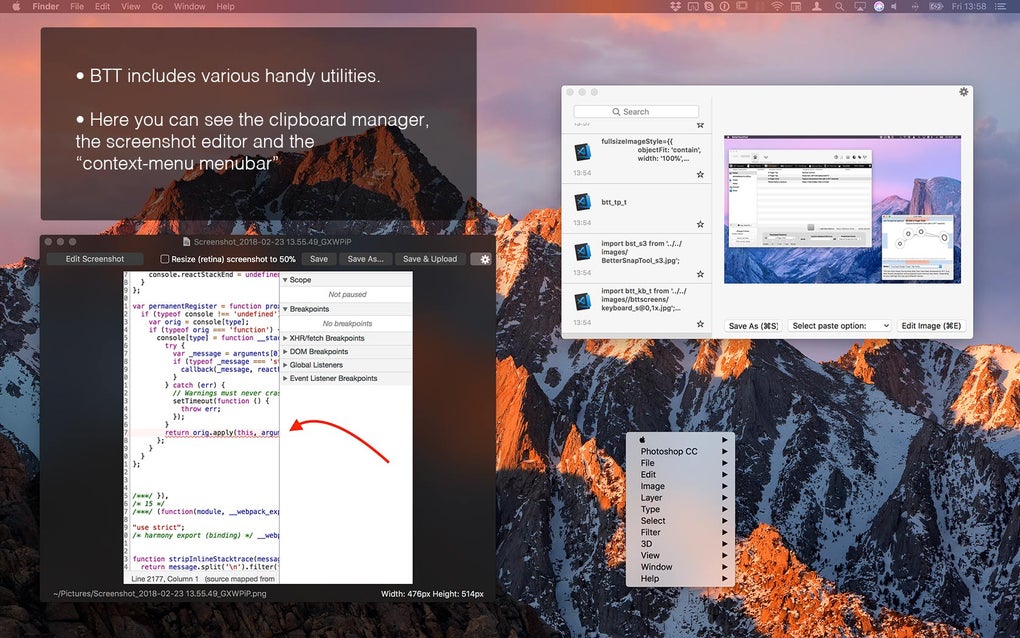
- Integrated Clipboard Manager – Store multiple clipboard entries, paste them selectively, and sync across devices.
- Screenshot & Image Editing Tools – Capture screens, add annotations, and apply quick edits without leaving the app.
- MIDI & Siri Remote Support – Map MIDI notes or remote button presses to macOS actions, ideal for musicians and media creators.
- Advanced Trigger Types – Combine conditions such as active window title, time of day, or connected Bluetooth device to fire actions only when needed.
Each feature is built around a simple “trigger → action” model. When you create a new trigger, BTT presents a clear list of possible inputs (gesture, mouse button, keyboard shortcut, etc.) and a corresponding list of actions (open URL, run AppleScript, execute shell command, control window size, etc.). The interface is organized into a left‑hand navigation pane that groups triggers by device, and a right‑hand pane where you fine‑tune the details. Because BTT stores its configuration in a plain‑text plist file, you can back up or share your custom setups across multiple Macs with ease. The app also offers a powerful export/import function, letting you download community‑created preset packs that cover common workflows such as video editing shortcuts, web‑development hotkeys, or even accessibility enhancements for users with motor impairments. While the sheer number of options can be overwhelming at first glance, the modular design means you can start small—perhaps with a single three‑finger swipe to open Finder—and gradually expand as you become comfortable with the workflow. The result is a highly personalized macOS experience that feels native, yet is crafted entirely by you.
Installation, Setup, and Everyday Use
Getting started with BetterTouchTool is straightforward. First, visit the official website or the Mac App Store, click the “Download” button, and save the DMG file to your Downloads folder. Open the DMG, drag the BetterTouchTool icon into your Applications folder, and launch the app. Because BTT needs to monitor input devices at a system level, macOS will prompt you to grant Accessibility permissions; simply open System Settings → Privacy & Security → Accessibility and enable BetterTouchTool. After the permission is granted, the app appears as an icon in the menu bar, providing quick access to its preferences, a list of active profiles, and a “Quit” command.
The first‑time experience includes a brief “Welcome” window that explains the core concepts: triggers, actions, and contexts. Although the built‑in tutorial is minimal, you can explore the extensive online knowledge base or community forum for step‑by‑step guides. To create a new gesture, click the “Add New Gesture” button, choose your input device (e.g., Trackpad), select the gesture type (e.g., three‑finger swipe left), and then assign an action from the dropdown list—such as “Move Window to Left Half.” You can further refine the gesture by adding conditions, like “Only when Safari is active,” or “Only when an external monitor is connected.”
For everyday use, many users keep a handful of core gestures in the global profile—actions that work across all apps—while maintaining per‑application profiles for specialized tasks. For example, a graphic designer might enable a custom “pinch‑to‑zoom” shortcut only within Adobe Photoshop, whereas a programmer could map a “two‑finger tap” to open the Terminal. The menu‑bar icon also offers a “Quick Switch” menu, letting you toggle between profiles with a single click, which is handy when you need to shift from a work environment to a gaming session. If a trigger stops working, a simple restart of the BetterTouchTool process (via the menu bar) usually resolves the issue. Because the app runs in the background, it does not interfere with system updates, and you can safely leave it active 24/7 without noticeable performance impact. Regular users also benefit from the built‑in “Export Settings” feature, which creates a backup file you can restore after a macOS upgrade or a fresh install, ensuring your custom gestures survive any system change.
Compatibility, Pros & Cons, and Frequently Asked Questions
BetterTouchTool is designed exclusively for macOS and supports versions from macOS 10.13 (High Sierra) up through the latest release (macOS 15 Ventura as of 2025). The app works seamlessly on both Intel‑based Macs and Apple‑silicon (M1, M2, and later) devices, taking advantage of native ARM optimization for faster gesture detection and lower power consumption. While the core functionality focuses on the built‑in trackpad, Magic Mouse, and Touch Bar, BTT also extends support to external USB or Bluetooth mice, third‑party keyboards, and even iOS devices running the companion BTT Remote app. Because it relies on macOS Accessibility APIs, the software does not interfere with other input‑enhancement tools, but users should avoid running multiple gesture‑customization utilities simultaneously to prevent conflicts.
Pros
- Extremely flexible—covers trackpad, mouse, keyboard, Touch Bar, and remote devices.
- Free to download and use, with a generous feature set that rivals paid competitors.
- Lightweight background process with minimal CPU and memory footprint.
- Per‑application profiles allow granular control without affecting global behavior.
- Built‑in clipboard manager and screenshot editor consolidate multiple utilities.
- Active community providing preset packs, tutorials, and scripts.
Cons
- Steep learning curve; the UI can feel cluttered for first‑time users.
- Lack of an integrated, step‑by‑step onboarding tutorial.
- Some advanced triggers require manual editing of plist files or script knowledge.
- Occasional need to restart the app when triggers stop responding.
- No native Windows or Linux version—macOS‑only.
FAQ
Is BetterTouchTool completely free?
Yes, BetterTouchTool can be downloaded and used for free. A paid license is optional and removes the occasional reminder prompt, but all core features remain available without charge.
Can I use BetterTouchTool on an Apple Silicon Mac?
Absolutely. BetterTouchTool runs natively on M1, M2, and later Apple Silicon chips, offering the same performance and feature set as on Intel Macs.
How do I back up my custom gestures?
Open BetterTouchTool, go to the menu bar → Preferences → Advanced → Export Settings. Save the resulting .btt file to a safe location. To restore, use the “Import Settings” button and select the saved file.
Will BetterTouchTool interfere with macOS updates?
No. The app is designed to survive macOS upgrades. However, after a major system update it’s a good idea to launch BetterTouchTool and verify that all permissions are still granted.
Can I assign different gestures for the same action in different apps?
Yes. BetterTouchTool’s per‑application profiles let you define unique gestures for each app, so the same three‑finger swipe could open Finder in one program while launching a custom script in another.
In summary, BetterTouchTool shines as a versatile, low‑cost solution for anyone who wants to break free from the default macOS input limitations. While the initial setup demands patience and a willingness to explore the UI, the long‑term productivity gains are well worth the effort. Whether you’re a power user looking to streamline window management, a designer needing custom Touch Bar controls, or a developer who wants quick access to terminal commands, BTT offers a unified platform that can be tailored to virtually any workflow.
Conclusion & Call to Action
BetterTouchTool stands out as one of the most comprehensive gesture‑customization tools available for macOS. Its ability to unify trackpad, mouse, keyboard, Touch Bar, and remote inputs under a single, lightweight umbrella makes it an indispensable addition to any Mac workflow. While the learning curve may deter casual users at first, the extensive community support, downloadable preset packs, and clear documentation (once you dig a little deeper) help flatten that curve quickly. If you’ve ever felt limited by Apple’s default gestures or found yourself reaching for multiple utilities to manage shortcuts, windows, and screenshots, it’s time to give BetterTouchTool a try.
Ready to supercharge your Mac? Download BetterTouchTool now and start building the personalized input experience you’ve always wanted. Remember to grant the necessary Accessibility permissions, explore the community preset library, and back up your configuration once you’ve crafted your ideal setup. With BetterTouchTool, the only limit is your imagination.
Pros: Flexible input mapping, free core features, lightweight, per‑app profiles, extensive community support.
Cons: Steep learning curve, limited onboarding, occasional need to restart.