
Download Gimp Painter – Free Windows Graphic Editor, Photo & Drawing Tool
Overview
Gimp Painter is a lightweight, GPL‑licensed graphics editor designed for Windows users who need a powerful yet free solution for photo retouching, digital painting, and image manipulation. First added to our catalog in 2011, the program has amassed more than 200,000 downloads, with a steady flow of new installations each week. Although it targets the classic Windows XP era and earlier, its streamlined interface and modest system requirements make it an excellent choice for legacy machines, educational labs, or anyone looking to avoid the bloat of commercial suites. Gimp Painter focuses on core drawing and retouching tools, offering layers, brushes, filters, and basic vector shapes without the overhead of a full‑blown Photoshop clone. The software is distributed in English only, and the current stable version is 2.6.11, last updated on September 6 2011. Its small installation footprint—under 100 MB—means you can keep it on portable drives or install it alongside other design tools without crowding your hard drive.
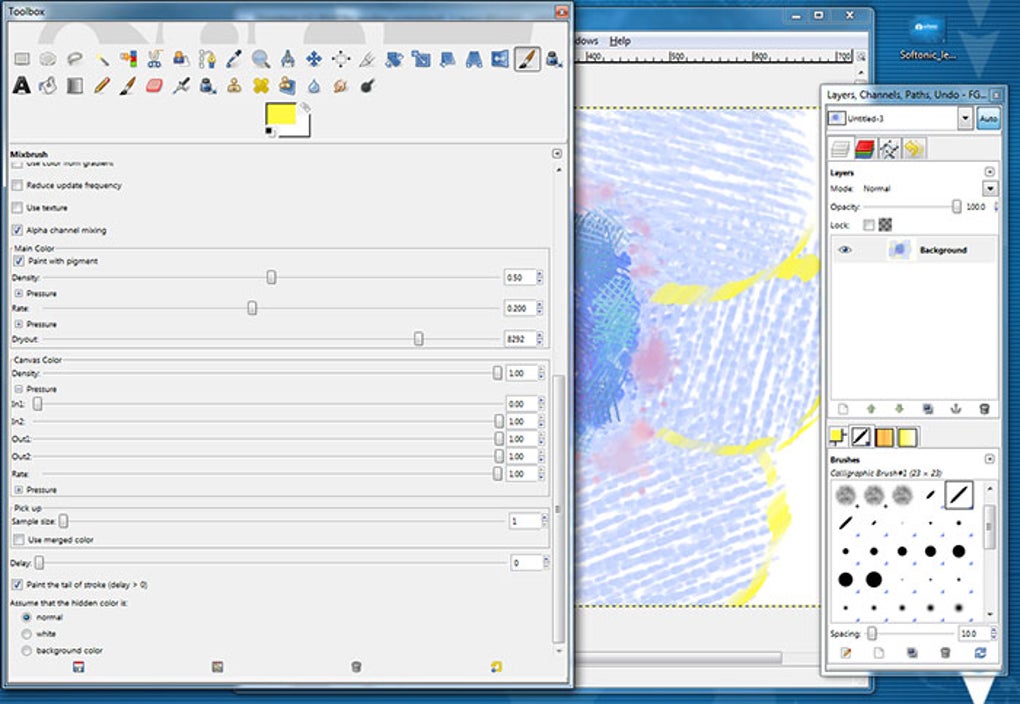
From a usability perspective, Gimp Painter balances a familiar toolbox layout with a modern, “slick” UI that reduces visual clutter. The program’s emphasis on speed and simplicity makes it especially attractive to hobbyists, students, and professionals who need a quick solution for image tweaks, concept sketches, or lightweight batch processing. While it lacks some of the advanced features found in newer editors (such as AI‑based upscaling or cloud sync), it compensates with stability, a vibrant community of plugin developers, and the reassurance of a completely free license. In the following sections we’ll dive deeper into its feature set, walk through the installation process, explore system compatibility, and weigh the pros and cons to help you decide whether Gimp Painter fits your workflow.
Key Features of Gimp Painter
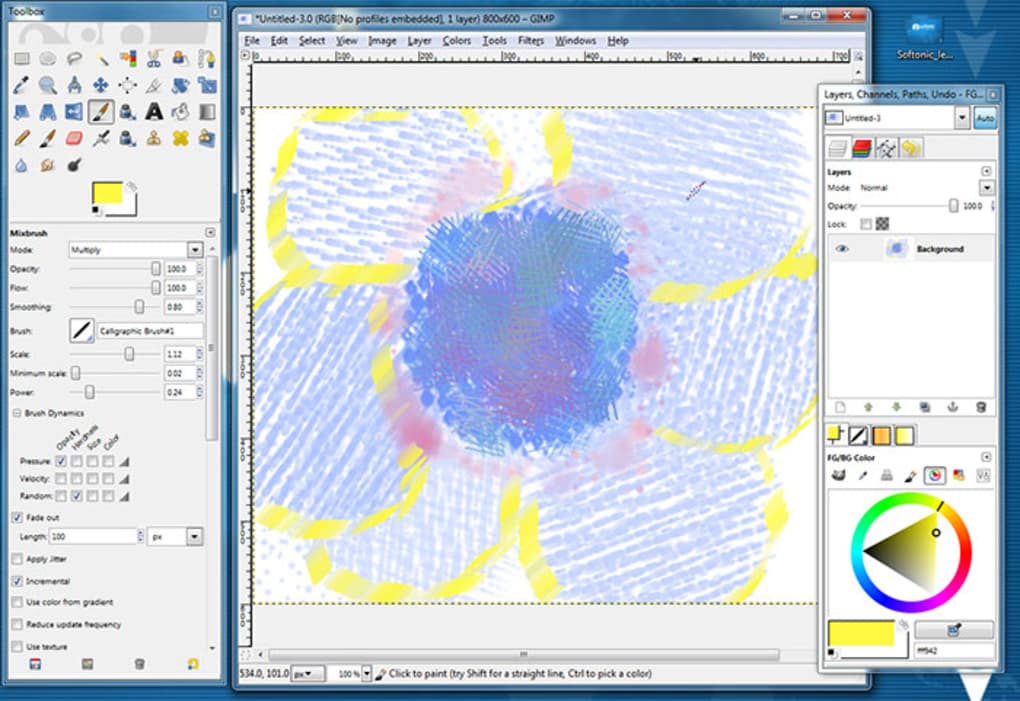
- Layer‑Based Editing: Unlimited layers with opacity, blending modes, and mask support, enabling non‑destructive workflows.
- Extensive Brush Engine: Over 30 built‑in brushes plus support for custom brush packs, pressure sensitivity (via compatible tablets), and brush dynamics.
- Selection & Mask Tools: Polygonal, free‑hand, fuzzy, and color‑based selections, plus quick mask for refined edge work.
- Filters & Effects: A collection of blur, sharpen, distort, and artistic filters that can be previewed in real time.
- Color Management: Full RGB/CMYK handling, gradient editor, and palette management for consistent color reproduction.
- File Compatibility: Import and export of popular formats such as JPEG, PNG, BMP, TIFF, and native XCF for seamless collaboration with other GIMP‑based tools.
- Scriptable Automation: Support for Python‑Fu and Script‑Fu scripts, allowing users to automate repetitive tasks or create custom effects.
- Portable Installation: Can be run from a USB stick without requiring admin rights, perfect for on‑the‑go editing.
- Community Extensions: A vibrant ecosystem of free plugins that add functionalities like HDR toning, batch processing, and advanced typography.
Beyond the listed capabilities, Gimp Painter’s UI is highly customizable. Users can dock panels, assign keyboard shortcuts, and switch between dark or light themes to suit personal preferences or reduce eye strain during long sessions. The program also offers a “History” palette, which records every action taken, allowing you to step back through multiple undo levels without performance penalties. For artists who rely on tablet input, Gimp Painter recognizes pressure, tilt, and wheel‑based controls, delivering a natural drawing experience comparable to more expensive alternatives.
Another notable advantage is the software’s open‑source nature. Because the source code is publicly available, security‑focused users can audit the program for vulnerabilities, and developers can contribute patches or new features. This collaborative model ensures that, even though the last official version dates back to 2011, the community continues to keep the application relevant through updates, bug fixes, and modern plug‑ins that extend its lifespan well beyond its original release date.
Installation & Usage Instructions
Step‑by‑Step Installation
- Visit the official download page and click the Download Gimp Painter button. The installer is a compact
.exefile (~78 MB). - Run the installer. If you lack administrator rights, choose the “Portable” option to extract the program to a folder of your choice (e.g.,
C:\GimpPainteror a USB drive). - Follow the on‑screen prompts: accept the GPL license, select the destination folder, and optionally create a desktop shortcut.
- When the installation finishes, launch Gimp Painter from the shortcut or directly from the installation directory.
- On first launch, the program may ask to configure default folders for brushes, plugins, and temporary files. Accept the defaults or point them to a location with sufficient space.
Getting Started with a New Project
After opening Gimp Painter, you’ll be greeted by the main workspace. To create a new canvas, go to File → New and specify dimensions in pixels, inches, or centimeters. The “Advanced Options” let you set the resolution (DPI) and background fill (transparent, white, or custom color). Once the canvas appears, you can start drawing with the Brush tool, add layers via the Layers panel, and experiment with filters through the Filters menu.
For photo retouching, import an image via File → Open. Use the Selection tools to isolate areas, apply adjustments like Brightness‑Contrast or Color Balance, and then refine edges with the Feather option. The non‑destructive layer system ensures you can always revert changes without damaging the original file.
Saving and Exporting
When your work is complete, you have two primary options for saving:
- Native Save: Choose File → Save to create an
.xcffile that preserves all layers, masks, and history for future editing. - Export: Use File → Export As to convert the project into common formats (JPEG, PNG, TIFF). Export settings allow you to control compression level, color profile, and metadata inclusion.
Because Gimp Painter is lightweight, the save and export processes are fast even on older hardware. Additionally, the program supports batch processing through scripts—ideal for applying the same watermark or size adjustment to multiple images at once.
Compatibility, Pros & Cons
Gimp Painter is officially compatible with Windows XP, Windows Vista, and earlier Windows versions. It runs smoothly on 32‑bit and 64‑bit architectures, though it was originally compiled for 32‑bit systems. Modern Windows 10/11 users can still install it in compatibility mode (Windows XP) without major issues. Because the application relies on standard Windows libraries, it does not require additional runtimes such as .NET or Visual C++ redistributables.
Pros
- Completely free and open‑source (GPL), eliminating any licensing costs.
- Very low system requirements; works on legacy PCs with as little as 256 MB RAM.
- Robust layer system and brush engine comparable to more expensive editors.
- Portable version available for use on USB drives or restricted environments.
- Extensive community‑driven plugin ecosystem that adds modern features.
- Simple, uncluttered UI that is easy for beginners to learn.
Cons
- Last official update was in 2011; some newer file formats and color profiles may lack native support.
- No built‑in cloud storage or collaboration tools.
- Limited support for high‑DPI displays and modern monitor scaling.
- Only English language interface; no localization for other languages.
- Advanced features such as CMYK soft‑proofing or 16‑bit channel editing are missing.
Overall Rating: 4 out of 5 stars – Gimp Painter delivers a surprisingly powerful toolset for a free Windows graphics editor, especially for users with older hardware. Its limitations are mostly due to its age, but the active plugin community helps bridge the gap.
FAQ & Conclusion
Is Gimp Painter truly free or does it contain hidden costs?
Gimp Painter is released under the GNU GPL license, meaning it is completely free to download, install, and use. There are no hidden fees, subscription models, or premium add‑ons required to access the core features.
Can I use Gimp Painter on Windows 10 or Windows 11?
Yes. Although the software was built for Windows XP and older, it runs in compatibility mode on Windows 10/11. Most users report stable performance, especially when the program is launched with “Windows XP” compatibility settings.
Does Gimp Painter support tablet pressure sensitivity?
Absolutely. The brush engine recognises pressure data from Wacom, Huion, and other supported graphics tablets, allowing for natural line weight variation and opacity control.
Can I install plugins or extensions?
Yes. Gimp Painter has a thriving plugin community. You can download additional filters, batch processors, and script‑based tools from the official GIMP extension repository and place them in the plugins folder.
Is there any official support or documentation?
Official documentation is minimal due to the age of the software, but the community maintains several tutorials, forums, and YouTube channels that cover everything from basic brushes to advanced scripting.
In summary, Gimp Painter offers a solid, free alternative for Windows users who need a capable graphics editor without the price tag or heavy system demands of commercial software. Its core tools—layer management, brush customization, and a respectable filter set—are more than sufficient for hobbyists, educators, and professionals working on older hardware. While the lack of recent updates means you won’t find the latest AI‑driven features, the active plugin ecosystem keeps the program relevant and adaptable. If you’re looking for a secure, lightweight, and fully free solution for photo retouching or digital painting, downloading Gimp Painter today is a sensible choice.
Ready to get started? Click the download button below to install Gimp Painter on your Windows PC and unleash your creativity without spending a dime.